Connect with us

Cannabis News

CAN: Worker strike in British Columbia a "worry" for cannabis industry

Published

on

Cannabis News

Vireo Growth announces California retail joint venture with Glass House Brands

Published

on

By

Vireo Growth and Glass House Brands have announced a joint venture to build one of the largest and most strategic cannabis retail platforms in California. Subject to certain regulatory and closing conditions, each company will bring its California dispensary operations to the combined entity in exchange for 50% ownership.

Vireo operates twelve dispensaries and home delivery operations that it recently acquired from Eaze, Inc. (“Eaze”). Today, Glass House has eleven stores in California. Together, the combined network will be supported by a preferential supply agreement with Glass House, California’s most efficient large-scale cannabis grower. After five years, Vireo will have the option to acquire Glass House’s stake in the joint venture, and Glass House will own the mutual well.

Cory Azzalino, Vireo’s California president, has been named CEO of the joint venture, where he will oversee operations and lead the platform’s retail acquisition and expansion strategy.

“California continues to be the largest legal cannabis market in the world, and this joint venture allows us to unlock its potential in a way that no one company can achieve alone,” said Kyle Kazan, founder, president and CEO of Glass House. “Vireo brings unparalleled retail reach and delivery infrastructure through the Eaze platform, while Glass House supports proven retail execution, low-cost, large-scale production and deep brand equity. Together with Vireo, we have found a way to mitigate California’s challenging pricing dynamics and enhance the value of our retail operations without expanding Glass House’s focus on selling biomass outside of the state.”

“Glass House is the ideal partner to collaborate with to build the future of cannabis retail in California,” said Vireo CEO John Mazarakis. “Their production scale and brand strength, combined with Vireo’s retail depth and access to one of the industry’s leading technology-based delivery platforms, creates a joint venture that is greater than the sum of its parts – serving more consumers, supporting independent brands and providing a compelling home for operators looking for a strong, capitalized partner.”

The joint venture’s integrated delivery capabilities through the Eaze platform will expand distribution to areas with limited retail access, offering competitive pricing that supports the legal market.

“I am proud to lead this platform and the opportunity it represents,” said Cory Azzalino. “Our combined retail and delivery network gives us the reach and resources to bring high-quality, affordable cannabis to consumers across California, including underserved communities, seeking disciplined growth that strengthens the long-term legal market.”

For more information:
vireo
vireohealth.com

Brands of Glass Houses
(email protected)
glasshousebrands.com/

Continue Reading

Cannabis News

Idaho Medical Marijuana Campaign Has More Than 100,000 Signatures For Legalization Ballot Measure As Deadline Nears

Published

on

By

Supporters of A He proposed a medical cannabis ballot initiative in Idaho he said they have collected more than 100,000 signatures and are making a final push to qualify the proposal for the November general election ballot by April 30.

A group called the Idaho Natural Medicine Alliance hopes to legalize medical cannabis as a treatment option for Idahoans with debilitating illnesses such as cancer, post-traumatic stress disorder, AIDS, epilepsy, Crohn’s disease or Alzheimer’s disease.

Under Idaho law, cannabis means the same thing as marijuana, and the two terms are sometimes used interchangeably.

Currently, all forms of cannabis are illegal in Idaho, but recreational marijuana or medical cannabis is available in every state bordering Idaho except Wyoming.

Supporters said they want to legalize medical cannabis to give people with serious illnesses and chronic pain an alternative to opioid medications.

“Hundreds of people have emailed us about how they have PTSD or epilepsy and they’re driving across the border and illegally buying gummy bears because they want some dignity in their custody, in their state, but they can’t get it, and they’re still getting these things because they’re there and they’re available,” said Amanda Bomanise Wason of the initiative. “This framework includes a very strong regulatory, limited access and medical program.”

Opposition is leading the Republican-controlled Idaho Legislature, which is pushing a competitive marijuana measure on the November ballot and urging voters to reject the medical cannabis ballot initiative.

“Idaho’s Medical Cannabis Act is not guaranteed to the extent that it would effectively legalize the widespread recreational use of marijuana,” Idaho lawmakers warned in a resolution passed earlier this month.

Who’s behind Idaho’s medical cannabis ballot initiative?

Rob Cronin, a Sun Valley businessman who has opened several restaurants in Idaho and across the country, is president and treasurer of the Natural Medicine Alliance PAC.

In an interview last week, Cronin said his experience as a cancer survivor and his friendship with the late Dr. Dori Tunney, a physician and philanthropist, inspired him to push the medical cannabis ballot initiative.

Tunnery was diagnosed with glioblastoma and treated his pain with opioids, which led to severe side effects, reduced appetite and severe physical decline, Cronin and Watson said.

In treatment in California, where cannabis is legal, Tunney tried medical cannabis jelly and Cronin and Watson said his appetite and sleep returned to normal and his pain decreased.

Cronin and Watson said Tunney began advocating for the legalization of medical cannabis in Idaho in 2022, a push he continued until his death in 2024.

Cronin said she also experienced serious side effects when she used opioids after surgery after cancer treatment. Cronin said today he weighs 175 pounds, but his weight has dropped to 119 pounds due to nausea, loss of appetite and sleep loss caused by opioids.

“The pain was excruciating and I was hammering the Vicodin like it was going to go out of style,” Cronin said. “I can say in my head all day that I would choose an alternative to opioids over cannabis, because opioids put you on that funky roller coaster of, ‘Oh, I feel better. Oh, I’m depressed, and my life is bad. Oww, now I’m in pain. Another opioid. Oh, I’m depressed again and my life is bad.’ It really messes with your head.”

Cronin and Watson said they met while volunteering with Tunney to help cancer patients in Idaho. Cronin and Watson said they support the measure to try to finish Tunney’s job before the Idaho Legislature tries to further curtail the ability of voters to legalize medical cannabis in Idaho.

Watson said most of the funding for the initiative comes from an investment in Double Springs Ranch, owned by Tunney and her husband. The ranch is located in central Idaho and produces hemp and hemp fiber and raises Black Angus cattle.

What is a ballot initiative and what will it take to get medical cannabis on the November ballot?

In Idaho, a ballot initiative is a form of direct democracy in which Idaho voters—not the Idaho Legislature—vote on whether to pass a bill.

Organizers say they are taking the Idaho Medical Cannabis Act to voters as a ballot initiative because the Idaho Legislature has not taken action to legalize medical cannabis.

All states surrounding Idaho other than Wyoming offer medical cannabis, such as Utah, or recreational marijuana, such as Washington, Oregon, Montana, and Nevada.

To qualify for the November general election, organizers must collect signatures from 6 percent of registered voters statewide, or 70,725 valid signatures. In addition to the total gross, organizers must also collect signatures from 6 percent of registered voters in at least 18 of Idaho’s 35 legislative districts.

The period for verifying the signatures of the State will end on April 30.

“I would say we’re cautiously optimistic,” Watson said Friday. “Right now, we’re collecting thousands of signatures a day to make sure we cross that threshold every legislative session. There are some rural areas in Idaho where we’re working really hard to get that 6 percent. Right now, we’ve collected over 100,000 raw signatures.”

The Idaho Natural Medicine Alliance is using paid signature gatherers in an effort to qualify the initiative for election. The alliance pays $25 an hour plus incentives, Watson said.

If the initiative qualifies for the November general election, it would need a simple majority of votes to pass.

Why is the Idaho Legislature against cannabis?

If the Idaho Medical Cannabis Act makes it to the ballot, there would be marijuana-related questions on the November ballot.

The Idaho Legislature has already come out against medical cannabis and placed an amendment to the Idaho Constitution on the November ballot. If approved by a majority of voters, it would be House Resolution 4 make it so that only the Idaho Legislature, not the voters, can legalize marijuana or other narcotics.

“Too many legislatures in this nation have sat and waited for initiative after initiative to come after them until they finally get overwhelmed and pass the legislature,” Sen. Scott Grow, R-Eagle, said last year. “We are acting because that is our responsibility.”

In the 2025 legislative session, the Idaho Legislature and Gov. Brad Little (R) passed a law that creates a mandatory minimum fine of $300 for anyone convicted of simple possession of marijuana, the Idaho Capital Sun previously reported.

This year, the Idaho Legislature also passed Senate Resolution 127, which encourages Idaho voters to reject a medical cannabis ballot initiative.

In the resolution, lawmakers warn that legalizing marijuana and medical cannabis has created problems for other states and would increase the Idaho Department of Health and Welfare’s budget and costs at a time when state revenues are uncertain.

Idaho lawmakers have also complained that the requirements for obtaining a cannabis medical card would be so low that almost anyone would be able to obtain one.

“The 18 medical conditions to qualify for a cannabis license, including insomnia, anxiety and acute pain, are so broad that almost anyone can qualify,” Idaho lawmakers wrote.

On Thursday, Idaho Secretary of State officials said 10,232 signatures have been submitted so far, and the office has deemed 4,698 of those signatures valid.

How would Idaho’s Medical Cannabis Act work?

Here’s how Idaho’s Medical Cannabis Act would work for the November election if a majority of Idaho voters pass the act.

  • Idahoans would be able to apply for a renewable cannabis medical card by submitting medical records showing a significant or terminal health condition such as cancer, HIV/AIDS, epilepsy, Alzheimer’s, MS, post-traumatic stress disorder, chronic pain.
  • Meanwhile, the state would initially issue three medical cannabis production licenses statewide, allowing a licensee to grow, produce, distribute and sell medical cannabis to people with a valid Idaho cannabis license. When Idaho’s population increases by 650,000, additional production licenses could be issued, bringing the total to six in the state. The production license application process requires a valid Idaho hemp license in good standing, submission of an operational plan, background checks and the use of a supervising pharmacist.
  • This law allows each licensee to operate up to six retail locations, two facility locations, a fulfillment center, a warehouse, and a distribution center.
  • For individuals with an Idaho medical cannabis card, online ordering, delivery and pickup at distribution centers would be permitted.
  • Using medical cannabis in public and sharing medical cannabis with someone who does not have an Idaho cannabis card would be prohibited by law in Idaho. It would also be illegal to drive, operate a ship, operate aircraft, operate heavy machinery or drive a train under the influence of medical cannabis.

Continue Reading

Cannabis News

Building Nevada’s most vertically integrated cannabis operation

Published

on

By

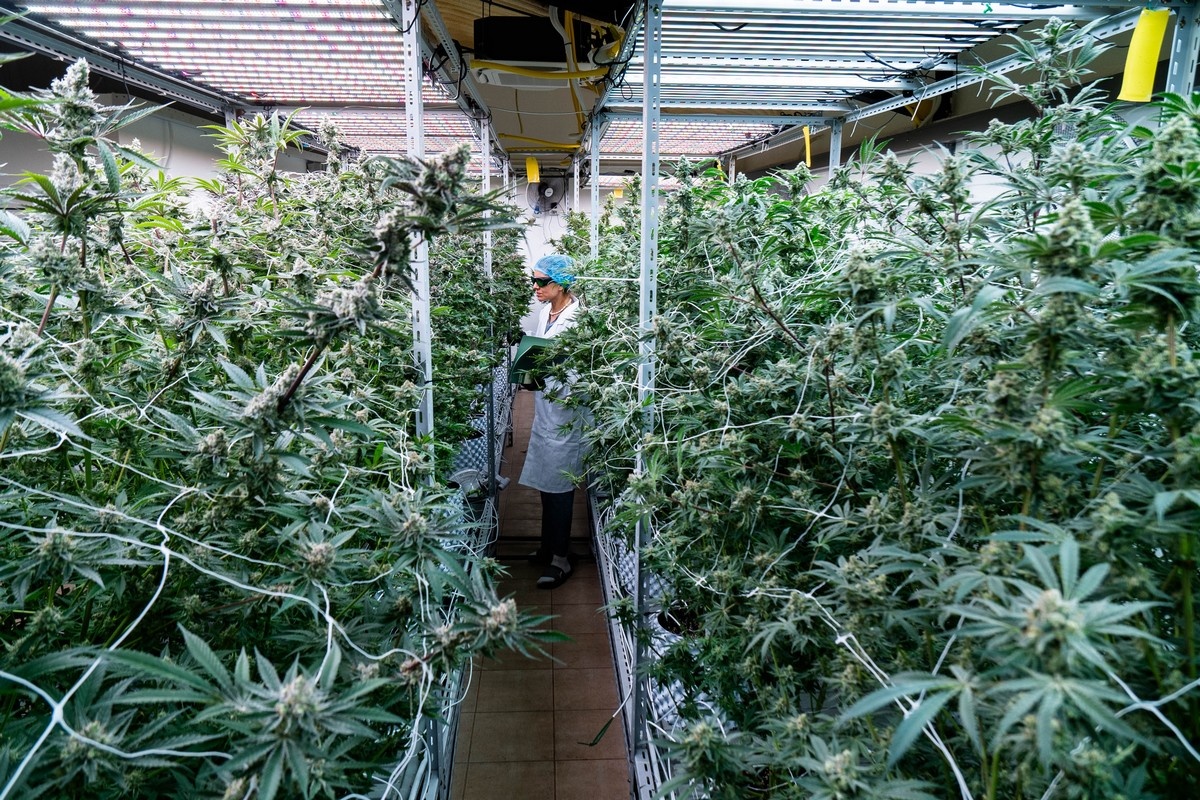
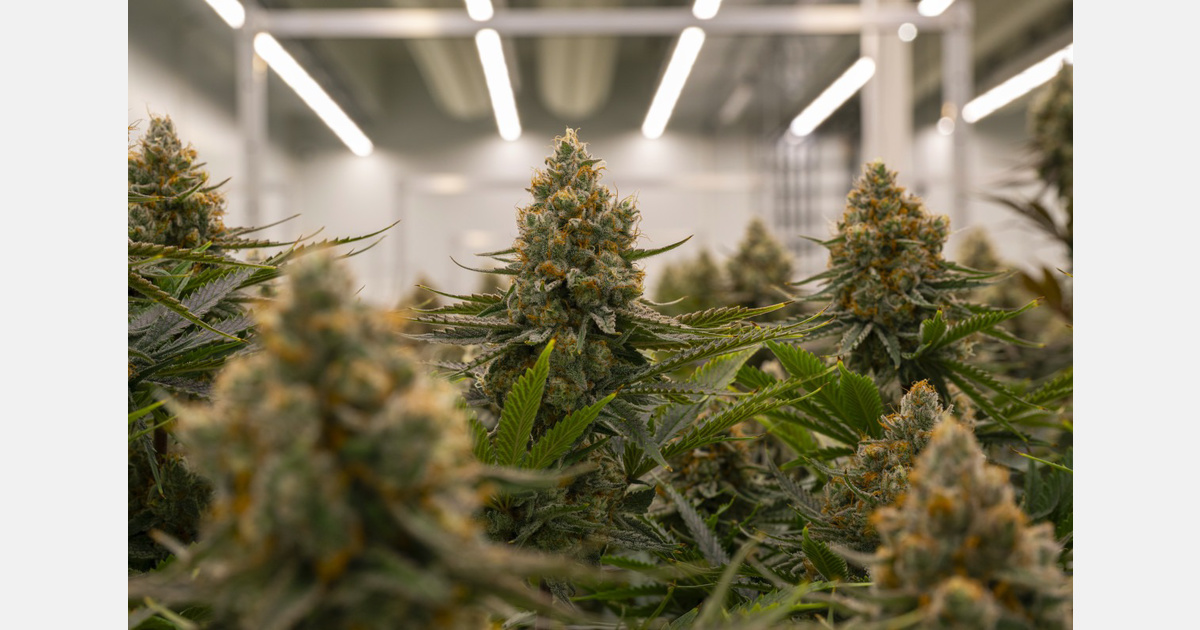
Nevada is one of the most competitive retail cannabis markets in the United States, and Deep Roots Harvest has been betting for years that the way to win is to control everything. 11 cultivation, processing, manufacturing, extraction and retail locations all under one roof, or pretty close to it. Chris O’Ferrell, Deep Roots Harvest’s Chief Cultivator, runs the growing side of that operation in two facilities totaling 30,000 square feet, pushing 500 pounds of harvested cannabis per week and 2,000 pounds of biomass per month.

“The Source and Deep Roots harvest retail team sells 75 kilos of cannabis daily, 500 kilos weekly, over a third of which is in-house to support the High Heads, Neon Moon and CAMP brands. We cultivate, extract, process, manufacture and work the retail locations,” says Chris. “We have one of the largest market shares in Nevada in terms of retail volume and gross sales.”

That volume is produced by 60 full-time employees at the two sites, and the crop program behind it is, by any reasonable measure, built for efficiency and quality. “Many of the genetics in our library consistently exceed 100 grams per square foot, which directly helps reduce our overall cost per gram,” explains Chris. “We operate with a consumer-first approach, focusing on cost consciousness while providing tasty and competitive offerings. We operate below 70 cents per gram, a benchmark that reflects careful cost management. Getting there and staying there has required compressing costs at all input levels while continuing to invest in technology that moves the needle on quality, cost efficiency and performance.”

© Deep Roots Harvest Chris O’Ferrell, Chief Cultivator at Deep Roots Harvest

Genetics as intended by the producer
The transition of light is a clear example of this, as is the case with cannabis. In the beginning, the company used your classic HPS lights. As LED technology advanced, Deep Roots made the switch. However, it wasn’t just about improving energy efficiency. Chris and the team understood that the more precisely the crop was targeted, the better the final product would be. Energy savings don’t necessarily show up on retail shelves, but crop control does, in the form of flowers that express their genetics the way the grower intended.

To achieve this level of control, the spectrum became a critical tool. “We start with the spring setting, using the blue light to regulate the spacing of the interiors and control the spacing,” he explains. “As the plants progress, we move to the summer spectrum until the end of week eight, switching to a broader spectrum light with balanced wavelengths. This increases the red light, along with other parts of the spectrum to more closely replicate sunlight. We also increase the light intensity during the flowering phase to improve the plant’s photosynthetic performance, accumulation and photosynthetic activity. The parameters support the initiation of flowering, accelerate maturation and allow the plant to reach its potential they allow him to fully express his genetics.”

Nothing is left to chance
At canopy level, plants from the two largest facilities are housed in two-gallon coco pots, chosen to accommodate longer growing periods and larger plant structures. The second facility operates stone wool. Both use substrate sensors in connection with fertigation control, and track performance at different growth stages. Dissolved oxygen is injected into the root zone to increase availability, and a chlorine injection system keeps the lines clear of pathogens with a relatively inexpensive cleanup compared to conventional cleaning programs. “A chlorine injection system is relatively inexpensive to implement, replacing approximately $40,000 in other cleaning and disinfection products annually,” says Chris. “It’s all about being ahead of the curve.”

Pest management is entirely biological, implemented in conjunction with mechanical and cultural controls. “We haven’t had any pest problems,” says Chris. “This was also a decision based on reducing inputs while maintaining, if not improving, the quality of the product.”

Genetics is the backbone of cannabis operations and the gas that drives the company’s engine. They receive the same systematic treatment as all other parts of the operation. A steering committee reviews the portfolio quarterly, withdrawing underperforming cultivars and acquiring replacements based on market data from multiple markets, cross-referenced with gaps in the current menu. The criteria are repeatable agronomic performance, yield, potency, distinctive flavor profile and the ability to wash well for extraction, ensuring strong yields for both rosin and resin production. “All genetics need to adapt to the program,” says Chris. “Unique production, potency and flavor expression that fills the void of what we don’t have on the menu. It’s about finding a commercial cultivar that works well and fits the existing infrastructure. All the cultivars we grow now have a similar and predictable growth structure. The difference is the color, the smell, the experience. They are very close agronomically.”

For more information:
Harvest deep roots
deeprootsharvest.com

Continue Reading
Advertisement

Trending

Copyright © 2021 The Art of MaryJane Media