
Cannabis News
Tariffs, visa problems add to cannabis industry issues

The US legal cannabis industry has been suffering for the past two years under an indecisive federal government, and now it’s being squeezed from two unexpected angles: Tariffs and Visas add to the cannabis industry’s misery. For businesses and workers, what once seemed like a fledgling success story is showing more turmoil.
The first blow comes through international trade policy. Many cannabis-related businesses – from vape cartridge manufacturers to packaging suppliers and cultivation equipment importers – rely heavily on foreign inputs, particularly from China. Recent US tariffs on Chinese goods (in some cases raising tariffs to 30-50% or more) have driven up costs, and the impact is hitting herbal players hard.
According to an industry analysis, the cost of producing a typical vape unit is rising by a few cents due to tariffs on hardware and packaging. With thousands of units produced each month, it adds up quickly. Some businesses are absorbing the blow, but others hope the increases will eventually trickle down to consumers or drive buyers back to illegal markets.
What makes this especially tough for cannabis companies: margins are already thin, regulatory burdens are high and the domestic supply chain is not built. Switching providers takes time; It’s even harder to find US-based manufacturers that comply with regulations.
Read more at Fresh Toast









Vireo Growth and Glass House Brands have announced a joint venture to build one of the largest and most strategic cannabis retail platforms in California. Subject to certain regulatory and closing conditions, each company will bring its California dispensary operations to the combined entity in exchange for 50% ownership.
Vireo operates twelve dispensaries and home delivery operations that it recently acquired from Eaze, Inc. (“Eaze”). Today, Glass House has eleven stores in California. Together, the combined network will be supported by a preferential supply agreement with Glass House, California’s most efficient large-scale cannabis grower. After five years, Vireo will have the option to acquire Glass House’s stake in the joint venture, and Glass House will own the mutual well.
Cory Azzalino, Vireo’s California president, has been named CEO of the joint venture, where he will oversee operations and lead the platform’s retail acquisition and expansion strategy.
“California continues to be the largest legal cannabis market in the world, and this joint venture allows us to unlock its potential in a way that no one company can achieve alone,” said Kyle Kazan, founder, president and CEO of Glass House. “Vireo brings unparalleled retail reach and delivery infrastructure through the Eaze platform, while Glass House supports proven retail execution, low-cost, large-scale production and deep brand equity. Together with Vireo, we have found a way to mitigate California’s challenging pricing dynamics and enhance the value of our retail operations without expanding Glass House’s focus on selling biomass outside of the state.”
“Glass House is the ideal partner to collaborate with to build the future of cannabis retail in California,” said Vireo CEO John Mazarakis. “Their production scale and brand strength, combined with Vireo’s retail depth and access to one of the industry’s leading technology-based delivery platforms, creates a joint venture that is greater than the sum of its parts – serving more consumers, supporting independent brands and providing a compelling home for operators looking for a strong, capitalized partner.”
The joint venture’s integrated delivery capabilities through the Eaze platform will expand distribution to areas with limited retail access, offering competitive pricing that supports the legal market.
“I am proud to lead this platform and the opportunity it represents,” said Cory Azzalino. “Our combined retail and delivery network gives us the reach and resources to bring high-quality, affordable cannabis to consumers across California, including underserved communities, seeking disciplined growth that strengthens the long-term legal market.”
For more information:
vireo
vireohealth.com
Brands of Glass Houses
(email protected)
glasshousebrands.com/
Cannabis News
Idaho Medical Marijuana Campaign Has More Than 100,000 Signatures For Legalization Ballot Measure As Deadline Nears

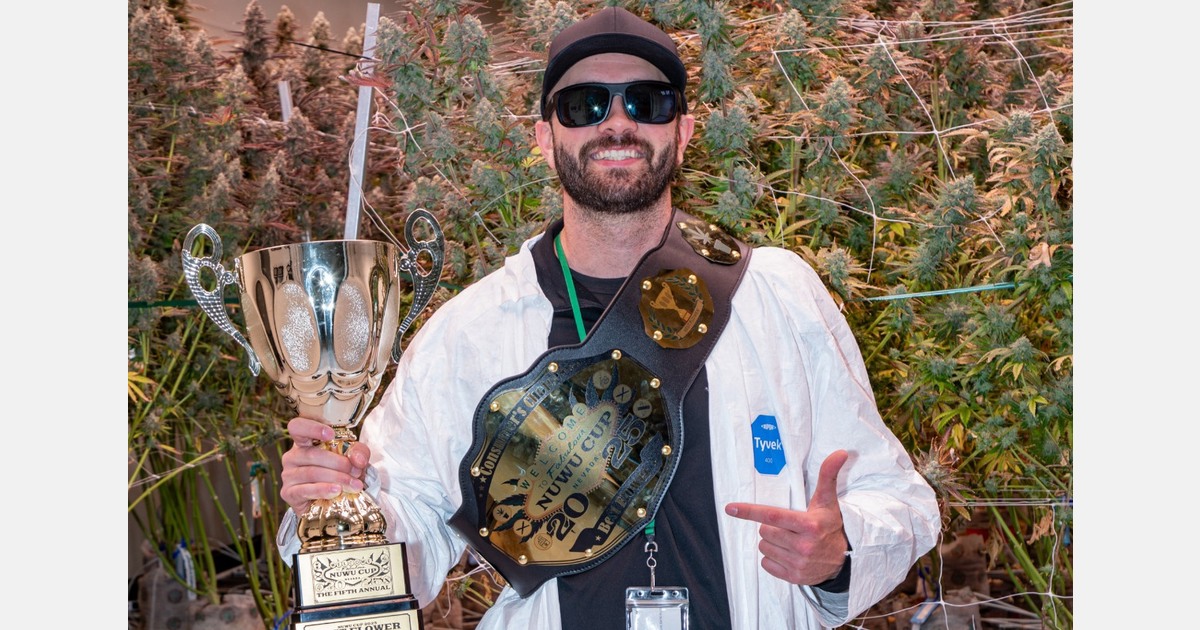
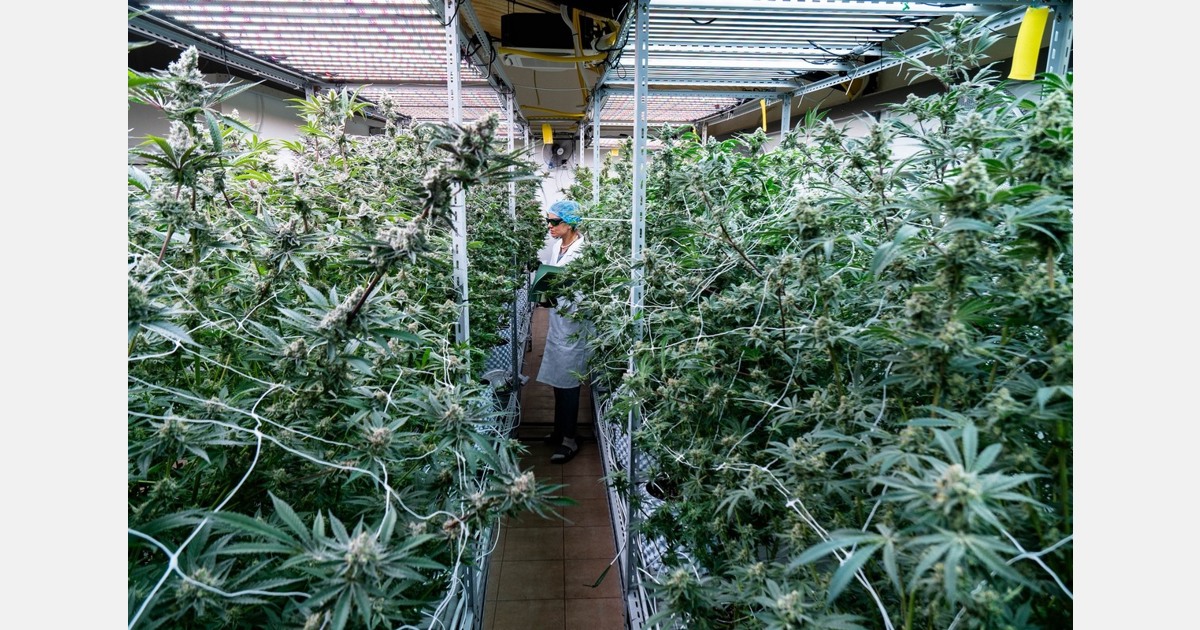
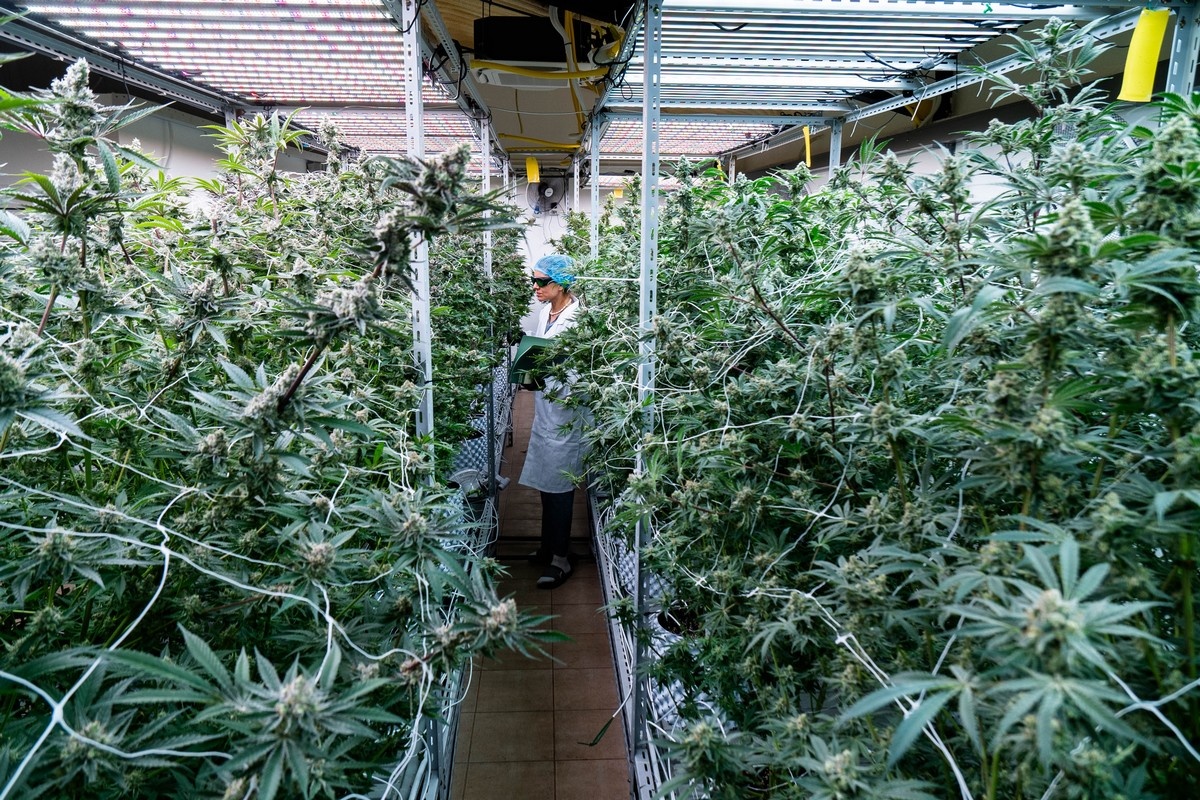
Nevada is one of the most competitive retail cannabis markets in the United States, and Deep Roots Harvest has been betting for years that the way to win is to control everything. 11 cultivation, processing, manufacturing, extraction and retail locations all under one roof, or pretty close to it. Chris O’Ferrell, Deep Roots Harvest’s Chief Cultivator, runs the growing side of that operation in two facilities totaling 30,000 square feet, pushing 500 pounds of harvested cannabis per week and 2,000 pounds of biomass per month.
“The Source and Deep Roots harvest retail team sells 75 kilos of cannabis daily, 500 kilos weekly, over a third of which is in-house to support the High Heads, Neon Moon and CAMP brands. We cultivate, extract, process, manufacture and work the retail locations,” says Chris. “We have one of the largest market shares in Nevada in terms of retail volume and gross sales.”
That volume is produced by 60 full-time employees at the two sites, and the crop program behind it is, by any reasonable measure, built for efficiency and quality. “Many of the genetics in our library consistently exceed 100 grams per square foot, which directly helps reduce our overall cost per gram,” explains Chris. “We operate with a consumer-first approach, focusing on cost consciousness while providing tasty and competitive offerings. We operate below 70 cents per gram, a benchmark that reflects careful cost management. Getting there and staying there has required compressing costs at all input levels while continuing to invest in technology that moves the needle on quality, cost efficiency and performance.”
 © Deep Roots Harvest Chris O’Ferrell, Chief Cultivator at Deep Roots Harvest
Genetics as intended by the producer
The transition of light is a clear example of this, as is the case with cannabis. In the beginning, the company used your classic HPS lights. As LED technology advanced, Deep Roots made the switch. However, it wasn’t just about improving energy efficiency. Chris and the team understood that the more precisely the crop was targeted, the better the final product would be. Energy savings don’t necessarily show up on retail shelves, but crop control does, in the form of flowers that express their genetics the way the grower intended.
To achieve this level of control, the spectrum became a critical tool. “We start with the spring setting, using the blue light to regulate the spacing of the interiors and control the spacing,” he explains. “As the plants progress, we move to the summer spectrum until the end of week eight, switching to a broader spectrum light with balanced wavelengths. This increases the red light, along with other parts of the spectrum to more closely replicate sunlight. We also increase the light intensity during the flowering phase to improve the plant’s photosynthetic performance, accumulation and photosynthetic activity. The parameters support the initiation of flowering, accelerate maturation and allow the plant to reach its potential they allow him to fully express his genetics.”
Nothing is left to chance
At canopy level, plants from the two largest facilities are housed in two-gallon coco pots, chosen to accommodate longer growing periods and larger plant structures. The second facility operates stone wool. Both use substrate sensors in connection with fertigation control, and track performance at different growth stages. Dissolved oxygen is injected into the root zone to increase availability, and a chlorine injection system keeps the lines clear of pathogens with a relatively inexpensive cleanup compared to conventional cleaning programs. “A chlorine injection system is relatively inexpensive to implement, replacing approximately $40,000 in other cleaning and disinfection products annually,” says Chris. “It’s all about being ahead of the curve.”
Pest management is entirely biological, implemented in conjunction with mechanical and cultural controls. “We haven’t had any pest problems,” says Chris. “This was also a decision based on reducing inputs while maintaining, if not improving, the quality of the product.”
Genetics is the backbone of cannabis operations and the gas that drives the company’s engine. They receive the same systematic treatment as all other parts of the operation. A steering committee reviews the portfolio quarterly, withdrawing underperforming cultivars and acquiring replacements based on market data from multiple markets, cross-referenced with gaps in the current menu. The criteria are repeatable agronomic performance, yield, potency, distinctive flavor profile and the ability to wash well for extraction, ensuring strong yields for both rosin and resin production. “All genetics need to adapt to the program,” says Chris. “Unique production, potency and flavor expression that fills the void of what we don’t have on the menu. It’s about finding a commercial cultivar that works well and fits the existing infrastructure. All the cultivars we grow now have a similar and predictable growth structure. The difference is the color, the smell, the experience. They are very close agronomically.”
For more information:
Harvest deep roots
deeprootsharvest.com

Mastering Cannabis Dispensary SEO: 28 Actionable Tips to Boost Online Visibility

Vireo Growth announces California retail joint venture with Glass House Brands

Idaho Medical Marijuana Campaign Has More Than 100,000 Signatures For Legalization Ballot Measure As Deadline Nears

PURE Hash Joint Wednesday

B Block -State reports including the latest from Jersey City Police 3; Cannabis Coast to Coast News

The Legendary Origins Of Blueberry Weed

ADVOCACY & CANNABIS DEVICE INNOVATION | DAVIS CLAYTON KIYO

Marijuana Retail Report

Glass House Brands and Vireo Growth Are Easing Into California Cannabis Combo – New Cannabis Ventures

Building Nevada’s most vertically integrated cannabis operation

“Our system can manage equipment across 10,000+ m² using just a few wires”

Florida Workshop to Discuss What Constitutes a ‘Cartoon’ in Hemp Packaging

Mazar-i-Sharif Hash Wednesday

Re-release of the full show of Cannabis Coast to Coast news. Republican Texas DA Fires Up vs. laws;

From Finance to Wellness: Brad Zerman’s Impactful Pivot

Weak Michigan Cannabis Sales Again in July – New Cannabis Ventures

DEA’s Cole Reverses His “priorities” ; Prohibitionists Dig In; Dead & Co Celebrates 60 years in SF

Your Cannabis Business: Consistent Filings Are Critical

New Hampshire Governor Says Federal Marijuana Rescheduling Won’t Change Her Opposition To Legalization

Texas DA Partakes on Tik Tok to prove a point; Boston Sheriff arrested for Extortion of $ w/ Ascend
-
 Cannabis News8 months ago
“Our system can manage equipment across 10,000+ m² using just a few wires”
-
 Florida8 months ago
Florida Workshop to Discuss What Constitutes a ‘Cartoon’ in Hemp Packaging
-
 Video6 months ago
Mazar-i-Sharif Hash Wednesday
-
 Video8 months ago
Re-release of the full show of Cannabis Coast to Coast news. Republican Texas DA Fires Up vs. laws;
-
 Video8 months ago
From Finance to Wellness: Brad Zerman’s Impactful Pivot
-
 aawh8 months ago
Weak Michigan Cannabis Sales Again in July – New Cannabis Ventures
-
 Video8 months ago
DEA’s Cole Reverses His “priorities” ; Prohibitionists Dig In; Dead & Co Celebrates 60 years in SF
-
 Best Practices8 months ago
Your Cannabis Business: Consistent Filings Are Critical