
Cannabis News
Northern Leaf grows exports as Jersey regulations and old glasshouses unlock new opportunities

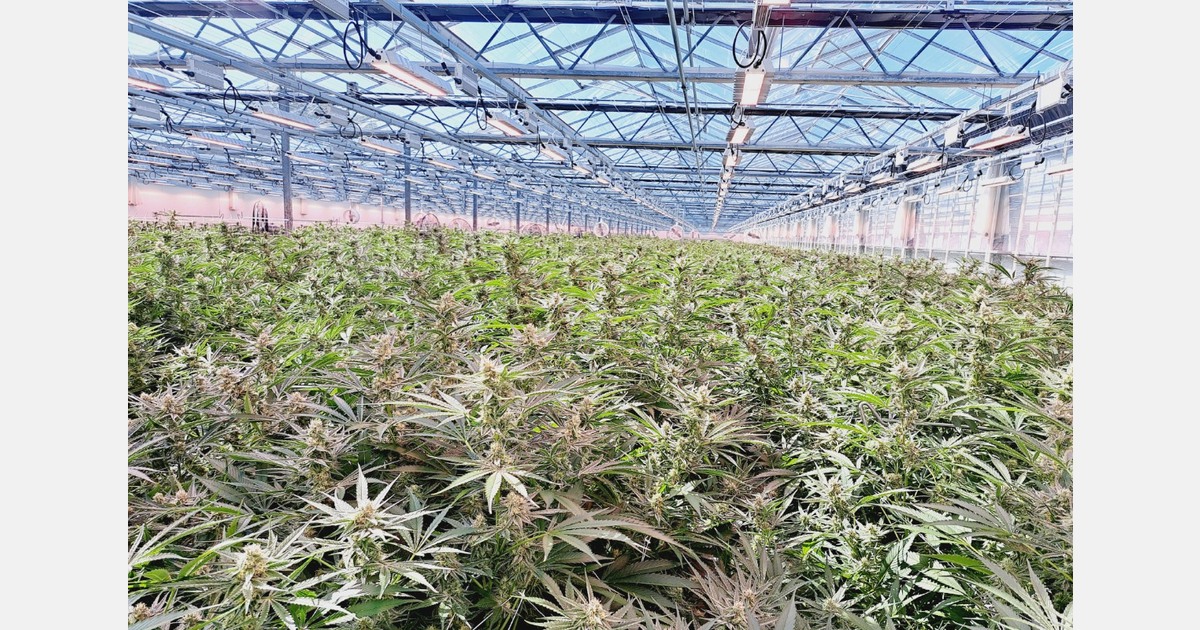
A Jersey cannabis grower exporting tonnes of medicinal products every year has praised the island’s unique regulatory framework and redevelopment of disused greenhouses for allowing it to expand into UK and European markets.
Northern Leaf began operating in 2019 after Jersey introduced a commercial licensing regime that allows producers on the island to supply medical cannabis to overseas pharmaceutical supply chains.
 © Northern leaf
Revival of abandoned greenhouses
This regulatory framework was introduced following the collapse of the island’s tomato export industry, which left many large greenhouse sites unused.
Northern Leaf operates out of one of these former horticultural structures, which has been rebuilt for the cultivation of cannabis in a controlled environment in the mid-west of the island.
The company said the combination of the regulatory framework and the availability of unused greenhouses supports its ability to scale.
He added that Jersey’s location, just a 30-minute ferry ride to France, provides a direct route for products to be shipped by road to mainland Europe.
 © Northern leaf
Northern Leaf expects to export around six tonnes of cannabis this year and nine tonnes next year. He added that everything grown in the last five months has already been sold and future crops are also pre-sold in the UK and European markets.
Growing up on an island
Head of Production and Facilities Andrew Dunlop described the facility as “the benchmark for modern cultivation facilities”.
The greenhouse uses CO₂ injection, automated irrigation, environmental and gas control systems and air purification designed to reduce the risk of pathogens. The growing area is divided into compartments of 20 x 80 meters, so that different genetics and crop phases can run simultaneously.
Northern Leaf is grown on coir rather than rockwool, a substrate often seen in large installations. Mr Dunlop said: “It’s higher yielding, medium forgiving in terms of excess water or nutrients, and coir has a lower environmental impact.”
 © Northern leaf
Drying takes place in purpose-built dryers that control the rate of moisture loss to maintain consistency while preventing the loss of terpenes, the molecules primarily responsible for the flavor and aroma of cannabis.
The company holds an EU-GMP bulk licence, which allows it to produce and supply Bulk Pharmaceutical API to distributors and packers in the UK and Europe before the products reach medical cannabis patients.
Northern Leaf has been under a new management team for the past 14 months, which has focused on stabilizing production, strengthening operational controls and expanding technical capability.
The business is also expanding through cannabis genetics and tissue culture in collaboration with international collaborators. It plans to increase supply to the UK cannabis market by 2026. According to estimates, the current demand in the UK is between 20 and 25 tonnes.
For more information:
Northern leaf
+44 1534 660420
(email protected)
northern-leaf.com












Cannabis News
Florida GOP Lawmaker Files Medical Marijuana Expansion Bill Allowing Patients To Qualify If They’ve Been Prescribed Opioids

A Republican Florida lawmaker has introduced a bill to expand the state’s medical marijuana program in several ways, including allowing doctors to recommend cannabis to any patient with a condition for which opioids have been prescribed.
Legislation by Rep. Bill Partington (R), introduced Wednesday for the 2026 session, would also make medical marijuana registrations last two years instead of the current 30 weeks, and would waive patient registration fees for honorably discharged military veterans.
Under the proposal, doctors would also be able to recommend medical cannabis via telehealth without a physical exam, expanding the current policy that allows renewals, but not initial certifications, to be done remotely.
The measure also includes reciprocity provisions, requiring regulators to create a process to issue medical cannabis registration cards “within one business day to non-residents who are actively enrolled in a medical cannabis program in another jurisdiction recognized by the department.” It specifies that “a qualified visiting patient may engage in all behaviors permitted to a qualified patient.”
Another part of invoice specifies that physicians may be certified to receive more than three 10- to 70-day supply limits for patients to smoke medical marijuana. They may also issue a 35-day supply limit instead of the current six.
The measure is being introduced just days after Florida’s Democratic senator introduced legislation for the 2026 session. legalize home cultivation of marijuana for registered medical cannabis patients in the state
The proposal would allow qualified patients at least 21 years of age to plant up to six flowering plants for personal and therapeutic use. These patients can also buy seeds and clones from licensed pharmacies.
If passed, the bill would become law on July 1, 2026. A A similar proposal was introduced earlier this year by Sen. Joe Gruters (R).who is now the chairman of the Republican National Committee, but did not advance.
Gruters and Kim Rivers – CEO of Trulieve, the medical marijuana company that provided most of the funding for last year’s cannabis legalization ballot initiative.He also met with President Donald Trump ahead of the adoption of the constitutional amendmentas well as federal replanning and access to industrial banking.
Notably, Amendment 3 would not legalize the home cultivation of marijuana, a detail seized on by some critics of the industry-backed proposal.
The campaign behind that initiative, Smart & Safe Florida, said recently He collected more than a million signatures to place the new version of the legalization measure on the 2026 ballot—and therefore voluntarily declined to appeal a court case a judge allowed state officials to cancel about 200,000 applications largely on a procedural issue.
Smart & Safe filed another lawsuit in state Supreme Court last month, alleging that officials were acting. violating election laws, stalling the measure’s necessary review process without justification The state has since he agreed to proceed with the processing.
A In August, a federal judge ruled in a separate victory for the campaign—Giving “absolute relief” from the provisions of a law the governor signed to impose other severe restrictions on signature gathering.
In March, two Democratic members of Congress representing Florida asked the federal government to investigate What they described as an “illegal diversion” of millions in state Medicaid funds through a group with ties to Gov. Ron DeSantis (R). The money was used to fight a popular ballot initiative the governor vehemently opposed that would have legalized adult marijuana.
The lawmakers’ letter alleges that a $10 million donation from a state legislative settlement was misappropriated to the Hope Florida Foundation, which later sent the money to two political nonprofits, and sent $8.5 million to the anti-Amendment 3 campaign.
The governor said this in February The latest measure to legalize marijuana is in “big trouble” with the state Supreme CourtHe announced that it will be blocked from going before the voters next year.
“There are a lot of different views on marijuana,” DeSantis said. “It shouldn’t be in our Constitution. If you feel strongly about it, you have a legislative election. Bring back the candidates you think will be able to deliver what you think about it.”
“But when you put these things in the Constitution, and I think, I mean, the way they were written, there’s all kinds of things going on here. I think it’s going to have a lot of trouble getting passed by the Florida Supreme Court,” he said.
the last the initiative It was introduced to the secretary of state just months after initial versions failed in the November 2024 election, despite President Donald Trump’s endorsement.
The revised version of Smart & Safe Florida is expected to be successful in 2026. The campaign — which received tens of millions of dollars from cannabis industry players in the last election cycle, notably from multi-state operator Trulieve — introduced some changes in the new version that address criticisms of opponents of the 2024 push.
For example, it now specifically states that “smoking and vaping marijuana in any public place is prohibited.” Another section states that the legislature should adopt rules governing the “time, place and public manner of consuming marijuana.”
Last year, the governor accurately predicted this The campaign’s 2024 cannabis measure would survive a legal challenge From the state attorney general. It’s not entirely clear why he thinks this version will face a different outcome.
Although there is uncertainty about how the state’s highest court will navigate the measure, a poll released in February It showed the overwhelming support of a bipartisan voter for reform— 67% of Florida voters support legalization, including 82% of Democrats, 66% of independents and 55% of Republicans.
—
It’s Marijuana Time tracking hundreds of cannabis, psychedelic and drug policy bills in state legislatures and Congress this year. Patreon supporters by pledging at least $25/month, you’ll get access to our interactive maps, charts, and audio calendars so you never miss a development.
Learn more about our marijuana bill tracking and become a Patreon supporter to gain access
—
In hindsight, a recent survey by a Trump-linked research firm found that Nearly 9 in 10 Florida voters say they should have the right to decide whether to legalize marijuana in the state
Meanwhile, pro-legalization GOP state lawmakers have just introduced a bill to change state law code that the public use of marijuana is prohibited.
Rep. Alex Andrade (R), the sponsor, said earlier this year Passing cannabis reform is a way for the Republican Party to get more votes from young people
Separately, there are medical marijuana officials in Florida actively expunging the records of patients and caregivers with drug-related criminal records. The policy is part of the sweeping budget legislation DeSantis signed into law earlier this year. The aforementioned provisions address the State Department of Health (DOH). void the records of medical marijuana patients and caregivers if convicted of drug offenses, or pleaded guilty or no contest.
Marihuana Moment is made possible with the help of readers. If you rely on our pro-cannabis journalism to stay informed, consider a monthly Patreon pledge.



Leafwell Inc. filed a federal lawsuit against medical marijuana company My Florida Green, alleging that its competitor used artificial intelligence to make legal claims as part of an extortion scheme designed to harm Leafwell’s business. The lawsuit was filed in U.S. District Court…
Cannabis News
Maine Officials Approve 2026 Ballot Initiative To Largely Repeal Marijuana Legalization Law For Signature Collection
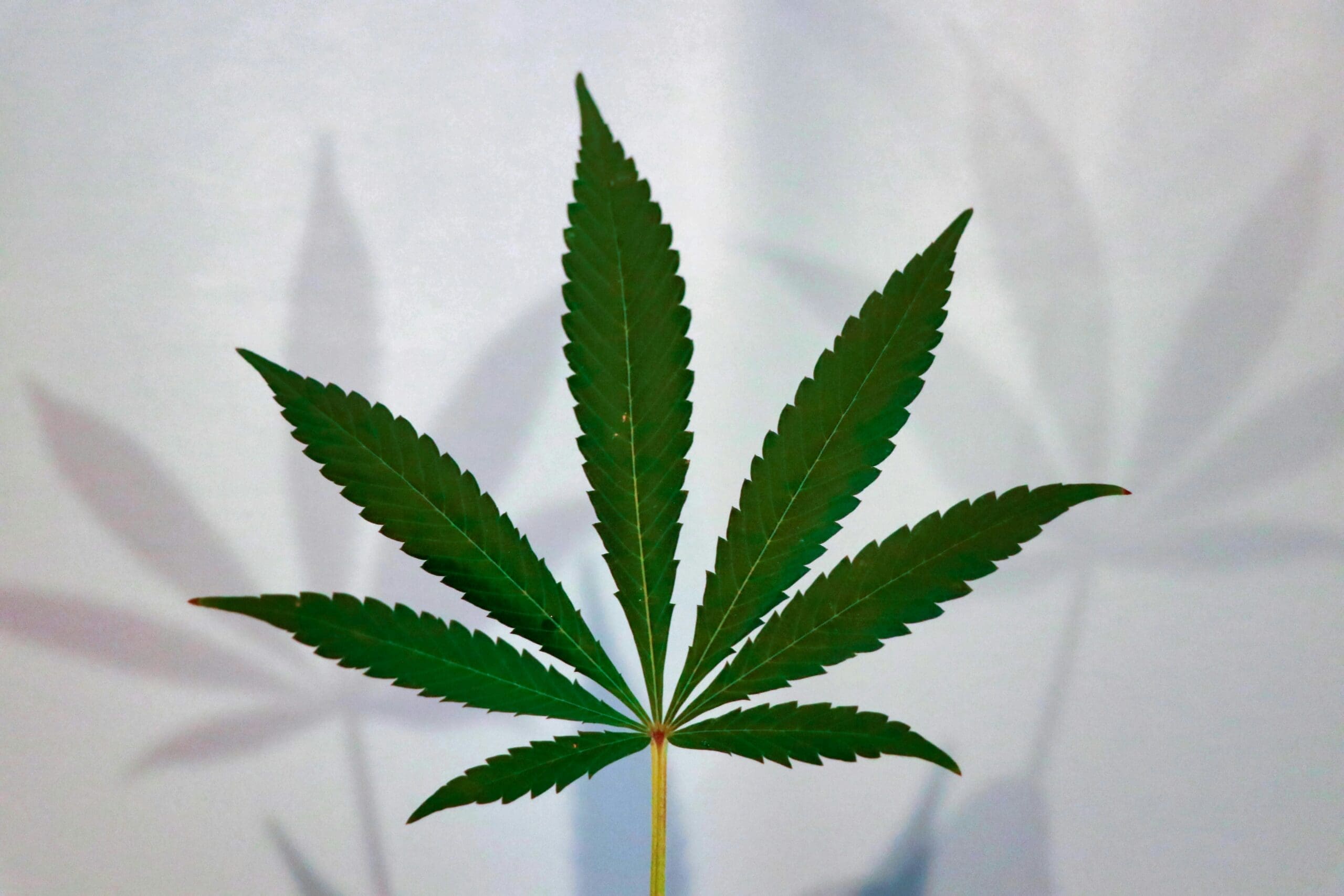
Maine officials have given permission to prohibition activists to begin gathering signatures for a proposal A ballot initiative that would roll back the state’s voter-approved marijuana legalization law. The measure, if passed, would also overhaul the regulatory structure of the medical cannabis program by establishing product testing requirements.
The proposal — called the “Cannabis Legalization Act and Maine Medical Use of Cannabis Act” — is a revamped version of a marijuana initiative introduced in September, sponsored by a Republican state senator and a former top staffer for then-Gov. Paul LePage (R), staunch prohibitionist.
The latest proposal, a petition approved by the Secretary of State on Monday, would remove and amend multiple sections of the current state statute, which voters approved in 2016 to effectively repeal the legalization of recreational marijuana sales.
Adults over the age of 21 would remain legal to possess 2.5 ounces of cannabis under the proposal, but a section of the law allowing home cultivation would be repealed. The sale and home cultivation of medical marijuana would be legal.
Madison Carey, who was listed as a lead petitioner in the original version of the repeal initiative and remains involved in the current campaign, told Marihuana Momenti on Tuesday that “there needs to be regulation of marijuana,” arguing that her own experience recovering from opioid misuse disorder speaks to the inadequacy of the current law.
“My hope is to raise awareness of the reality of the potential dangers of not having regulation,” he said. “I think people are fed up with the constant use — the constant (retail businesses) coming up where people can legally buy marijuana.”
Of course, repealing the voter-approved law that established the adult-licensed sales system would eliminate the current regulatory infrastructure in place, which reform advocates say helps mitigate public health and safety risks associated with the illegal market.
Rep. David Boyer (R), who led the fight to get a cannabis legalization initiative on Maine’s ballot in 2016 when he was a staff member at the Marihuana Policy Project, said voters should refuse to sign petitions for the new initiative.
“Don’t stop Maine’s progress, don’t stop signing this unfair repeal initiative,” he told Marijuana Moment on Tuesday. “Repealing the legalization of cannabis would shut down an industry larger than lobsters, potatoes and blueberries combined, costing our state jobs, revenue and economic growth.”
According to the new measure, the director of the Office of Cannabis Policy will “advance policies that promote the health and welfare of the people of the state and protect their health and safety, emphasizing the health and welfare of minors as a priority consideration in the performance of all duties.”
They should also “ensure that eligible patients maintain access to high-quality, effective, and affordable medical cannabis under this Act.”
Under the proposal, the Department of Administrative and Financial Services would create a testing program for cannabis products that would require dispensaries and dispensaries to send those products to a licensed facility for safety evaluation before dispensing them to qualified patients.
The testing facility “should ensure that cannabis or cannabis products do not exceed acceptable levels of contamination for any contaminants that are harmful to health and require testing and ensure proper labeling.”
“The department shall adopt rules establishing a testing program under this section, rules identifying the types of pollutants harmful to health, which must be tested for cannabis and cannabis products under this chapter, and rules regarding the maximum level of contamination for each pollutant,” the vote said. the initiative the text says
Additionally, regulators should administer a system to track cannabis plants from seed to the point of retail sale or disposal. That system “should be able to track cannabis plants in groups during the cultivation phase and when passing from the cultivation phase to another registrar”.
Entrepreneurs must submit at least 67,682 valid voter signatures by February 2, 2026 to be eligible for next year’s ballot. If approved by voters, the initiative would take effect on January 1, 2028.
—
It’s Marijuana Moment tracking hundreds of cannabis, psychedelic and drug policy bills in state legislatures and Congress this year. Patreon supporters by pledging at least $25/month, you’ll get access to our interactive maps, charts, and audio calendars so you never miss a development.
Learn more about our marijuana bill tracking and become a Patreon supporter to gain access
—
Maine lawmakers passed a bill in June legalize possession of an ounce of psilocybin Adults over 21 years of age.
After a different effort in the state last year legalize psilocybin and allow adults to access the psychedelic in state-licensed facilities. But lawmakers watered down that bill—instead, they changed it to create a committee to study further reforms—and in the end it was not approved.
Meanwhile, Maine legislators in February A top marijuana official voted to investigate possible conflicts of interest.
And last year, the law that allowed people came into force now apply for legal marijuana crime records to be sealed.
Marijuana Moment is made possible with the help of readers. If you rely on our pro-cannabis journalism to stay informed, consider a monthly Patreon pledge.

Remo Nutrients Liquid Line Showcase!

State of California Cannabis Report with Yarrow Kubrin 1v1 with PCM TV Jimmy Young

☢️Everything You Were Told About GMO w33d Is A LIE!

POLITICS TO CANNABIS | MARIE ST FLEUR

After Paying Down Old Debt, Trulieve Launches a New Debt Deal – New Cannabis Ventures

Northern Leaf grows exports as Jersey regulations and old glasshouses unlock new opportunities

Florida GOP Lawmaker Files Medical Marijuana Expansion Bill Allowing Patients To Qualify If They’ve Been Prescribed Opioids

Bitch Slap Marijuana Monday

Re-Release of full Cannabis Coast to Coast News; DEA bribes for Anti-420 campaign and Hope from DC?

🍋These Botanical Terpene Profiles Are NOT The Same Thing!

“Our system can manage equipment across 10,000+ m² using just a few wires”

Florida Workshop to Discuss What Constitutes a ‘Cartoon’ in Hemp Packaging

German Retail Acquisition Pending for High Tide – New Cannabis Ventures

Re-release of the full show of Cannabis Coast to Coast news. Republican Texas DA Fires Up vs. laws;

Your Cannabis Business: Consistent Filings Are Critical

From Finance to Wellness: Brad Zerman’s Impactful Pivot

New Hampshire Governor Says Federal Marijuana Rescheduling Won’t Change Her Opposition To Legalization

IIPR Extends Beyond Cannabis – New Cannabis Ventures

Weak Michigan Cannabis Sales Again in July – New Cannabis Ventures

Cannabis Investors Should Consider REITs – New Cannabis Ventures
-
 Cannabis News4 months ago
“Our system can manage equipment across 10,000+ m² using just a few wires”
-
 Florida4 months ago
Florida Workshop to Discuss What Constitutes a ‘Cartoon’ in Hemp Packaging
-
 Canadian Cannabis News4 months ago
German Retail Acquisition Pending for High Tide – New Cannabis Ventures
-
 Video4 months ago
Re-release of the full show of Cannabis Coast to Coast news. Republican Texas DA Fires Up vs. laws;
-
 Best Practices4 months ago
Your Cannabis Business: Consistent Filings Are Critical
-
 Video4 months ago
From Finance to Wellness: Brad Zerman’s Impactful Pivot
-
 Cannabis News4 months ago
New Hampshire Governor Says Federal Marijuana Rescheduling Won’t Change Her Opposition To Legalization
-

 Cannabis News4 months ago
12 businesses sue state OCM over new zoning laws