
Cannabis News
Arizona Senators Approve Measures To Criminalize ‘Excessive’ Marijuana Smoke Or Odor


Arizona senators have passed a couple of measures make the act of creating an “excessive” amount of marijuana smoke or odor a criminal nuisance punishable by jail time.even if the person is using cannabis in their own home in compliance with state law.
Despite concerns about weakening the will of voters who voted to approve legalization and concerns about enforceability and ambiguity about what constitutes “excessive” marijuana smoke, members of the Senate Judiciary and Elections Committee on Friday approved the bill and a joint resolution to put the issue on the table by votes of 5-2 and 4-3, respectively.
The legislation by Sen. JD Mesnard (R) was amended during the hearing to provide a clearer definition of “excessive” smoking and remove the reference to making the offense a “felony.” However, some members still argued that the measures lack clarity and will continue to threaten criminalization, making the offense a Class 3 felony, punishable by up to 30 days in jail, a maximum fine of $500 and a year of probation.
The revised definition of excessive cannabis smoke or odor describes “what a person is able to detect on another person’s private property.”
The law states that excessive production of marijuana smoke or odor is “injurious to health, unreasonable, offensive to the senses, and interferes with the comfortable enjoyment of life or property and is a public nuisance.”
Mesnard said he decided to push the issue “based on personal experience” with his neighbors, “as well as hearing from other people that people can do what they want on their private property, but on other people’s private property, their homes no less, that’s when it starts to become another problem.”
“I can say that it was regrettable for me that I didn’t have to have conversations with my four-year-old, maybe because of what’s going on in some houses down in my neighborhood, there was such a strong smell and smoke coming from the road,” he said. “If it’s important to you to play, there are a lot of ways to do it without affecting the neighbors around you, so it’s easy.”
Several citizens testified against the proposals, arguing that the state’s legalization law would unfairly restrict adults’ right to use cannabis and make it difficult to challenge in court allegations of excessive smoke or odor, for example.
The ACLU of Arizona also expressed opposition to the measure, saying a representative said it would “undermine the intent of the voters” and that the issue of smoking and public odor has already been addressed by the courts, stating that “the mere smell of marijuana no longer automatically establishes criminal activity.”
“SCR 1048 and the mirror bill (SB 1725) Relying on subjective assessments like excessive marijuana smell opens up enforcement to the kind of discretionary judgments that research on bias shows leads to disparities and outcomes,” they said. “This leads to equal protection violations and arbitrary enforcement.”
—
It’s Marijuana Time tracking hundreds of cannabis, psychedelic and drug policy bills in state legislatures and Congress this year. Patreon supporters by pledging at least $25/month, you’ll get access to our interactive maps, charts, and audio calendars so you never miss a development.
Learn more about our marijuana bill tracking and become a Patreon supporter to gain access
—
On the back of this law, anti-cannabis activists are working to place an initiative on the state’s November ballot. significantly rolling back the voter-approved marijuana legalization law.
A GOP congressman recently said he would like his state to take such a measure, but he also admitted that. President Donald Trump’s recent federal scheduling order could complicate that prohibitionist push.
Under the proposal, possession would be legal if voters chose to enact the initiative — and Arizona’s medical marijuana program would remain in place — but it would shut down the commercial recreational cannabis market that has evolved since voters approved a measure to legalize adult use in 2020.
According to a section of the latest initiative’s findings, “the proliferation of marijuana establishments and recreational marijuana sales in this state has created unintended consequences and negative consequences for the public health, safety, and welfare of Arizonans, including increased marijuana use among children, environmental concerns, increased demand on water resources, public nuisance, illegal market activity, and market instability.”
“Sales of legal marijuana in Arizona have declined for two years in a row, resulting in less tax revenue for the state, and some patients relying on recreational marijuana use instead of taking advantage of the benefits of the state’s medical marijuana program,” he says.
The initiative would instruct the legislature to make appropriate changes, also by amending the existing statute as it pertains to the commercial industry, including tax and advertising regulations.
To vote, the campaign must collect 255,949 valid signatures by July 2nd. If the proposal goes to the voters and is approved, it would take effect in January 2028.
It remains to be seen whether there will be any desire for repeal among voters, as 60% of voters approved legalization on the ballot in 2020.
Even more last year’s poll found majority support for medical cannabis legalization (86 percent), adult-use legalization (69 percent), and banking reform (78 percent).
Max Jackson’s photo.
Marijuana Moment is made possible with the help of readers. If you rely on our pro-cannabis journalism to stay informed, consider a monthly Patreon pledge.












Vireo Growth and Glass House Brands have announced a joint venture to build one of the largest and most strategic cannabis retail platforms in California. Subject to certain regulatory and closing conditions, each company will bring its California dispensary operations to the combined entity in exchange for 50% ownership.
Vireo operates twelve dispensaries and home delivery operations that it recently acquired from Eaze, Inc. (“Eaze”). Today, Glass House has eleven stores in California. Together, the combined network will be supported by a preferential supply agreement with Glass House, California’s most efficient large-scale cannabis grower. After five years, Vireo will have the option to acquire Glass House’s stake in the joint venture, and Glass House will own the mutual well.
Cory Azzalino, Vireo’s California president, has been named CEO of the joint venture, where he will oversee operations and lead the platform’s retail acquisition and expansion strategy.
“California continues to be the largest legal cannabis market in the world, and this joint venture allows us to unlock its potential in a way that no one company can achieve alone,” said Kyle Kazan, founder, president and CEO of Glass House. “Vireo brings unparalleled retail reach and delivery infrastructure through the Eaze platform, while Glass House supports proven retail execution, low-cost, large-scale production and deep brand equity. Together with Vireo, we have found a way to mitigate California’s challenging pricing dynamics and enhance the value of our retail operations without expanding Glass House’s focus on selling biomass outside of the state.”
“Glass House is the ideal partner to collaborate with to build the future of cannabis retail in California,” said Vireo CEO John Mazarakis. “Their production scale and brand strength, combined with Vireo’s retail depth and access to one of the industry’s leading technology-based delivery platforms, creates a joint venture that is greater than the sum of its parts – serving more consumers, supporting independent brands and providing a compelling home for operators looking for a strong, capitalized partner.”
The joint venture’s integrated delivery capabilities through the Eaze platform will expand distribution to areas with limited retail access, offering competitive pricing that supports the legal market.
“I am proud to lead this platform and the opportunity it represents,” said Cory Azzalino. “Our combined retail and delivery network gives us the reach and resources to bring high-quality, affordable cannabis to consumers across California, including underserved communities, seeking disciplined growth that strengthens the long-term legal market.”
For more information:
vireo
vireohealth.com
Brands of Glass Houses
(email protected)
glasshousebrands.com/
Cannabis News
Idaho Medical Marijuana Campaign Has More Than 100,000 Signatures For Legalization Ballot Measure As Deadline Nears

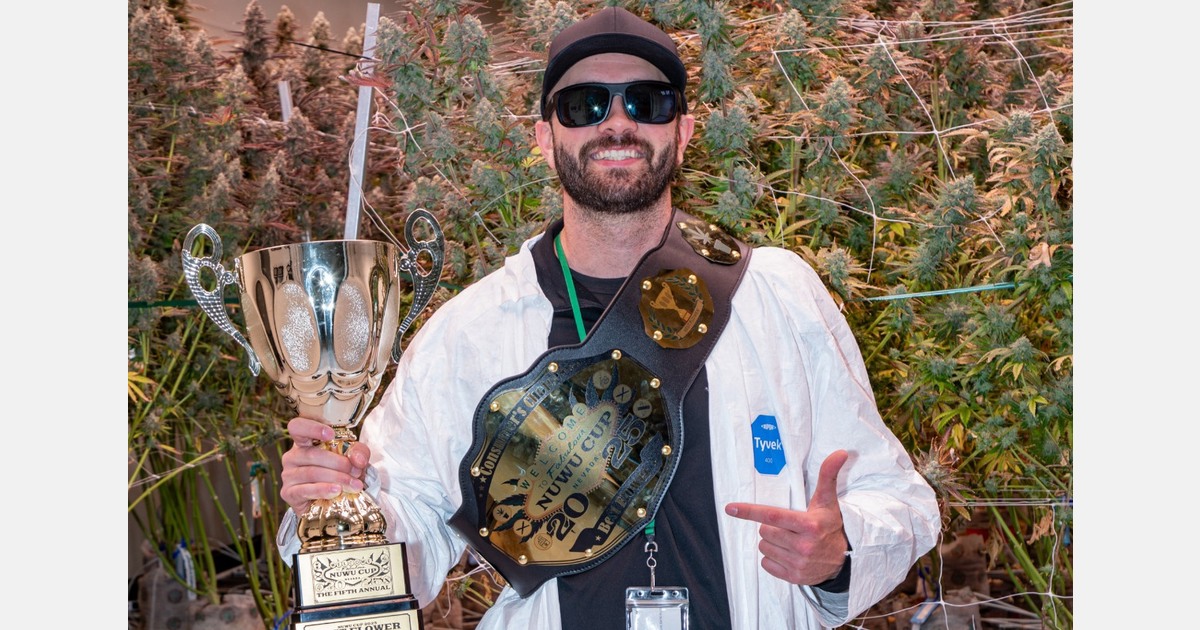
Nevada is one of the most competitive retail cannabis markets in the United States, and Deep Roots Harvest has been betting for years that the way to win is to control everything. 11 cultivation, processing, manufacturing, extraction and retail locations all under one roof, or pretty close to it. Chris O’Ferrell, Deep Roots Harvest’s Chief Cultivator, runs the growing side of that operation in two facilities totaling 30,000 square feet, pushing 500 pounds of harvested cannabis per week and 2,000 pounds of biomass per month.
“The Source and Deep Roots harvest retail team sells 75 kilos of cannabis daily, 500 kilos weekly, over a third of which is in-house to support the High Heads, Neon Moon and CAMP brands. We cultivate, extract, process, manufacture and work the retail locations,” says Chris. “We have one of the largest market shares in Nevada in terms of retail volume and gross sales.”
That volume is produced by 60 full-time employees at the two sites, and the crop program behind it is, by any reasonable measure, built for efficiency and quality. “Many of the genetics in our library consistently exceed 100 grams per square foot, which directly helps reduce our overall cost per gram,” explains Chris. “We operate with a consumer-first approach, focusing on cost consciousness while providing tasty and competitive offerings. We operate below 70 cents per gram, a benchmark that reflects careful cost management. Getting there and staying there has required compressing costs at all input levels while continuing to invest in technology that moves the needle on quality, cost efficiency and performance.”
 © Deep Roots Harvest Chris O’Ferrell, Chief Cultivator at Deep Roots Harvest
Genetics as intended by the producer
The transition of light is a clear example of this, as is the case with cannabis. In the beginning, the company used your classic HPS lights. As LED technology advanced, Deep Roots made the switch. However, it wasn’t just about improving energy efficiency. Chris and the team understood that the more precisely the crop was targeted, the better the final product would be. Energy savings don’t necessarily show up on retail shelves, but crop control does, in the form of flowers that express their genetics the way the grower intended.
To achieve this level of control, the spectrum became a critical tool. “We start with the spring setting, using the blue light to regulate the spacing of the interiors and control the spacing,” he explains. “As the plants progress, we move to the summer spectrum until the end of week eight, switching to a broader spectrum light with balanced wavelengths. This increases the red light, along with other parts of the spectrum to more closely replicate sunlight. We also increase the light intensity during the flowering phase to improve the plant’s photosynthetic performance, accumulation and photosynthetic activity. The parameters support the initiation of flowering, accelerate maturation and allow the plant to reach its potential they allow him to fully express his genetics.”
Nothing is left to chance
At canopy level, plants from the two largest facilities are housed in two-gallon coco pots, chosen to accommodate longer growing periods and larger plant structures. The second facility operates stone wool. Both use substrate sensors in connection with fertigation control, and track performance at different growth stages. Dissolved oxygen is injected into the root zone to increase availability, and a chlorine injection system keeps the lines clear of pathogens with a relatively inexpensive cleanup compared to conventional cleaning programs. “A chlorine injection system is relatively inexpensive to implement, replacing approximately $40,000 in other cleaning and disinfection products annually,” says Chris. “It’s all about being ahead of the curve.”
Pest management is entirely biological, implemented in conjunction with mechanical and cultural controls. “We haven’t had any pest problems,” says Chris. “This was also a decision based on reducing inputs while maintaining, if not improving, the quality of the product.”
Genetics is the backbone of cannabis operations and the gas that drives the company’s engine. They receive the same systematic treatment as all other parts of the operation. A steering committee reviews the portfolio quarterly, withdrawing underperforming cultivars and acquiring replacements based on market data from multiple markets, cross-referenced with gaps in the current menu. The criteria are repeatable agronomic performance, yield, potency, distinctive flavor profile and the ability to wash well for extraction, ensuring strong yields for both rosin and resin production. “All genetics need to adapt to the program,” says Chris. “Unique production, potency and flavor expression that fills the void of what we don’t have on the menu. It’s about finding a commercial cultivar that works well and fits the existing infrastructure. All the cultivars we grow now have a similar and predictable growth structure. The difference is the color, the smell, the experience. They are very close agronomically.”
For more information:
Harvest deep roots
deeprootsharvest.com

Galactic Runtz Marijuana Monday

Legalization & Collaboration & Regulation for the Cannabis Industry with Sen. Ron Wyden’s Bill

How To Kill ALL BUGS & DISEASES In Your Garden

WHAT IS INTERPENING? [Cannabis Science]

Mastering Cannabis Dispensary SEO: 28 Actionable Tips to Boost Online Visibility

Vireo Growth announces California retail joint venture with Glass House Brands

Idaho Medical Marijuana Campaign Has More Than 100,000 Signatures For Legalization Ballot Measure As Deadline Nears

PURE Hash Joint Wednesday

B Block -State reports including the latest from Jersey City Police 3; Cannabis Coast to Coast News

The Legendary Origins Of Blueberry Weed

“Our system can manage equipment across 10,000+ m² using just a few wires”

Florida Workshop to Discuss What Constitutes a ‘Cartoon’ in Hemp Packaging

Mazar-i-Sharif Hash Wednesday

From Finance to Wellness: Brad Zerman’s Impactful Pivot

Re-release of the full show of Cannabis Coast to Coast news. Republican Texas DA Fires Up vs. laws;

Weak Michigan Cannabis Sales Again in July – New Cannabis Ventures

DEA’s Cole Reverses His “priorities” ; Prohibitionists Dig In; Dead & Co Celebrates 60 years in SF

Your Cannabis Business: Consistent Filings Are Critical

New Hampshire Governor Says Federal Marijuana Rescheduling Won’t Change Her Opposition To Legalization

Texas DA Fires Up for Change! Mass. Sheriff arrested on Extortion charges; GOP vs Industry in state
-
 Cannabis News8 months ago
“Our system can manage equipment across 10,000+ m² using just a few wires”
-
 Florida8 months ago
Florida Workshop to Discuss What Constitutes a ‘Cartoon’ in Hemp Packaging
-
 Video6 months ago
Mazar-i-Sharif Hash Wednesday
-
 Video8 months ago
From Finance to Wellness: Brad Zerman’s Impactful Pivot
-
 Video8 months ago
Re-release of the full show of Cannabis Coast to Coast news. Republican Texas DA Fires Up vs. laws;
-
 aawh8 months ago
Weak Michigan Cannabis Sales Again in July – New Cannabis Ventures
-
 Video8 months ago
DEA’s Cole Reverses His “priorities” ; Prohibitionists Dig In; Dead & Co Celebrates 60 years in SF
-
 Best Practices8 months ago
Your Cannabis Business: Consistent Filings Are Critical