Connect with us

Cannabis News

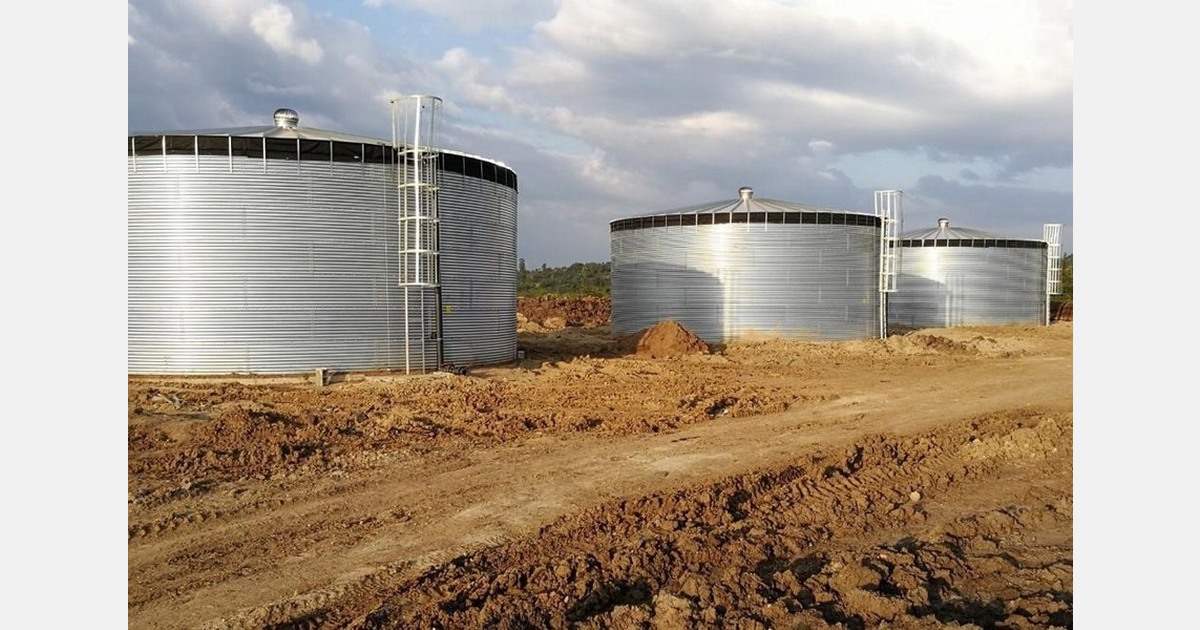
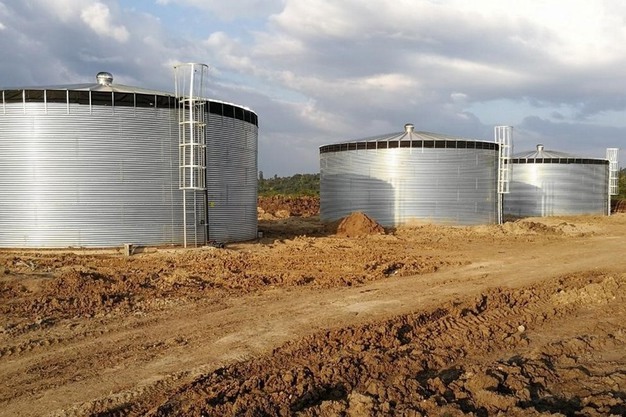
A steel roof transforms the silo into a solid building instead of a container with a cover on it

Published

on


The future of steel roofs in water silos


The demand for steel roofs on water silos in the Netherlands is increasing rapidly. According to Bas van der Elst of silo producer Hendic, this development reflects a structural change in the market rather than a temporary trend.

“Growers are increasingly choosing the safety of steel over traditional covers,” he says. “This is largely driven by safety concerns, but also by more stringent requirements from insurers and authorities.”

Van der Elst explains that structural reliability is a key factor behind the growing interest. “It’s about the reliability of the construction. A steel roof can withstand significant snow and wind loads, much more than a traditional roof. However, certification is often the deciding factor. At Hendic, we include the steel roof in the structural calculations and the CE certification of the entire silo. This is essential compared to PVC roofs.”

© Hendic

Why has CE certification become so important?
The importance of CE certification has increased, especially in export markets. “In Germany and other countries, many municipalities will not issue a permit without a structural calculation that complies with local regulations,” explains Van der Elst. “Insurers are also increasingly requiring the silo to be assessed and insured as a single unit. The steel roof effectively turns the silo into a solid building, rather than a basin with a sheet on top. This provides producers with legal certainty and operational peace of mind.”

Is safety a factor in addition to construction?
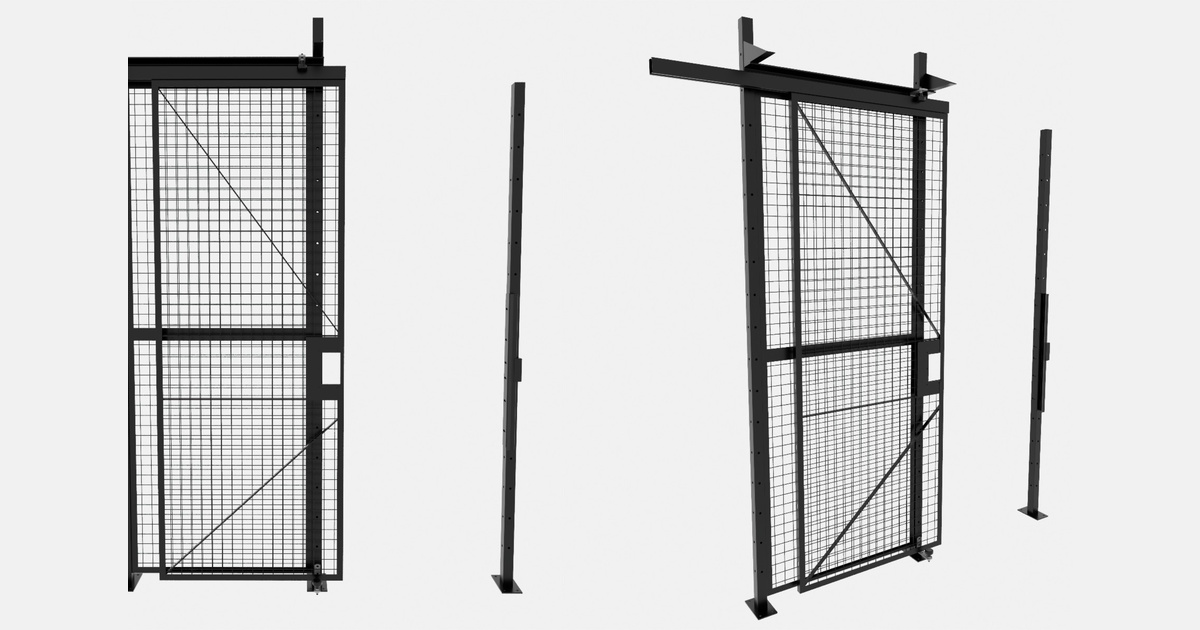
In addition to structural resistance, local security plays an important role. “With a steel cover, a silo is completely enclosed. We equip them with a lockable access gate, so the silo can literally be locked. Compared to a tented cover, it’s a significant improvement in yard security.”
© Hendic

Does this mean the end of the popular PVC covers?
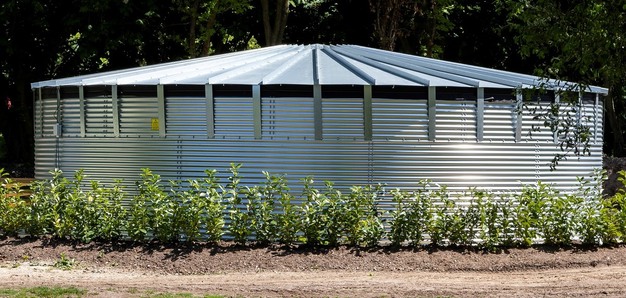
According to Van der Elst, steel roofs do not mean the end of PVC-based systems. “The various systems we offer, from simple tension roofs to floating roofs and domes, have proven their worth and remain highly functional in most situations. However, for producers dealing with strict building regulations or extreme weather conditions, steel roofs offer the greatest added value today.”
© Hendic (gn)

For more information:
Bas van der Elst
Hendic bv
(email protected)
https://www.hendic.nl/



Publication date:


Continue Reading
Click to comment

Leave a Reply

Your email address will not be published. Required fields are marked *

Cannabis News

Florida Lawmakers Pass Bill To Provide Discounted Medical Marijuana Cards For Military Veterans

Published

on

By

The Florida House of Representatives has overwhelmingly passed a bill to reduce the fee for military veterans to obtain medical marijuana registry identification cards.

The measure passed by Reps. Susan Valdés (R) and Michelle Salzman (R) unanimously on Wednesday in a 113-0 vote. The proposal comes after clearing three House panels and separate Senate legislation to reduce the cost of cannabis for veterans is also moving forward.

If enacted into law, HB 887 would require honorably discharged veterans to pay $15 to obtain a medical cannabis card, down from the current $75 rate for most eligible patients.

The $15 charge will also apply to replacement cards as well as annual renewals.

To receive the reduced fee, veterans must provide the state Department of Health (DOH) with a copy of the discharge form, a US Veterans Affairs (VA) identification card, or a Florida driver’s license with a “veteran designation.”

The law will come into effect on July 1 of this year.

“Medical cannabis has shown promise in relieving symptoms commonly experienced by military veterans, such as managing chronic pain, mitigating the effects of PTSD, improving sleep and reducing opioid addiction,” Valdés said on the House floor. “This bill greatly reduces veterans’ financial barriers to accessing medical marijuana, their health solution of choice.”

“Reducing the cost of access is not only a symbolic gesture to the veterans who serve us, it directly removes the often very high cost barrier that prevents already underserved veterans from participating in this program, and this is one way to show our veterans how grateful we are by turning that slate green,” he said. he saidas before notify By Florida Politics.

According to A invoice study, the reform “would have an unspecified negative fiscal impact on the DOH.” While there are currently 931,000 registered medical marijuana patients in Florida, “the number of veterans with an active medical marijuana use registry identification card is unknown” and thus “the amount of revenue reduction is unknown.”

That said, the analysis says the policy change “would have a positive fiscal impact on veterans who will see a $60 reduction in the cost of ID cards under the bill.”

Earlier this month, the Senate Health Policy Committee advanced a bill by Sen. Alexis Calatayud that would reduce medical cannabis registration fees for veterans to $15 and implement other reforms to expand access to medical marijuana.

Under that amended proposal, a physician would recommend a 70-day supply limit for cannabis, or a 35-day supply limit for marijuana smoking products for 10 supply limits. Under current law, they can recommend up to three 70-day supply limits for non-smoking cannabis and six 35-day supply limits for smoking marijuana.

The SB 1032 bill would also require doctors to evaluate patients to qualify for medical marijuana every 52 weeks, rather than the legal requirement of evaluations every 30 weeks.

Here’s an overview of some of the pending Florida marijuana bills:


It’s Marijuana Time tracking hundreds of cannabis, psychedelic and drug policy bills in state legislatures and Congress this year. Patreon supporters by pledging at least $25/month, you’ll get access to our interactive maps, charts, and audio calendars so you never miss a development.


Learn more about our marijuana bill tracking and become a Patreon supporter to gain access

Meanwhile, a Florida campaign seeking to put marijuana legalization on the ballot faces complications as the status of the 2026 signature drive remains in dispute. Lawyers are now asking the state Supreme Court to overturn the officials’ decision to quash the tens of thousands of applications submitted.

A new survey released this week shows that a A majority of Florida voters support the legalization of cannabis.

Max Jackson’s photo.

Marihuana Moment is made possible with the help of readers. If you rely on our pro-cannabis journalism to stay informed, consider a monthly Patreon pledge.

Become a patron on Patreon!

Continue Reading

Cannabis News

Cannabis products recalled due to “unreliable” tests

Published

on

By


New York State’s Office of Cannabis Management (OCM) has recalled several cannabis products after finding that reported results from a testing laboratory were “unreliable.”

OCM says it has found a total of 54 product lots that tested false positive for Aspergillus, the mold that causes disease. According to OCM, another batch of product had incorrect results for the heavy metal cadmium.

“When test results are inaccurate or unclear, product safety and, in turn, the safety of New York State consumers cannot be guaranteed,” said OCM Executive Deputy Director of Licensing, Enforcement and Laboratories Stephen Geskey. “It’s not a risk OCM is willing to take.”

This information comes from an audit of inspections and records conducted by Keystone State Testing New York between December 2025 and January 2026. According to OCM, there have been no reports of the effects of consuming any of the products.

Read more at News 10


Continue Reading

Cannabis News

Virginia House And Senate Lawmakers Advance Marijuana Sales Legalization Bills Toward Governor’s Desk

Published

on

By

The march to legalize the sale of recreational marijuana in Virginia continues, with the full House of Representatives and a Senate committee advancing a pair of bills to create a regulated adult cannabis market in the commonwealth.

The House on Tuesday approved the second reading of the cannabis sale bill passed by the Senate, giving it the chance to pass it definitively in the chamber. Earlier, a House measure moved through the Senate Finance and Appropriations Committee on a 10-5 vote, sending the measure back to the floor for consideration.

Both chambers’ marijuana-sale proposals aim to give adults a legal way to buy cannabis, legalizing both state possession and home cultivation in 2021, though there are key differences between them.

Bicameral measures—HB 642 and SB 542—Recently changed to allow micro business licensees to cultivate, process or conduct retail sales at two locations instead of one, as long as they are within 10 miles of each other and operate under common ownership and control.

Lawmakers also revised the legislation to clarify that current medical cannabis businesses would only be able to grow cannabis indoors, including in secure greenhouses with a total hood of 70,000 square feet. The amendments also would not allow additional marijuana licenses with “dual-use privileges” beyond medical licenses.

Finally, the measure’s conversion fee structure was revised to pay current medical marijuana companies the privilege of dividing the adult-use market into three parts.

There are some key differences between the House bills that still need to be ironed out — related to the start date of legal sales and cannabis tax rates — before a final product can be delivered to the governor’s desk.

Here are the key details of Virginia’s marijuana sales legalization legislation, SB 542 and HB 642:

  • Adults would be able to purchase up to 2.5 ounces of marijuana in a single transaction, or up to an equivalent amount of other cannabis products, as determined by regulators.
  • The House bill sets a statewide sales date of Nov. 1, 2026, while the Senate measure would allow it to begin on Jan. 1, 2027.
  • The Senate bill would impose a 12.875 percent excise tax on cannabis products, in addition to a 1.125 percent state sales tax and a mandatory 3 percent local tax. The House measure would apply a 6 percent excise tax, as well as a 5.3 percent retail sales and use tax, allowing municipalities to impose a 3.5 percent local tax.
  • Under the House bill, the Virginia Cannabis Control Authority would oversee licensing and regulation of the new industry, while the Senate legislation calls for a new combined Alcoholic Beverage and Cannabis Control Authority.
  • The House bill calls for the proceeds to be allocated to a new Cannabis Equity Reinvestment Fund (60 percent), early childhood education (10 percent), the Department of Behavioral and Developmental Health Services (25 percent) and public health initiatives (5 percent). The Senate proposal, on the other hand, would put 30 percent into the capital reinvestment fund, 40 percent for early childhood education, 25 percent for the department of behavioral and developmental health services and 5 percent for public health initiatives.
  • Local governments could not allow marijuana companies to operate in their area.
  • Delivery services would be allowed.
  • Serving sizes would be limited to 10 milligrams of THC, with no more than 100 mg of THC per package.
  • Existing medical cannabis operators could enter the adult-use market if they pay a license conversion fee set at $15 million in the Senate bill and $10 million in the House measure.
  • Cannabis businesses should implement peaceful labor agreements with their employees.
  • A legislative committee would direct the addition of local consumer licenses and micro-enterprise cannabis event permits that would allow licensees to hold sales at farmers markets or pop-up locations. The Virginia Alcoholic Beverage Control Authority would also investigate the possibility of involvement in marijuana regulation and enforcement.

Both the Virginia House and Senate Last month, he took action on multiple marijuana bills during a major deadline—accept proposals to legalize the sale of cannabis, provide a way to punish previous marijuana convictions and allow access to medical cannabis for seriously ill patients in hospitals.

As for the Senate marijuana sales bill, members recently clashed in committee over amendments to the body version that would add new penalties for illegal cannabis activity.

The amendments in the Judiciary Committee’s case included penalties for consumers who purchase from unlicensed sources, recriminalizing possession and sale of cannabis by those under 21, making it a Class 1 felony for a first offense and a felony punishable by a mandatory prison sentence for a second offense. As revised, the bill would also increase the penalty for unlicensed cultivation to a felony with up to five years in prison and make it a felony to transport cannabis with the intent to distribute it across state lines.

But the Finance and Appropriations Committee backed down the amendments last month, sending a letter to senators under pressure from a coalition of advocacy groups. saying that they undermined the “intent” of the legislation and “the will of the people” by adding criminal penalties to certain cannabis-related activities.

In general, both chambers’ commercial sales bills have largely aligned with recommendations released by the legislature in December. Joint Committee to Oversee the Transition to the Commonwealth Retail Cannabis Market.

Meanwhile, some members of the GOP have aligned ideologically with their Democratic colleagues throughout this legislative process, breaking with the majority of their caucus. in favor of creating a regulated market for adults to buy cannabis.

Since legalizing cannabis ownership and home cultivation in 2021, Virginia lawmakers have been working to establish a commercial marijuana market– Only for those efforts to stall under former Gov. Glenn Youngkin (R), who twice vetoed measures sent to his desk by the Legislature.

Governor Abigail Spanberger (D), for her part, supports legalizing the sale of marijuana to adults..

Meanwhile, members of the Virginia House and Senate advanced a pair of bills Monday, with amendments that provide a pathway to resentencing for people with prior marijuana convictions.

Members of the Senate and House Judiciary Committees approved alternate versions of the opposite chamber’s reform bill on Monday, setting the stage for bicameral negotiations as the measures move through the legislative process.

Legislation introduced in both chambers would create a process to consider changing the sentences under which people incarcerated or on community custody for certain felonies involving the possession, manufacture, sale or distribution of marijuana could receive an automatic trial.

Separately last month, the Virginia House patients passed a bill to allow the use of medical marijuana in hospitals. It would require health care facilities to implement policies “to address the situation in which an eligible patient is authorized to use medical cannabis.”

The Senate passed various pieces of legislation use of medical cannabis in healthcare facilities last month


It’s Marijuana Time tracking hundreds of cannabis, psychedelic and drug policy bills in state legislatures and Congress this year. Patreon supporters by pledging at least $25/month, you’ll get access to our interactive maps, charts, and audio calendars so you never miss a development.


Learn more about our marijuana bill tracking and become a Patreon supporter to gain access

Meanwhile, the Virginia House passed the bill earlier this month Protecting the rights of parents who use marijuana by complying with state laws.

Del. According to the proposal by Nadarius Clark (D), a parent or guardian’s own use of cannabis “shall not serve as a basis for a finding of abuse or neglect of a child unless other facts establish that its possession or consumption causes or produces physical or mental injury to the child.”

“A person’s legal possession or consumption of substances permitted (under state marijuana law) shall not serve as a basis for limiting custody or visitation unless other facts establish that such possession or consumption is not in the best interest of the child,” reads the text of HB 942.

Separately, the Virginia Department of Labor and Industry has published a new defining workplace protections for cannabis users.

Photo by Chris Wallis // Side Pocket Images.

Marijuana Moment is made possible with the help of readers. If you rely on our pro-cannabis journalism to stay informed, consider a monthly Patreon pledge.

Become a patron on Patreon!

Continue Reading
Advertisement

Trending

Copyright © 2021 The Art of MaryJane Media