
Cannabis News
GOP Senator To File Bill Promoting Psychedelics Research And Treatment For Veterans













The Yale Center for the Science of Cannabis and Cannabinoids (YC-SCAN²) announced on March 11 a new collaboration with the McGill Research Center for Cannabis (MRCC), taking an important step in strengthening international collaborations in cannabis and cannabinoid research.
As part of this partnership, MRCC will sponsor and help promote YC-SCAN²’s monthly educational webinar series. The webinars feature talks from leading researchers and clinicians who explore the science of cannabis and cannabinoids from a variety of perspectives. Open to the public, the series creates a platform where experts can present emerging findings, discuss key scientific questions, and engage researchers, clinicians, students, and the wider academic community.
The partnership reflects a shared commitment to advancing rigorous evidence-based research in a rapidly evolving field. By connecting researchers from different institutions and disciplines, the two centers aim to accelerate scientific discovery while promoting the exchange of knowledge across borders.
Deepak C. D’Souza, MD, the Vikram Sodhi ’92 Professor of Psychiatry and director of YC-SCAN², said the collaboration builds on a longstanding professional relationship with colleagues at McGill.
“Romina (Mizrahi, director of the MRCC) and I have shared a long-standing interest in advancing rigorous research on cannabis and cannabinoids, and have collaborated for several years to achieve this goal,” he said. “This collaboration between Yale and McGill reflects the importance of bringing together researchers across institutions to exchange ideas, support trainees, and accelerate scientific progress in this rapidly evolving field.”
Mizrahi emphasized the opportunities the partnership creates for future collaboration and training.
“I’m excited about this new chapter for our centers,” he said. “This partnership brings together complementary expertise and creates new opportunities for joint training, knowledge exchange and collaborative research excellence. By working together, we can strengthen the scientific foundation across the full spectrum of cannabis research, from plant science to understanding the effects of cannabis on the body, brain and society.”
Going forward, both centers plan to expand the webinar initiative with virtual “Lunch and Learn” sessions specifically designed for interns and junior researchers. These sessions will provide opportunities for early career researchers to present their work, network with peers and learn from top scientists in the field. The programming will focus on mentoring, interdisciplinary learning and strengthening skills in communicating scientific findings.
The partnership reflects YC-SCAN²’s broader goal of developing long-term partnerships with organizations that share a mission to advance cannabis science. By building networks between universities and research centers, the initiative aims to support high-quality research, promote innovation and help translate scientific findings into informed public policies.
Founded in 2023, YC-SCAN² works to advance the understanding of cannabis and its derivatives, commonly known as cannabinoids. The center serves as a center for research, education and dissemination of information in the field. His work explores the potential therapeutic applications and risks associated with cannabis and cannabinoids, while helping to inform public policy through evidence-based research.
Source: Yale School of Medicine
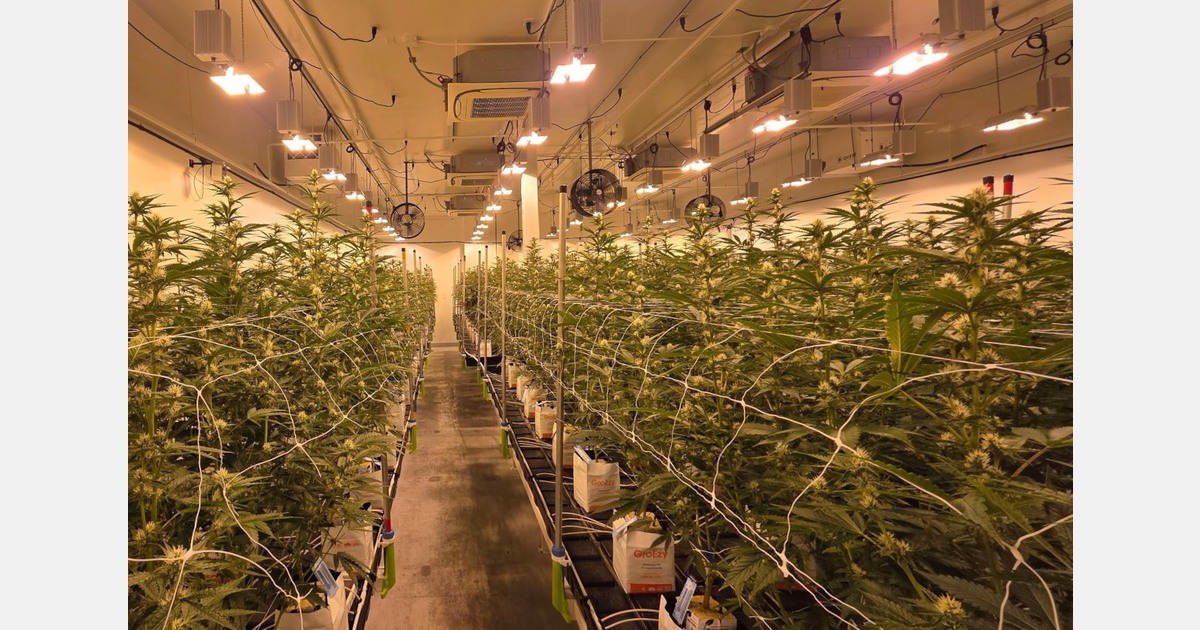
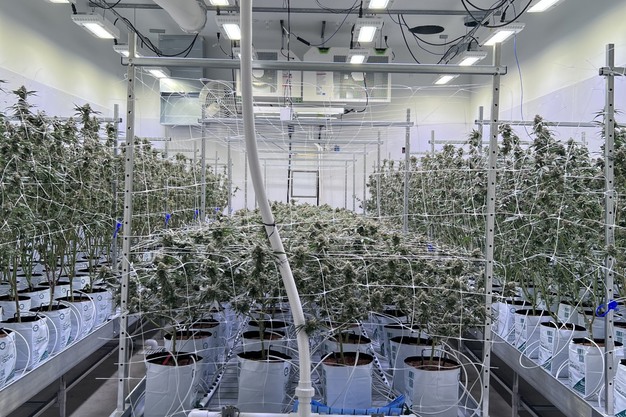
Walk into most cannabis facilities and the grow rooms should (should) look clean. Plant lines under marked light, climate systems singing, nutrient programs marked to a decimal. However, inside the irrigation lines, a different story often unfolds. Out of sight, out of mind is not always applicable, unfortunately.
Biofilm accumulation in irrigation infrastructure is one of the most persistent and underestimated problems of CEA. Left unchecked, it creates the conditions for pathogen pressure, nutrient inconsistencies and costly crop losses. “However, in many operations, the solutions offered have historically come with their own trade-offs, phytotoxicity concerns, incompatibility with beneficial microbes, or less aggressive chemicals that require complete crop removal before application,” says Key Solutions Group’s Don Lund.
 © Key Solutions Group
As the owner of Key Solutions Group, the manufacturer’s representative for PRO-OXINE® Horticulture, a unique chlorine dioxide-based chemical developed specifically for CEA environments, registered by the EPA as a disinfectant, sanitizer, algicide and fungicide and manufactured in the United States. Don is very aware of the space growers need to navigate. “There are a lot of chemicals on the market,” says Don, “and what usually happens on the irrigation side is that growers start dealing with biofilm and end up looking for something that creates phytotoxicity problems. Our chemistry is based on Integrated Disease Management (IDM) principles. The goal is to keep the growing clean from the start through prevention. We’re a science-based company, not a marketing-based one,” he says. “That makes a real difference in this space, especially for growers who have been burned before.”
One chemistry, many applications
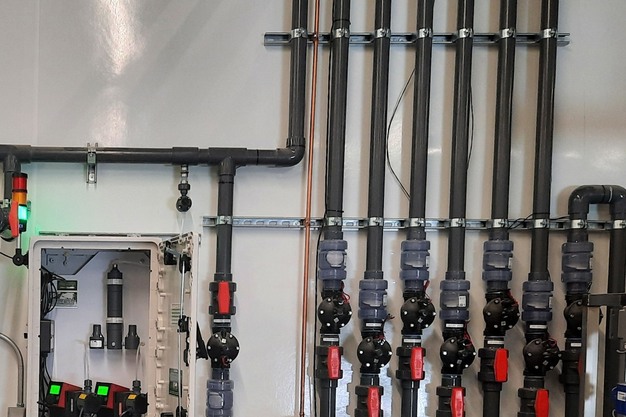
What sets PRO-OXINE® Horticulture apart is a proprietary blend of purified sodium chlorite and highly refined oxychlorine species with dual-use flexibility, according to Don. “The same chemistry, activated on-site by a mild acid, can be spread across irrigation lines and hard non-porous surfaces. This means a single product handles what would otherwise require multiple SKUs, reducing inventory complexity and simplifying staff training.”
Activation occurs through a proprietary method, allowing for the persistent residual effect that Don describes throughout the growing cycle, a key difference from chlorine dioxide products, which tend to act in a binary mode: inactive or fully activated, while leaving mostly undesirable toxic byproducts.
 © Key Solutions Group
“With standard chlorine dioxide, you’re either on or off,” Don explains. “Developed specifically by the manufacturer for CEA, it allows you to manipulate ppm levels while maintaining a near-neutral pH, which maintains a clean, healthy irrigation environment throughout the growing cycle, rather than hoping for the best.”
For facilities with existing biofilm problems, the protocol can be adapted accordingly. “Starting slowly or using a shock treatment at night when there are no plants, followed by a wash,” he says. “For clean operations, the focus shifts to prevention: injecting at low ppm during irrigation (2 ppm per EPA rule) keeps lines clean, nutrients effective and the root zone happy and healthy. We eliminate the need for shock between growths while being proven time and time again.”
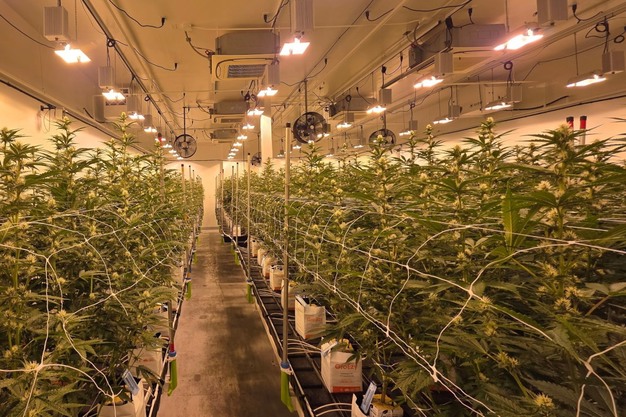
The chemistry also addresses specific pathogen challenges that cannabis growers regularly encounter, including biofilm, fusarium, botrytis, HLVd, iron bacteria and other water sources, and algae and botrytis build-up on floors and tables. “Applications range from inlet water, storage tanks, irrigation, recycled water systems, tools, facility hard surfaces, equipment and more to disinfecting and effective sanitation with PRO-OXINE® horticulture.”
 © Key Solutions Group
Organic word of mouth
“What’s interesting about our growth in the horticulture field is through word of mouth, as we do very little actual advertising and marketing. Our customers are our best form of marketing as they share their experiences with their industry contacts. Yes, we exhibit a few cannabis and produce CEA shows a year, however testimonials and relationship building have been very key.” Don estimates that about 90% of new business comes from existing customers recommending PRO-OXINE® to members of the Horticulture industry. It’s a dynamic that he attributes not only to product performance, but to the company’s approach to the relationship itself. “We don’t sell consumables,” he says. “We’re selling a solution through prevention…an IDM approach. The mindset is completely different. We want growers to succeed through a proven proactive approach, which is what Key Solutions Groups is all about.”
 © Key Solutions Group
Key Solution Group (Altoona, IA) is currently expanding its presence in Europe, Australia and South America while continuing to grow and produce its own cannabis in North America. Key Solution Group is the manufacturer’s representative for PRO-OXINE Horticulture and the manufacturing facility of Kemin Bio Solutions (Des Moines, IA; Norman, OK).
For more information:
Key Solutions Group
(515) 802-2761
(email protected)
ksg-corp.com
Cannabis News
Georgia Lawmakers Pass Bill To Expand Medical Marijuana Access, Sending It To Governor’s Desk


Marijuana Retail Report

Yale and McGill collaborate to expand cannabis research

GOP Senator To File Bill Promoting Psychedelics Research And Treatment For Veterans

Mississippi Senate Passes Medical Cannabis Reform Bill with ‘Right to Try’ Provisions

Psycho Berry Hash Wednesday

Women Out Preform Men in Weed Use! Cannabis Coast to Coast News with Alaina Pinto The C Block

Are You Smoking Pesticides? Backpack Boys EXPOSED

HOUSE ARREST VIRTUAL COMEDY TOUR | CHAUNTE WAYANS

Marijuana Retail Report

Biofilm, pathogens, and the costs of dirty irrigation systems

“Our system can manage equipment across 10,000+ m² using just a few wires”

Florida Workshop to Discuss What Constitutes a ‘Cartoon’ in Hemp Packaging

Mazar-i-Sharif Hash Wednesday

Re-release of the full show of Cannabis Coast to Coast news. Republican Texas DA Fires Up vs. laws;

From Finance to Wellness: Brad Zerman’s Impactful Pivot

DEA’s Cole Reverses His “priorities” ; Prohibitionists Dig In; Dead & Co Celebrates 60 years in SF

Your Cannabis Business: Consistent Filings Are Critical

Weak Michigan Cannabis Sales Again in July – New Cannabis Ventures

New Hampshire Governor Says Federal Marijuana Rescheduling Won’t Change Her Opposition To Legalization

Texas DA Partakes on Tik Tok to prove a point; Boston Sheriff arrested for Extortion of $ w/ Ascend
-
 Cannabis News7 months ago
“Our system can manage equipment across 10,000+ m² using just a few wires”
-
 Florida7 months ago
Florida Workshop to Discuss What Constitutes a ‘Cartoon’ in Hemp Packaging
-
 Video6 months ago
Mazar-i-Sharif Hash Wednesday
-
 Video7 months ago
Re-release of the full show of Cannabis Coast to Coast news. Republican Texas DA Fires Up vs. laws;
-
 Video7 months ago
From Finance to Wellness: Brad Zerman’s Impactful Pivot
-
 Video7 months ago
DEA’s Cole Reverses His “priorities” ; Prohibitionists Dig In; Dead & Co Celebrates 60 years in SF
-
 Best Practices7 months ago
Your Cannabis Business: Consistent Filings Are Critical
-
 aawh7 months ago
Weak Michigan Cannabis Sales Again in July – New Cannabis Ventures