
Cannabis News
Grow Up Vancouver sets the tone for 2026 cannabis


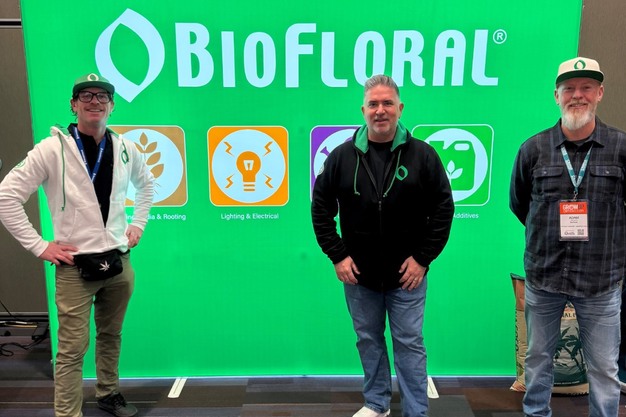
The start of this cannabis year was marked by the latest edition of the Grow Up conference in Vancouver, which seems to be setting the tone for what to expect from the industry in 2026. Exhibitors and attendees reported that the industry is becoming more measured, operationally focused, and increasingly aware that long-term viability depends on execution rather than wishful thinking. “Grow Up was a very positive experience, with direct and practical conversations with growers and partners. The event created a space for meaningful discussions, focused on current market realities and field-level challenges,” said the BioFloral team.
For Cannatrol, the show highlighted how it has become a post-harvest strategy. “In Grow Up 2026, Cannatrol brings technology that works where few solutions exist, setting new standards for the industry,” said David Sandelman, chief technology officer and company founder. Appearing at the event, along with new Canadian distribution partner Quality Horticulture, Cannatrol used the conference to highlight a once-left-behind process as an increasingly crucial part of every cannabis operation. “We’re here to show conference attendees why your post-harvest system matters even more than the growing process.”
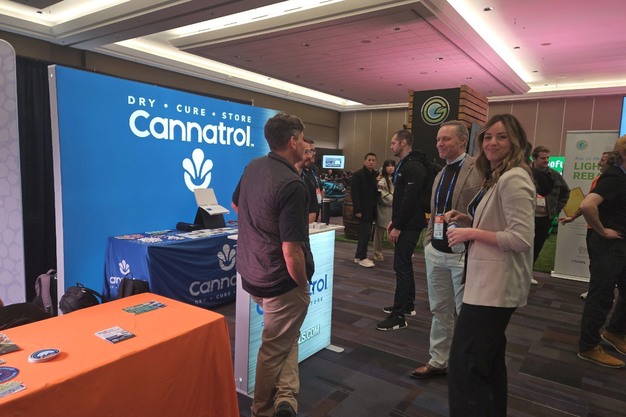
Since cannabis was regulated, many growers have focused more on maximizing fat space, relegating drying, curing and all that to a small part of their operation. So it seems that the industry is indicating that the sector is maturing, and the year 2026 is crucial to show this. “Cannatrol sees 2026 as a new phase of maturity for the cannabis industry driven by potential rescheduling and more disciplined business practices focused on operational efficiency.” In such an environment, he added, “quality and consistency are no longer differentiators, but critical drivers for producing top-notch craftsmanship and achieving successful business growth.”
The very tone of the event was in favor of this assessment. David described Grow Up as “a very positive experience, with direct and practical conversations with growers and partners”, noting that “the event created a space for meaningful discussions based on market realities and field-level challenges”. He also saw a clear change in behavior among producers. The same sentiment is echoed by the BioFloral team, who noticed that attendees were more interested in practical solutions than the latest shiny toy. “We’ve noticed an increasing focus on efficiency, consistency and long-term profitability. Growers seem less driven by novelty and more interested in stable, proven solutions.” 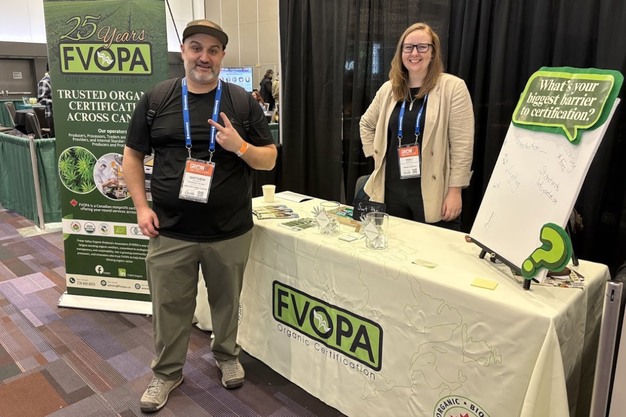
Exhibitors for the first time, such as the Fraser Valley Organic Producers Association, are joining the world of cannabis with a new benchmark in organic cannabis cultivation. “We really enjoyed being part of the Grow Up show this year. We received a great response from the attendees, with many expressing an interest in learning more about the organic certification of cannabis. As this was our first time attending the conference, we were very pleased with the diversity of industry players in attendance. It was particularly interesting to learn more about the research that some growers are doing into the medical use of cannabis.
Similar pragmatism emerged from brand-focused exhibitors. The Pure Sunfarms and Super Toast teams reported that Grow Up Vancouver provided a valuable opportunity to strengthen retail relationships and strengthen their presence in British Columbia. “Grow Up Vancouver was a strong opportunity to share more about our evolving portfolio, strengthen connections with retail partners and their teams, and highlight our deep connection to British Columbia as our home market,” the company said, adding that “the quality of the conversations was high and it was gratifying to see such thoughtful engagement across the industry.”

From the point of view of the market, retailers appear to be more and more selective. “One of the most noticeable changes is the continued push behind convenience-driven categories,” the team noted. “There is a strong demand for products that are easy to understand, easy to use and fit seamlessly into consumer routines, especially formats that prioritize consistency, quality and accessibility.”
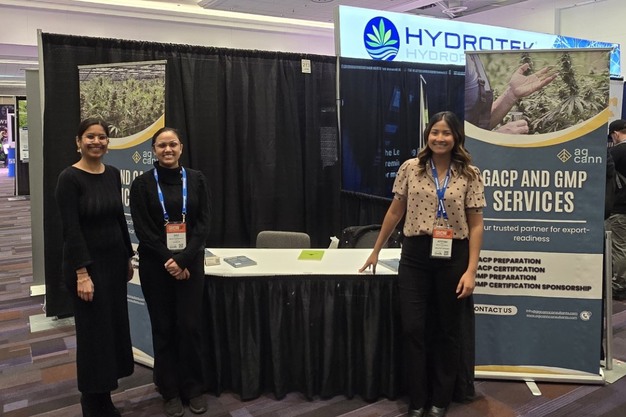
For other attendees, Grow Up Vancouver also reinforced a sense of confidence in an industry that continues to grow despite many obstacles. “Grow Up Vancouver was the perfect start to 2026,” says Atiyyah Ferouz, founder of AgCann Consultancy. “There was a renewed energy and positivity that was palpable throughout the event.” This optimism was linked to a growing strategic awareness, especially regarding market diversification. “A big trend, which has been increasing year by year, is the focus on the export market,” continued Atiyyah. “We’ve spoken to a number of producers who have included export readiness as a key part of their 2026 strategy. In many of the conversations we had, producers were still keen to supply the Canadian market, but wanted to make sure their sales weren’t completely dependent on a single market.”
This vision is shaped by an industry that, despite pressure, is not standing still.” The Canadian cannabis industry is in a strong position today,” stated the GrowerIQ team. “Producers continue to benefit from expanded international legalization, global underproduction and the gradual reduction of the gray market. The continued maturation of Canadian and international supply chains has opened up access to markets that were previously difficult for medium and smaller producers to tap into.”
At the same time, challenges remain. “Regulatory complexity, taxation and access to capital continue to impact the industry,” they continued. “Competition from low-cost jurisdictions and domestic producers unloading excess product at discounted prices is keeping prices under pressure. Individual producers continue to face business-specific challenges, while the rapid pace of change in the sector increases these pressures. Those who cannot adapt quickly risk being left behind in this fast-moving market.”
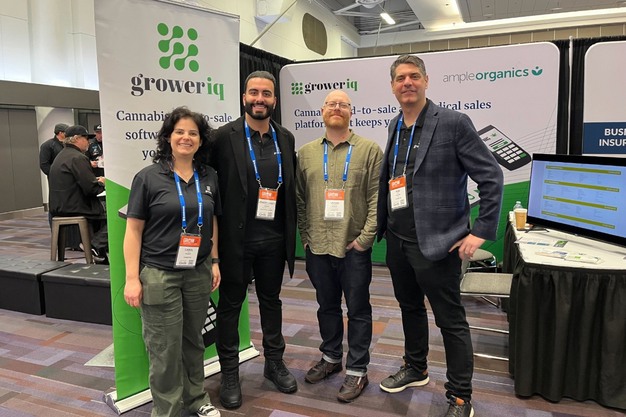
Despite the headwinds, there is cautious confidence. “2026 has the potential to be another challenging but successful year for the Canadian cannabis industry,” they concluded. The seed itself seems to be evolving along with the sector. “Grow Up continues to raise the bar every year,” said the GrowerIQ team. “Grow Up has truly established itself as Canada’s premier cannabis event.”
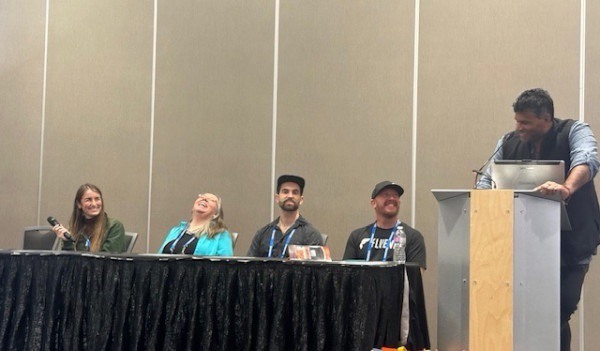
Overall, the Grow Up conference in Vancouver showed an industry that is recalibrating itself around consistency, efficiency and strategic resilience. Long (?) gone are the days of big announcements and earth-shattering innovations. The sector is preparing for its next tougher phase.
For more information:
grow up
growupconference.com








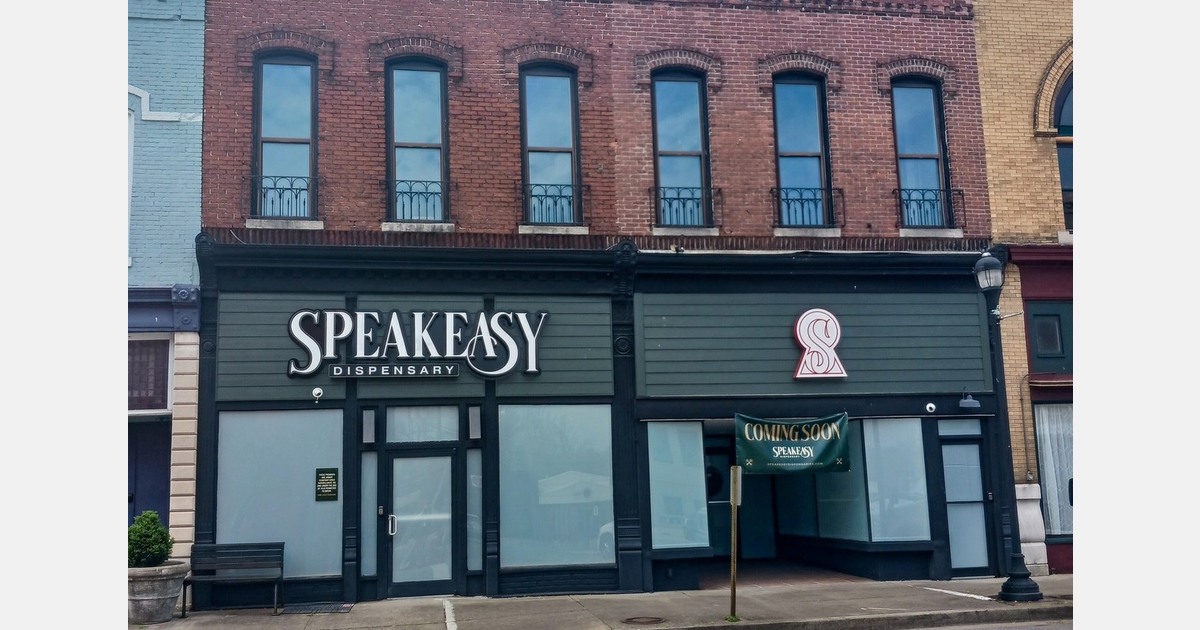
Speakeasy Dispensary will officially open its newest medical cannabis location in Kentucky at 108 E. Main St., Princeton, KY 42445, further expanding access to patients in Caldwell County and surrounding communities.
The dispensary will open at 11:00 a.m. on Friday, April 10 for registered medical cannabis patients.
Located in the heart of downtown Princeton, the space reflects Speakeasy’s vision to blend local character and a comfortable, patient-first experience. The carefully designed environment provides a welcoming entrance before patients enter the main sales floor, where trained team members provide personalized guidance and education tailored to the individual’s needs.
“Each new location is an opportunity to meet patients where they are,” said Casey Flippo, CEO of Gold Leaf Management. “Communities like Princeton are an important part of Kentucky’s medical cannabis program, and expanding access here means more patients can explore safe and regulated options closer to home. As the program continues to take shape, our focus remains on building something reliable, accessible and rooted in long-term care.”
Opening weekend will feature a low-cost patient drive, offering new and existing patients an affordable and streamlined way to obtain or renew their Kentucky cannabis license.
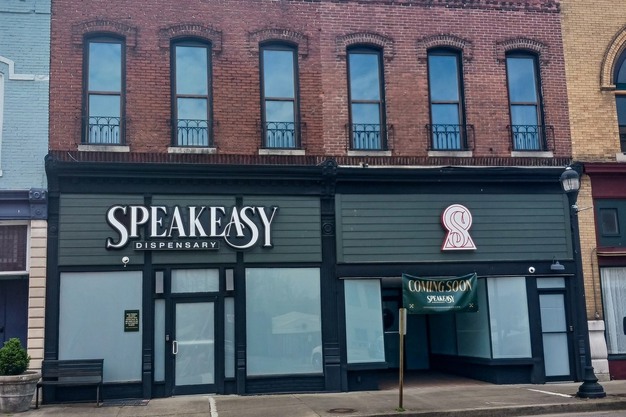 © Speakeasy Dispensary
In partnership with the Kentucky Cannabis Industry Association and LexMed & Wellness, patient tours will be held Friday, April 10th from 11:00am to 7:00pm and Saturday, April 11th from 11:00am to 5:00pm. Appointments will be made with a licensed provider in a mobile unit on site, so patients can complete the entire process, including assessment, notary and state filing, in one visit.
Patients can register for an appointment by clicking here. The appointment fee is $25, and an additional $25 state fee must be paid when submitting documents to the state portal. The $25 state fee is waived for anyone who received a valid medical card in 2025.
As Kentucky’s medical cannabis market continues to develop, product availability and selection will continue to grow along with additional growers and processors entering the space. In addition to flowers and gummies, Speakeasy Princeton plans to have an extensive menu soon after opening, which will include vapes and concentrates, along with a new variety of gummies. Speakeasy continues to focus on providing a consistent education-first experience supported by strong statewide partnerships.
For more information:
Speakeasy Dispensary
speakeasydispensaries.com/

“The issue is not whether the funds should be used, but how they are used and how we are doing it in a responsible and sustainable way.”
By Henry Culvyhouse, Mountain State Spotlight
This story was originally published by Mountain State Spotlight. Get stories like this delivered to your email inbox once a week; sign up for the free newsletter at https://mountainstatespotlight.org/newsletter.
Even with the veto he could have delayed it further $38 million spent on medical marijuana raised over the past four years, state Treasurer Larry Pack (R) now says he will release the funds during his original term.
Last week, Gov. Patrick Morrisey (R) vetoed a bill that would have required the release of medical marijuana funds to help the homeless and expedite child abuse and neglect cases in the court system. He said the bill tied up money for future expenses.
In his veto letter, Morrisey wrote, “West Virginia needs to do a better job of planning for the future, and cannot fully pre-commit future revenue like this if it has reserves to invest more in roads, water, sewer, site selection, rail and future tax cuts.”
Morrisey said he was willing to negotiate with the Legislature on how to spend the money.
“The issue is not whether the funds should be used, but how they are used and whether we are doing so responsibly and sustainably,” Lars Dalseide, a spokesman for the governor’s office, wrote in an email.
But the money was pre-committed in state code.
Pack’s office said 100 percent of that money will go to various offices and programs mandated by the original law; more than half to the Office of Medical Cannabis, with the remaining funds split between the substance abuse treatment grant program and law enforcement grants. The move negates the governor’s desire to use future reserves to deal with infrastructure and tax cuts.
In October, a Mountain State Spotlight investigation revealed that $34 million was deposited into an account held by the Treasury Department from the state’s medical marijuana program..
Pack’s office said the money it was not spent due to legal concerns about the drug. Currently, marijuana is listed as a Schedule I narcotic under federal law, meaning it has no medical use and is illegal.
Pack is not the first state treasurer to express concern. State Treasurer John Perdue (D) said his office would not keep money in 2018 after the Medical Cannabis Act was passed. Riley Moore (R), who beat Perdue in the 2020 race, never released the money.
In the 2026 Legislative Session, Del. Rep. Evan Worrell, R-Cabell, said he read a report on the funds raised and wanted to change it. He successfully led a bill that would have forced the state to spend money on a commission to help thousands of children with abuse and neglect in court and homelessness services.
Had the governor not vetoed the bill, the money would have been earmarked for one year for those things. The commission on substance abuse research, treatment, and abuse and neglect would continue for years to come.
Treasurer’s Office spokeswoman Carrie Smith said that due to the complexity of state and federal laws, the office had been working for months to release the money. He said that the money has been sent to the Department of Security and the Department of Health.
This the article appeared for the first time The focus of the Mountain State and is republished here under a Creative Commons Attribution-NoDerivs 4.0 International License.
Marijuana Moment is made possible with the help of readers. If you rely on our pro-cannabis journalism to stay informed, consider a monthly Patreon pledge.


With the April 2025 tax return filing deadline fast approaching, cannabis companies must once again face the burden of Section 280E of the Internal Revenue Code (“Section 280E”). Despite significant developments over the past year — including a major executive order from President Trump and the IRS, for the first time, disclosing legal reasoning funds to keep state cannabis “within the meaning” of Section 280E — taxpayer scrutiny remains the same.
However, whether substantively or psychologically, these recent developments weigh on how taxpayers should deal with Section 280E. Below, we summarize the key developments that cannabis taxpayers should be aware of as they prepare their 2025 returns.
As discussed in previous publications, Section 280E provides: “(e) no deduction or credit shall be allowed for any amount paid or incurred in the course of any trade or business during the taxable year, if such trade or business (or the activities constituting such trade or business) is trafficking in controlled substances (controlled substance classes I and II prohibited by State or Federal law).
Because cannabis is now listed as a Schedule I controlled substance under the Controlled Substances Act (CSA), the IRS has consistently maintained that Section 280E applies to state-licensed cannabis businesses, significantly increasing their effective tax rates.
Read more at JD above

Grape Cake Marijuana Monday

The C Block of Cannabis Coast to Coast News-

Cannabis Lawyer Explains Hidden Risks of Rescheduling

MEGA CANNABIS BRAND BUILDER | SMOKE WALLIN [cannabis brands]

Cannabis Sales Failed to March – New Cannabis Ventures

Speakeasy Dispensary announces opening of newest Kentucky location

West Virginia Treasurer Allocates Medical Marijuana Revenue Despite Governor’s Veto

Funky Charms Marijuana Monday

Legalization update with Morgan Fox of NORML full interview Special Report w/PCM Founder Jimmy Young

Do THIS When It’s Time To Flower

“Our system can manage equipment across 10,000+ m² using just a few wires”

Florida Workshop to Discuss What Constitutes a ‘Cartoon’ in Hemp Packaging

Mazar-i-Sharif Hash Wednesday

From Finance to Wellness: Brad Zerman’s Impactful Pivot

Re-release of the full show of Cannabis Coast to Coast news. Republican Texas DA Fires Up vs. laws;

DEA’s Cole Reverses His “priorities” ; Prohibitionists Dig In; Dead & Co Celebrates 60 years in SF

Weak Michigan Cannabis Sales Again in July – New Cannabis Ventures

New Hampshire Governor Says Federal Marijuana Rescheduling Won’t Change Her Opposition To Legalization

Your Cannabis Business: Consistent Filings Are Critical

Texas DA Partakes on Tik Tok to prove a point; Boston Sheriff arrested for Extortion of $ w/ Ascend
-
 Cannabis News8 months ago
“Our system can manage equipment across 10,000+ m² using just a few wires”
-
 Florida8 months ago
Florida Workshop to Discuss What Constitutes a ‘Cartoon’ in Hemp Packaging
-
 Video6 months ago
Mazar-i-Sharif Hash Wednesday
-
 Video8 months ago
From Finance to Wellness: Brad Zerman’s Impactful Pivot
-
 Video8 months ago
Re-release of the full show of Cannabis Coast to Coast news. Republican Texas DA Fires Up vs. laws;
-
 aawh8 months ago
Weak Michigan Cannabis Sales Again in July – New Cannabis Ventures
-
 Video7 months ago
DEA’s Cole Reverses His “priorities” ; Prohibitionists Dig In; Dead & Co Celebrates 60 years in SF
-
 Cannabis News8 months ago
New Hampshire Governor Says Federal Marijuana Rescheduling Won’t Change Her Opposition To Legalization