
Cannabis News
Three In Four American Voters Want Hemp To Stay Legal, With Enhanced Regulations, Poll Finds

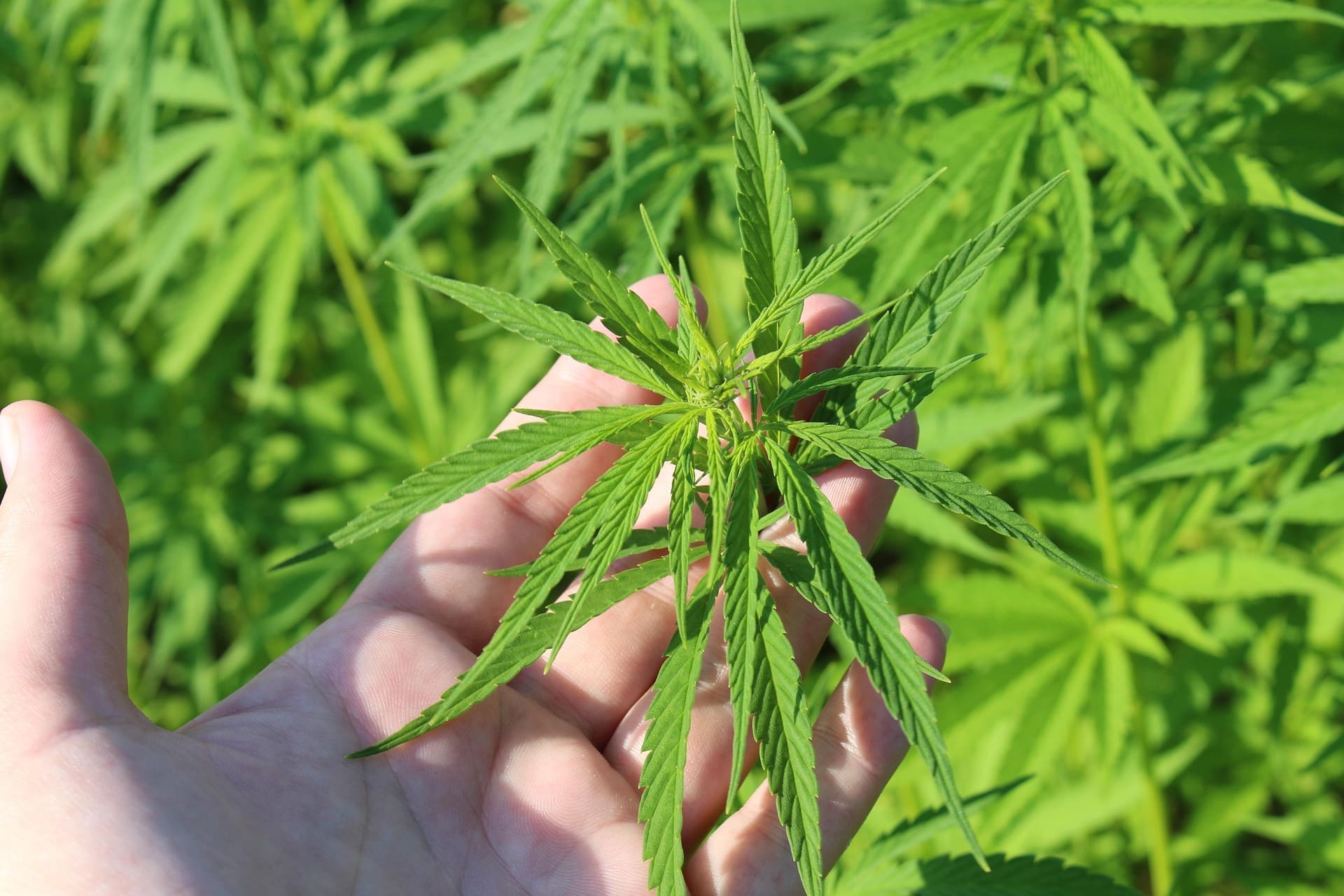
American voters across the political spectrum support legalizing consumer hemp products and enacting regulations to ensure public safety and prevent youth access, according to a new poll.
The McLaughlin & Associates survey, commissioned by the Hemp Industry & Farmers of America (HIFA), comes amid heightened debate in Congress and state legislatures across the country on how to navigate consumer hemp product laws, which were made federally legal under the 2018 Farm Bill signed into law by President Donald Trump in his first term.
Overall, 72 percent of respondents said they want to see hemp retain its legal status under federal law, with “new safety and licensing regulations.” Notably, Republicans were 77 percent in favor, compared to Democrats (71 percent) and independents (68 percent).
The question to voters did not ask about hemp being legal, so it’s unclear what percentage is falling back or being affected by the addition of new regulations. He asked, “Would you support or oppose a federal law to continue to allow the sale and possession of hemp-based consumer products with new safety and licensing regulations to protect children and adult consumers, including age restrictions for adult-only use, free school zones, and greater transparency such as clear health and warning labels.”
Given their generally popular regulatory policies, it is not surprising that strong majorities in both parties expressed support for a legal framework for the cultivation of cannabis.
When asked individually about specific regulatory proposals, 87 percent said they want child-friendly packaging, 86 percent want to limit sales to adults over 21, 81 percent said there should be marketing restrictions to prevent appeal to youth, and 71 percent said hemp products should not contain “unnatural psychoactive substances.”
The survey “shows strong support for passing federal legislation to continue to allow the sale and possession of hemp-based consumer products with new common-sense safety rules,” a survey release said.
Additionally, polls show that 55 percent of respondents who voted to keep hemp’s legal status would be more likely to support a political candidate with improved regulations. It includes 62% of Republicans, 53% of Democrats and 48% of independents.
“The hemp ban is a harmful government overreach, plain and simple,” HIFA Executive Director Brian Swensen said in a press release. “The desire to ban or regulate farmers and small business owners puts hundreds of thousands of jobs at risk, and Americans across the political spectrum.”
“After nearly a decade of law-abiding farmers and companies investing in this industry, changing the rules now would be a slap in the face,” he said. “Congress should think twice and work with the hemp industry to support common sense regulations instead of passing retroactive bans that penalize responsible operators.”
According to the survey, nearly half (47 percent) of voters have personally purchased hemp products or know someone who has.
Survey first notify On the part of the city council, there were interviews with 1,000 voters between October 1 and 5, with a margin of error of +/-3.1 points.
Last week, a major hemp industry organization sent a letter to Trump praising him for his role in legalizing the crop during his first term and banning hemp products by asking Congress to avoid “delaying” reform containing any amount of THC.
“As hemp growers, farmers, consumers and advocates, we are grateful and remain hopeful that your influence can save the $28.4 billion hemp industry you helped make possible,” the US Hemp Board said. “Your recent video sharing about the extraordinary value of hemp products was important in raising awareness of the positive impact of our products grown and manufactured in the United States.”
That was a reference to the president’s recent sharing of a video from The Commonwealth Project He touted the health benefits of hemp-derived CBD, especially for the elderly.
“Congress is close to passing a hemp ban, reversing the work you led to make hemp boom in 2018,” he said. “The proposed change in the definition of hemp, which says that Americans are protected, would eliminate 95 percent of this American industry that you are so proud of.”
—
It’s Marijuana Moment tracking hundreds of cannabis, psychedelic and drug policy bills in state legislatures and Congress this year. Patreon supporters by pledging at least $25 a month, you’ll get access to our interactive maps, charts, and audio calendars so you never miss a development.
Learn more about our marijuana bill tracking and become a Patreon supporter to gain access
—
Lawmakers from both sides of Congress have raised similar concerns in a recent letter to House Speaker Mike Johnson (R-LA) pushing back against attempts to ban THC hemp products. That was argued by the members such a change in policy will “deal a fatal blow” to the industry. and, as currently contained in a spending bill, violates congressional rules. For this purpose, the members say that there is an intention to implement an alternative measure to regulate the market.
At the federal level, on the other hand The Senate eventually removed the hemp THC ban language from its version After a procedural protest from Sen. Rand Paul (R-KY) over the farm spending measure, there is still concern among stakeholders that it could end up in the final package sent to the president after bicameral negotiations.
Meanwhile, Democratic senators also sent a letter to the administration last month He warned of major upheavals in the hemp market If products containing any amount of THC were to be banned.
Dozens of Kentucky hemp farmers also recently petitioned senior U.S. Senator McConnell. he backtracked on his push to re-criminalize some crop-derived products.
Paul, for his part, recently noted this The cannabis policy movement has ‘pushed hard for prohibition’ amid controversy over intoxicating hemp products. And he worries that, if things go wrong, the hemp market could shrink in “the next couple of weeks.”
Asked about recent conversations with McConnell and Rep. Andy Harris (R-MD), Paul said “We have been working diligently” with the workers “trying to reach a compromise”.
“A lot of the conversations have been constructive. They say, at least on the surface, they don’t want to get rid of it, but I think we’re kind of talking past each other,” he said.
Meanwhile, Paul recently introduced a stand-alone bill that would go in the opposite direction of the hemp ban, proposing to triple the concentration of THC that the crop could legally containaddressing several other concerns expressed by industry about federal regulations.
The senator introduced legislation in June called the Hemp Economic Mobilization Plan (HEMP) Act. It reflects versions backed up in recent sessions.
Harris, who supported the ban on THC from hemp in the House version of the agriculture spending bill, told Marijuana Moment he wasn’t worried about potential opposition to the hemp ban in the Senate—and also discussed reports on the scope his legislation would do to the industry.
The Congressional Research Service (CRS) released a report in June stating this The legislation would “effectively” ban hemp-derived cannabinoid products. It initially said the ban would also prevent the sale of CBD, but the CRS report was updated to exclude that language for unclear reasons.
The hemp language is largely consistent with the appropriations and agriculture legislation that was introduced in the last Congress, but ultimately not enacted.
Hemp industry stakeholders opposed that proposal, an earlier version of which was also included in the subcommittee’s core bill last year. is Almost identical to a provision in the 2024 Farm Bill attached by a separate committee. last May through an amendment by Rep. Mary Miller (R-IL), which also did not become law.
Further evidence of the normalization of the hemp sector, retail giant Target recently soft started sales of THC-infused drinks in select stores in minnesota
Meanwhile, the US Veterans of Foreign Wars (VFW). recently entered into its first partnership with a hemp THC beverage companyWith a brand licensing deal that will support a variety of veterans services and promote cannabis-based beverages as a potential alternative to alcohol, the beverages will be available at VFW stands across the country.
Read the full hemp survey memo below:
Marijuana Moment is made possible with the help of readers. If you rely on our pro-cannabis journalism to stay informed, consider a monthly Patreon pledge.









CPC of Missouri-Smithville, LLC and GF Saint Mary LLC, licensed cannabis growers and manufacturers in Missouri, filed a lawsuit in the Circuit Court of Jackson County on behalf of independent wholesalers, alleging that Good Day Farm (GDF) and its network of conspiring companies and investors were harmed by an intentional, coordinated and unconstitutional scheme. The complaint alleges that the “GDF Cartel” illegally controls or manages the state’s share of dispensary licenses and uses that market power to manipulate Missouri’s $1.52 billion cannabis market for its own profit.
GDF and its co-conspirators allegedly built the cartel by arranging for third parties to invest in limited liability companies (LLCs) that then acquire additional dispensaries, cultivation and processing facilities, all of which are owned, operated or controlled by GDF. The result: The alleged cartel exercises effective control over at least 61 dispensaries, nearly triple the 22 allowed by the Missouri Constitution, with more than 10% of dispensary licenses “under substantially common control, ownership or management.” With 224 dispensaries currently licensed statewide, the alleged GDF Cartel controls more than one in four dispensary licenses in Missouri. But its influence is even greater, with alleged Cartel dispensaries accounting for more than 40% of wholesale cannabis in the state, giving it significant — and illegal — influence over all independent growers and manufacturers forced to sell through its network.
To avoid the Missouri Constitution’s 10% licensing limit and avoid regulatory oversight, the alleged cartel operates under five different brand names:
- Good Day Farm (21 dispensaries),
- CODES (20 dispensaries),
- Green light (10 dispensaries),
- Fresh Karma (6 dispensaries), and
- 3 Fifteen Primo (4 medications).
But they’re all part of a single, coordinated operation, the complaint says.
- Purchase cannabis products from non-Cartel wholesalers at artificially depressed prices;
- They supply their 61 dispensaries with the same products—mainly those produced by Cartel growers—significantly excluding products from independent wholesalers;
- Force independent drug wholesalers to purchase the Cartel’s finished products as a condition for their wholesale products to be placed on the Cartel’s drug store shelves; and
- Boycott non-cartel wholesalers who refuse to agree to anti-cartel demands.
Bob Hoffman, one of the attorneys leading the case, said: “The GDF Cartel is removing competition from the wholesale cannabis market and enriching itself with illegal profits through a counterproductive, clandestine business conspiracy. Missouri growers and manufacturers have been suffering under this scheme for a long time; many of them know something is wrong, but we don’t realize how the cartel has manipulated the market through this manipulation framework. Missourians to approve recreational cannabis in 2022 They voted for a fair and competitive market. Missouri licensed cannabis businesses that have suffered these practices should join us because they may be entitled to substantial damages.”
The complaint alleges the financial toll the Cartel has taken: Since the Cartel began illegal price-fixing, it has used its collective market power to lower wholesale prices by more than 20%, and continues to squeeze wholesalers and threaten the viability of their operations.
The unconstitutional complaint alleges that GDF knew its plan to build cartels could create legal risks for the company under the Constitution’s 10% licensing limit. The complaint quotes from a document provided by GDF to potential investors: “There can be no assurance that the Missouri Department of Cannabis Regulation will not dispute the number of marijuana dispensaries operated or supervised by the operator or its affiliates…”.
This action is brought on behalf of a putative class that includes all licensed independent wholesalers in Missouri that are not members of the alleged GDF Cartel for purposes of injunctive relief. Wholesalers who believe they have been financially harmed by the alleged Cartel’s practices should join the case because they may be entitled to substantial damages. The putative class is represented by the law firms of Feuerstein Kulick LLP and Bryan Cave Leighton Paisner LLP.
Source: Feuerstein Kulick LLP and Bryan Cave Leighton Paisner LLP
Cannabis News
State-Licensed Marijuana Businesses Can Now Apply For Federal Protections Using New DEA Form

After fifteen years of successful cooperation, managing director Moritz Böcking and the shareholders of Klasmann-Deilmann GmbH have mutually agreed to part ways. As of May 1, 2026, Moritz Böcking will hand over the position of managing director to Jan Astrup, who served as the company’s CEO in 2021/2022. Jan Astrup and Damian Ikemann will form the Board of Directors of the Klasmann-Deilmann Group from now on.
 © Klasmann-Deilmann Benelux
Klasmann-Deilmann thanks Moritz Böcking for his cooperation and the progress achieved in the transformation of the Klasmann-Deilmann Group. Moritz Böcking expanded Klasmann-Deilmann beyond the growing media business into new areas of commercial horticulture and promoted innovation and digitalization within the company. In addition, its achievements include the expansion of resources derived from renewable raw materials, as well as the acquisition of a subsidiary in Australia and production facilities in France and Canada, which operate in cooperation with external partners. He also significantly advanced Klasmann-Deilmann’s positioning as a global pioneer of sustainable development in the growing media industry, thereby making a decisive contribution to the company’s economic growth.
With Jan Astrup, Klasmann-Deilmann is getting an internationally experienced manager who has proven himself in the company and has extensive experience in raw materials, production, process optimization and technology. With the new CEO, raw materials and technology-driven areas for the substrate industry are now increasingly important at senior management level. Jan Astrup will strengthen the core commercial horticulture business and help develop the company for the future.
For more information:
Klasmann-Deilmann GmbH
(email protected)
www.klasmann-deilmann.com

Marijuana Retail Report

Missouri cannabis growers file class action against Good Day Farm

State-Licensed Marijuana Businesses Can Now Apply For Federal Protections Using New DEA Form

MJ Unpacked Is Coming Home to the Boardwalk

Spannabis 2022 Cannabis Garden

The B Block of Cannabis Coast to Coast News with Alaina Pinto – State reports from WA, VA, ON, DC

🩸The Secret To Feeding Cannabis Nutrients

CANNABIS PTSD STUDY | BATTLE BROTHERS FOUNDATION [cannabis for veterans]

The Biggest Things About Schedule III You Haven’t Thought Of

Klasmann-Deilmann announces management changes

“Our system can manage equipment across 10,000+ m² using just a few wires”

Florida Workshop to Discuss What Constitutes a ‘Cartoon’ in Hemp Packaging

Mazar-i-Sharif Hash Wednesday

Re-release of the full show of Cannabis Coast to Coast news. Republican Texas DA Fires Up vs. laws;

From Finance to Wellness: Brad Zerman’s Impactful Pivot

Weak Michigan Cannabis Sales Again in July – New Cannabis Ventures

DEA’s Cole Reverses His “priorities” ; Prohibitionists Dig In; Dead & Co Celebrates 60 years in SF

Afghan Black Hash Wednesday

Your Cannabis Business: Consistent Filings Are Critical

Texas DA Partakes on Tik Tok to prove a point; Boston Sheriff arrested for Extortion of $ w/ Ascend
-
 Cannabis News8 months ago
“Our system can manage equipment across 10,000+ m² using just a few wires”
-
 Florida9 months ago
Florida Workshop to Discuss What Constitutes a ‘Cartoon’ in Hemp Packaging
-
 Video7 months ago
Mazar-i-Sharif Hash Wednesday
-
 Video9 months ago
Re-release of the full show of Cannabis Coast to Coast news. Republican Texas DA Fires Up vs. laws;
-
 Video9 months ago
From Finance to Wellness: Brad Zerman’s Impactful Pivot
-
 aawh9 months ago
Weak Michigan Cannabis Sales Again in July – New Cannabis Ventures
-
 Video8 months ago
DEA’s Cole Reverses His “priorities” ; Prohibitionists Dig In; Dead & Co Celebrates 60 years in SF
-
 Video7 months ago
Afghan Black Hash Wednesday