
Best Practices
Marijuana Retail Report

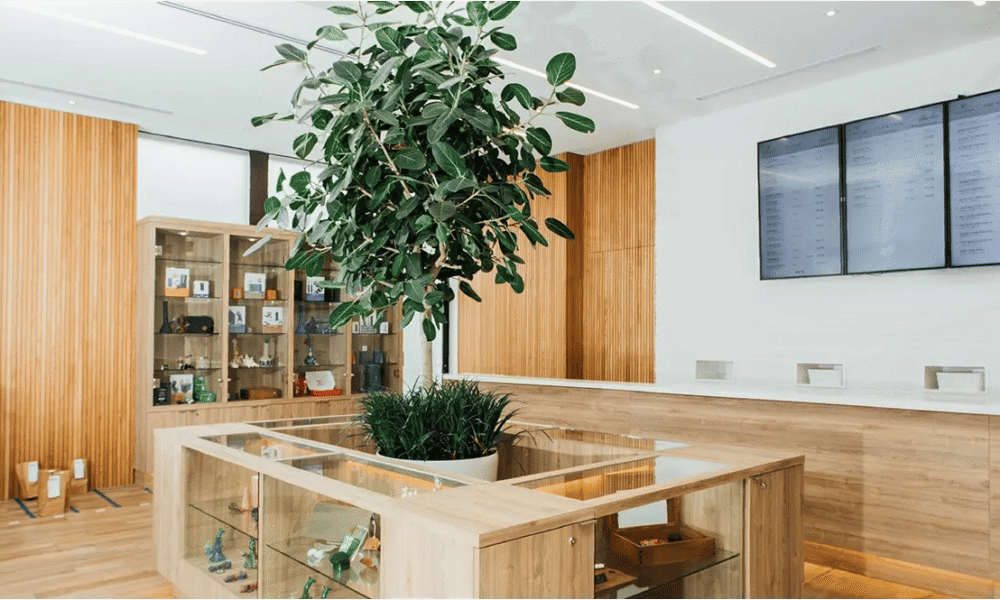
Like any retail operation, your design has a big impact on your customers’ shopping experience
*This article was originally published on March 9, 2026*
Like any retail, the design of your dispensary has a big impact on the customer’s shopping experience and how they feel about your brand. That’s why it’s so important to use effective dispensary design elements that attract and retain you target customers. A well-designed store that is welcoming, unique and functional will help build brand loyalty and ultimately increase sales.
In this guide, we’ll break down the basics of modern dispensary design, including innovative features to consider, dispensary design steps, case studies of unique retail stores we love, and DIY design ideas to help you create a great cannabis retail space.
Basics of effective dispensary design
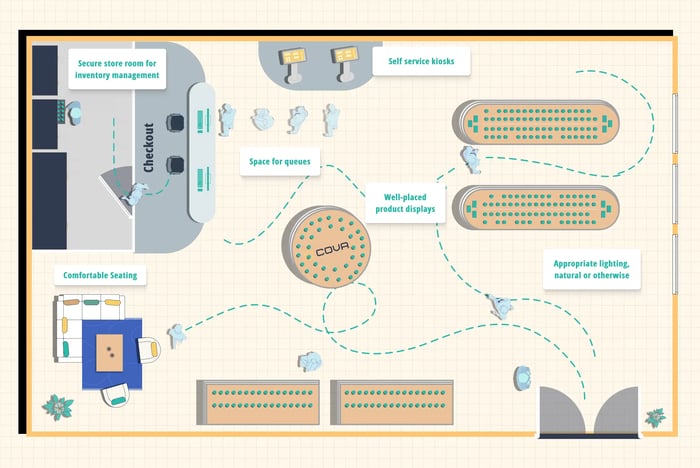
Layout optimization
Thoughtful planning is the basis of effective dispensary design. You want to provide a smooth, intuitive process that enhances your customers’ shopping experience. Navigating the cannabis retail space should be easy and stress-free. When designing your cannabis dispensary layout, keep the following in mind:
- Entry and registration areas: They should be clearly marked and easy to navigate.
- Product demonstration areas: Use open or glass display cases to display merchandise, making it easier for customers to browse.
- Waiting areas: Comfortable seats and interesting content can improve the waiting experience for your customers.
Adequate lighting
It may seem like a counterintuitive thought, but lighting plays a key role in creating the right mood for your dispensary and making your cannabis products stand out. Use a mixture of environment, the task and accent lighting to create a welcoming atmosphere and draw attention to core products.
Customer flow
Make sure you design your store to facilitate a smooth flow of customers from entry to exit. You can do this with:
- Clear signs: To help customers navigate the store easily.
- Well-placed checkout areas: Strategically place your cash register to avoid bottlenecks.
To read the rest of this article about Cova software, Click here







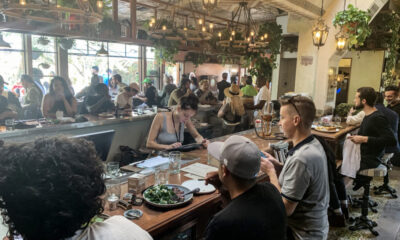


Competing on price alone cuts into margins without building lasting loyalty
The retail cannabis market is maturing faster than many operators expected. More dispensaries are competing for the same customers, the product mix is starting to look the same, and consumers have more information and more options than ever before. While the instinct to discount is understandable, there are more strategic ways to stand out in this competitive environment.
Discounting can move product and drive traffic through the door. The problem is that it’s easy for any dispensary to do, it eats into margins, and it gradually trains customers to expect a deal every time. In a market where multiple dispensaries may operate within a few miles of each other, price competition rarely provides a lasting advantage.
In this article, we explore non-discount competition strategies in cannabis retail. That means choosing where to compete, deciding what matters most to customers besides price, and creating capabilities that can sustain a sustainable advantage over time.
Key conclusions
- Competing on price alone cuts into margins without building lasting loyalty – and any competitor can copy the discount by the end of the week.
- Strategic differentiation means choosing a few areas where your store can really win and then creating opportunities to deliver on them consistently.
- Small operators can compete effectively with large chains by focusing on local relevance, agility and doing some things exceptionally well.
- The strongest competitive moves often involve fixing gaps in execution and retention before adding a new tactic or promotion.
- Tracking exposure to promotions, repeat purchase rates, and gross margins reveals whether your strategy is building real competitiveness or masking a deeper problem.
To read the rest of this article on Cova, Click here




The C Block…more 420 recaps on Weed Talk News …recorded 4_29_24

PART 1 TAKING A KNEE | NATE BOYER

Marijuana Retail Report

Will the top World Cup expert in the fruit, vegetable, and horticulture sector come from Canada, the U.S. or Belgium?

ALJ Hearing Is Officially Over

States Move To Let First Responders Use Marijuana And Psychedelics To Treat PTSD

San Francisco Board of Supervisors Approves Cannabis Café Ordinance

Industry Reaction to DEA Decision Recommending Schedule 3 – Special Report from Weed Talk News

Part 2 TAKING A KNEE | NATE BOYER

Standard Wellness expands into Cleveland with dispensary acquisition

“Our system can manage equipment across 10,000+ m² using just a few wires”

Mazar-i-Sharif Hash Wednesday

Florida Workshop to Discuss What Constitutes a ‘Cartoon’ in Hemp Packaging

Afghan Black Hash Wednesday

From Finance to Wellness: Brad Zerman’s Impactful Pivot

Weak Michigan Cannabis Sales Again in July – New Cannabis Ventures

Re-release of the full show of Cannabis Coast to Coast news. Republican Texas DA Fires Up vs. laws;

DEA’s Cole Reverses His “priorities” ; Prohibitionists Dig In; Dead & Co Celebrates 60 years in SF

Your Cannabis Business: Consistent Filings Are Critical

Texas DA Fires Up for Change! Mass. Sheriff arrested on Extortion charges; GOP vs Industry in state
-
 Cannabis News11 months ago
“Our system can manage equipment across 10,000+ m² using just a few wires”
-
 Video10 months ago
Mazar-i-Sharif Hash Wednesday
-
 Florida11 months ago
Florida Workshop to Discuss What Constitutes a ‘Cartoon’ in Hemp Packaging
-
 Video9 months ago
Afghan Black Hash Wednesday
-
 Video11 months ago
From Finance to Wellness: Brad Zerman’s Impactful Pivot
-
 aawh11 months ago
Weak Michigan Cannabis Sales Again in July – New Cannabis Ventures
-
 Video11 months ago
Re-release of the full show of Cannabis Coast to Coast news. Republican Texas DA Fires Up vs. laws;
-
 Video11 months ago
DEA’s Cole Reverses His “priorities” ; Prohibitionists Dig In; Dead & Co Celebrates 60 years in SF