“We are full of plans,” Agrolux director Marc Salvany told the more than 40 participants who attended the Six Days track cycling event in Rotterdam last Wednesday, invited by Agrolux. They were given a look behind the scenes (and the route), and a moment was set aside to find out how the new management sees the future of the company. “We want to honor the legacy of the Agrolux brand, a brand that many of you have known for so long.”
Paying homage to the brand Last Wednesday, while the riders on the Ahoy track were cycling around the unbearably slow or lightning-fast track, a special moment was happening in the middle of the cycling track: the introduction of the revamped Agrolux.
Since the end of September, Agrolux has been independent again, and the group has big ambitions for the beginning of this new era. Although it may seem counterintuitive, they will not focus on selling as many devices as possible. Marc explained that it is much more to strengthen relations with the sector and customers. “Many producers have been working with Agrolux for years. These are the long-term partnerships we believe in and the ones we want to continue, because together we can achieve success.”
CEO Ad van der Vorst added that in recent years the company has not been properly organized to support this long-term market vision. “But we’re excited about the horticulture industry, we see it as having tremendous potential, and we’re excited to tackle it.”
In recent months, the team has grown and is investing heavily in product development and innovation. “New software and more modular and sustainable products,” said Ad. But more about that at Fruit Logistic in Berlin, because it was also possible to see it by bike, of course.
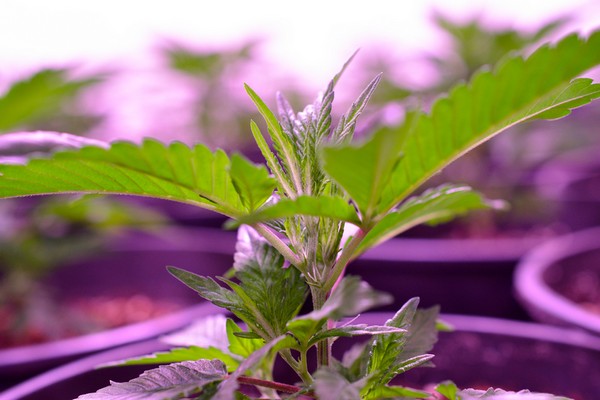
Many of the things that are common in modern cannabis come from a time when curiosity about the plant could lead to real problems. With the market now dominated by hybrid genetics, it is a common belief that it is almost impossible to bring anything back to an original cultivar. However, many of these initial building blocks came from the first wave of cannabis exploration, when a handful of growers traveled across continents in search of unique local varieties. Nevil Schoenmakers was one of them, and what he spotted on the side of a highway during a trip to Turkey left a mark on the history of cannabis that has never been erased.
On the way to Turkey Dwight Diotte of D9 Canna Consulting still remembers those early years. A time when the modern industry was just an idea and the world of cannabis lived in the shadows between one country and another. Everyone in that circle followed clues more than maps, and it all felt like a treasure hunt with pocket knives and curiosity.
So how did cannabis ruderalis enter the cannabis world. The story begins with a road trip. Nevil was moving through Eastern Europe on one of his journeys to find his seed when he saw something strange on a highway in Hungary. The plants, already in flower, stand out against the July heat. He stopped so suddenly that his car screeched. Then he ran across like someone who had just seen a myth pass by.
He took some branches and dried them in the car heater. He soon realized that what he found was something special. He paused again, and turned around. Turkey could wait. What he had just discovered demanded attention, “and perhaps saved him from a more dangerous detour,” Dwight notes. The Cold War was still very real and the borders of that region were not yet friendly to roving plant hunters.
Sparking the seeds of something new By the time Dwight saw Nevil the following year in the Netherlands, the seeds of the mystery were already on the table. They were tiny, dark and impossible to germinate with the usual tricks. Dwight remembers gently cracking the pebbles and soaking them as Nevil thought animals might do in the wild. “It felt less like horticulture and more like archaeology,” Dwight recalls.
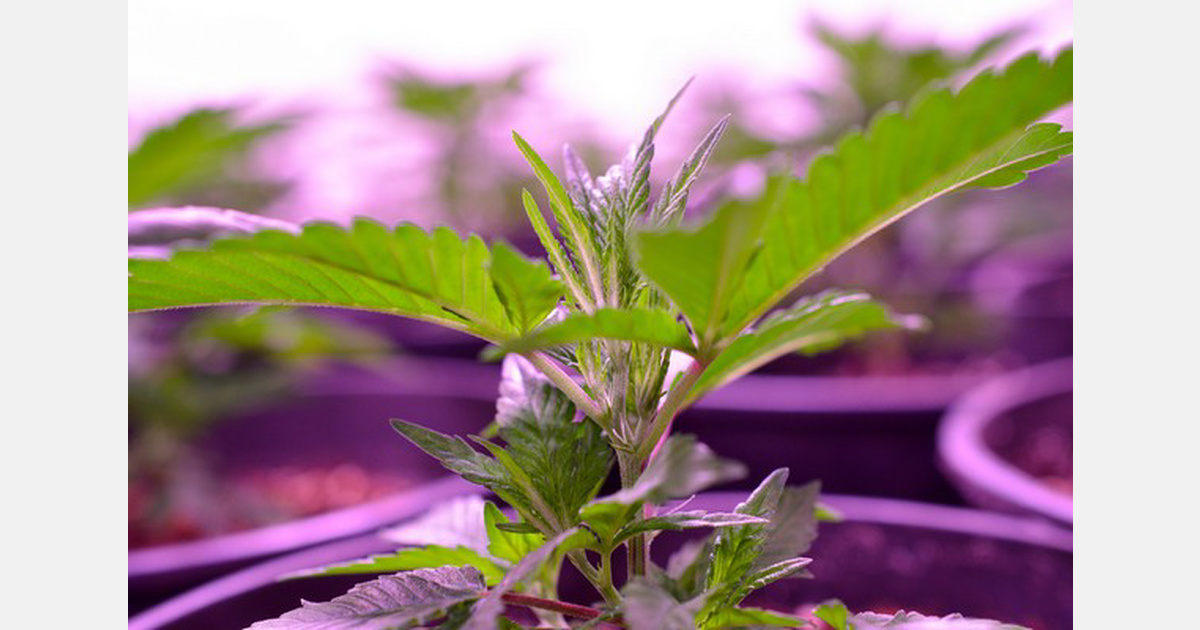
Once they sprouted, the surprise came quickly. These were no ordinary plants. They went from seed to flower oblivious to the light of day and seemed determined to complete their cycle, encouraged or not. The concept of autoflowering did not yet exist. “Nevil saw the plants blooming on the fifth or seventh node and understood that something new was on the table.”
This was the birth of the modern ruderalis work, although at the time no one was thinking in neat categories. “We were trying to understand what we found.”
Claiming ownership Dwight wandered between Canada and Europe during those years and witnessed it all. He helped raise funds for what would later become the famous Cannabis Castle, watched the early grow in action and watched Nevil push ruderalis as far as he could before returning to his passion for long-flowering cannabis. “The Finola project was created in the mid-90s and its founders claimed credit for the autoflowering breakthrough, even though the genetics went back to the same region that Nevil had explored, if not the same plants as Nevil himself,” Dwight said.
Everyone involved in that era seemed to reinvent themselves every season. The seed companies changed their names. Growers moved between projects. Some developed legendary cultivars. Others disappeared completely from public life. Through it all, Nevil remained a figure who kept one foot in research mode and the other in business reality. When the Dutch tightened regulations in the nineties, the landscape changed again, and a series of legal dramas followed across continents. “A few years later the dust settled and life moved on, but the seeds of his legacy had already been planted.”
According to Dwight, many of the fog lines that dominate the shelves today have their origins in Nevil. “It’s the same in the autoflowering category. Even after turning his attention away from ruderalis, he produced work that breeders talk about in low tones and reverence.”
Heritage Dwight still grows ruderalis for fun. He says that plants teach him things. He says that even after forty years they still amaze him. “Nevil Schoenmakers always worked with what he found and let the plants say what they wanted to be. But the evidence is hard to ignore. When the first little black seeds were opened in Hungary, the industry of the future cracked with them. And even today, every time an autoflower appears on a legal shelf anywhere in the world, a small part of that moment is still on the side of the road in Eastern Europe.”
WHO expert review he determined in September how millions of people in the Andes consume the coca leaf daily as part of a long-standing cultural practice without significant negative effects, and conversely that coca control strategies are associated with significant public health harm.
And yet, on December 2nd, the WHO’s Expert Committee on Drug Dependence (ECDD) recommended that the plant be kept in Annex I of the United Nations drug treaties—the most restrictive category of control—because coca leaves can be converted relatively easily into cocaine.
“The simplicity of extracting cocaine from cocaine and its high yield and profitability are well known,” ECDD wrote. “The Commission has also examined evidence of significant increases in the cultivation of cocaine and the production of cocaine-related substances in the context of significant and growing public health concerns about the use of cocaine. In this context, the Commission believes that the reduction or elimination of international controls on the coca leaf may pose a particularly serious risk to public health.”
The commission noted a 34 percent year-on-year increase in cocaine production in 2023, with some countries experiencing historically high levels. But supporters of reform emphasize that coke is not cocaine. They point out that the WHO review supports the plant’s medical potential and the lack of evidence of problematic coca leaf use anywhere in the world — two key criteria a drug must meet to be placed on a less restrictive schedule.
“It is unacceptable for humanity to demonize a sacred medicinal plant”, Jaison Perez Villafaña, guardian of wisdom or mother From the Arhuaco community in Colombia, he said The filter. “It was a political decision rather than a scientific one. Coca leaf (help) is not to blame for the fact that humans with economic interests turned it into cocaine”.
The ECDD said it recognized that “the coca leaf has important cultural and therapeutic value to indigenous peoples and other communities and that there are exceptions to the traditional use of the coca leaf in certain national settings.” A coalition of indigenous coca leaf producers and consumers he wrote The WHO in October asked the UN body to “clearly distinguish” between traditional coca use and cocaine-related issues.
Steve Rolles, senior policy analyst at the Transform Drug Policy Foundation, called the WHO’s suggestion that keeping coca on Schedule 1 would limit cocaine production “ridiculous”, saying the decision exposed the “moral and scientific failure” of drug control worldwide.
“While we might expect them to emerge from political institutions embedded in drug war narratives, there was a sense that the more objective, scientific and nominally independent corners of the UN would maintain a level of pragmatism and principle, even if their recommendations were later rejected by UN political entities.” he wrote It’s LinkedIn.
“The dangers of cocaine powder or smoked crack cocaine, creations of the global North, which is also by far the largest market for both, depend on the traditional use of coca, chewed or in tea, which only occurs in the South,” added Rolles. “It is the global South where the burden of the failed war on cocaine and the criminalization of entire cultures is felt most acutely.”
In 2020, following a WHO recommendation, the United Nations Commission on Narcotic Drugs voted to ease international controls on cannabis, recognizing its medical value after decades of “referral madness”. For reform advocates, the decision represented a slow and delayed shift to evidence-based programming. That is why there was hope that the UN system could also separate the coca leaf — which contains less than 1 percent of the alkaloid cocaine — from the refined powder that feeds global demand.
However, coca will continue to be treated as if it has the same risk profile as cocaine, after a WHO review confirmed that coca chewing has not caused any documented deaths, is not associated with high addiction or “abuse” potential, and has possible therapeutic applications, from anti-inflammatory effects to modest improvements in post-meal glucose.
“The WHO decision is deeply disappointing and disturbing,” Ann Fordham, executive director of the International Council on Drug Policy, said in a press release. “This was no ordinary study, it was a critical test of the UN drug control system. The Commission has demonstrated that it cannot objectively assess the evidence or consider the human rights implications of prohibition. Instead, it has chosen to reinforce the racist and colonial foundations of international drug control. This decision makes it clear that the system is broken and resistant to meaningful reform.”
Experts have long argued that the logic behind the coca ban is selective and ignores existing treaty precedent. Plants such as ephedra used to manufacture methamphetamine, psilocybin-containing mushrooms, and cacti that produce mescaline remain unscheduled at the plant level, although they are used to produce controlled substances.
While open persecution of coca chewers has eased in the Andes, the ban still shapes daily life in parts of the region, from farmers losing crops to stopping aerial fumigation campaigns, eradication forces and communities caught between the networks that dominate the cocaine trade. In a September study, an independent group of experts hired by the WHO said that studies that showed exposure to harmful glyphosate-based pesticides such as Roundup, a probable carcinogen, by aerial spraying of coca crops by authorities “increased the number of abortions and increased the number of medical consultations related to dermatological and respiratory diseases in communities”.
The review added that another study showed that forced coca eradication encouraged coca growers to increase production through the use of toxic agrochemicals “on more or subsequent coca plots, increasing exposure to these chemicals.”
Villafaña and other indigenous leaders have warned that these pressures are cultural violence. Coca is central to Andean communities’ spiritual practice, conflict resolution, work, ceremony, and community health; however, using it outside of the narrow “traditional” exemptions puts people at risk of criminal penalties.
“It would be useful for us as a culture,” said Villafaña, “if the world recognized it as a sacred plant and did not demonize it.” But, he added, the decision would not otherwise affect his community, as its members will continue to chew coca as they have always done.
Marijuana Moment is made possible with the help of readers. If you rely on our pro-cannabis journalism to stay informed, consider a monthly Patreon pledge.
A Democratic senator is holding back nearly 90 of President Donald Trump’s administration nominees, including the president’s pick for White House drug czar He says he is among many “unqualified” candidates who threaten to “undermine the rule of law and our national security.”
The Senate Judiciary Committee in October advanced the nomination of Sara Carter Bailey to join the administration as director of the Office of National Drug Control Policy (ONDCP). But when he was included in an en bloc confirmation package of 88 nominees, Sen. Michael Bennet (D-CO) raised a procedural question that led Republicans to stall the vote.
“I’ve just blocked 88 of Trump’s nominees for confirmation, including Sara Carter Bailey, the former Fox News contributor nominated to be our country’s drug czar,” Bennet said Thursday. “Bailey was nominated by Trump, who recently pardoned the former president of Honduras, who served 45 years in prison for conspiring to distribute more than 400 tons of cocaine.”
“I will not allow those without a candidate, this White House or the president to undermine the rule of law and our national security,” he said. he said.
The procedural complaint raised by Bennet relates to the ONDCP director being a “Tier I” executive officer.
Therefore, unlike the other candidates in the package, Bailey could not be included in the group vote – the body that was chaired by the Republican senator on Thursday. recognize.
Trump tried to induct 88 unpopular candidates, including a Fox News executive, to lead America’s drug policy. I blocked the nominations, and I’m running for Governor to bring back the same backbone and respect for the rule of law to Colorado. https://t.co/8aPEIpSrYr
Bennet isn’t the only senator questioning the nominee’s abilities. Before the committee’s vote in October, Sen. Dick Durbin (D-IL), the panel’s ranking member, called Bailey a Trump “loyalist” who was “appointed to a position that he is completely, utterly unqualified for.”
“He’s not a doctor or an addiction specialist,” she said. “He’s never been a prosecutor or a law enforcement officer.”
Given the ONDCP director’s role in setting and carrying out the administration’s agenda on drug policy issues, Bailey’s enthusiastic endorsement of medical cannabis in the past is welcome to advocates.
Senator Cory Booker (D-NJ) raised the issue of cannabis rescheduling one-on-one with the candidate in September, stating that the proposal to move marijuana from Schedule I to III of the Controlled Substances Act (CSA) would be a “step in the right direction.”
“It would open the door to more scientific research, so if you were to be confirmed, how would you advise the American president on the reprogramming process going on?” he asked.
Bailey said she shares Booker’s passion for the issue, which she described as “bipartisan.”
“If confirmed as director, I will comply with all federal laws and meet all legal responsibilities of ONDCP,” he said. “However, we will continue to work in depth with research and data. We will continue to do so and explore all options.”
Trump endorsed the redistricting on the campaign trail before his second term — as well as bank access to the marijuana industry and a ballot initiative to legalize Florida. But his latest comments in late August about the timing of the reorganization decision gave a more ambiguous impression of his stance on the matter.
While Bailey has spoken often on a variety of marijuana policy issues (focusing on illegal trafficking and illegal growing operations on US soil, for example), his public comments have been limited on how he personally feels about the issue. Last year, she said in an episode of her podcast, The Sara Carter Show, that she makes a distinction between legally regulated and illegally supplied marijuana.
“I don’t have a problem if it’s legalized and controlled,” he said. “I mean, maybe I have my own issues with how I feel about it, but I think it’s a wonderful way to handle cannabis for medicine and medical reasons — especially for people with cancer and other diseases, you know — to manage the disease and the side effects of those drugs and diseases. So I’m not saying we should make it illegal.”
If Bailey is ultimately confirmed by the Senate, he will be the second drug czar to come out in favor of medical marijuana. Former President Joe Biden’s ONDCP Director Rahul Guptaworked as a consultant to cannabis businesses and oversaw the implementation of West Virginia’s medical marijuana program.
On his social media, Bailey has previously shared links (without comment) to news on various marijuana-related topics. In addition to his increased focus on illegal billboards, he has also published on congressional and state legalization votes, Biden administration staffers fired for cannabis use, Democratic presidential candidates’ support for legalization, progress on cannabis banking legislation in Congress, and state policy developments such as the legalization of cannabis cafes in Alaska.
the federal statute The drug czar is prohibited from agreeing to the legalization of Schedule I drugs in the CSA, including marijuana.
“The Director . . . shall ensure that federal funds appropriated to the Office of National Drug Control Policy shall not be expended for any study or contract related to the legalization (for medical use or any other use) of a substance listed in section I of section 812 of this title and shall take such measures as may be necessary to oppose any attempt to legalize the use (in any form) of a substance not listed in subparagraph (I)(B) of section 8 of section (I). The purpose of the Food and Drug Administration approved for medical use.
Bailey has separately sounded the alarm about the risk of pesticides and other contaminants in marijuana grown and sold by Chinese cartels…recently a House committee took up the matter.
Last year, the candidate discussed the issue with Derek Maltz, a now-retired Drug Enforcement Administration (DEA) official who is serving as the agency’s interim administrator before his confirmation. Trump’s perennial pick, Terrance Cole.
In an X post about the interview with Maltz, Bailey said how “Chinese marijuana growing operations are using dangerous chemicals as pesticides.”
In 2022, U.S. Representative Mike Garcia (R-CA) praised Bailey for working with his office to bring attention to illegal grow operations in his district, leading to an investigation by local law enforcement.
Bailey credited congress, saying, “The work you’ve done to get rid of illegal marijuana seeds has prevented the cartels from exploiting your community, the people forced to work in it, and (your money).”
In a 2021 interview with Fox News’ Sean Hannity, he also talked about his work with Garcia, including accompanying him on a helicopter, “a lot of sophisticated illegal farms worth billions of dollars.”
The posters “have become much bolder. They are not afraid to hide,” he said. “They don’t hide it because they don’t feel like they’ll ever be held accountable for it.”
In a sense, Bailey seems to be implicitly suggesting that he supports regulated access to cannabis as a means to promote public safety and health. Whether that implied position would influence federal policy and whether the role of ONDCP director is confirmed and assumed remains to be seen.
On his social media, he has previously shared links (without comment) to news on various marijuana-related topics. In addition to his increased focus on illegal billboards, he has also published on congressional and state legalization votes, Biden administration staffers fired for cannabis use, Democratic presidential candidates’ support for legalization, progress on cannabis banking legislation in Congress, and state policy developments such as the legalization of cannabis cafes in Alaska.
Photo by Chris Wallis // Side Pocket Images.
Marijuana Moment is made possible with the help of readers. If you rely on our pro-cannabis journalism to stay informed, consider a monthly Patreon pledge.