
Cannabis News
Greenhouse hygiene programs emphasize deep-penetration sanitation during cleanouts


During winter clean-ups, greenhouse operators prepare facilities for the next production cycle, with hygiene remaining a critical focus. Effective sanitation during crop transition plays a key role in reducing pathogen pressure and promoting long-term crop health, particularly in operations that manage virus risks such as Tomato brown rugose fruit virus (ToBRFV).
Disinfectants commonly included in greenhouse hygiene programs include Intra Multi Des GA, supplied in North America by Houweling Americas. “This product is widely used by vegetable and ornamental growers as part of comprehensive cleaning and routine sanitation strategies, especially where deep penetration is required on complex surfaces,” says the Houweling Americas team.
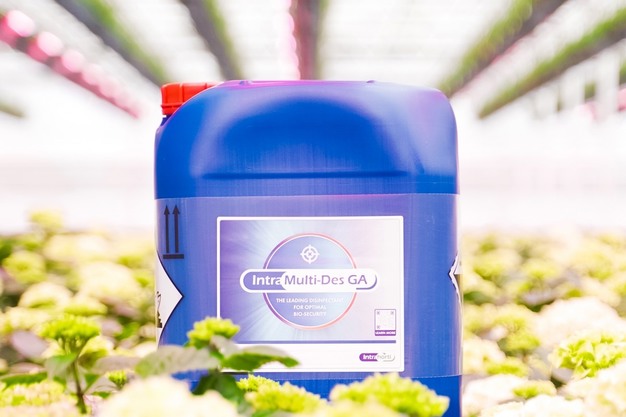 © Houweling Americas
Getting under the surface
Biofilms and organic debris continue to limit the effectiveness of many disinfectants, harboring microorganisms in cracks, crevices, and porous materials. According to the Multi Des GA technical team, the formulation is designed to address this challenge through penetration rather than surface activity.
“Intra Multi Des GA has five active ingredients that work together to provide strong penetration properties, allowing the product to reach microorganisms hiding in difficult access areas,” the team explained. While not positioned as a dedicated biofilm remover, the formulation is intended to reveal and eliminate pathogens sheltered beneath biofilm layers.
For best results, a two-step sanitation approach is recommended: deep cleaning to remove organic matter and biofilm, followed by disinfection. “Skip the cleaning step increases the risk of completely eliminating pathogens,” the team noted, highlighting the continued opportunity for farmer education around proper hygiene sequencing.
The role of cleaning before disinfection
As part of the Intracare product portfolio, Houweling Americas also supplies Intra Foam Organics, a cleaner designed to remove organic material prior to disinfection. Organic debris can significantly reduce disinfectant performance if not completely removed, especially on high-traffic or porous surfaces. When used as a first step, cleaners like Intra Foam Organics help ensure that disinfectants can come into direct contact with target pathogens.
Performance on porous and uneven surfaces
Concrete floors, block walls and other porous greenhouse materials remain among the most difficult areas to sanitize. According to internal tests, Intra Multi Des GA works reliably on these surfaces, moving into the micro-cracks where pathogens can persist.
“When applied to porous materials such as concrete blocks, the formulation moves significantly across the substrate,” the team explained. “This behavior is different from traditional disinfectants that remain on the surface and do not reach the embedded microorganisms.”
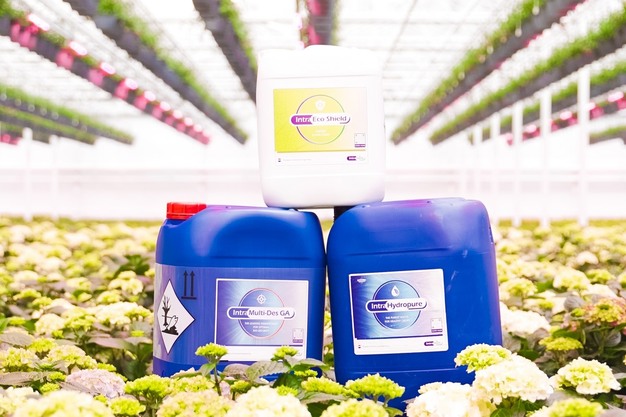 © Houweling Americas
Broad spectrum pathogen control
Growers of all types of crops rely on Intra Multi Des GA to manage a wide range of pathogens, including fungal, bacterial and viral threats. The reported efficacy against ToBRFV has made it an essential component of hygiene protocols in tomato production.
“Intra Multi Des GA has shown excellent efficacy against ToBRFV and has proven effective in eliminating the virus on contact when used appropriately,” the team reported. Beyond viral control, growers also use the product against pathogens such as Fusarium and Pythium in crop and ornamental systems.
Waste behavior and crop turnover
Unlike non-residue disinfectants, Intra Multi Des GA is designed to leave a residual effect on treated surfaces during cleaning, providing extensive protection between crops. This waste is not intended to come into contact with the collected products, but is used to maintain sanitation during downtime.
Operational efficiency is another matter. The product is applied at a low concentration of use, requires a short contact time and usually requires only one application, allowing rapid crop rotations without compromising hygiene standards.
Long-term sanitation results
Growers who consistently incorporate Intra Multi Des GA have reported cumulative improvements in crop rotation hygiene programs over multiple seasons. In one documented case, a Dutch tomato operation managing ToBRFV reported no subsequent infections after integrating the product into the cleaning protocol.
“Starting clean remains one of the most effective ways to reduce the risk of early cycle infection,” the team emphasizes.
Supporting North American producers
Houweling Americas supplies Intra Multi Des GA and other Intracare solutions through established distribution partners and provides technical support to assist with implementation. In addition to hygiene products, the company’s portfolio includes nutrient solutions, growing substrates, LED lighting, water treatment technologies and biostimulants such as Intra Eco Shield, with Intra Boost, a next-generation willow bark-derived biostimulant, scheduled for a North American launch in early 2026.
Based in British Columbia and Ontario, Houweling Americas works closely with growers to develop integrated solution programs that support yield, plant health and resilience. The company is part of Royal Houweling, a Dutch family business founded in 1925 and recently recognized with royal status for its long-term commitment to horticulture and sustainability.
For growers seeking technical guidance on hygiene protocols or product performance, the Houweling Americas team encourages direct engagement for further assistance.
For more information:
Houweling America
1-800-252-5824
houwelingamericas.com








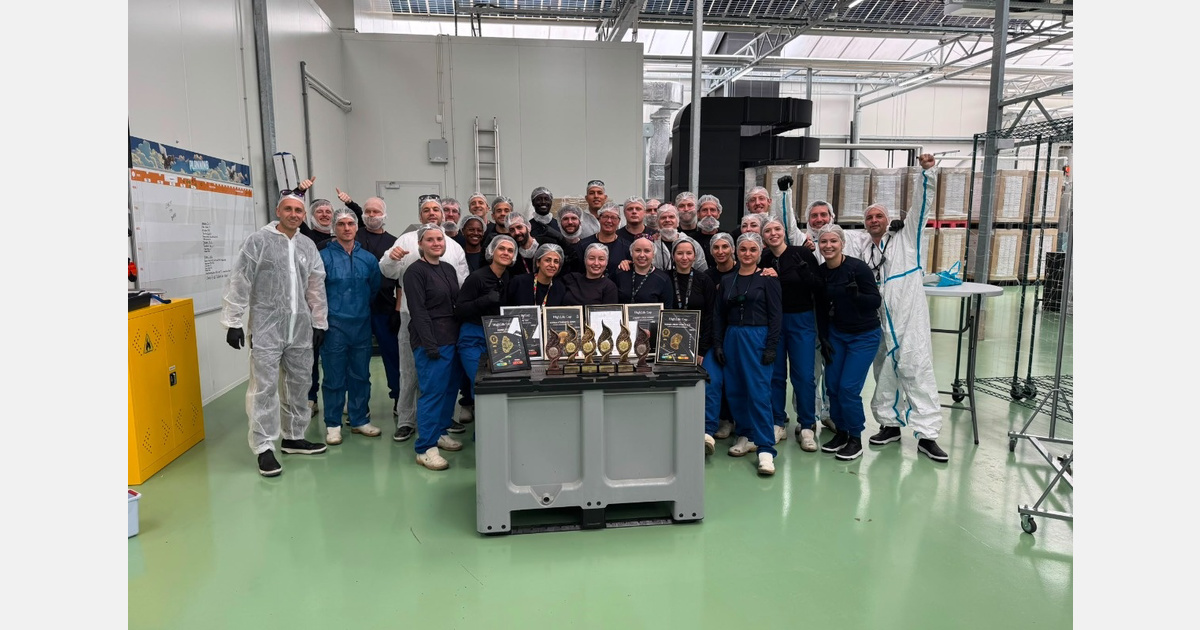
Hollandse Hoogtes received seven awards at the 2026 Highlife Cup, five of them in first place, using batches it was already sending to cafes in Holland, rather than material saved for the competition. The works were presented together with coffeeshop Club69 and John&co.
 © Hollandse Hoogtes
The difference between LP and equity income
The Highlife Cup is run in lots selected by cafes from months of sales, which leaves room for an entrant to submit their strongest lot. Rick Bakker, CEO of Hollandse Hoogtes, didn’t have much to choose from. “We built our facility to have a harvest every week, so the cycle goes on and on,” says Rick. The company’s production is allocated as quickly as it comes off the line, so what went into the mug was the final version, the same flower that a customer would buy that week. Wins include Crumbled Lime’s first sativa, Zizi’s first indica, Rainbow Zizi’s house favorite, Fruit Punch’s hash and Karma Stardawg third place at WPFF, along with two edible awards.
This is the first year that licensed producers can enter the cup, in their categories, after being excluded the previous year. The jury conducts terpene tests on the entries, and scores put the regulated category above the illegal cafe entries in three of the five flower categories, with both illegal entries scoring higher than the regulated entries. Basic growers had months to select their best material to send, while Hollandse Hoogtes produced a standard weekly production.
Rick spends time in the cafeteria telling the employees where the company is going. “Being number one is a standard, not a trophy,” he says. “What I’m proud of is our people, from farming to hand cutting to logistics, they keep that motivation to be the best and produce week after week.”
 © Hollandse Hoogtes
Cafes sold cannabis for decades without lab testing or stable genetics. “Everything we produce has to be tested, and we can consistently deliver consistent quality,” says Rick. “We have mother plants, all the plants come from those selected mother plants. That was unthinkable in the illegal market.” Cultivating all harvests with selected mothers allows the company to put regular production into a glass without worrying about which batch it is.
Genetics and inheritance
Hollandse Hoogtes works with two genetic houses, Karma Genetics and Amsterdam Genetics, both of which have long histories in the Dutch scene, and all of Karma’s breed and selection top positions come from this relationship. “We are very pleased that Karma has supported the start of Hollandse Hoogtes and continues to consult and support us.”
At the start of the experiment, growers got a short window to import cuttings of the developed genetics, which Rick describes as a day or two, when the rules briefly allowed, after which the path was closed. “The selection process now works from seed,” says Rick. When the company sees a gap in the market it selects seeds and conducts a full pheno-hunt of approximately 2,000 plants to judge how ten to fifty expressions of a single genetic grow together with others and the capabilities of the facility. Some basic genetics never worked well indoors, so selection continues.
 © Hollandse Hoogtes
Dutch experimental cannabis market
Edibles come out of a kitchen run by a chef, Nicolas Vanderslyen, who spent ten to fifteen years in Michelin-starred kitchens before fully delving into cooking with cannabis compounds. Hollandse Hoogtes combines the flavor of rosin with the flavor of chocolate or gummy, combines its tiramisu praline with Super Silver Sweets rosin for the look of the cake, and the chocolate comes from a luxury chocolate house. Tiramisu Pralines took the first place and Cherry Cola Gummies came third. “We see it as an important category that helps people who don’t want to smoke but want to get the experience,” says Rick.
Hollandse Hoogtes prices in the premium segment. “If you look for the same quality products from coffee shops, you pay 25 to 35 euros per gram for a good type of Gelato, like our Rainbow Bacio (Karma’s favorite for roasting) and we sell that for 12 to 15 euros,” says Rick. In the middle of the market is an average of eight to eleven euros per gram of flower, and at the bottom are greenhouse crops that have not done well indoors, and stock that a grower needs to move, where Rick has seen similar offers for five grams of strain for €22.50.
Demand already exceeds what the company can grow. “Winning awards doesn’t help because the demand will grow,” laughs Rick. The facility opened with ten flowering cells and sixteen are under construction, an increase of close to fifty percent, with flowers from the new cells expected to be on the market in the second quarter of next year. Current cells run on Fluence VYPR LEDs, and in expansion the company plans to test HPS and under-lighting with its own nutrient recipes. In canopy size Rick ranks alongside Hollandse Hoogtes Village Farms after counting the new build, behind CanAdelaar (Cronos), which remains the largest among experimental growers in greenhouse production, while Hollandse Hoogtes is grown entirely indoors, a setup best suited to the Dutch climate.
 For more information:
Dutch heights
(email protected)
www.hollandsehoogtes.nl
Cannabis News
DEA Picks Participants For Marijuana Rescheduling Hearing This Month, And Only Opponents Are Invited
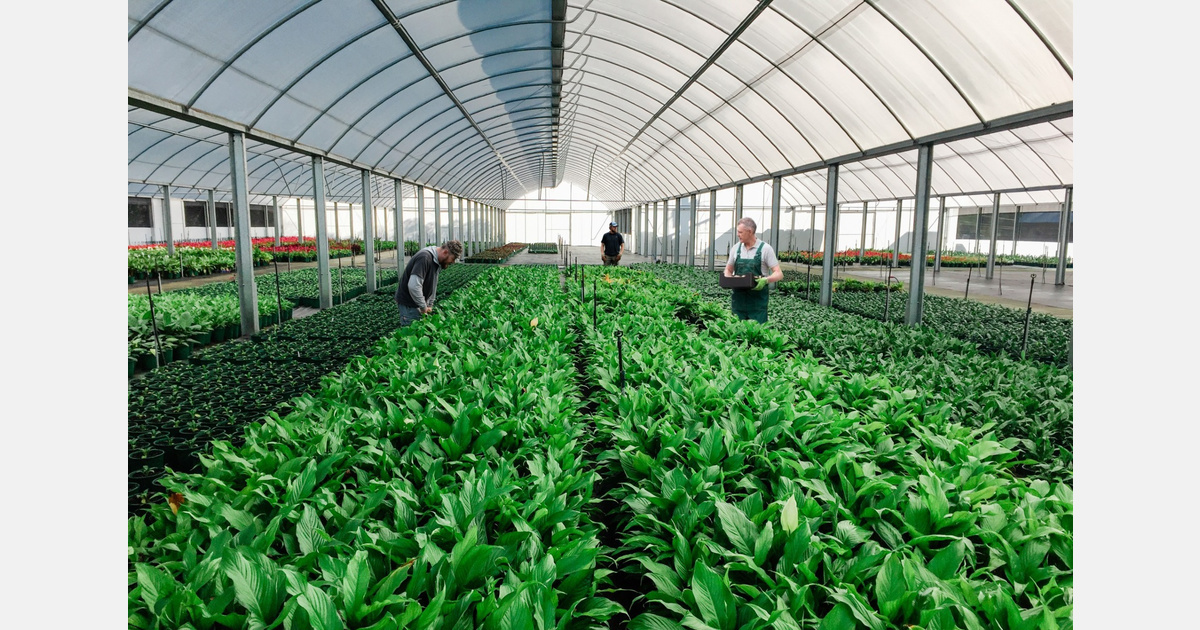
For over 50 years, Solarweave has been a woven covering solution for greenhouse and polytunnel applications. First introduced in the 1970s, it was developed as a sustainable alternative to plastic films and is recognized for its long life, strength and consistent performance.
Designed and manufactured in Australia, Solarweave is designed to withstand demanding growing environments, including high temperatures and high winds. Today, it is used worldwide in many protected cropping systems.
Building on this heritage, GALE Pacific has expanded the Solarweave range with the new D40 and D60 variants, giving growers greater flexibility to manage light, condensation and UV exposure while maintaining the durability that Solarweave is known for.
 © GALE Pacific
Light performance optimized for modern grow systems
The extended Solarweave range allows growers to select the right balance of light properties and anti-drip performance for different crops, climates and structures.
Solarweave D40 and D60 gradually increase fog, light diffusion and UV protection. This allows more light to penetrate through the crop canopy and helps reduce plant stress and disease risk in greenhouse environments.
Long life for stronger life value
Unlike plastic films that often need to be replaced every few seasons, Solarweave is used for 15 years or more in greenhouse and polytunnel applications.
This extended service life reduces replacement frequency, labor requirements and downtime during the life of the structure. When evaluated over time, many growers believe Solarweave provides a greater return on investment by avoiding the recurring costs and downtime associated with film replacement and disposal.
Built for real-world production
Solarweave is repairable, allowing localized damage to be repaired on site rather than replacing the entire coating. This is a practical advantage for continuous commercial growing operations.
With decades of proven performance, Australian manufacturing expertise and a wide range of options, Solarweave continues to evolve while remaining a reliable solution for long-lasting greenhouse covers.
For more information:
GALE Pacific
Email: (email protected)
galepacific.com/

Marijuana Retail Report

‘We didn’t cherry pick our submissions”

DEA Picks Participants For Marijuana Rescheduling Hearing This Month, And Only Opponents Are Invited

New York Court Overturns Injunction That Stopped Hemp Shop Raids

Full Show A&B&C Blocks Weed Talk News 6-10-24 with Alaina Pinto – Coast to Coast cannabis news

CANNABIS PIONEER | BIGMIKE

Marijuana Retail Report

More flexibility to manage light, condensation and UV with extended Solarweave range

Michigan Lawmakers Take Up Bill To Cap Marijuana Business Licenses As Industry Reels From Tax Increase

Virginia Officials Reach Compromise to Launch Legal Cannabis Sales Next July

“Our system can manage equipment across 10,000+ m² using just a few wires”

Florida Workshop to Discuss What Constitutes a ‘Cartoon’ in Hemp Packaging

Mazar-i-Sharif Hash Wednesday

Afghan Black Hash Wednesday

Weak Michigan Cannabis Sales Again in July – New Cannabis Ventures

From Finance to Wellness: Brad Zerman’s Impactful Pivot

DEA’s Cole Reverses His “priorities” ; Prohibitionists Dig In; Dead & Co Celebrates 60 years in SF

Re-release of the full show of Cannabis Coast to Coast news. Republican Texas DA Fires Up vs. laws;

Your Cannabis Business: Consistent Filings Are Critical

Curaleaf Q2 Revenue Falls 8% – New Cannabis Ventures
-
 Cannabis News10 months ago
“Our system can manage equipment across 10,000+ m² using just a few wires”
-
 Florida10 months ago
Florida Workshop to Discuss What Constitutes a ‘Cartoon’ in Hemp Packaging
-
 Video9 months ago
Mazar-i-Sharif Hash Wednesday
-
 Video8 months ago
Afghan Black Hash Wednesday
-
 aawh10 months ago
Weak Michigan Cannabis Sales Again in July – New Cannabis Ventures
-
 Video10 months ago
From Finance to Wellness: Brad Zerman’s Impactful Pivot
-
 Video10 months ago
DEA’s Cole Reverses His “priorities” ; Prohibitionists Dig In; Dead & Co Celebrates 60 years in SF
-
 Video10 months ago
Re-release of the full show of Cannabis Coast to Coast news. Republican Texas DA Fires Up vs. laws;