
Cannabis News
Nighttime humidity is not a problem that needs to be vented away


Night hours present a persistent and costly challenge for commercial greenhouse operators. When the thermal screens are closed and the ventilations are closed, the greenhouse is closed, trapping the moisture produced by the crop. This creates a high-stakes battle against condensation, disease and unnecessary energy loss. Amir Kandlik, B.Sc. Plant Science and Genetics in Agriculture and agronomist with Drygair explores the critical problem of nighttime humidity and explains the strategic shift from traditional ventilation-based control to a system built around active indoor dehumidification. “This ‘closed greenhouse’ approach improves energy efficiency and supports stronger crop health.”
 © Drygair
Night challenge: Thermodynamic and pathological risk
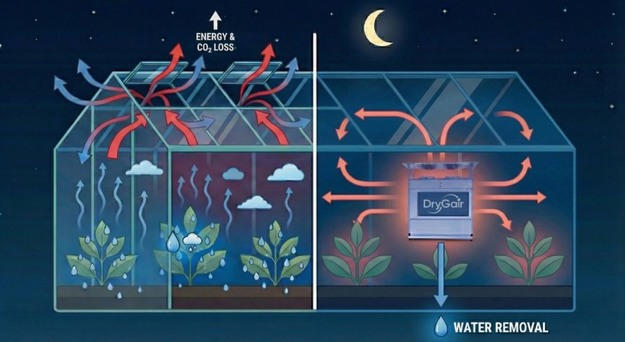
“At night, plants continue to transpire even though photosynthesis has stopped. Without the drying effect of daytime conditions, the air mass in the greenhouse quickly approaches saturation,” says Amir. “Traditional methods rely on ventilation, but ventilation replaces warm, CO₂-rich air with cold outside air. This increases heating demand, destabilizes temperatures and can introduce more moisture, especially in humid weather.”
A variation of this, heating the air before it is vented, wastes energy because the air conditioner is blown out immediately. “In cold, rainy, or snowy conditions, ventilation becomes impossible and humidity increases unchecked. As relative humidity rises above 85 percent and temperatures drop, surface temperatures can drop below the dew point. Condensation then forms on leaves, fruit, and structural elements, creating conditions that promote Botrytis, powdery mildew, and powdery mildew.”
Solution: “Closed” paradigm with active dehumidification.
A more advanced strategy replaces night ventilation with active internal dehumidification, keeping the greenhouse closed. Amir explains that it starts when the unit pulls in moist air, cools it below its dew point and condenses the water vapor into liquid form. “The latent heat released by condensation is captured and recycled, heating the dry air before redistributing it throughout the cottage. Instead of losing heat to dryness, this method converts moisture into heat and creates a net positive energy cycle.”
 © Drygair
Basic advantages of the closed night strategy
This approach improves disease prevention by maintaining a stable vapor pressure deficit and preventing dew formation. Keeping surfaces above the dew point significantly reduces disease pressure. Flower tests recorded a 98% reduction in Botrytis when relative humidity remained below 85%. Energy efficiency is also increased because the airfields remain closed and latent heat is recovered during dehumidification. Vegetable producers have reported energy savings of 50%.
“Climate uniformity is improved as constant air circulation removes microclimates, and sealed conditions store CO₂ for uptake at dawn,” says Amir. Crop quality and yield benefit from consistent transpiration and improved movement of nutrients and calcium. Basil had a 15 percent yield increase without downy mildew, and unheated tomato houses had a 25 percent higher yield per stem.
Practical settings for leaders
Adopting this strategy requires changing the operational logic, which is usually handled by a climate computer. “During the day, the vents are open and the natural ventilation manages the humidity, so the dehumidifiers are turned off. At night, when the outside temperature drops below the indoor set point, the vents and screens close, and the dehumidifier operates at an RH of about 75 to 80 percent. The priority is to maintain a dew point range of at least 2 degrees. While heating is used only for temperature stability, nighttime temperatures stay below 10 degrees Celsius. in regions with , an additional defrost coil is required for continuous operation.
Looking at the field results
Field studies show that flowers grown according to this strategy maintained lower relative humidity, achieved significant energy savings and did not require night ventilation. Basil trials showed a 15 percent increase in yield and zero downy mildew. Tomatoes and peppers have seen a 5 to 25 percent increase in yield and a 98 percent reduction in disease. Cannabis growers recorded 30 to 40 percent higher yields with about 50 percent energy savings.
Specific questions about geography and climate
In very cold climates, this view is especially good. Ventilating at minus 10 degrees Celsius creates an extreme heating load, and sealing the greenhouse and dehumidifying the interior retains heat, recovers latent heat and reduces boiler use. In hot and humid climates, night ventilation is unreliable during warm or rainy weather. Active dehumidification removes moisture in a controlled manner, and with additional Air-Water Heat Exchange, the system can heat or cool the air through an external water loop.
Supporting scientific and technical references
Research includes Elad and Shtienberg’s work on Botrytis cinerea, University of Massachusetts Extension greenhouse moisture reduction guidance, Stanghellini’s transpiration studies, and Ho and Adams’ work on water and nutrient uptake in tomatoes.
Without ventilation
“Nighttime humidity is not a problem to be banished, but an imbalance to be managed,” says Amir. “The closed greenhouse strategy treats moisture as an energy resource instead of a waste product. By keeping greenhouses closed at night and using active internal dehumidification, growers can reduce disease, improve energy efficiency, retain CO₂, stabilize the nighttime climate, and increase yield and crop quality. This is one of the most impactful changes in modern greenhouse climate management.”








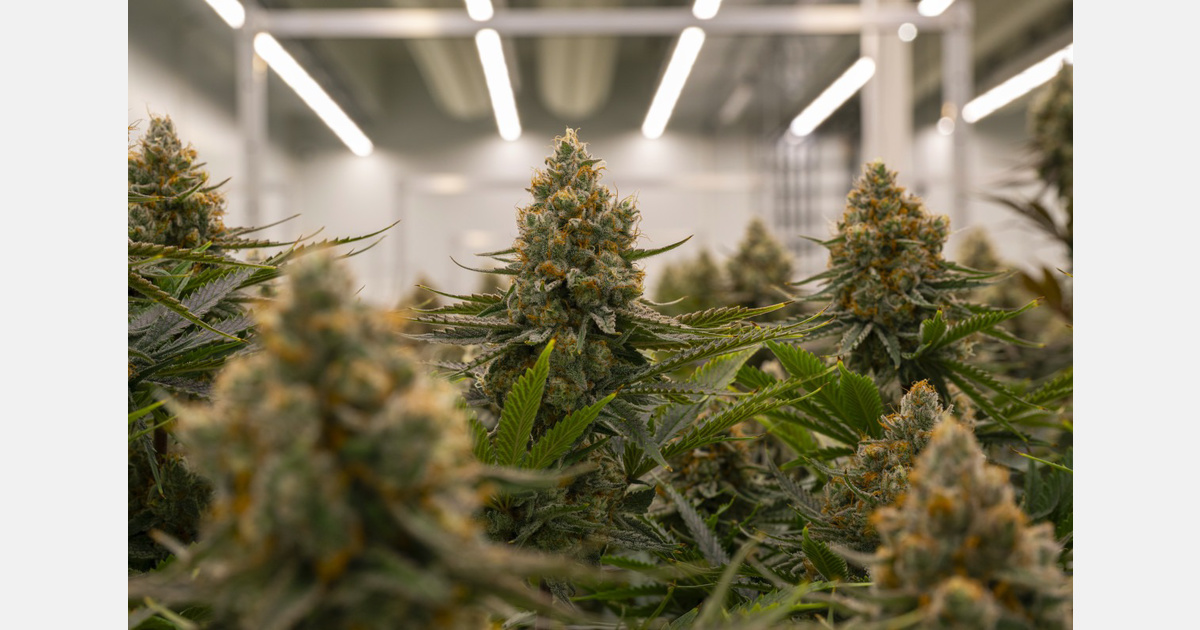
Village Farms International, one of the world’s largest cannabis production facilities located in Delta, BC, increased its export volumes by more than 500 percent by the end of 2025, with international sales reaching US$37.9 million, or just over 20 percent of total cannabis revenue of US$188 million. The main export markets are Germany, Australia, the United Kingdom, New Zealand and Israel.
The company is also expanding, developing an additional 550,000 square feet of greenhouse space across the street from its main facility, designed to support both domestic and international cultivation. Orville Bovenschen, VFI’s global president of operations, points to the excise burden as a permanent strain on the domestic economy: “If you look at how much we paid in excise last year, it’s astronomical,” he says, although VFI declined to provide specific figures.
Walker Patton, one of the founders of the BC Cannabis Alliance, which represents about 50 licensed growers in the province, frames the domestic regulatory environment in stark terms: “With the rules that this industry was set up for, it’s like doing business right out of the gate.” Canada’s excise tax structure charges by weight instead of market price, meaning that since wholesale prices have fallen to roughly half of initial projections, effective tax rates for producers have risen.
 © This is Holland
Sweetgrass Cannabis, a micro-farm located in the Kootenay region, now derives 60 to 70 percent of its sales from international markets after retreating from provinces such as Ontario and Alberta. Company CEO Gemma Hayes says: “Margins, as well as export opportunities, drove our decision.” Ontario’s wholesale markup of up to 25 per cent, layered with excise taxes, spurred what Hayes described as a “race to the bottom.”
Rubicon Organics, a Vancouver-based publicly traded company, entered international markets last year and recently opened a 47,500-square-foot facility in Hope in part to meet overseas demand. Speaking from the International Cannabis Conference in Berlin, Mathieu Aubin, director of marketing and new business, said: “Canada is very well positioned to access international markets for reliable and safe cannabis,” noting that reliability and product integrity are key to gaining access to the medical market.
Not all producers have equal access to these markets. Alex Rumi, founder of grower Good Buds out of Salt Spring Island, said established export markets are structured around an indoor pharmaceutical-style model that hurts sun-grown cannabis, and that Canada’s export system “works for big growers and doesn’t work for craft.” Julia Cameron, president of Cannabis Cultivators of BC and chair of communications and corporate affairs for the VFI, added that growers must secure permits for each shipment while navigating different rules across countries, creating a prohibitive barrier for small operators.
BC has more than 200 licensed growers and accounts for roughly a quarter of Canada’s legal cannabis production, but represents only 14 percent of national exports. Lana Popham, B.C.’s Minister of Agriculture and Food, points to the FIFA World Cup games in Vancouver as a near-term possibility: “It will be interesting to see how many people engage with what is a great product here in B.C.”
Cannabis News
Congressman And Other Media Outlets Join Marijuana Moment’s Push For DEA To Livestream Rescheduling Hearing

Cannabis News
New access solution for cannabis facilities designed to address limitations of traditional gates
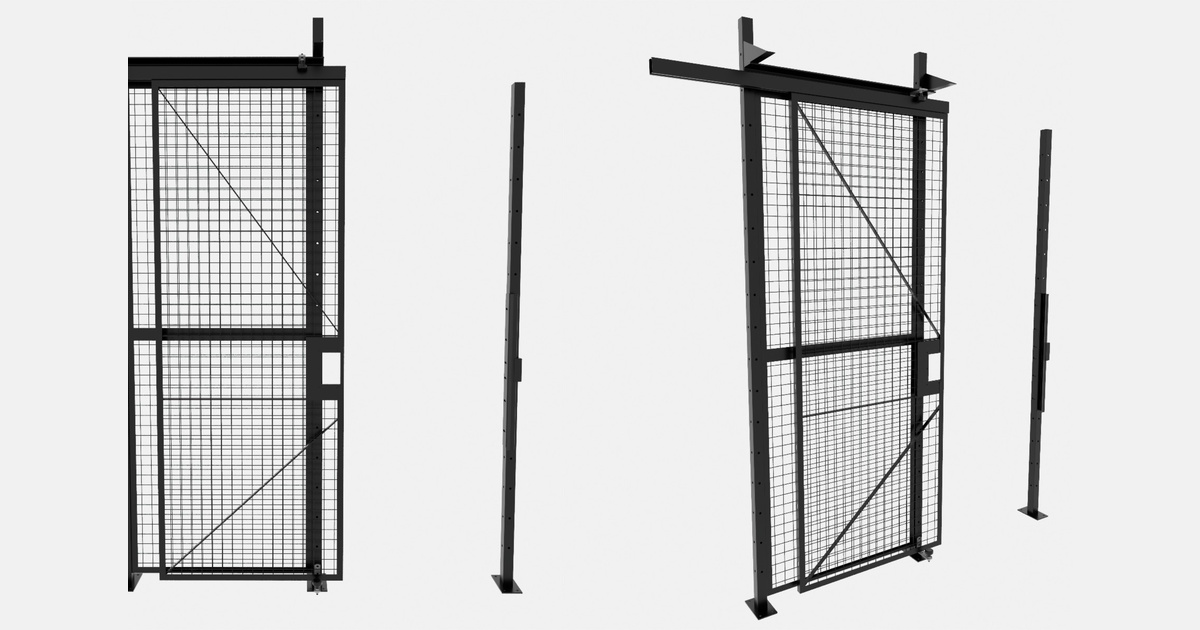
SpaceGuard Products, a North American manufacturer of wire mesh security solutions and security protection systems, has released the BeastWire® Tunnel Door. This access solution is designed to overcome the limitations of traditional balanced doors and is aimed at cannabis cultivation, processing, packaging and distribution environments. The BeastWire Tunnel Door is designed for installations that require vertical clearance, reliable movement and floor space efficiency.
The BeastWire Tunnel Door provides top clearance with no tracks in the operating path of the door. It is suitable for spaces where overhead paths are not feasible, such as facilities that use high-mast forklifts, oversized pallet loads or specialized material handling equipment. Tall equipment can pass through the opening unhindered, allowing for continuous workflow and flexibility in equipment movement.
 © SpaceGuard Products
The door uses a track system designed to create consistent movement. This addresses issues such as stuttering, binding, and misalignment that can occur with conventional sliding or counterbalanced designs. The track controls the path of the door so that the locking mechanism aligns with each cycle, allowing operators to close the door with relatively low force.
Unlike lower track systems that require a soil trench, the BeastWire Tunnel Door mounts above ground. This avoids cutting the installation slab, simplifies installation and reduces maintenance requirements. The system can be installed as a retrofit or in new construction, without changing the floor.
 © SpaceGuard Products
The door frame and retractable design reduces the need for side supports and additional space on the side of the door. This results in a smaller footprint and more usable surface area. The gate has the same construction approach as other BeastWire systems.
The BeastWire Tunnel Door is a high-access door designed for strength and ease of use in cannabis industry facilities.
For more information:
SpaceGuard products 
Email: (email protected)
spaceguardproducts.com/

A New York Apple Orchard Bet The Farm On Cannabis

Village Farms International leads B.C. cannabis producers in global export push

ALJ Timeline + CBD Data That Could Influence Federal Decision

Congressman And Other Media Outlets Join Marijuana Moment’s Push For DEA To Livestream Rescheduling Hearing

Trump Admin Asks Congress to Regulate Full-Spectrum Hemp Products or Delay Federal Crackdown

Coast to Coast Cannabis News Reports – Massachusetts Rids THC Infused Drinks from Liquor Stores

CANNABIS GLASS HOUSE | KYLE KAZAN

Marijuana Retail Report

New access solution for cannabis facilities designed to address limitations of traditional gates

Canopy Growth’s Year of Reinvention Under Luc Mongeau

“Our system can manage equipment across 10,000+ m² using just a few wires”

Florida Workshop to Discuss What Constitutes a ‘Cartoon’ in Hemp Packaging

Mazar-i-Sharif Hash Wednesday

Afghan Black Hash Wednesday

Weak Michigan Cannabis Sales Again in July – New Cannabis Ventures

From Finance to Wellness: Brad Zerman’s Impactful Pivot

Re-release of the full show of Cannabis Coast to Coast news. Republican Texas DA Fires Up vs. laws;

DEA’s Cole Reverses His “priorities” ; Prohibitionists Dig In; Dead & Co Celebrates 60 years in SF

Curaleaf Q2 Revenue Falls 8% – New Cannabis Ventures

Your Cannabis Business: Consistent Filings Are Critical
-
 Cannabis News10 months ago
“Our system can manage equipment across 10,000+ m² using just a few wires”
-
 Florida10 months ago
Florida Workshop to Discuss What Constitutes a ‘Cartoon’ in Hemp Packaging
-
 Video9 months ago
Mazar-i-Sharif Hash Wednesday
-
 Video9 months ago
Afghan Black Hash Wednesday
-
 aawh10 months ago
Weak Michigan Cannabis Sales Again in July – New Cannabis Ventures
-
 Video10 months ago
From Finance to Wellness: Brad Zerman’s Impactful Pivot
-
 Video10 months ago
DEA’s Cole Reverses His “priorities” ; Prohibitionists Dig In; Dead & Co Celebrates 60 years in SF
-
 Video10 months ago
Re-release of the full show of Cannabis Coast to Coast news. Republican Texas DA Fires Up vs. laws;