Connect with us

Cannabis News

Tilray expands UK pharmaceutical access through partnerships

Published

on


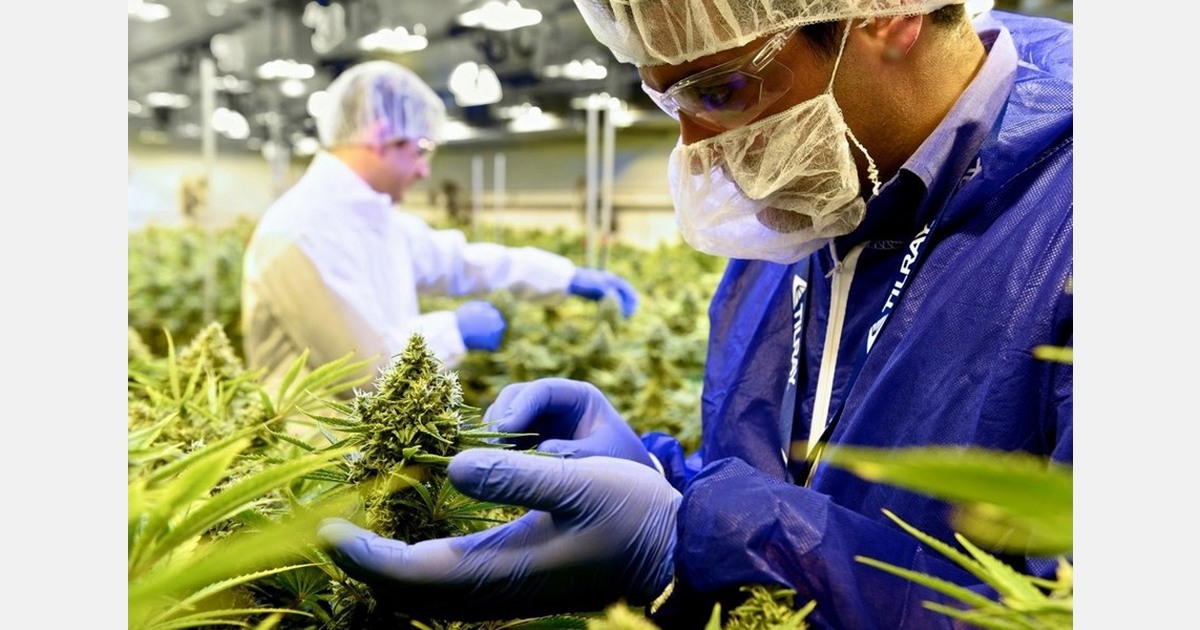
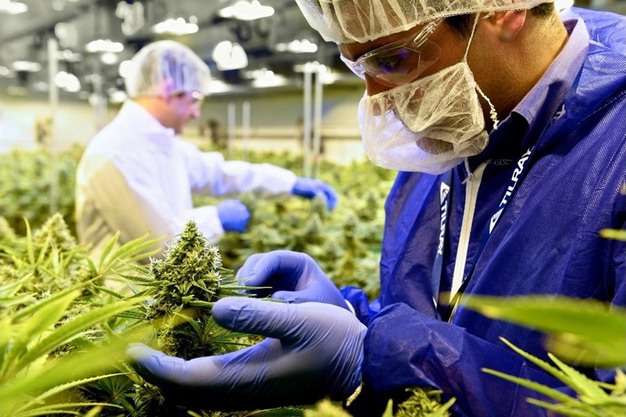
Tilray Pharma has announced that its European pharmaceutical distribution business, CC Pharma, has entered into an agreement with Smartway Pharmaceuticals to expand the availability of its pharmaceutical products in the UK.

Through this agreement, CC Pharma and Smartway will jointly support the expansion of parallel importation and specialist pharmaceutical supply in the UK, leveraging Smartway’s established national distribution infrastructure to facilitate the delivery of pharmaceutical products and leveraging CC Pharma’s European purchasing power and GMP capability.

The UK pharma market is almost £1 billion in this category, and this agreement positions Tilray and CC Pharma to work with Smartway to accelerate access, improve reliability of supply and extend reach through trusted healthcare channels.
© Tilray Marks

Rajnish Ohri, International President, Tilray Brands, stated, “The UK is a priority market within Tilray’s international medical strategy. This agreement strengthens our ability to expand access to medicines through established healthcare distribution channels, while advancing long-term growth across the evolving European landscape. Additionally, this agreement is expected to integrate Tilray into its medicinal cannabis system.”

Mathias Bossen, Managing Director of CC Pharma added, “This agreement is an important step forward in expanding our pharmaceutical distribution activities in the UK. By working closely with Smartway and leveraging its strong national network, we are well positioned to improve supply reliability and support our pharmacy and hospital partners with high-quality UK PI product lines.”

Josh Cocklin, CEO of Smartway, said: “Our focus is always on patients and outcomes. Extending what Smartway already does in regulated pharmaceutical supply, this deal supports the continuity and expansion of access to medicines across the UK healthcare service. For patients and the healthcare professionals who care for them, this means less disruption and more predictable access to care.”

For more information:
Tilray
www.tilray.com



Publication date:


Cannabis News

Horticulture plays an important role in testing techniques for energy storage

Published

on

By

A three-year research project in the Netherlands aims to accelerate long-term energy storage in the national energy system. The RenewaFLEXNL consortium includes 17 partners under the coordination of TNO. The project aims to address grid congestion, price volatility and the growing imbalance between supply and demand for renewable energy.

Horticulture practice
Two case studies of the project are related to the Dutch greenhouse sector. At De Kwakel, the project explores how stored heat and electricity can be used to reduce greenhouses’ dependence on gas-fired combined heat and power (CHP) installations. The goal is to integrate energy storage into horticultural production in a way that supports more flexible and sustainable energy use.

Alternatively, the focus is on a wider regional energy system. This includes renewable energy generation, energy storage, electric truck charging infrastructure and supply of greenhouses and local end users.

The third case study is in the port of Rotterdam. There, the focus is on integrating storage with offshore wind power to provide green electricity and heat to energy-intensive industries.

Long-term energy storage technologies
Pilot projects evaluate how long-term energy storage can reduce grid congestion, improve the use of renewable energy and strengthen regional energy security.

The technologies under study are designed to store renewable energy for periods ranging from 8 to 100 hours, allowing for flexible expansion when needed. This can help prevent the reduction of renewable generation and contribute to a more stable energy system.

The consortium is investigating three main solutions. These include a scalable saltwater-based acid-base flow battery, multi-day storage through reversible iron oxidation aimed at grid stability and cost-effective flexibility, and integrated systems combining heat pumps, water-based thermal storage, and sodium-ion batteries with intelligent control systems.

In addition to technology development, RenewaFLEXNL focuses on system integration. This includes techno-economic analyses, life cycle assessments, business case development and recommendations for future regulatory frameworks.

A national system analysis will identify where long-term energy storage can provide the greatest societal value.

Consortium
The project included TNO (coordinator), Eindhoven University of Technology (TU/e), DNV, Vattenfall, Vopak, Nobian, Stedin, Aquabattery, ORE Energy, BB1 Project, HilverdaFlorist, Butterfly Orchid, Emmett Green, EFS, Ecomatters, New Ground Law and Energy Storage NL.

Advisory partners and stakeholders include TenneT, Alliander, Enexis, Port of Rotterdam Authority, Glastuinbouw Nederland and representatives from the industry and transport sectors.

RenewaFLEXNL receives funding from the Dutch MOOI program.

Source: TNO

Continue Reading

Cannabis News

Missouri Bill To Restrict Hemp THC Products Stalls Amid Senate Filibuster

Published

on

By

“We have to make sure we don’t have unintended consequences, and destroy things that don’t need to be destroyed.”

By Rebecca Rivas, Missouri Independent

A push for Missouri’s immediate approval of planned federal limits on intoxicating hemp products emerged Wednesday in the state Senate, with critics urging any changes to wait until national regulations take effect in November.

Democratic state Sen. Karla May of St. Louis led the two-hour filibuster invoice that would immediately ban hemp-derived THC beverages and edibles as soon as the legislation is passed and becomes law.

May argued in a Senate debate on Wednesday that the federal limits will be changed before they are implemented later this year. Congress passed a provision to ban these products as part of the federal spending package last year.

offered one correction which would align the Senate bill with a the proposal Sponsored by Republican state Rep. Dave Hinman of O’Fallon, Missouri would be allowed to sell the products nationwide if Congress allows it.

Hinman’s bill has cleared a House committee and is ready for debate by the full chamber.

“When Congress voted on this whole thing, this was literally reopening the government,” May said. “I mean, this wasn’t even a thoughtful conversation.”

The bill debated Wednesday afternoon, sponsored by Republican state Sen. David Gregory Chesterfield, would prohibit hemp products from containing more than 0.4 milligrams of THC per container and from having a THC concentration of no more than 0.3 percent by dry weight, delta-9 THC. These reflect federal boundaries.

Intoxicating hemp products containing as much as 1,000 mg of THC are being sold in smoke shops—outside of licensed marijuana dispensaries in Missouri—and are not regulated by any government agency. Missouri lawmakers have not passed legislation regulating these products since 2023.

Gregory has argued that his bill and the federal provision close loopholes left in the 2018 Farm Bill when Congress legalized hemp.

“My bill continues the intent of Congress three months ago, and of course our great people in Missouri,” Gregory said, “which is that if you get drunk from the cannabis plant, it’s marijuana and it should be heavily regulated under these specific rules.”

May has been a consistent critic of attempts to ban intoxicating hemp products outright, arguing that they should be regulated.

May said the amendment she offered to Gregory’s bill Wednesday was a “good compromise” because it would still align state and federal lines if Congress rewrites the federal boundaries.

“It’s not about removing your tongue,” May told Gregory. “And if (Congress) does nothing, your language will be the law of the land of Missouri.”

Gregory said his amendment went “a little too far” for him because Missouri would do “what the feds tell us.” He said these products urgently need to be regulated to protect children.

After more than two hours of debate, the Senate was forced to adjourn when it failed to get enough lawmakers from the chamber to form a quorum.

State officials estimated in 2024 that 40,000 food establishments and smoke shops and 1,800 food manufacturers were selling products that would be banned under the proposed federal regulations. This includes low-THC seltzers such as Mighty Kind and Triple, which have grown in popularity in liquor stores and bars.

May said lawmakers should consider those businesses when making decisions.

“It’s a complicated situation,” May said. “And I think we need to make sure we don’t have unintended consequences, and destroy things that don’t need to be destroyed.”

Hinman told The Independent Thursday that he spent about 20 hours this week working on his bill, so he expected it wouldn’t face the same hurdles Gregory faced during a full-house debate.

“There’s so much involved in this,” Hinman said, “and trying to legalize that is very difficult.”

He said there are three potential scenarios that could play out before November, when the federal limits go into effect.

The feds can continue with the current limits, he said, which “puts all hemp businesses out of business.” Congress could redefine what constitutes hemp and change the limit of 0.4 milligrams of THC per container to allow low-THC drinks and edibles.

“So in that case, we’re looking at what would happen if we changed that piece of the puzzle,” he said.

The third option is if Congress approves a two-year extension, he said, and “go for it.” That would mean Missouri would have to put some sort of regulation in place in the meantime, he said.

“We’re trying to write legislation that would effectively cover those three things,” he said, “So we’re trying to achieve the goal of making these hard negotiations successful for everyone in this market, if federal law is possible.”

This story was first published by the Missouri Independent.

Marijuana Moment is made possible with the help of readers. If you rely on our pro-cannabis journalism to stay informed, consider a monthly Patreon pledge.

Continue Reading

Cannabis News

New Farm Bill Released By GOP Committee Chair Aims To Reduce Hemp Industry ‘Regulatory Burdens’

Published

on

By

A top House committee chairman has introduced the latest version of a large-scale agriculture bill with provisions that his office says will reduce “regulatory burdens on industrial hemp producers.”

The proposed 2026 Farm Bill released Friday by House Agriculture Committee Chairman Glenn Thompson (R-PA) would maintain the industrial hemp program as the cannabinoid industry waits for the recriminalization of consumable cannabinoid products under legislation signed into law by President Donald Trump last year.

But for farmers who grow hemp for industrial purposes, such as fiber and grain, the latest version of the Farm Bill is being touted as a source of industry relief, with policies that allow the US Department of Agriculture (USDA), as well as states and tribes, to reduce or eliminate “testing requirements and background checks for producers.”

Those provisions are modeled after the Industrial Hemp Standalone Act, bipartisan legislation introduced in the 118th Congress aimed at strengthening the hemp market after the crop and its derivatives were federally legalized in 2018 during Trump’s first term.

Under the new 2026 Farm Bill, the USDA would also be mandated to “establish a process by which hemp testing laboratories can be accredited,” a section-by-section summary says. Currently, only Drug Enforcement Administration (DEA)-accredited laboratories can test hemp yields for compliance purposes, which has created a bottleneck that has historically limited resources.

“A new farm bill is long overdue, and the Farm, Food and National Security Act of 2026 is an important step forward in providing certainty to our farmers, ranchers and rural communities,” Thompson said of the sweeping legislation in a press release Friday.

“This bill offers modern policies for modern challenges and builds on years of listening to the needs of farmers, ranchers and rural Americans,” he said. he said. “The farm bill affects our entire country, whether you live on a farm or not, and I look forward to my colleagues in Congress working together to push this critical legislation through the finish line.”

His panel will begin examining the bill on February 23.

Although the text of the legislation has only just been released to the public, the Democratic leadership has already argued with the draft proposal.

“A review of the text of the legislation is underway,” said Rep. Angie Craig (D-MN), a member of the committee. “As far as I know, the Republican farm bill doesn’t meet the moment before farmers and workers.”

“Farmers need Congress to act quickly to end inflationary tariffs, stabilize trade relations, expand domestic market options like year-round E15, and help lower input costs. The Republican majority instead chose to ignore Democratic priorities and push through a farm bill with poison pills if nothing else complicates their options.” he said. “I strongly urge my Republican colleagues to put aside the political brass and work with House Democrats on a bipartisan bill that addresses the real issues facing farmers right now, before it’s too late.”

Again, regardless of how the proposed revisions to industrial hemp policy play out, there is a more pressing concern for the primary economic driver of the cannabis market—the farmers, manufacturers, and processors of cannabinoids in consumable products like CBD—in this latest Farm Bill.

The spending legislation signed by the president would once again ban cannabinoid products containing trace amounts of THC, which advocates say would upend an already struggling market.

Since 2018, cannabis products have been considered legal hemp if they contain less than 0.3 percent delta-9 THC by dry weight.

However, the law, which will take effect in November, specifies that the weight would be applied to total THC — including delta-8 and other isomers. Also, “as tetrahydrocannabinol (or any other marketed cannabinoid) with similar effects in humans or animals (as determined by the Secretary of Health and Human Services).”

The new definition of legal hemp would also prohibit “any hemp-derived cannabinoid intermediate product marketed or sold as an end product or directly to an end consumer for personal or household use,” as well as products containing cannabinoids that are synthesized or manufactured outside of the cannabis plant or that cannot be produced naturally by the plant.

Legal hemp products would be limited to 0.4 milligrams total THC per container or any other cannabinoids with similar effects.

A bill called the Hemp Enforcement, Modernization and Protection (HEMP) Act is a potential alternative to the outright THC ban included in the spending bill signed by Trump. in the affirmative allowing the sale of consumable hemp products to adults over 21 years of age. This includes edibles, beverages and breathable items.

If the legislation were to be enacted, there would be several regulatory restrictions on the market. For example, packaging should not appeal to young people and should be fake. It should also list all the cannabinoids present and include a QR code that links to a certificate of analysis.

Manufacturers of hemp products would be prohibited from adding substances such as alcohol, caffeine, tobacco, nicotine, melatonin or others “that may interact with cannabinoids or enhance or modify their effects.”

There would also be manufacturing and testing requirements, and hemp companies would have to register their facilities.

Additionally, there are provisions mandating the establishment of a total cap on cannabinoids in hemp products. The US Department of Health and Human Services (HHS) would be responsible for proposing the cannabinoid limits within 60 days of their enactment.

In the meantime, the liquor dealers got together recently Encourage Congress to delay passage of the law Trump signed to federally recriminalize THC beverages and other hemp-derived products.

The coalition calls on the members of parliament to approve the legislation they have just presented Hemp Plantation Provision Lawthat would give the hemp industry two more years before a federal ban on THC products takes effect, which stakeholders hope will better position them to negotiate a broader regulatory compromise.

House Oversight and Government Reform Committee Chairman James Comer (R-KY), who is sponsoring the proposal, appeared at a news conference last month. farmers concerned about the impact of the federal hemp ban in their businesses.

what’s the point Four out of five marijuana users say they oppose the recriminalization of THC hemp products According to the spending bill Trump signed in November. However, it should be noted that this survey was conducted a few weeks before the cannabis rescheduling order and measures to protect access to full-spectrum CBD.

Meanwhile, it would make way for a recently introduced bill in the Republican-led Congress stop implementing the hemp ban under established credit legislation.


It’s Marijuana Time tracking hundreds of cannabis, psychedelic and drug policy bills in state legislatures and Congress this year. Patreon supporters By pledging at least $25 per month, you’ll get access to our interactive maps, charts and audio calendars so you never miss a development.


Learn more about our marijuana bill tracking and become a Patreon supporter to gain access

Hemp companies and industry groups have warned about the potential ramifications of the ban, but despite states in support of cannabis rights and a social media post extolling the benefits of CBD, Trump signed the underlying spending measure into law without endorsing the hemp provisions.

GOP political operative Roger Stone recently said it was Trump effectively “forced” Republican lawmakers to sign the spending bill with language to ban hemp THC.

However, a White House spokesman said before signing the bill Trump was particularly supportive of the ban’s language.

The Democratic governor of Kentucky said that the hemp industry is an “important” part of the economy that deserves to be regulated at the state level—instead of being banned federally, as Congress has done—.

Additionally, a leading veterans organization is alerting Congressional leaders to the recently passed blanket ban on consumable hemp products. could inadvertently “close the door” on critical inquiry.

Marijuana Moment is made possible with the help of readers. If you rely on our pro-cannabis journalism to stay informed, consider a monthly Patreon pledge.

Become a patron on Patreon!

Continue Reading
Advertisement

Trending

Copyright © 2021 The Art of MaryJane Media