Connect with us

Cannabis News

New Farm Bill Released By GOP Committee Chair Aims To Reduce Hemp Industry ‘Regulatory Burdens’

Published

on

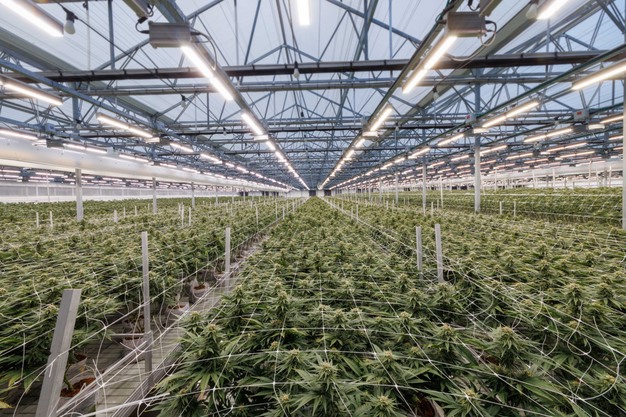
A top House committee chairman has introduced the latest version of a large-scale agriculture bill with provisions that his office says will reduce “regulatory burdens on industrial hemp producers.”

The proposed 2026 Farm Bill released Friday by House Agriculture Committee Chairman Glenn Thompson (R-PA) would maintain the industrial hemp program as the cannabinoid industry waits for the recriminalization of consumable cannabinoid products under legislation signed into law by President Donald Trump last year.

But for farmers who grow hemp for industrial purposes, such as fiber and grain, the latest version of the Farm Bill is being touted as a source of industry relief, with policies that allow the US Department of Agriculture (USDA), as well as states and tribes, to reduce or eliminate “testing requirements and background checks for producers.”

Those provisions are modeled after the Industrial Hemp Standalone Act, bipartisan legislation introduced in the 118th Congress aimed at strengthening the hemp market after the crop and its derivatives were federally legalized in 2018 during Trump’s first term.

Under the new 2026 Farm Bill, the USDA would also be mandated to “establish a process by which hemp testing laboratories can be accredited,” a section-by-section summary says. Currently, only Drug Enforcement Administration (DEA)-accredited laboratories can test hemp yields for compliance purposes, which has created a bottleneck that has historically limited resources.

“A new farm bill is long overdue, and the Farm, Food and National Security Act of 2026 is an important step forward in providing certainty to our farmers, ranchers and rural communities,” Thompson said of the sweeping legislation in a press release Friday.

“This bill offers modern policies for modern challenges and builds on years of listening to the needs of farmers, ranchers and rural Americans,” he said. he said. “The farm bill affects our entire country, whether you live on a farm or not, and I look forward to my colleagues in Congress working together to push this critical legislation through the finish line.”

His panel will begin examining the bill on February 23.

Although the text of the legislation has only just been released to the public, the Democratic leadership has already argued with the draft proposal.

“A review of the text of the legislation is underway,” said Rep. Angie Craig (D-MN), a member of the committee. “As far as I know, the Republican farm bill doesn’t meet the moment before farmers and workers.”

“Farmers need Congress to act quickly to end inflationary tariffs, stabilize trade relations, expand domestic market options like year-round E15, and help lower input costs. The Republican majority instead chose to ignore Democratic priorities and push through a farm bill with poison pills if nothing else complicates their options.” he said. “I strongly urge my Republican colleagues to put aside the political brass and work with House Democrats on a bipartisan bill that addresses the real issues facing farmers right now, before it’s too late.”

Again, regardless of how the proposed revisions to industrial hemp policy play out, there is a more pressing concern for the primary economic driver of the cannabis market—the farmers, manufacturers, and processors of cannabinoids in consumable products like CBD—in this latest Farm Bill.

The spending legislation signed by the president would once again ban cannabinoid products containing trace amounts of THC, which advocates say would upend an already struggling market.

Since 2018, cannabis products have been considered legal hemp if they contain less than 0.3 percent delta-9 THC by dry weight.

However, the law, which will take effect in November, specifies that the weight would be applied to total THC — including delta-8 and other isomers. Also, “as tetrahydrocannabinol (or any other marketed cannabinoid) with similar effects in humans or animals (as determined by the Secretary of Health and Human Services).”

The new definition of legal hemp would also prohibit “any hemp-derived cannabinoid intermediate product marketed or sold as an end product or directly to an end consumer for personal or household use,” as well as products containing cannabinoids that are synthesized or manufactured outside of the cannabis plant or that cannot be produced naturally by the plant.

Legal hemp products would be limited to 0.4 milligrams total THC per container or any other cannabinoids with similar effects.

A bill called the Hemp Enforcement, Modernization and Protection (HEMP) Act is a potential alternative to the outright THC ban included in the spending bill signed by Trump. in the affirmative allowing the sale of consumable hemp products to adults over 21 years of age. This includes edibles, beverages and breathable items.

If the legislation were to be enacted, there would be several regulatory restrictions on the market. For example, packaging should not appeal to young people and should be fake. It should also list all the cannabinoids present and include a QR code that links to a certificate of analysis.

Manufacturers of hemp products would be prohibited from adding substances such as alcohol, caffeine, tobacco, nicotine, melatonin or others “that may interact with cannabinoids or enhance or modify their effects.”

There would also be manufacturing and testing requirements, and hemp companies would have to register their facilities.

Additionally, there are provisions mandating the establishment of a total cap on cannabinoids in hemp products. The US Department of Health and Human Services (HHS) would be responsible for proposing the cannabinoid limits within 60 days of their enactment.

In the meantime, the liquor dealers got together recently Encourage Congress to delay passage of the law Trump signed to federally recriminalize THC beverages and other hemp-derived products.

The coalition calls on the members of parliament to approve the legislation they have just presented Hemp Plantation Provision Lawthat would give the hemp industry two more years before a federal ban on THC products takes effect, which stakeholders hope will better position them to negotiate a broader regulatory compromise.

House Oversight and Government Reform Committee Chairman James Comer (R-KY), who is sponsoring the proposal, appeared at a news conference last month. farmers concerned about the impact of the federal hemp ban in their businesses.

what’s the point Four out of five marijuana users say they oppose the recriminalization of THC hemp products According to the spending bill Trump signed in November. However, it should be noted that this survey was conducted a few weeks before the cannabis rescheduling order and measures to protect access to full-spectrum CBD.

Meanwhile, it would make way for a recently introduced bill in the Republican-led Congress stop implementing the hemp ban under established credit legislation.


It’s Marijuana Time tracking hundreds of cannabis, psychedelic and drug policy bills in state legislatures and Congress this year. Patreon supporters By pledging at least $25 per month, you’ll get access to our interactive maps, charts and audio calendars so you never miss a development.


Learn more about our marijuana bill tracking and become a Patreon supporter to gain access

Hemp companies and industry groups have warned about the potential ramifications of the ban, but despite states in support of cannabis rights and a social media post extolling the benefits of CBD, Trump signed the underlying spending measure into law without endorsing the hemp provisions.

GOP political operative Roger Stone recently said it was Trump effectively “forced” Republican lawmakers to sign the spending bill with language to ban hemp THC.

However, a White House spokesman said before signing the bill Trump was particularly supportive of the ban’s language.

The Democratic governor of Kentucky said that the hemp industry is an “important” part of the economy that deserves to be regulated at the state level—instead of being banned federally, as Congress has done—.

Additionally, a leading veterans organization is alerting Congressional leaders to the recently passed blanket ban on consumable hemp products. could inadvertently “close the door” on critical inquiry.

Marijuana Moment is made possible with the help of readers. If you rely on our pro-cannabis journalism to stay informed, consider a monthly Patreon pledge.


Become a patron on Patreon!

Cannabis News

New CFO announced for TerrAscend

Published

on

By

TerrAscend Corp. has announced the appointment of Eric Jackson as Chief Financial Officer, effective April 27, 2026.

“On behalf of the entire TerrAscend team, we are pleased to welcome Eric as our Chief Financial Officer,” said Ziad Ghanem, President and CEO of TerrAscend. “Eric brings a proven track record of financial and operational leadership in complex and competitive retail and consumer businesses. His experience in driving efficiencies, expanding margins and navigating dynamic operating environments will be invaluable as we continue to scale and execute our strategy.”

© TerrAscend

Mr. Jackson brings more than two decades of financial and operational leadership experience in the retail, consumer and manufacturing sectors. Most recently, he served for more than eight years as Executive Vice President and Chief Financial Officer of American Signature, Inc., a multi-location, omnichannel retailer, where Mr. Jackson oversaw finance, accounting, treasury, analytics, IT, real estate and supply chain functions.

Prior to American Signature, Mr. Jackson spent more than 14 years at L Brands, a publicly traded specialty retailer whose portfolio included Victoria’s Secret, PINK, Bath & Body Works, La Senza and Henri Bendel. He held senior management roles in finance and operations, supporting its large-scale retail and merchandising businesses. Throughout his career, Mr. Jackson has driven operational transformation, optimized cost structures, strengthened liquidity management, improved capital efficiency, and streamlined financial and operational processes to create long-term value.

“I’m excited for TerrAscend to enter an important phase of its growth,” said Eric Jackson. “The company has built a strong foundation in attractive markets, and I look forward to working with the team to improve financial performance, increase operating leverage and drive sustainable long-term value for our shareholders.”

Mr. Jackson holds a Bachelor of Science in Business Administration from the University of Miami and a Master of Business Administration from The Ohio State University.

For more information:
Terrigoera
terrascend.com

Continue Reading

Cannabis News

Massachusetts Governor Signs Bill Doubling Legal Marijuana Possession Limit And Revising Industry Rules

Published

on

By

The governor of Massachusetts has signed a bill double the legal limit for adult marijuana possession and revise the regulatory framework for the state’s adult cannabis market.

Gov. Maura Healey (D) approved the legislation Sunday, about a week and a half after lawmakers sent it to her desk in unanimous House and Senate votes.

“The cannabis industry is an important part of the Massachusetts economy: it supports jobs and local businesses and generates revenue for cities and towns,” Healey said in a press release. “It is important that we are doing everything we can to ensure that this industry is set up to succeed and remain competitive in this growing market. I am grateful to the Legislature for their leadership on this critical reform project.”

A bicameral conference committee spent months working on provisions of the legislation after the two chambers passed different versions last year, and the committee approved the compromise approach on Monday.

“With the governor’s signature today, our legislature takes an important step toward making the cannabis industry here in Massachusetts more profitable, profitable and competitive for business owners and consumers,” said Sen. Adam Gómez (D), who chaired the bicameral panel. “This legislation strengthens the Cannabis Regulatory Commission’s oversight by making smart updates that help small businesses, improve accountability, and ensure consumers can safely and legally access cannabis.”

“By clarifying shipping and advertising rules, increasing accounts receivable transparency, increasing purchase amounts and modernizing licensing limits, we’re building a more stable and fairer cannabis market for our state and I’m proud of our body for prioritizing reform this session,” he said.

Rep. Daniel M. Donahue (D), who also chaired the conference committee and co-chairs the Joint Committee on Cannabis Policy with Gómez, said he is “delighted” that the legislation became law.

“These reforms represent a new commitment to ensuring a safe, equitable and prosperous future for the Commonwealth’s legalized cannabis industry,” he said. “I look forward to working with the administration through their implementation.”

Among the revisions to the state’s cannabis law is a section that increases the personal possession limit of marijuana from one ounce to two. Colorado enacted the same reform in 2021 after the state’s cannabis market matured.

H.5350 reduces the size of the Cannabis Control Commission (CCC) and overhauls the organization, while also updating the limits on marijuana business licenses.


It’s Marijuana Time tracking hundreds of cannabis, psychedelic and drug policy bills in state legislatures and Congress this year. Patreon supporters by pledging at least $25/month, you’ll get access to our interactive maps, charts, and audio calendars so you never miss a development.


Learn more about our marijuana bill tracking and become a Patreon supporter to gain access

According to the versions of both chambers invoiceThe CCC would consist of three members instead of the current five. Conference committee the report it takes provisions of the House measure that has now become law that would allow the governor to make all appointments, with the Senate approach giving the attorney general one of the appointments. According to the previous law, the treasurer also had a role in appointing committee members, but this will no longer be the case.

The proposal calls for one member of the CCC to have a background in social justice, while the other two commissioners have a background in public health, public safety, social justice, consumer regulation or the production and distribution of cannabis.

The new law also increases the number of licenses a single entity can hold from three to six, and also raises from 10 percent to 20 percent the threshold for how much of a company’s equity is considered property to count toward the license cap. It also removes a current requirement that medical cannabis operators be vertically integrated to simultaneously cultivate, manufacture and sell marijuana.

It also empowers regulators to choose dispensaries to advertise sales, discounts and customer loyalty programs at retail locations and via email, and specifies that marijuana dispensary operators can deliver to any municipality unless local officials proactively ban cannabis businesses and stop delivery.

The measure creates a new portal for reporting illegal behavior and directs regulators to create a list of cannabis companies that have not paid their debts to other operators for more than 60 days and prevents regulators from doing business with other operators until the debts are settled.

The legislation also requires regulators to study and report on hemp-derived products, the public health impacts of cannabis, tax policy and workplace safety regulations.

Before the governor signed the bill, the CCC published guidance on the immediate effect of the new law.

After signing the bill on Sunday, CCC Executive Director Travis Ahern he said “During this transition, the organization will remain focused on its primary mission of regulating a safe and fair cannabis industry for Massachusetts consumers, patients, employers and taxpayers.”

Cannabis regulation reform has come into effect after state marijuana businesses filed a lawsuit aimed at blocking it. initiative to roll back the legalization law approved by state voters from reaching the November vote.

If approved, the state would not return to general prohibition; rather, it would repeal the commercial recreational sales and home cultivation components of the law, while allowing adults 21 and older to possess one ounce of cannabis for personal use.

Possession of more than one ounce but less than two ounces would effectively be decriminalized, with violators facing a $100 fine. Adults can also continue to gift cannabis to each other without payment. The sale of medical marijuana would be legal.

The measure is before the legislature after supporters provided an initial round of signatures last year, and lawmakers have until May 5 to act on the proposal. If they decide not to pass it in the legislature, the campaign would have to go through another round of petitions and get at least 12,429 certified signatures by July 1 to get on the November ballot.

The promoters faced skeptical questions from lawmakers at a hearing of the Joint Committee on Initiative Petitions last month, with several. raising concerns about the motivations behind the anti-marijuana measure and the consequences for consumers and companies.

A Bay State Poll by the University of Hampshire State Opinion Project found that A majority of Massachusetts adults oppose the initiative to repeal the sale and cultivation of marijuana.

Meanwhile, in November, the legislature’s Joint Committee on Cannabis Policy advanced a bill that would have required a study. legal barriers facing first responders who want to use marijuana in compliance with state law.

Regulators should also examine marijuana’s effectiveness in the treatment of anxiety, depression and post-traumatic stress disorder (PTSD). In addition, police and first responders in other jurisdictions will review laws and policies regarding the use of cannabis and “any other matter deemed relevant by the commission.”

The bill was reported when lawmakers in another committee passed separate legislation employment protection for people who use marijuana. Another panel advanced a a bill similar to the employment protections for cannabis in September

Meanwhile, the head of Massachusetts’ marijuana regulatory agency recently suggested measures to effectively recriminalize the sale of recreational cannabis. dangerous tax revenues being used to support substance abuse treatment efforts and other public programs.

To that point, Massachusetts recently achieved another marijuana milestone, officials announced in February that the state has. Over $9 billion in adult cannabis purchases since market launch in 2018.

A report by the Cannabis Control Commission (CCC) found that legalization is achieving one of its main goals: stopping the illegal sale of cannabis as adults move into the regulated market. It shows that among adults who used marijuana in the past year, a staggering 84 percent said they got their cannabis from a licensed source.

Massachusetts lawmakers recently joined a bicameral conference committee to hammer out a deal. double the legal limit for possession of marijuana for adults and reviewing the regulatory framework for the state’s adult cannabis market.

In December, state regulators, too established rules for the halls of social consumption of marijuana.

CCC has recently launched a targeted online platform helping people find work, on-the-job training and networking opportunities in the state’s legal cannabis industry.

Separately, members of parliament are advancing the legislation establishing pilot programs for the regulated therapeutic use of psychedelics.

Marijuana Moment is made possible with the help of readers. If you rely on our pro-cannabis journalism to stay informed, consider a monthly Patreon pledge.

Become a patron on Patreon!

Continue Reading

Cannabis News

State hemp license applications end April 30

Published

on

By


Those wishing to grow and process hemp this year must apply for a license from the Minnesota Department of Agriculture (MDA) by April 30. Each license is valid until December 31 of the year it is issued. Graduates must reapply annually to continue in the program. An MDA license is required for individuals and businesses.

So far, about 30 people have applied for the 2026 MDA license, compared to 84 applicants last year.

These licenses are for the cultivation and processing of industrial hemp only. The hemp license application is not for adult use or for growing or selling medical cannabis. The application is also not intended for the sale of hemp-derived cannabinoid products. Information on adult use and medical cannabis is available Office of Cannabis Management (OCM) website.

There are applications of industrial hemp MDA website. Along with the online form, first-time applicants and authorized representatives must submit fingerprints and pass a criminal background check.

There are also several updates for the 2026 season. The extraction of cannabinoids from hemp is now regulated by the OCM, meaning that anyone interested in this type of processing will need a separate licence. The rates have also changed. The base cost of a hemp license is now $400, with an additional $250 per growing or processing location. The previous $250 processor license fee has been removed, but a 5% surcharge now applies to upgrades to MDA’s technology systems.

All authorized representatives listed on an application must pass a background check before being licensed. In addition, each lot of hemp must undergo THC testing before harvest, and each official sample collected by the MDA costs $100.

Source: Minnesota Department of Agriculture


Continue Reading
Advertisement

Trending

Copyright © 2021 The Art of MaryJane Media