
Cannabis News
Not an average greenhouse at NC State University

It takes a minute to adjust your eyes to Joe Chierak and Mike Beddoe in hats through the greenhouse doors of NC State University’s Plant Sciences Building.
It’s so bright there’s a sunglasses case in the entryway.
“When the sun shines on the white floor, it’s like being blinded by snow,” says Beddoe.
The 24-foot-tall glass and steel behemoth that sits atop the Centennial Campus building might look like an ordinary greenhouse.
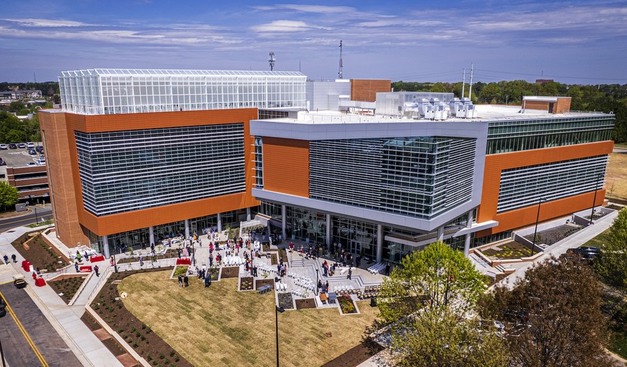 © NC State UniversityThe 10,000-square-foot Plant Sciences Building controlled-environment laboratory has 11 greenhouse bays (top left) that provide fully conditioned, glass-bottom growth environments for research.
But inside computer-controlled facilities, researchers work year-round to tackle the biggest challenges farmers face from disease, pests and extreme weather.
Plants for dozens of changing research projects are grown at any given time, all with different needs, requirements, growing seasons, and Chiera and Beddoe are tasked with overseeing them.
“We serve the entire campus,” says Chiera.
Increasing innovation
Researchers in one room have rows of blue-green plants. They are mostly eucalyptus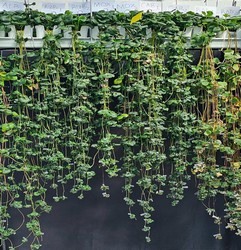 © NC State University Widely planted hardwood trees throughout the world.
By editing specific genes in eucalyptus, NC State researchers like forestry professor Jack Wang and genome editing expert Rodolphe Barrangou are developing trees to make paper and other wood products, reducing emissions and promoting the sustainability of paper mills.
In another room, they set up chain-like runners of hanging strawberry plant racks, which can be used to root and grow more strawberries.
Associate Professor of Horticultural Sciences Mark Hoffmann is researching new ways to propagate strawberry plants to minimize the spread of pathogens before they are shipped from nurseries to growers.
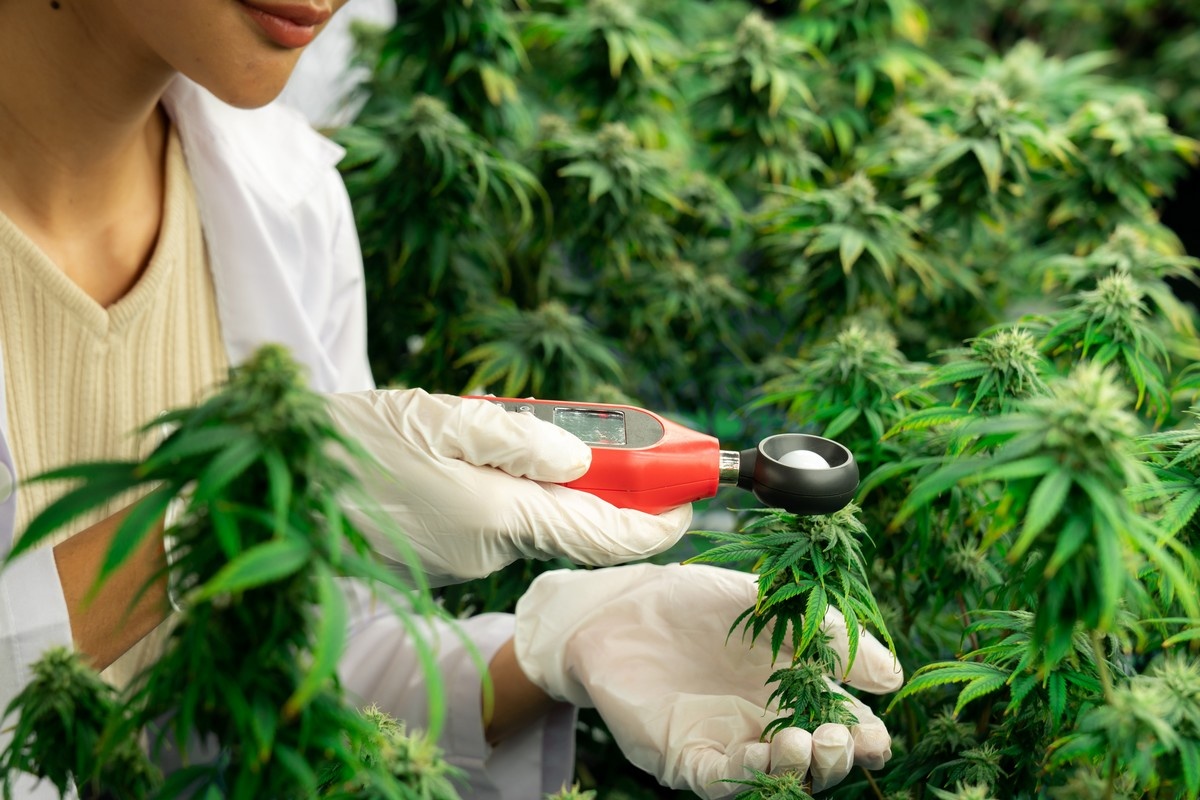
Growing plants for this job requires precise control of light, humidity and other conditions.
Controlled environments for research accuracy
Shouting over the hum of fans, sprinklers and other equipment, Beddoe leads her down the hall to a back office.
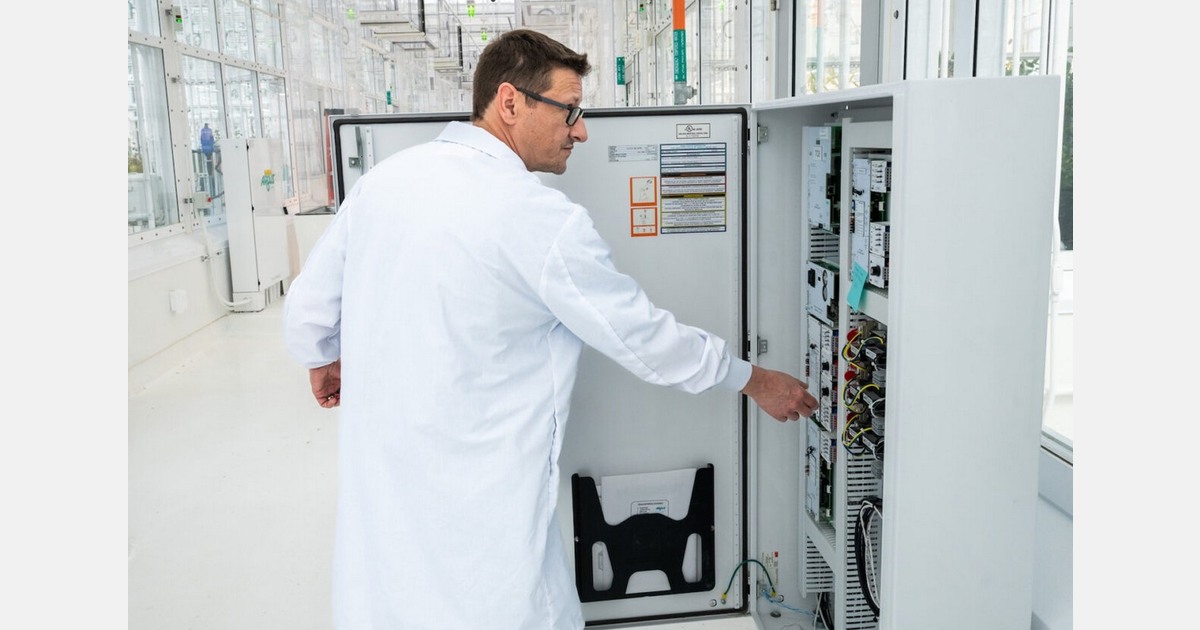
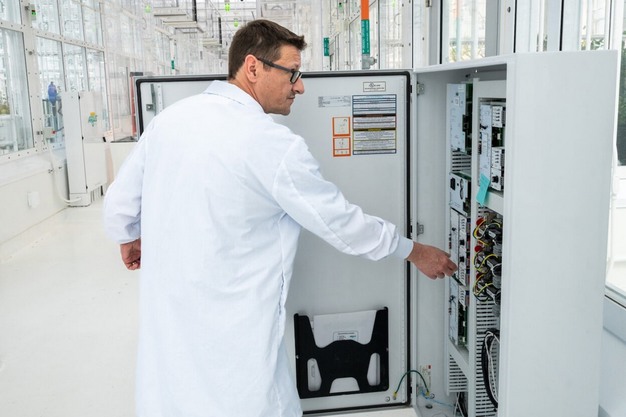 © NC State UniversityEach greenhouse bay is individually monitored, helping to ensure that experiments meet the researchers’ exacting standards. Pictured: Mike Beddoe.
“This is the brains of the entire greenhouse,” Beddoe says, tapping into a control system that allows the researchers to adjust the environment in each room to their needs.
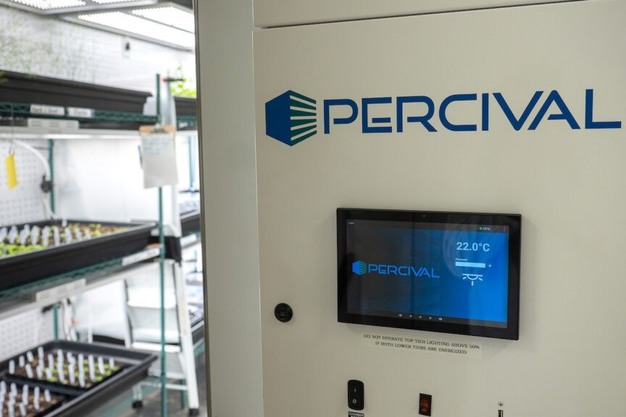 © NC State UniversityThe Plant Sciences building has 25 growing chambers of various sizes where plants are grown for food, fiber and even erosion control.
The facility includes 11 independently controlled greenhouse rooms spanning more than 10,000 square feet, as well as 25 plant growth chambers.
Sensors in each room continuously monitor temperature, soil moisture, CO2 concentration and more.
The data is then sent to a central computer, where it is analyzed and compared to optimal standards before issuing commands to the system, such as adjusting shade screens or turning on misters. Watering schedules are also programmed.
“We try to automate everything,” says Beddoe.
Safety first
Passing pots and earthenware, Chiera leads to one of the most unique rooms on the fifth floor.
The biocontainment greenhouse is one of the few facilities nationwide designed to safely screen for agricultural pests and pathogens.
Every year, farmers around the world lose up to 40% of their crops to pests and diseases.
As new threats continue to emerge that could threaten global food security, NC State is not taking any chances.
So they have converted one wing into a specialized high-capacity facility known as a biosafety level 3 laboratory.
Research here could be used to test treatments for crop diseases, for example, or to develop fruit and vegetables with greater resistance to insect pests.
The space itself is only accessible to credentialed staff, who work under the watchful eye of security cameras.
Chiera walks through the automatically closing doors and the researcher dons gowns, gloves, face shields and other protective gear before entering the lab.
What comes here, stays here
From air and water handling to waste disposal, it’s designed to ensure that what comes here stays here.
All water discharged from the BSL-3 greenhouse is run down pipes and boiled before leaving the facility.
Solid waste is treated in a special oven called an autoclave, which uses steam and pressure to ensure that any microbes are dead.
Air is also designed for safety.
A negative pressure ventilation system creates a flow of air in a direction to prevent anything in the air from escaping, and all the exhausted air is filtered out.
“So if we’re dealing with a pathogenic plant that produces spores, for example, it will trap them and not release them,” says Chiera.
Supporting diverse research in the face of tough challenges
Back in the main corridor, Chiera and Beddoe make their way through the hall to their next meeting, passing thousands of green plants along the way.
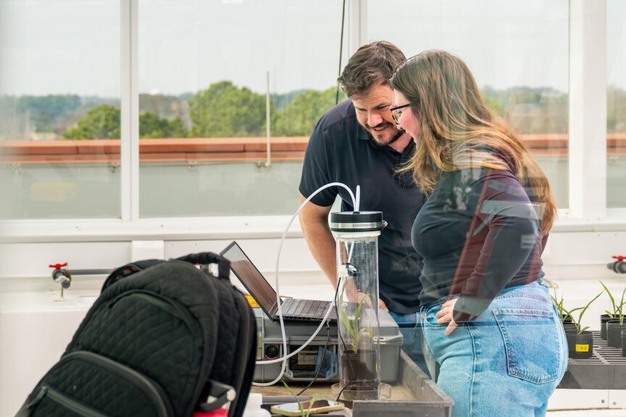 © NC State UniversityAlex Woodley (left) and Raine Lookabill study greenhouse gas emissions from greenhouse soils as part of efforts to find ways to reduce them and mitigate their effects.
Back in the main corridor, Chiera and Beddoe make their way through the hall to their next meeting, passing thousands of green plants along the way.
In one room, tests are being done on the sweet potato. Electrical and Computer Engineering Professor Wenye Wang and his team are developing ways to help farmers monitor starchy and swollen roots as they grow underground, using low-cost Wi-Fi signals (PDF) instead of expensive buried sensors.
in another room, NC State Professor Dorith Rotenberg, Department of Entomology and Plant Pathology, is growing corn. Plants will eventually become dinner for insects, such as plant eaters and aphids, to better understand how these insects spread viruses that can stunt growth and reduce yield in one of the world’s largest crops.
A fan favorite
Beddoe stops in front of a room at the end of the corridor. “This is my favorite bay,” he says.
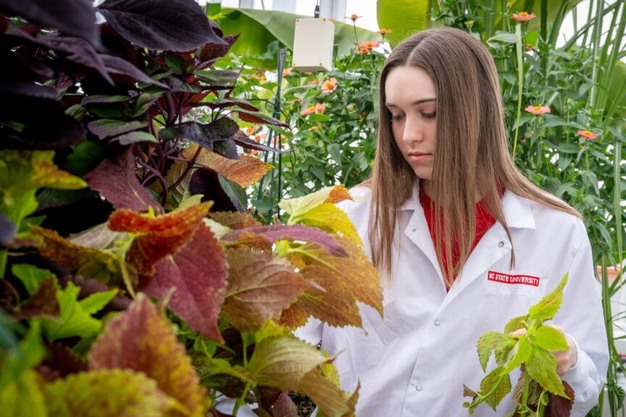 © NC State UniversityGrayson Cothran tends plants in a popular greenhouse bay where students have the opportunity to care for various plants and learn about greenhouse operations.
Inside, there are soybeans and banana plants basking in the sun, cotton plants with their hibiscus-like blooms, as well as a genetically engineered petunia that looks like an ordinary white flower during the day but glows at night using bioluminescent mushroom genes.
“These plants are mostly for our students,” explained Beddoe. “So they can learn different ways to water and breed and things like that.”
Always called
Beddoe will return here before heading home as part of his twice-daily inspections.
Because keeping the greenhouse running requires a lot of hands-on work.
“One of us is always on call,” says Beddoe, whose phone buzzes on evenings and weekends if something needs attention.
“Plants don’t take vacations,” he added.
Source: NC State University








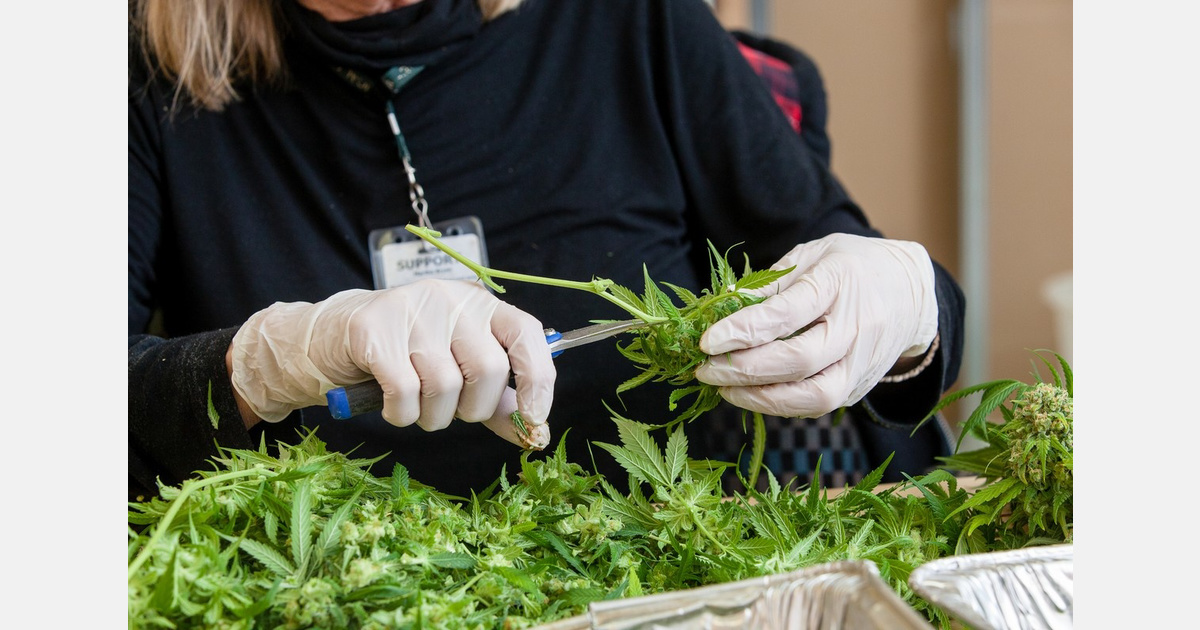
cbdMD welcomes the Administration’s call for Congress to ensure fair treatment of hemp-derived products under federal law and calls for immediate action to revise hemp regulations to ensure fair treatment of hemp products under federal law.
In a letter to congressional leadership this week, the White House Office of Management and Budget identified hemp reform as a priority strongly supported by the Administration. The petition calls on Congress to ensure fair treatment of hemp-derived products by maintaining access to appropriate full-spectrum CBD products, and by maintaining Congress’ intent to reduce products that pose health risks. The administration also urged Congress to pass a responsible federal framework or at least extend the current implementation period to give lawmakers time to get policy right. The request builds on the president’s previous public statements urging lawmakers to protect access to full-spectrum CBD products that millions of Americans rely on.
“We are encouraged to see the administration so clearly championing the responsible, scientific hemp products that consumers depend on every day,” said Ronan Kennedy, CEO of cbdMD. “cbdMD has always believed that the future of this category is built on quality, transparency, and clear rules that separate them from bad actors. A federal framework that protects consumer access, promotes safety, and provides certainty to companies that provide certainty is what this industry and the people it serves deserve. We applaud the policymakers who are working to achieve this outcome.”
“We believe CbdMD is purpose-built for this next phase of the market,” added Kennedy. “Our focus remains on serving our customers with reliable and effective products, supporting responsible regulation and building long-term value for our shareholders as the category continues to evolve. Along the way, we will continue to evaluate the opportunities this evolving environment holds.”
For more information:
cbdMD 
cbdmd.com/
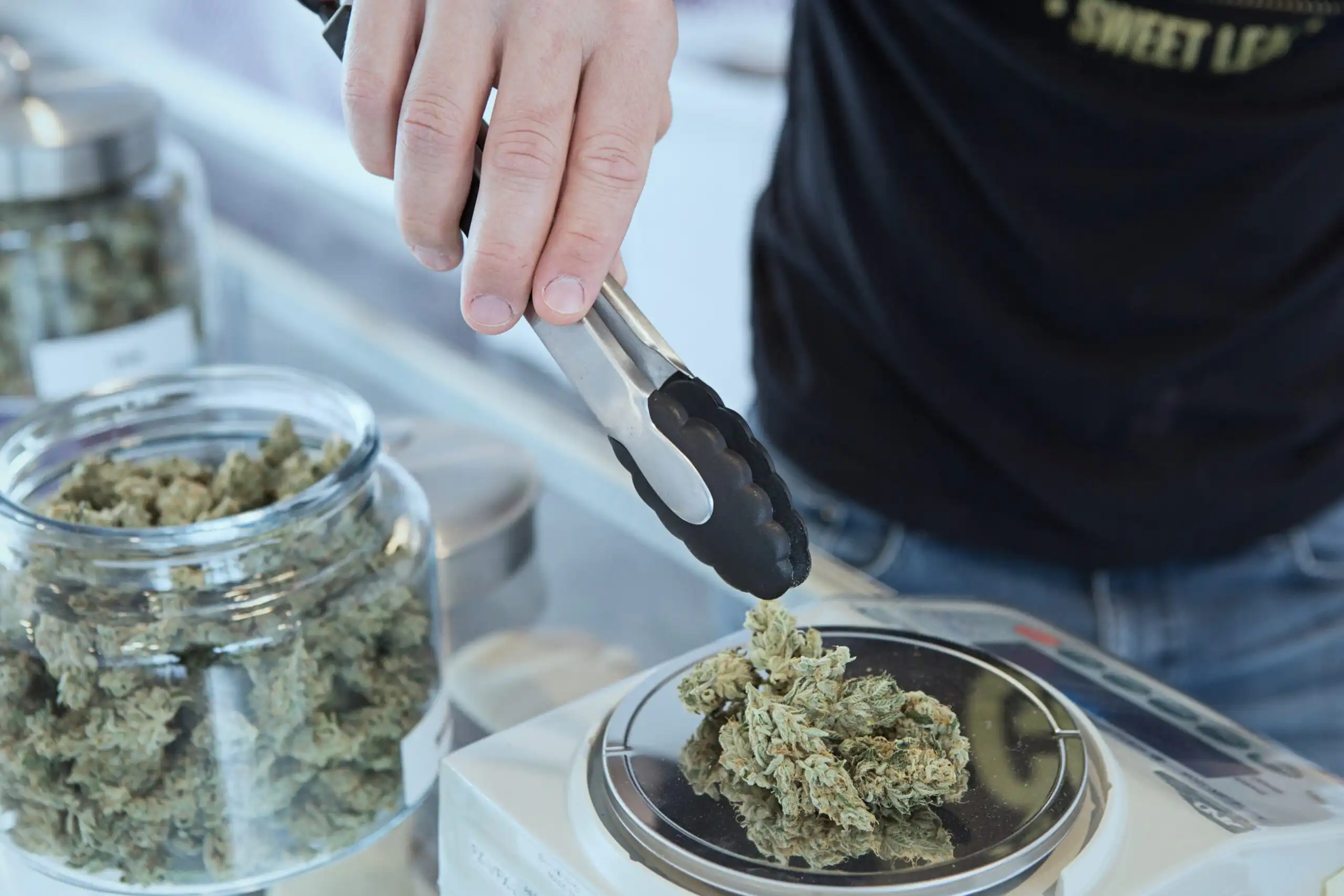
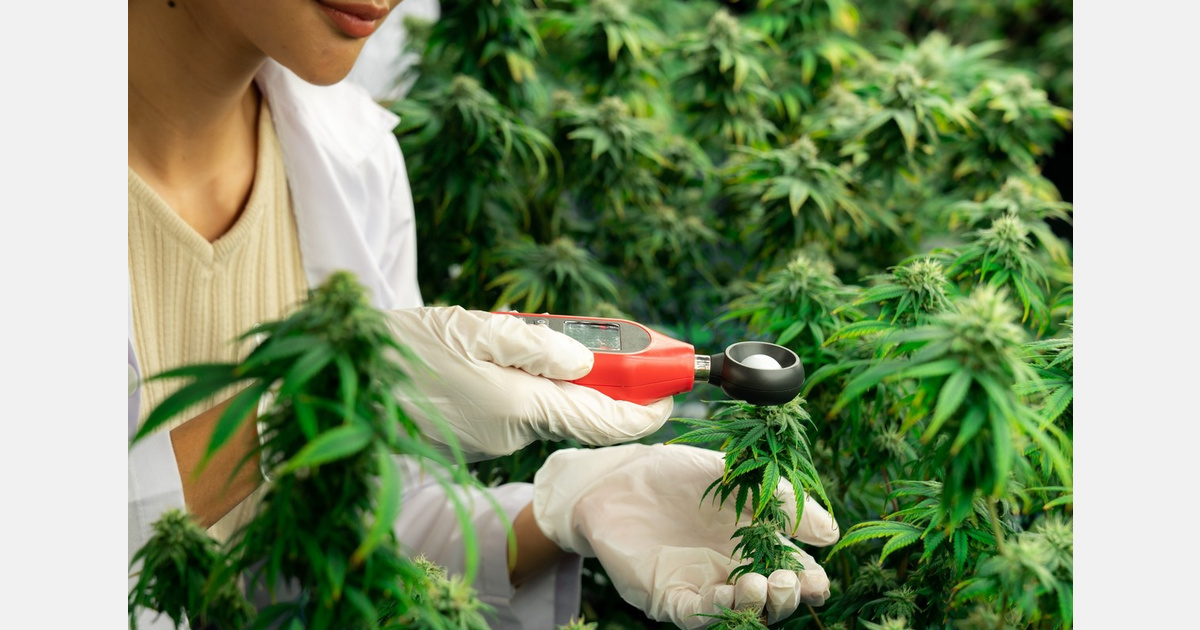
Two new RAND reports commissioned by the Richard M. Fairbanks Foundation outline the policy options and financial commitments facing Indiana as the state debates whether to change its cannabis laws amid restrictions across the country.
Reports show that 44% of Indiana residents live within 50 miles of a licensed dispensary in a neighboring state, and 96% live within 100 miles, as three of Indiana’s four states have legalized adult-use cannabis. At the same time, intoxicating hemp products containing the same psychoactive compound as marijuana are available at gas stations, convenience stores and grocery stores throughout Indiana with limited oversight.
Cannabis use in Indiana has doubled in the past decade, with a significant increase among adults 26 and older. RAND estimates that 1.3 million Hoosiers used cannabis in 2024 and spent $1.8 billion on marijuana products that year. Indiana recorded more than 13,000 cannabis-related arrests in 2024, with more than 90% for possession and more than 75% for non-cannabis related charges. The state spends $10 million to $20 million annually on cannabis law enforcement.
Rather than recommending a specific policy, the RAND reports outline four broad options: maintaining prohibition, reducing criminal penalties for possession, legalizing medical cannabis, or legalizing the adult recreational use market. Legalizing adult-use cannabis would generate about $180 million in annual state revenue, roughly 1 percent of the state’s general fund, well below some previous projections and less than half of the $385 million in combined cigarette and alcohol tax revenue Indiana will collect in 2025, according to the Indiana Department of Revenue.
Legalization would also entail significant upfront costs, and ongoing regulatory costs could reach the low tens of millions of dollars annually, outweighing the savings from reduced criminal justice spending. RAND identifies 14 policy considerations important to establishing legal markets, each with its own public health and state economic implications.

Weed Talk News Special Report & Interview Redefining Hemp Throws Industry into Turmoil

INVESTING IN CANNABIS | EMILY PAXHIA

cbdMD welcomes White House call for fair treatment of hemp-derived products

Industry Sentiment vs Reality – Could The Hemp Ban Be Extended?

Applications For Missouri Marijuana Microbusiness Licenses Will Open Next Month

Half of Gen Z Diagnosed with Depression Report Using Cannabis

Will the Farm Bill of 2024 Close Down Hemp Derived Highs? The Full A and B Blocks of Weed Talk News

Let’s Be Blunt with Montel – Algorithmic Boost Request – 2000000 #YTBoostRequest

RAND estimates Indiana adult-use cannabis could yield $180M in annual revenue

Institutions Evaluate Cannabis While Trulieve CEO Sells Shares

“Our system can manage equipment across 10,000+ m² using just a few wires”

Florida Workshop to Discuss What Constitutes a ‘Cartoon’ in Hemp Packaging

Mazar-i-Sharif Hash Wednesday

Afghan Black Hash Wednesday

Weak Michigan Cannabis Sales Again in July – New Cannabis Ventures

From Finance to Wellness: Brad Zerman’s Impactful Pivot

DEA’s Cole Reverses His “priorities” ; Prohibitionists Dig In; Dead & Co Celebrates 60 years in SF

Re-release of the full show of Cannabis Coast to Coast news. Republican Texas DA Fires Up vs. laws;

Curaleaf Q2 Revenue Falls 8% – New Cannabis Ventures

Your Cannabis Business: Consistent Filings Are Critical
-
 Cannabis News10 months ago
“Our system can manage equipment across 10,000+ m² using just a few wires”
-
 Florida11 months ago
Florida Workshop to Discuss What Constitutes a ‘Cartoon’ in Hemp Packaging
-
 Video9 months ago
Mazar-i-Sharif Hash Wednesday
-
 Video9 months ago
Afghan Black Hash Wednesday
-
 aawh11 months ago
Weak Michigan Cannabis Sales Again in July – New Cannabis Ventures
-
 Video11 months ago
From Finance to Wellness: Brad Zerman’s Impactful Pivot
-
 Video10 months ago
DEA’s Cole Reverses His “priorities” ; Prohibitionists Dig In; Dead & Co Celebrates 60 years in SF
-
 Video11 months ago
Re-release of the full show of Cannabis Coast to Coast news. Republican Texas DA Fires Up vs. laws;