Connect with us

Cannabis News

Nebraska Legislature Approves Bill To Protect Doctors Who Recommend Medical Marijuana

Published

on

“Today is a small step forward, but we are facing terrible prospects.”

Zach Wendling, Nebraska Examiner

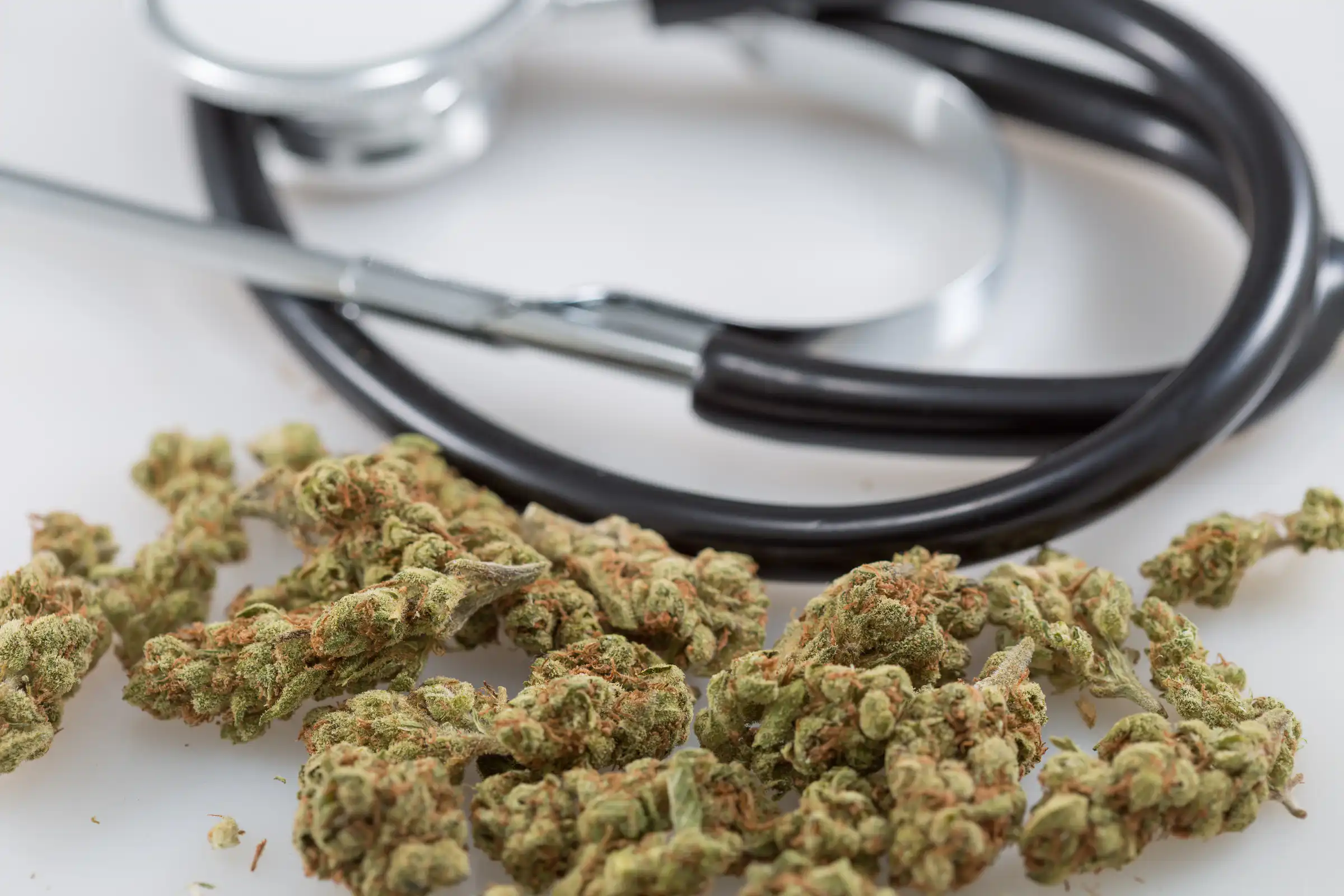
Health care Practitioners wishing to recommend medical cannabis to patients in Nebraska They are one step closer to having legal protections to write the recommendation in the face of opposition from some state leaders.

The Legislature voted 30-7 Friday to advance House Bill 933 by state Sen. John Cavanaugh of Omaha. It would protect medical providers from criminal, civil or disciplinary penalties “merely” for providing a written recommendation or stating that, in their professional opinion, the potential benefits of cannabis outweigh the potential harms.

“It would create a step forward and hope and opportunity for these families who have worked so hard, waited so long and would like to have that conversation with their doctors and then get some relief,” Cavanaugh said during the discussion.

Legislators clarified that the practitioner would not be protected from malpractice or professional negligence claims, such as failing to evaluate a patient or follow an appropriate standard of care. A Cavanaugh amendment passed 35-4, as did a similar amendment from the House Health and Human Services Committee on a 38-4 vote.

State Sen. Brian Hardin Gering, chairman of the HHS Committee, opposed LB 933 in committee, but said the added language was an “important clarification.”

“Practitioners are protected by the recommendation itself, but they are responsible for conducting a thorough and appropriate assessment of the patient before making it,” Hardin said.

“Professional malpractice or negligence” is defined in law as failure to use “ordinary and reasonable care, skill and knowledge normally possessed and exercised by members of his profession engaged in similar activities in the same or similar countries.”

In the 2024 general election, 71% of voters supported a recommendation to legalize the possession of 5 ounces of medical cannabis, and 67% of voters created the Nebraska Medical Cannabis Commission.

Reaching 33 votes

Similar protections for providers were included in a bill offering a broader regulatory framework proposed in 2025, LB 677 by state Sen. Ben Hansen of Blair. The bill failed 23-22, missing the 33 votes needed to overcome a filibuster.

Cavanaugh’s LB 933 would also need 33 votes to change voter-approved laws, as required by the Nebraska Constitution.

There is still a way to get there, with 12 senators absent or absent from Friday’s vote. One of them, State Sen. Rick Holdcroft of Bellevue, who was “absent, did not vote,” supported LB 677 10 months ago but did not vote to advance LB 933. He is the only supporter of LB 677 on that ship.

Holdcroft helped get LB 677 out of the General Affairs Committee as committee chair. He said his biggest concern last year was funding for the commission, which this year is being addressed by state budget adjustments LB 1071 and a separate General Affairs bill, LB 1235.

Holdcroft noted that the Medical Cannabis Board has just completed licensing four growers, and indicated that it could be eight months to a year before there is enough of a crop to manufacture and later distribute.

“To start giving immunity to doctors who are going to make recommendations for a product that we won’t even have for a year is, I think, a little premature,” Holdcroft said.

Cavanaugh, Hansen and other advocates say the protections are necessary for a state program to exist. So far, they said, no state doctor has made a recommendation, in part because of fear of retribution, such as from law enforcement. And without protection, supporters worry that there will be no patients able to access board-licensed facilities.

Nebraska Attorney General Mike Hilgers (R) rallied law enforcement against Hansen’s LB 677 in 2025 and spoke out against the health care professionals’ language. His office did not formally oppose LB 933, nor did the Nebraska Department of Health and Human Services.

“The preponderance of scientific evidence”

State Sen. Jared Storm of David City, who led the opposition to LB 677 last year, introduced an amendment to Cavanaugh’s bill requiring the health care professional’s recommendation to be “based on the preponderance of current scientific evidence.”

Storm argued that the “simple and straightforward addition” was rooted in the Hippocratic Oath “to do no harm.”

“If you’re against this amendment, you’re in favor of recreational marijuana,” Storm said. “If you’re in favor of my correction, you see this as medicine.”

Cavanaugh argued the opposite, that LB 933 It would protect advocates and not encourage them to rally in favor of recreational marijuana because of delays in access to medical marijuana. Hansen made a similar request last year.

“If you don’t want a recreational program, we have to make our medical program functional,” Cavanaugh said.

Storm, Hansen and Cavanaugh said they know of no doctors nationwide who have been sued for malpractice or negligence for recommending medicinal cannabis.

‘Moral hazard’ or ‘dangerous road’?

State Sens. Tanya Storer of Whitman and Bob Andersen of Sarpy County argued, as Storm did, that the debate was about public safety rather than medical cannabis.

Storer said, “Immunity creates moral hazard. When there are no consequences, there is less incentive to exercise caution.”

Cavanaugh and Hansen were concerned about the long-term effects of Ekaitz’s proposal, arguing that it “muddies the water.” Hansen said we could “go back and bite ourselves in the ass” over some drugs, such as Ivermectin, used in the COVID-19 pandemic.

Cavanaugh said he spoke with the Nebraska Medical Association and the association’s malpractice provider, and Cavanaugh told him that Storm’s amendment would “create more uncertainty.”

Hansen, the former chairman of the HHS Committee, said he understood where Storm was coming from and was aware of Storm’s views on medical cannabis. Hansen said using the “preponderance of scientific evidence” would rule out more than 38 percent of the drugs dispensed off-label.

“I think we’re going down a very dangerous path in the future in terms of micromanaging how a medical professional can prescribe medication in the future,” Hansen said.

‘A bit of fixer upper’

State Sen. Carolyn Bosn of Lincoln, a former prosecutor, clarified with Cavanaugh that nothing in LB 933 would protect a practitioner’s license if it went against their professional judgment. He said the legal standard is based on someone’s education, training and experience. He accepted protections.

Storm said one problem was the difference between a “recommendation” and a “prescription” for medical cannabis. For example, he noted, opioids are tracked under the state’s Prescription Drug Monitoring Program. Hansen proposed using this system in LB 677.

Hardin, who ultimately did not vote on advancing LB 933, said he supported Ekaitz’s amendment. He said they’ve studied marijuana “since they were crossing a mile from my house on the Oregon Trail,” and with dozens of states legalizing marijuana, how to ask that question “in the safest way possible.”

“I think it’s a little bit of a fix, and I think we’re getting there,” Hardin said.

The storm amendment failed 22-19. They may try again at a future debate, as five senators were absent from the state Capitol Friday, including Storer.

‘Small step forward’

Crista Eggers of Nebraskans for Medical Marijuana said she was encouraged by the progress of LB 933, but some of the debate, especially around Storm’s amendment, shows continued opposition to a functioning state program.

“It’s a small step forward today, but we face daunting prospects as this bill moves forward to select file and final reading,” Eggers said after the vote.

“Nebraskas have had few victories in this decades-long battle,” he continued. “Today is one of them.”

LB 933 has two more rounds of debate before it, with 33 votes it can send to Nebraska Governor Jim Pillen for his signature.

Vote to advance bill 933 related to medicinal cannabis

Yes (30): John Arch, Carolyn Bosn, Eliot Bostar*, Tom Brandt*, John Cavanaugh*, Machaela Cavanaugh*, Stan Clouse*, Danielle Conrad*, Wendy DeBoer*, Barry DeKay, Myron Dorn*, George Dungan*, John Fredrickson*, Dunixi Guereca*, Ben Hansen*, Jana Hughes*, Terrell*, Margo Juguez*, Margo Juguez McKinney*, Fred Meyer, Glen Meyer*, Jason Prokop*, Dan Quick*, Jane Raybould*, Merv Riepe, Victor Rountree*, Rita Sanders, Ashley Spivey, Brad von Gillern and Dave Wordekemper*.

No (7): Bob Andersen, Rob Clements, Mike Jacobson, Kathleen Kauth, Loren Lippincott, Dave Murman and Jared Storm.

Presented, not voted (7): Christy Armendariz, Beau Ballard, Brian Hardin, Rick Holdcroft*, Teresa Ibach, Mike Moser and Tony Sorrentino.

Sorry, no vote (5): Rob Dover, Bob Hallstrom, Dan Lonowski, Tanya Storer and Paul Strommen.

* Voted in favor of a broader scope of medical cannabis proposed in 2025 (Legislative Bill 677).

This story was first published by the Nebraska Examiner.

Marijuana Moment is made possible with the help of readers. If you rely on our pro-cannabis journalism to stay informed, consider a monthly Patreon pledge.

Continue Reading

Cannabis News

Third cannabis business approved by Jefferson Town Council

Published

on

By


The Jefferson City Council unanimously approved “Green Leevs” as the city’s first cannabis micro-farm at its May 6 meeting. This is the third cannabis business approved by the municipality in order to bring income to the municipality. Retail dispensaries “Greenlight Apothecary” and “Gas and Grass” were previously approved.

Green Leevs are owned by Bill Comeford, Elliot McClendon and Josh Moskowitz. All three are from the local area, Comeford grew up in Jefferson. In New Jersey, a micro-enterprise is a facility with 2,500 square feet of growing space. A micro-farm relies on the craftsmanship of cannabis rather than mass production.

“We have more control, we have more hands, the smaller grow rooms make it easier to inspect each plant,” Comeford said. “If you’re careful, it makes for a better product at the end of the day.”

Green Leeves understands that there are mixed feelings about the Council’s approval of the cannabis industry and hopes that this will ease over time.

Read more at Press Jefferson


Continue Reading

Cannabis News

Virginia Governor Signs Marijuana Resentencing Bill After Lawmakers Rejected Her Amendments

Published

on

By

Virginia’s governor has signed legislation to grant sentence relief to people with past marijuana convictions, even as lawmakers have refused to accept proposed amendments to the legislation that would significantly narrow the scope of reform.

Gov. Abigail Spanberger (D) gave final approval to the bills, Rozia Henson Jr.’s HB 26 (D) and Senate President Pro Tem Louise Lucas’ SB 62 (D), on Thursday.

Separately, lawmakers and advocates are waiting the governor’s action on separate legislation to legalize the sale of recreational marijuana after amendments to his proposal were similarly rejected by the House and Senate last month. The changes suggested in that legislation included delaying the start of sales by six months, increasing taxes and introducing new criminal penalties for cannabis users.

Retrial reform, on the other hand, creates a process by which people incarcerated or on community custody for certain crimes involving the possession, manufacture, sale or distribution of marijuana will consider changing their sentences to receive an automatic trial.

Spanberger sent proposed amendments to lawmakers last month They had to proactively submit requests for assistance to affected people instead of the courts proceeding automatically. The Senate and House of Representatives, however, rejected the proposal, effectively rejecting it and sending the original legislation to Spanberger’s desk.

Henson, the sponsor of the House version of the bill, said it was ready to accept the governor’s changes, even if he is concerned this would mean that some people with cannabis convictions would fall through the cracks because they “didn’t have a lawyer or didn’t know how to ask.”

The whole parliament did not agree with the change, however, and now HB 26 and SB 62 The laws that were originally approved have been implemented.

The relief will apply to people with convictions or convictions for conduct that occurred before July 1, 2021, when a state law that legalized personal possession and home cultivation of marijuana went into effect. State and local corrections officials should identify and notify eligible individuals of their rights to provide notice of relief and then work with courts to automatically schedule hearings.

Henson said last month that the resentencing legislation was “built for people who are still paying the price for something that Virginia has made legal.”

“If the commonwealth were to change the law, it still has the duty to review the consequences of the people punished according to the old one,” he said.

The governor’s office said in a press release when he proposed his amendments that they “clarify that there will be no tolerance for violent crimes in Virginia, from armed robbery to possession of firearms to distribute fentanyl, heroin and other dangerous drugs.”

But Henson said he shares the “governor’s commitment” to making sure violent offenders are not eligible for this relief; and that commitment is reflected in the bill itself, which excluded people convicted of violent acts under Virginia law.

Spanberger’s release last month made no mention of the actual major changes to the bill, which was the removal of automatic leniency provisions for people with cannabis convictions.

The governor’s amendment also proposed removing the deadline for court filings on the retrial.

In the previous session, members of parliament approved similar legislation, but the then government vetoed it. Glenn Young (R).

Separately, Spanberger signed several other reform bills last month, including measures protecting the parental rights of marijuana users and giving patients access to medical cannabis in hospitals.

Cannabis policy reform organizations, on the other hand, sent a letter earlier this month asking the governor to enact the adult-use marijuana sales bill.

Marijuana Moment is made possible with the help of readers. If you rely on our pro-cannabis journalism to stay informed, consider a monthly Patreon pledge.

Continue Reading

Cannabis News

Cannabis operators report mixed results as rescheduling reshapes the financial outlook

Published

on

By

The rescheduling came mid-quarter and rewrote the tax math for each medical sales operator, but the underlying revenue picture remained uneven in early 2026, with acquisitions driven at one end of the scale and continued top-line compression at the other.

Vireo Growth: Back on $106 million deal
Vireo Growth Inc. reported Q1 GAAP revenue of $106.2 million, up 333.5% year-over-year, driven almost entirely by recent acquisitions rather than organic growth. The company completed the Schwazze acquisition in March, adding 45 dispensaries and two manufacturing facilities in Colorado and New Mexico. At the end of the quarter, it closed Eaze and Hawthorne Gardening, FLUENT Corp. announced an acquisition agreement and executed a California dispensary joint venture with Glass House Brands. Treating all acquisitions as closed on January 1, 2025 on a pro forma basis, revenue was $210.2 million and adjusted EBITDA was $42.2 million. The company ended the quarter with $137.8 million in cash.

John Mazarakis, CEO of Vireo, said: “Performance in the first quarter met our expectations and we are excited to welcome Schwazze, Eaze and Hawthorne to Vireo. We are focused on integration and optimization across the platform, while remaining opportunistic regarding growth opportunities associated with further acquisitions.”

Cresco Labs: $151 million, 280E relief and Texas license
Cresco Labs reported Q1 revenue of $151 million, down from $165.8 million in Q1 2025. Adjusted gross margin was 50.7% and adjusted EBITDA margin of $33 million was 21.7%. Cash at the end of the quarter was $67 million against a $310 million secured term loan. The company was conditionally granted a Texas Compassionate Use Program license after the quarter ended and opened two new dispensaries in Ohio.

Management said, “Moving the state’s legal medical cannabis from Schedule I to Schedule III is the most impactful reform this industry has seen, and it validates the work we’ve been executing for years. We’ve built the operational foundation and balance sheet discipline to reap the immediate benefits of rescheduling, and position Cresco to take advantage of the broader path to normalization.”

Jushi Holdings: 4% growth, 460 basis point margin expansion
Jushi Holdings reported first-quarter revenue of $66.4 million, up 4% year-over-year, with gross profit margin up 460 basis points to 45%. Adjusted EBITDA was $11.4 million, up 17.2%. The margin improvement was driven by higher production volumes in Ohio, Massachusetts and Pennsylvania and the performance of grower processors. Jushi brand products accounted for 58% of retail revenue in vertical markets. The company refinanced $132.3 million in debt during the quarter, providing $160 million in new debt through 2029.

Jim Cacioppo, president and CEO, said: “The recent scheduling of state-licensed medical marijuana for Schedule III is an important milestone for the industry, eliminating 280E tax limitations for medical operations and supporting a more favorable long-term operating environment.” Medical sales accounted for about 60% of Jushi’s 2025 revenue, making this material relief.

iAnthus Capital: Revenue falls to $33.5 million
iAnthus Capital reported first-quarter revenue of $33.5 million, down $4.6 million from 2025’s first quarter. Gross margin was 47.5%, up 477 basis points from the 2025 quarter. The company did not provide a management comment in the press release.

Country farms: international export record, fourth consecutive quarter of net income
Village Farms International reported first quarter consolidated net sales of $50.2 million, up 27% year-over-year, with net income of $2.9 million and adjusted EBITDA of $9.9 million, up 118% year-over-year. International export sales increased 171% to a record $14.6 million, driven by demand for EU-GMP compliant products in Germany. Pure Sunfarms had the top Canadian market share in dried flowers for the 15th consecutive month. The company started planting the first half of its Delta 2 greenhouse expansion and expects its Phase II facility in the Netherlands to reach full capacity by the end of 2026, which would quadruple Dutch production.

Michael DeGiglio, President and CEO, said: “Our first quarter results reflect a strong start to the year and continued momentum in our largest markets, with adjusted EBITDA growth of 118% year-over-year, significantly outpacing revenue growth of 27%, driven by our international business and continued leadership in Canada.

Cronos Group: Record revenue, $822 million in cash
Cronos Group reported Q1 net income of $45.2 million, up 40% year-over-year and a record quarter, with net income of $15.7 million and adjusted EBITDA of $5.1 million. Israel led growth PEACE NATURALS grew 53% for ninth consecutive record quarter. In Canada, the Spinach brand took first place in vapes with a 9.8% share of the national market, and maintained its top spot in edibles at 20.8%. The company ended the quarter with $821.9 million in cash and authorized a new $50 million stock repurchase program. The deadline to close the acquisition of CanAdelaar, one of the ten licensed growers in the Dutch Controlled Cannabis Supply Chain Experiment, has been extended to September 9, 2026 to allow time for regulatory approvals.

Mike Gorenstein, chairman, president and CEO, said, “Cronos achieved net earnings and gross profit in the first quarter as we continue to execute against our unlimited product strategy and the additional supply from Cronos GrowCo’s expansion fuels the next phase of our growth.”

Org chart: Revenue down 9%, Sanity Group acquisition closes after quarter
Organigram Global reported fiscal second quarter net income of $59.8 million, down 9% year-over-year, with adjusted EBITDA of $0.9 million, down 82%. Lower vape and pre-infusion sales drove the decline, along with a $5.8 billion dent in the U.S. hemp business. The company achieved a record quarterly harvest of over 32,000kg at its Moncton facility, up 56% year-on-year, and launched 10 SKUs in Australia targeting over 4,000 pharmacies. At the end of the quarter, Organigram acquired Sanity Group, one of Germany’s leading cannabis companies, and updated its 2026 guidance to net revenue of more than $350 million.

James Yamanaka, CEO, said: “Q2 reflected our poor performance in vaporizers and temporary challenges in pre-infusion production, compounded by slower industry growth. We have acted quickly to address these issues, and the operational changes and product improvements we have implemented are already beginning to stabilize performance.”

Greg Guyatt, Chief Financial Officer, said: “The financial impact of the competitive and operational challenges encountered earlier in fiscal 2026 is believed to have materialized in the first half of the year, and we are now beginning to stabilize performance. We expect to resume a trajectory of margin expansion and improved profitability during the second half of the year, supported by positive revenue and international sales growth. The Sanity Group.”

Continue Reading
Advertisement

Trending

Copyright © 2021 The Art of MaryJane Media