Connect with us

Cannabis News

Synthetic seeds show a glimpse of the future for cannabis breeding

Published

on

When tissue culture laboratories emerged in the 1970s, they quickly became the standard infrastructure for propagating tomatoes, corn, and dozens of other crops. Decades of scientific literature followed, refining formulas and SOPs that made the process reliable at scale. For cannabis, this body of knowledge does not exist, the consequences of the prohibition era. It’s a gap that companies like Microhemp, a tissue culture lab based in Italy, are now working to close. “Tissue culture labs have been around since the 70s,” says Marco Bianco, founder of Microhemp. “But when it comes to cannabis, this is a relatively new space.”

© Microhemp

Set to empty
Scientific failure has made the setup unimaginable. “Tissue culture has been known inside and out since the 70s. Around Cesena, where we are, there are many laboratories, but they work with traditional plants. Italy produces millions of plants in tissue culture every year, but the cloning formula of these plants is very well known to the scientific community. Because of the ban, there is not nearly as much for cannabis.” That’s why Marco says the value of Microhemp lies precisely in discovering the SOPs for tissue culture of cannabis. “We clean and preserve the genetics, and of course we replicate them.”

Before reaching that point, they had to go through the garage phase. That was 2018. “We started the first initial tests in the usual way. However, this could not work, everything became contaminated, which reinforced the belief that we had to create a sterile laboratory.” Thanks to a European grant, the Microhemp laboratory finally became a reality. “We built the lab inside two 12-meter containers. One has a growth chamber, and the other has a lab and a sterile growth chamber.” Notably, Microhemp did not buy off-the-shelf container farms, they acquired empty shipping containers and completely refurbished them to their specifications.

© Microhemp

Micropropagation of cannabis
This hands-on experience became the basis for one of the company’s secondary services: designing tissue culture laboratories and other facilities. But the core business remains micropropagation. “In micropropagation, every month, you triple the material.”

The method seems simple, but it is not. “We start with small plastic pots, with 7 nodes left to grow. We open the pot again, divide the plant into those 7 nodes again and move on to the last 3 pots. If you do this every month, you can produce a huge number of plants, it’s exponential. In a very short time, we build the line, which is millions of the same plants.” Achieving this requires careful planning at every stage. “The plant that I deliver to you today was taken from a sterile environment. To have that plant ready, we started two months before delivery, and before that there is at least two months of planning to reach the final clone. To deliver a plant to the customer, I decided that it would become a real plant four months before delivery. This creates challenges, because we have to be good at managing stocks, but this allows us to make traditional nurseries quite difficult. Our strength is in numbers, what really sets us apart is our cleanliness in GMP work when you do, the most important thing is to start with a plant that you can guarantee is not infected.

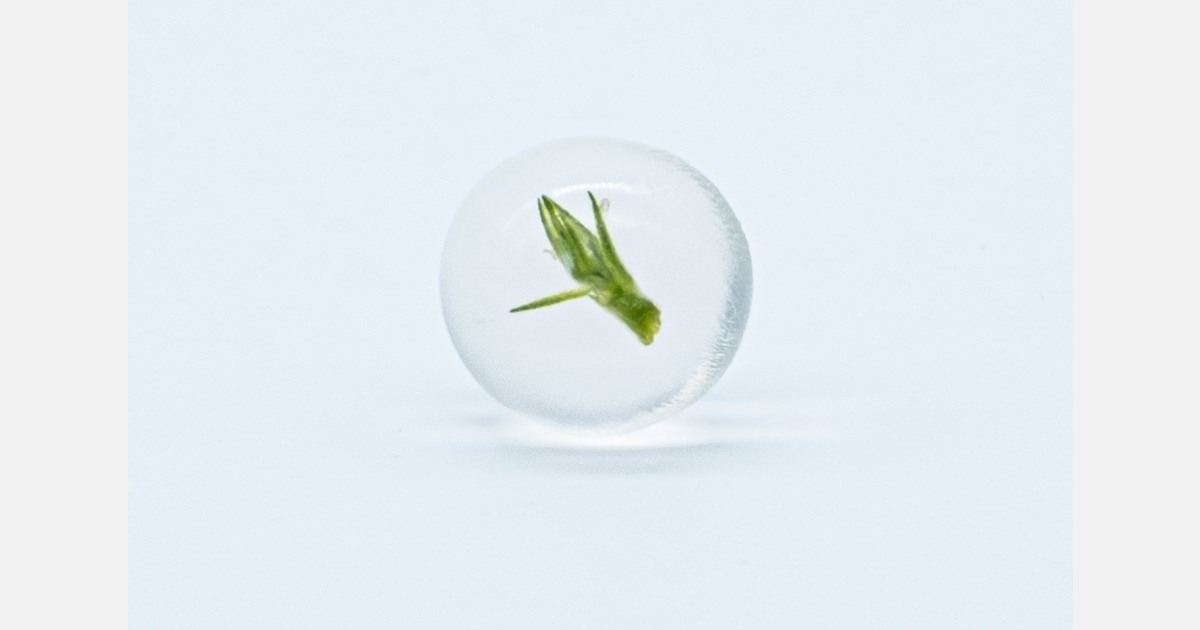
Synthetic seeds© Microhemp

Genetic conservation of microhemp can also take the form of synthetic seeds, a striking way of preserving genetics that keeps traits intact for the long term, and has a practical advantage unrelated to biology. “It’s a very convenient option from a purely logistical point of view,” explains Marco. “If a multinational has facilities in several countries and opens a new site in North Macedonia, synthetic seeds are the best way to move a specific genetic. Put the pot in your pocket,” he laughs.

The reality is more nuanced, as Marco is quick to acknowledge. Synthetic seeds cannot yet be germinated in rockwool, a separate laboratory is required on the recipient side. Microhemp has tested a middle solution: a container format that holds the synthetic seed and the grow room in the same container, but mechanically separated. The user drops the seed in the room to initiate the roots. “It wasn’t guaranteed enough. The seed was germinating with reasonable frequency, but not good enough,” says Marco. For now, the project is on hold while the company focuses on scaling up its core micropropagation and lab design services, which, as Marco says, is what a tissue culture lab actually does.

For more information:
Microhemp Srl

Via Giuseppe Verdi 131, 41019 Soliera (MO), Italy
+393351736178
(email protected)
microhemp.it

Cannabis News

DEA And FDA Highlight How Marijuana Is Safer Than Alcohol And Opioids During Rescheduling Hearing’s Opening Day
Published

on

By

Attorneys for the Drug Enforcement Administration (DEA) on Monday highlighted testimony about the medical benefits of marijuana and its relative safety compared to other substances such as alcohol and opioids in the opening day of a hearing. The Trump administration’s cannabis rescheduling proposal.

Marijuana Moment spoke with several people in the audience for Monday’s hearing to find out how the testimony is going, despite the proceedings not being broadcast live to the public at the request of one congressman and others.

According to those sources, DEA attorney James J Schwartz stated that the government is the proponent of the proposed rule to formally move cannabis from Schedule I to Schedule III of the Controlled Substances Act (CSA), stating that the hearing is “not about the recreational use of marijuana” and “about regulation, not about legalization.”

“The government has presented no evidence to suggest that marijuana is not dangerous. All controlled substances are dangerous,
he said “However, controlled substances must be evaluated against the risks they pose, balanced against the medical benefits they provide.”

Dominic Chiapperino, director of the Food and Drug Administration’s Center for Controlled Drug Evaluation and Research and one of two DEA witnesses, testified about how federal health officials formed their recommendation to reschedule cannabis.

Opponents of the reform have used a new two-part test that they argue is a bad departure from a previous analysis, although a DEA lawyer said the hearing is not about that issue, and Chiapperino said the new test is now considered “every time” a new analysis is done on a drug.

The FDA official said the agency compared marijuana to alcohol, opioids and other substances in its scheduling analysis, and found that marijuana’s daily harms were lower than all or most of those comparators.

Cannabis is associated with fewer overdose deaths than comparable substances, Chiapperino said, and when reports of cases involving deaths mention marijuana, the deaths are often attributed to secondary incidents such as accidents or self-inflicted harm. Marijuana’s potential for overdose deaths is “much lower” than other Schedule I drugs and Schedule II drugs. Rather than opioids, the FDA official said.

As for withdrawal in regular users, Chiapperino testified that cannabis has symptoms similar to tobacco, including irritability, but alcohol has “more of a withdrawal syndrome,” which can include seizure and death.

Also on Monday, the lawyers of some of the parties against the reorganization had the opportunity to cross Chiapperino.

Kevin Sabet, president and CEO of the prohibitionist organization Smart Approaches to Marijuana, who was also invited to attend the hearing, said in a video posted on social media that it is “surreal” to see the government arguing that cannabis’s medical uses and relatively minor harms are “just lying through their teeth.”

The DEA “is in a very awkward position to argue the opposite of what it’s been arguing for the last 50 years, the opposite of what the science says, the opposite of what the evidence is,” he said, “which is, of course, to argue against the government that marijuana is more harmful than we thought, not less harmful.”

On Tuesday, opponents of the review will have an opportunity to cross-examine the FDA official, and the government’s second witness, Corey Burchman, a doctor from New Hampshire, will begin his testimony. The DEA announced in a filing last week that it will do so Testify on “How Medical Marijuana Provides Medical Benefit to Pain Patients.”

On Monday, a DEA attorney said Burchman would “describe the real-world impacts of treating pain with marijuana instead of opioids” based on his experience with both and discuss how he has “personally transitioned patients from opioids to marijuana for their pain.”

The witness will also testify about the differences between cannabis and opioids in terms of withdrawal and overdose, he said.

Before the hearing began, marijuana reform activists rallied They held a press conference outside DEA headquarters to highlight how they feel of the process – criticizing the fact that supporters of the reform were not invited to participate and that the proceedings are not reproduced live, despite the “transparency” oath of the officials.

DEA Administrator Terrance Cole only organizations and individuals opposed to marijuana reform have been invited to the hearing as a designated participant – telling followers that they do not meet the definition of “interested person” to participate because they are not “affected or prejudiced by any rule or proposed rule that may be issued.”

last week, Marihuana Moments sent petitions to DEA Chief Administrative Law Judge Derek Julius and DEA Administrator Cole asking for them reverse the decision to ban the public from tuning into the cannabis hearing via live stream. A Congressmen and other journalists later joined that request.


Marijuana Moment’s journalism is made possible by readers like you, who value this work enough to support us Patreon Monthly Pledges. If you rely on our reports to stay informed of important developments in cannabis, please help us do this becoming a permanent subscriber today.

Backed by us at the $25/month level, you’ll have access to our Bill Tracker so you don’t miss any important marijuana legislation in your state.

The opponents who are participating in the hearing submitted statements last week anticipate the anti-marijuana arguments they intend to make during the procedure.

The hearing it will end before July 15.

Acting Attorney General Todd Blanche in April He issued an order that immediately reclassified the state’s licensed medical cannabisas well as marijuana products approved by the Food and Drug Administration (FDA) under Schedule I through Schedule III of the Controlled Substances Act (CSA).

According to a separate order signed by the acting attorney general, the upcoming hearing will include Class III marijuana.

Preliminary hearing process on the marijuana redistricting process initiated by the Biden administration It was halted last year amid allegations of improper communications and witness selection.

the current The marijuana redistricting process is being challenged in several ways which have been upheld by a federal Court of Appeals. those pieces of State attorneys general have filed lawsuits against cannabis reform, Opponents of marijuana legalization and a a cannabis-based biopharmaceutical corporation.

Meanwhile, the reorganization of state-licensed medical cannabis is already having a major impact.

The Congressional Research Service published a report on the current rescheduling of cannabis Certified patients with medical marijuana from state licensed dispensaries are now eligible for Class III. “The order appears to allow end users to use marijuana medically without a CSA prescription,” he says.

The Bureau of Alcohol, Tobacco, Firearms and Explosives (ATF) has published a Draft update to a gun purchase form to recognize the legal status of medical marijuana in the reprogramming. The revised section of the question states that only the “recreational use or possession of marijuana” is federally prohibited, omitting the prior form’s mention of medical cannabis.

The US Treasury and Internal Revenue Service (IRS) said they plan to issued new tax guidelines for the marijuana industry after reprogramming. The reform will benefit state-licensed marijuana businesses by allowing them to take federal tax deductions that are currently prohibited under IRS Code Section III, known as Section 280E.

Even the DEA, which has long opposed cannabis legalization and accused the Biden administration of stalling the initiative in the reorganization process, has done so. It launched a registration process for legal marijuana businesses in the state to take advantage of the federal benefits that come with the reform.

The Department of Transport, on the other hand, issued guidelines stating this use Legal medical cannabis in the state is still no excuse for truck drivers to test positive for drugspilots and other safety-sensitive personnel.

A congressional committee recently Federal officials voted to block further steps to reschedule cannabishowever lawmakers from both parties told Marihuana Moment they don’t think that provision will be enacted become law

user photo Carlos Gracia.

Marijuana Moment is made possible with the help of readers. If you rely on our pro-cannabis journalism to stay informed, consider a monthly Patreon pledge.

Continue Reading

Cannabis News

cbdMD welcomes White House call for fair treatment of hemp-derived products

Published

on

By


cbdMD welcomes the Administration’s call for Congress to ensure fair treatment of hemp-derived products under federal law and calls for immediate action to revise hemp regulations to ensure fair treatment of hemp products under federal law.

In a letter to congressional leadership this week, the White House Office of Management and Budget identified hemp reform as a priority strongly supported by the Administration. The petition calls on Congress to ensure fair treatment of hemp-derived products by maintaining access to appropriate full-spectrum CBD products, and by maintaining Congress’ intent to reduce products that pose health risks. The administration also urged Congress to pass a responsible federal framework or at least extend the current implementation period to give lawmakers time to get policy right. The request builds on the president’s previous public statements urging lawmakers to protect access to full-spectrum CBD products that millions of Americans rely on.

“We are encouraged to see the administration so clearly championing the responsible, scientific hemp products that consumers depend on every day,” said Ronan Kennedy, CEO of cbdMD. “cbdMD has always believed that the future of this category is built on quality, transparency, and clear rules that separate them from bad actors. A federal framework that protects consumer access, promotes safety, and provides certainty to companies that provide certainty is what this industry and the people it serves deserve. We applaud the policymakers who are working to achieve this outcome.”

“We believe CbdMD is purpose-built for this next phase of the market,” added Kennedy. “Our focus remains on serving our customers with reliable and effective products, supporting responsible regulation and building long-term value for our shareholders as the category continues to evolve. Along the way, we will continue to evaluate the opportunities this evolving environment holds.”

For more information:
cbdMD
cbdmd.com/


Continue Reading

Cannabis News

Applications For Missouri Marijuana Microbusiness Licenses Will Open Next Month

Published

on

By

“We have a lot of tutorials, and we also provide a step-by-step guide. Anyone could sit down and make the app. I don’t think it’s challenging.”

By Rebecca Rivas, Missouri Independent

Application window win one of Missouri’s 77 micro-business marijuana licenses through a lottery selection it will be open from July 13 to 27.

The selection lottery is scheduled for Sept. 9, and the Missouri Division of Cannabis Regulation expects to issue licenses in December, according to a press release issued Monday.

Microbusinesses are marijuana facility licenses issued to entities and individuals designed to allow marginalized or underrepresented people to legally participate in the marijuana market.

Lesley Turek, the division’s capital manager, has been traveling the state this month to educate people about the application process.

“I really feel that microenterprise graduates are, first and foremost, a community of people who help each other,” he said. “They’re the ones who are driving this program forward, so I’m looking forward to meeting new people and sharing as much as I can about the program. It’s a great program.”

Much of what is being worked on is the new rules that went into effect at the end of May…In 2024 the proposed cannabis regulators will remove a large number of licences Because of unconstitutional property deals.

The new rules, he said, allow regulators to conduct extensive scrutiny before licensing, rather than after. Furthermore, they give a more in-depth explanation of what it means to “have and operate the majority” of the License, which is a requirement in the Constitution.

Regulators are mandated to communicate directly with majority owners and require applicants to complete a compliance course before applying and after receiving a license.

The microbusiness program was passed by voters in the 2022 constitutional amendment to legalize recreational marijuana.

In Missouri, there are seven categories in which people can qualify for a micro-business license, ranging from lower income or living in an area considered poor, to past arrests or incarcerations related to marijuana offenses.

Applicants pay a $1,500 application fee if not selected. The Missouri Lottery will select 77 license applicants to open dispensaries or cultivation facilities. The goal is to fill the remaining gaps in the minimum 144 micro-business licenses mandated by the Constitution.

Turek believes the application is relatively simple and something people can complete on their own, unlike the much more complicated application for comprehensive licenses.

“We have a lot of tutorials, and we also offer a step-by-step guide,” he said. “Anyone can sit down and do the app. I don’t think it’s a challenge.”

The part that most people often don’t understand is everything that comes with owning a marijuana facility.

“It’s very expensive, it’s very regulated, and so it’s challenging,” he said. “I want to make sure people have a clear understanding beforehand so they can make a good decision whether they want to apply for this program.”

A big part of his presentation was that the majority of the licenses should be owned by and eligible people. They must have more than 50 percent of the authority to direct the decisions made with the license.

“It’s more than a percentage of ownership,” he said. “It’s really about being able to have that control over it.”

It also talks about the designated contact, and why in the new rule the regulators will require that the designated contact be the applicant or the eligible person with the majority of ownership.

The designated liaison role was conceived as a way to ensure clear communication between the state and licensees.

Instead, state regulators discovered it many named contacts have kept real applicants in the dark about business and licensing. Applicants are locked into agreements that limit their voting power and profits in the business.

That’s why the state now requires pre-application training, a three-video online course to ensure applicants understand “potentially predatory practices,” regulators said in response to public comments during the rulemaking process.

The press release It says those who need help with eligibility requirements or application forms can contact the facility’s application services (email protected).

Educational dissemination events for micro-enterprises

Personal forums:
June 22 – 6:00 pm to 8:00 pm – Kansas City

Webinars:
June 24 – from 11:00 a.m. to 1:00 p.m
June 29 – from 18:00 to 20:00

Registration is required for in-person and virtual sessions. Interested participants can register at Microenterprise education. Additional information on the microenterprise program is available here cannabis.mo.gov.

Those requiring assistance with eligibility requirements or application forms may contact Facilities Application Services at (email protected).

This story was first published by the Missouri Independent.

Marijuana Moment is made possible with the help of readers. If you rely on our pro-cannabis journalism to stay informed, consider a monthly Patreon pledge.

Continue Reading
Advertisement

Trending

Copyright © 2021 The Art of MaryJane Media