
Cannabis News
“There is more to Portugal’s medical cannabis story than recent turbulence”


Germany imported 2025 tons of medical cannabis. Part of that volume came from a Portuguese processor whose license had been revoked, which was unloaded below cost as it was reinstated. The episode sparked attention, and consequences followed. PTMC’s Joao Duarte believes that most of these conclusions are wrong. “Eight tons is not even 5% of what Germany consumes per year,” he says. “For that to result in price dumping, the math just doesn’t work.”
Structural price pressure
According to him, the price pressure in Portugal is mainly structural. “The more countries that get into production and start exporting, the lower the prices will be. Today, Colombia is exporting, Costa Rica is exporting, and Brazil, with the scale it can bring to outside cultivation, is not far behind. Canada has been the main volume supplier to markets in Germany, Australia, Israel and the UK due to the strength of low-priced flowers from European producers. Again, and fast.” It draws a direct line with what happened in the CBD market in previous years, when prices were compressed as supply expanded and operators without cost or quality advantages found themselves without a market. Medical flower THC, he says, is following the same logic over a longer timeline.
To lift the burden of this price pressure, the answer obviously lies in the right regulations and policies. These should be based on the principles of providing high quality medicines to patients. To achieve this, the flowers must reach the consumers shortly after they are picked. As simple as it sounds, proximity is Portugal’s real advantage. “The fresher the flower is when it reaches the patient, the better the quality,” he says. “Only proximity gives that.”
 © Henner Damke | Dreamstime
A turning point
As for the regulatory issue, Joao points to Portugal’s eight-year history of medical cannabis as a distinguishing feature, following last year’s police raids. Organizations that have long been involved in the licensing and enforcement framework have developed standards and experience in applying them. “Our GMP standards are real,” he says. “They are not a number on a certificate.”
The damage to the reputation of these raids, in his opinion, is exaggerated. “There is always a scandal in the industry,” he said. “That doesn’t necessarily mean it’s over, that a country’s economic sector has been kicked out. Canada, the largest exporter of cannabis, is the clearest example of that. Everyone remembers the CannTrust scandal in 2019, which made international headlines. That didn’t kill the Canadian industry until it became them, the regulatory system moved in their work. It looks like.”
EU-GMP clearance
One important area is EU GMP clearance, the practice of converting imported flowers through a European facility to obtain certification that the original material would not otherwise carry. “We would have more value growing the flowers than doing the conversion,” he says. For Portuguese producers, the practice reduces the premium that EU GMP certification must entail and makes it more difficult to distinguish domestically grown product from processed imports at the point of sale.
To each his own
Joao does not believe that other European countries can take Portugal’s place in the old continent’s cannabis industry. “This is simply because it’s not one thing for a country to be active in one sector and then push out another. It’s an open market, everyone participates at different levels.” As a neighbor, Joao cites Spain as an example. The country currently has less than ten licensed producers and has yet to build the export infrastructure or regulatory track required by the markets. “I don’t see Spain coming and taking over,” he says. “Both Spain and Portugal will take market share. Operators with established contracts will continue to move product. After that, it’s about quality and price.”
Denmark, he says, is an immediate competitive variable, producing significant quantities and moving into European markets with momentum. Portugal is currently among the top three to five exporters to Germany and has established positions in Australia, Israel and the United Kingdom. “This reflects accumulated capacity rather than regulatory time, and it’s not something that goes away because a processor loses its license,” he says.
A common European pricing policy, along the lines of the state-controlled model in France, is a mechanism that the industry should collectively push for. Without this, individual producers are left to absorb the cost pressures of suppliers operating on a scale that European policy has no current framework for. “We should aim to have good flowers,” he says. “We must not aim to demolish Portugal.”
For more information:
PTMC
ptmc.pt









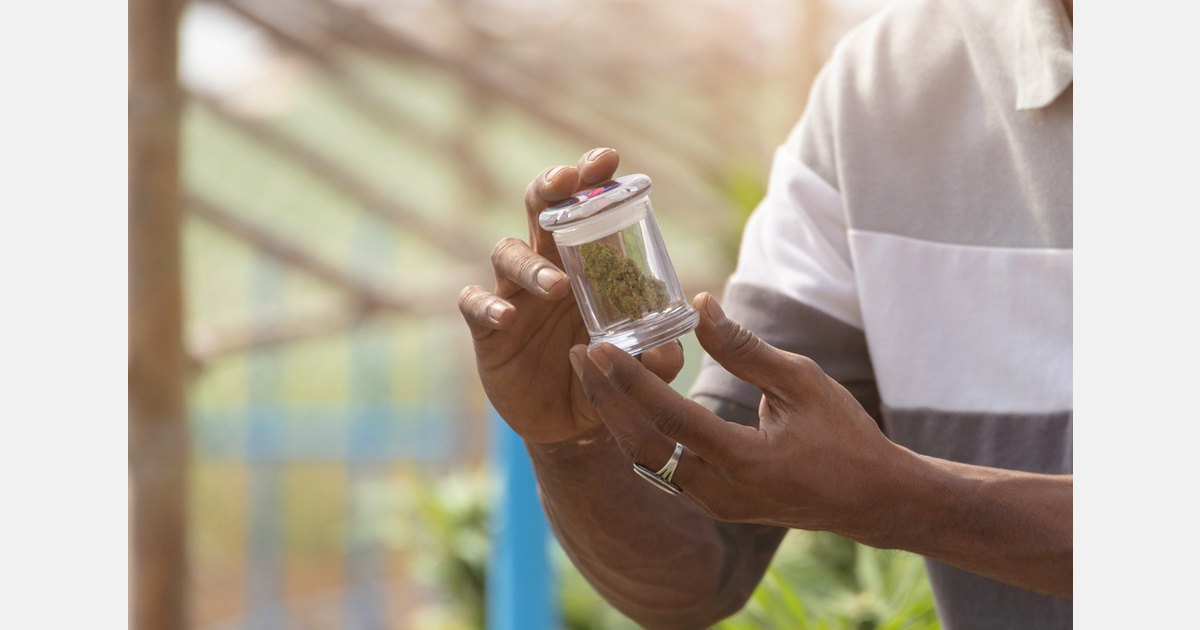
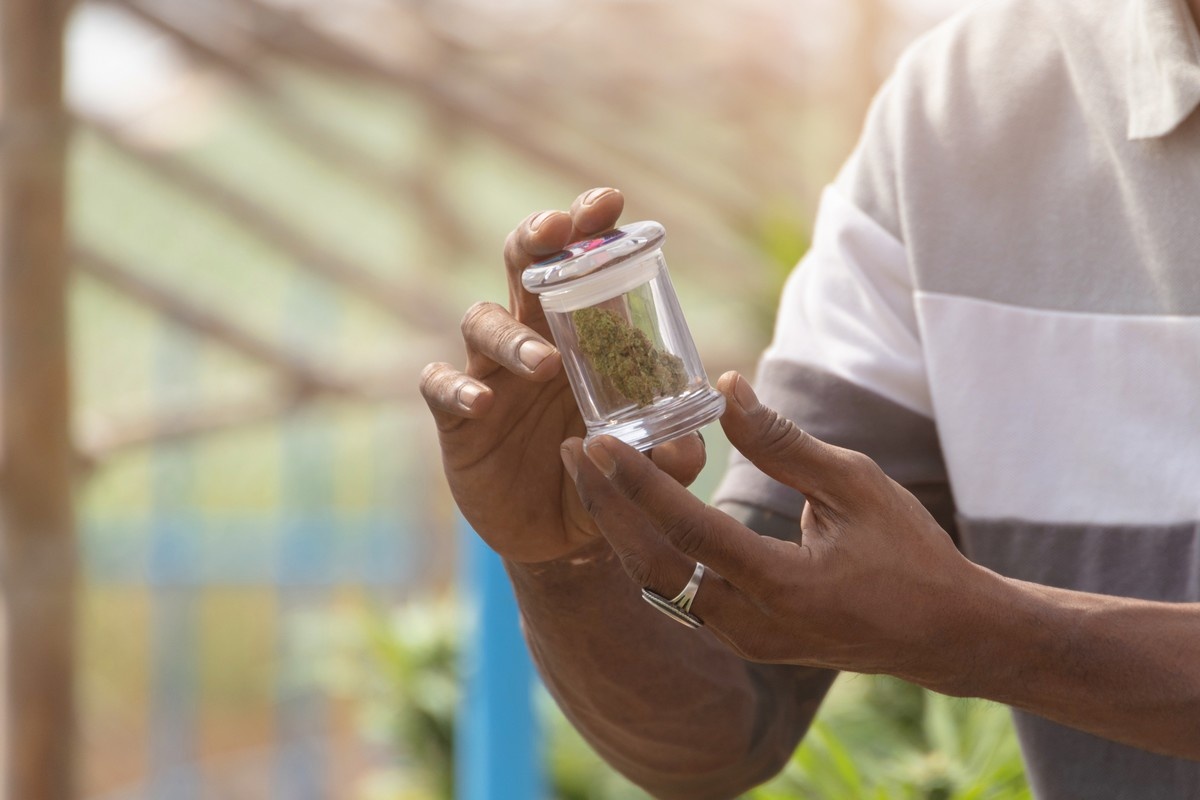
A cannabis company called Good Behavior is seeking approval from the city of Yorkville, Illinois, to open a dispensary on a 0.93-acre plot along Saravanos Drive, west of South Bridge Street and south of Stagecoach Trail, becoming the latest entrant in a string of cannabis proposals the city has previously rejected. The company has filed a special-use application with the city and is staking its case on the tax revenue a dispensary would generate for Yorkville.
Full details of the application, including projected tax figures, the company’s ownership structure and details of any board discussions, are available to Shaw Local News Network subscribers. The article, reported by Shaw Local News Network’s Joey Weslo and published on June 23, 2026, notes that cannabis companies had previously failed to get city approval before Good Behavior presented its proposal.
The proposed site places the dispensary in a commercial corridor to the south of the city. Good Behavior’s application requires a special use permit from Yorkville before the project can proceed.
Source: local Shaw
Cannabis News
White House Pushes Congress To Ensure ‘Fair Treatment Of Hemp Products’ By Calling Off Broad Recriminalization Law Set For November

Cannabis News
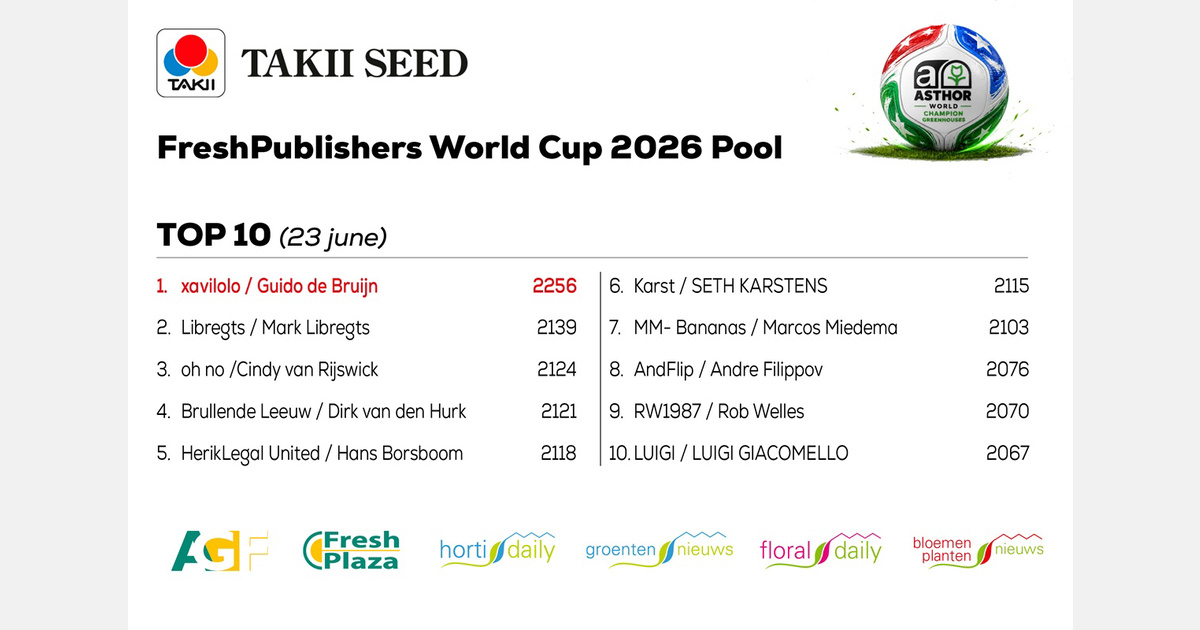
Guido de Buijn (Agrofair) consolidates his leading position, whilst fruit and vegetable lawyer Hans Borsboom enters the top five
FreshPublishers 2026 World Cup Group Stage
Today, it is the Dutch who are making their mark in the Fresh Publishers’ World Cup rankings. Guido de Bruijn, Agrofair’s account manager, correctly predicted the results of the Argentina – Austria and France – Iraq matches, thus consolidating his leadership. He is followed by quality controller Mark Libregts of JNV Produce, while food and agriculture specialist Cindy van Rijswick of Rabobank has once again rounded out the top three. In fourth place is Dirk van den Hurk, aaff’s relationship manager. He has a three-point lead over fruit and vegetable lawyer Hans Borsboom, who is competing under the name HerikLegal United. Interestingly, the main contestants predict very different winners. Guido supports Portugal, Mark supports France, Cindy supports Germany and Dirk and Hans support Spain.
In sixth place is Seth Karstens, who manages retail sales for Gerbera United. Marcos Miedema – again from Agrofair – is seventh, ahead of Andre Filippov from the German company Global Fruit Point. Rob Welles of plant grower Ovata and Italian potato and vegetable trader Luigi Giacomello have slipped a little further up the table and are in ninth and tenth place. However, there is still a long way to go to win the 1,000 euros. Starting with the next four matches: Portugal – Uzbekistan, England – Ghana, Panama – Croatia and Colombia – Congo.
 © FreshPublishers

Is New Hampshire ready to go Adult use legal? CWCB & Flower Expo previews C Block of Weed Talk News

TOMMY CHONG

Marijuana Retail Report

Good Behavior dispensary applies to open in Yorkville

Virginia Legalization Is Back On Track

White House Pushes Congress To Ensure ‘Fair Treatment Of Hemp Products’ By Calling Off Broad Recriminalization Law Set For November

Geek THCX Now Available in 300+ Licensed Dispensaries Across California

Schedule 3? Farm Bill 2024? Those are the Talk Topics for a Weed Talk News Special Report Talk Show

CANNABIS TALK | SECOND LADY OF PA GISELE FETTERMAN

Marijuana Retail Report

“Our system can manage equipment across 10,000+ m² using just a few wires”

Florida Workshop to Discuss What Constitutes a ‘Cartoon’ in Hemp Packaging

Mazar-i-Sharif Hash Wednesday

Afghan Black Hash Wednesday

Weak Michigan Cannabis Sales Again in July – New Cannabis Ventures

From Finance to Wellness: Brad Zerman’s Impactful Pivot

DEA’s Cole Reverses His “priorities” ; Prohibitionists Dig In; Dead & Co Celebrates 60 years in SF

Re-release of the full show of Cannabis Coast to Coast news. Republican Texas DA Fires Up vs. laws;

Your Cannabis Business: Consistent Filings Are Critical

Curaleaf Q2 Revenue Falls 8% – New Cannabis Ventures
-
 Cannabis News10 months ago
“Our system can manage equipment across 10,000+ m² using just a few wires”
-
 Florida10 months ago
Florida Workshop to Discuss What Constitutes a ‘Cartoon’ in Hemp Packaging
-
 Video9 months ago
Mazar-i-Sharif Hash Wednesday
-
 Video9 months ago
Afghan Black Hash Wednesday
-
 aawh10 months ago
Weak Michigan Cannabis Sales Again in July – New Cannabis Ventures
-
 Video10 months ago
From Finance to Wellness: Brad Zerman’s Impactful Pivot
-
 Video10 months ago
DEA’s Cole Reverses His “priorities” ; Prohibitionists Dig In; Dead & Co Celebrates 60 years in SF
-
 Video10 months ago
Re-release of the full show of Cannabis Coast to Coast news. Republican Texas DA Fires Up vs. laws;