Connect with us

Cannabis News

Village Farms International leads B.C. cannabis producers in global export push

Published

on

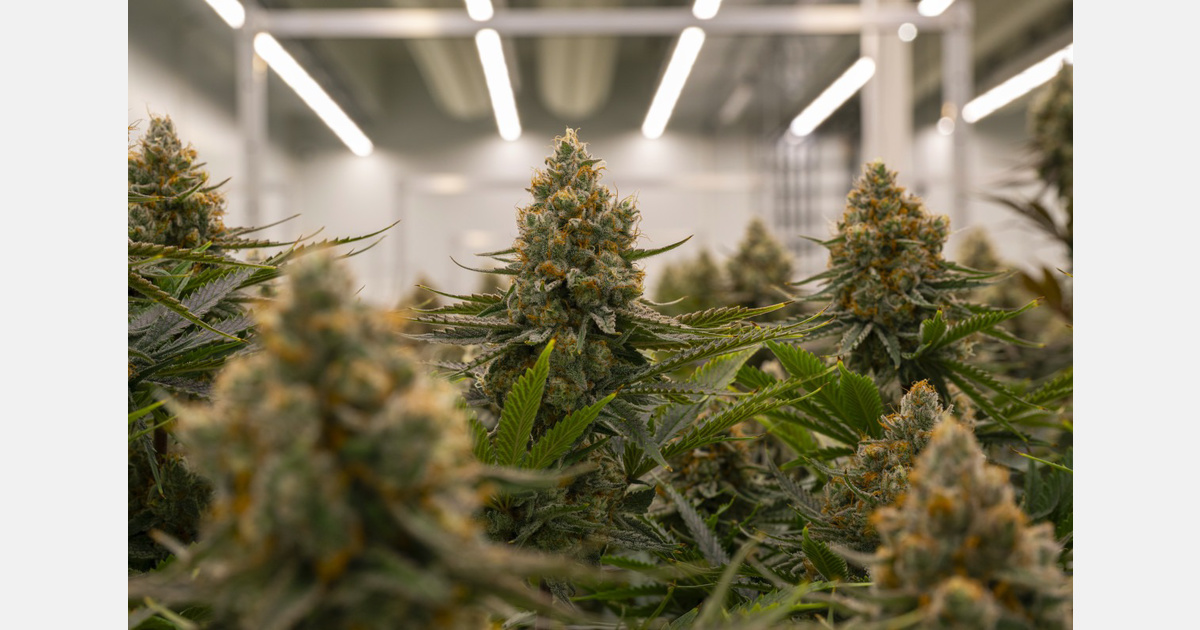
Village Farms International, one of the world’s largest cannabis production facilities located in Delta, BC, increased its export volumes by more than 500 percent by the end of 2025, with international sales reaching US$37.9 million, or just over 20 percent of total cannabis revenue of US$188 million. The main export markets are Germany, Australia, the United Kingdom, New Zealand and Israel.

The company is also expanding, developing an additional 550,000 square feet of greenhouse space across the street from its main facility, designed to support both domestic and international cultivation. Orville Bovenschen, VFI’s global president of operations, points to the excise burden as a permanent strain on the domestic economy: “If you look at how much we paid in excise last year, it’s astronomical,” he says, although VFI declined to provide specific figures.

Walker Patton, one of the founders of the BC Cannabis Alliance, which represents about 50 licensed growers in the province, frames the domestic regulatory environment in stark terms: “With the rules that this industry was set up for, it’s like doing business right out of the gate.” Canada’s excise tax structure charges by weight instead of market price, meaning that since wholesale prices have fallen to roughly half of initial projections, effective tax rates for producers have risen.

© This is Holland

Sweetgrass Cannabis, a micro-farm located in the Kootenay region, now derives 60 to 70 percent of its sales from international markets after retreating from provinces such as Ontario and Alberta. Company CEO Gemma Hayes says: “Margins, as well as export opportunities, drove our decision.” Ontario’s wholesale markup of up to 25 per cent, layered with excise taxes, spurred what Hayes described as a “race to the bottom.”

Rubicon Organics, a Vancouver-based publicly traded company, entered international markets last year and recently opened a 47,500-square-foot facility in Hope in part to meet overseas demand. Speaking from the International Cannabis Conference in Berlin, Mathieu Aubin, director of marketing and new business, said: “Canada is very well positioned to access international markets for reliable and safe cannabis,” noting that reliability and product integrity are key to gaining access to the medical market.

Not all producers have equal access to these markets. Alex Rumi, founder of grower Good Buds out of Salt Spring Island, said established export markets are structured around an indoor pharmaceutical-style model that hurts sun-grown cannabis, and that Canada’s export system “works for big growers and doesn’t work for craft.” Julia Cameron, president of Cannabis Cultivators of BC and chair of communications and corporate affairs for the VFI, added that growers must secure permits for each shipment while navigating different rules across countries, creating a prohibitive barrier for small operators.

BC has more than 200 licensed growers and accounts for roughly a quarter of Canada’s legal cannabis production, but represents only 14 percent of national exports. Lana Popham, B.C.’s Minister of Agriculture and Food, points to the FIFA World Cup games in Vancouver as a near-term possibility: “It will be interesting to see how many people engage with what is a great product here in B.C.”


Cannabis News

Congressman And Other Media Outlets Join Marijuana Moment’s Push For DEA To Livestream Rescheduling Hearing
Published

on

By

The momentum of the Marijuana Moment request for direct public and media access to historic federal cannabis rescheduling hearings they are being joined by a member of Congress and other reporters starting next week.

Representative Steve Cohen (D-TN) sent a letter to the head of the Drug Enforcement Administration (DEA) on Friday, calling the ongoing marijuana rescheduling process “historic.”

“I am writing to request that the hearings be made available to the public in real time,” Cohen wrote to DEA Administrator Terrance Cole. “Live streaming technologies have become ubiquitous and a common way for Americans to interact with the government. In late 2024, in a similar effort, your agency authorized live streaming of proceedings ‘due to the public interest in this matter’ and continued your agency’s ‘commitment to procedural transparency.’

“I see no reason why that reason wouldn’t hold today, especially when it comes to such an important and impactful issue,” the congressman wrote. “I have long been an advocate for transparency in court proceedings and I believe this is a rare opportunity to inform the public about rulemaking and administrative litigation.”

Cohen’s letter follows a couple Marijuana Moment’s attorney presented the petitions to Cole and DEA Chief Administrative Law Judge Derek Julius. to request access to a live stream of the hearing on the proposal to move cannabis from Schedule I to Title III of the Controlled Substances Act (CSA) — which includes only opponents of the reform as participants.

Also on Friday, an attorney from Portfolio Media, Inc., which publishes Law360, sent Cole a letter saying it “agrees with Marijuana Moment’s request” for streaming access.

“This approach is consistent with DEA’s prior approach to this hearing and the compelling public interest in rescheduling marijuana under the CSA, a policy change with profound social, legal, and regulatory implications,” the letter states.

Requiring observers to attend in person “limits real-time information about a consequential policy development to the press and a small audience in attendance, and removes the ability of the press to report on that development,” he says. “Live streaming is a safe, continuous and fair way to ensure meaningful public access and advance the DEA’s stated commitment to transparency.”

Separately, an attorney representing the cannabis publication Cultivated Media and also on behalf of New York Times reporter Ashley Southall sent a letter to the DEA administrator saying they “want the ability to monitor the proceedings in real time, to provide readers with reports on the progress and perspective of testimony and evidence during the hearing.”

“Cultivated Media, Ashley Southall and Marijuana Moment and all the other media because of this access to the live stream can simultaneously report on issues of important public concern related to a historic hearing,” he said.

The DEA announced Thursday that it would make the transcript available at the end of the multi-day hearing, but Marijuana Moment attorney Joseph A. Bondy wrote in his letter Thursday that it would not help the public follow the proceedings in real time on a daily basis.

“The final transcript is useful, but not a substitute for access to a live broadcast. A live broadcast allows the public and the press to observe the hearing as it unfolds without contesting admissions, filling the courtroom, or disrupting the proceedings,” the letter to Cole says. “After reviewing, correcting and releasing the transcript weeks after the testimony, the opportunity for real-time observation, timely reporting and public information response has passed.”

“For a large public audience seeking serious coverage of federal cannabis policy, Marihuana Moment is an important channel through which the public can understand these proceedings.”

“To the extent that the DEA now believes that live streaming is inappropriate, despite the DEA’s prior directive in this rulemaking, Marijuana Moment respectfully requests a written explanation identifying the specific basis for that conclusion, including why the public interest and transparency that previously warranted live streaming are being overridden here,” Bondy wrote.


Marijuana Moment’s journalism is made possible by readers like you, who value this work enough to support us monthly pledges on Patreon. If you rely on our reports to stay informed of important developments in cannabis, please help us do this becoming a permanent subscriber today.

Backing us at the $25/month level, you’ll have access to our Bill Tracker so you don’t miss any important marijuana legislation in your state.

Separately, cannabis advocates sent a letter Thursday to Julius, the DEA judge, saying he would not consider submissions from outside parties, also requesting access to the live stream.

“Many of the patients most interested in this procedure cannot travel to Arlington, Virginia. Many are disabled, immunocompromised, elderly, financially limited, or managing serious medical conditions,” states the letter from Americans for Safe Access, Veterans Initiative-22, US Pain Foundation, Realm of Caring, Montel Williams and others.

“Patients and advocates who can travel will also be unable to physically wait in line for an uncertain chance of admission, only to be turned away when limited seats are filled,” they wrote. “So the audience may technically be open to the public, but virtually inaccessible to most.”

Meanwhile, the DEA said in a new filing that its witness list for the hearing includes a doctor. Testify on “How Medical Marijuana Provides Medical Benefit to Pain Patients.”

Separately, the opponents who are participating in the trial have presented their declarations this week anticipate the anti-marijuana arguments they intend to make during the procedure.

The hearing it will start on June 29 and end before July 15.

Acting Attorney General Todd Blanche in April He issued an order that immediately reclassified the state’s licensed medical cannabisas well as marijuana products approved by the Food and Drug Administration (FDA) under Schedule I through Schedule III of the Controlled Substances Act (CSA).

According to a separate order signed by the acting attorney general, the upcoming hearing will include Class III marijuana.

Preliminary hearing process on the marijuana redistricting process initiated by the Biden administration It was halted last year amid allegations of improper communications and witness selection.

the current The marijuana redistricting process is being challenged in several ways which have been upheld by a federal Court of Appeals. those pieces of State attorneys general have filed lawsuits against cannabis reform, Opponents of marijuana legalization and a a cannabis-based biopharmaceutical corporation.

Meanwhile, the reorganization of state-licensed medical cannabis is already having a major impact.

The Congressional Research Service published a report on the current rescheduling of cannabis Certified patients with medical marijuana from state licensed dispensaries are now eligible for Class III. “The order appears to allow end users to use marijuana medically without a CSA prescription,” he says.

The Bureau of Alcohol, Tobacco, Firearms and Explosives (ATF) has published a Draft update to a gun purchase form to recognize the legal status of medical marijuana in the reprogramming. The revised section of the question states that only the “recreational use or possession of marijuana” is federally prohibited, omitting the prior form’s mention of medical cannabis.

The US Treasury and Internal Revenue Service (IRS) said they plan to issued new tax guidelines for the marijuana industry after reprogramming. The reform will benefit state-licensed marijuana businesses by allowing them to take federal tax deductions that are currently prohibited under IRS Code Section III, known as Section 280E.

Even the DEA, which has long opposed cannabis legalization and accused the Biden administration of stalling the initiative in the reorganization process, has done so. It launched a registration process for legal marijuana businesses in the state to take advantage of the federal benefits that come with the reform.

The Department of Transport, on the other hand, issued guidelines stating this use Legal medical cannabis in the state is still no excuse for truck drivers to test positive for drugspilots and other safety-sensitive personnel.

A congressional committee recently Federal officials voted to block further steps to reschedule cannabis.

read it the letters About DEA admin access to live streaming:

Marihuana Moment is made possible with the help of readers. If you rely on our pro-cannabis journalism to stay informed, consider a monthly Patreon pledge.

Continue Reading

Cannabis News

New access solution for cannabis facilities designed to address limitations of traditional gates
Published

on

By


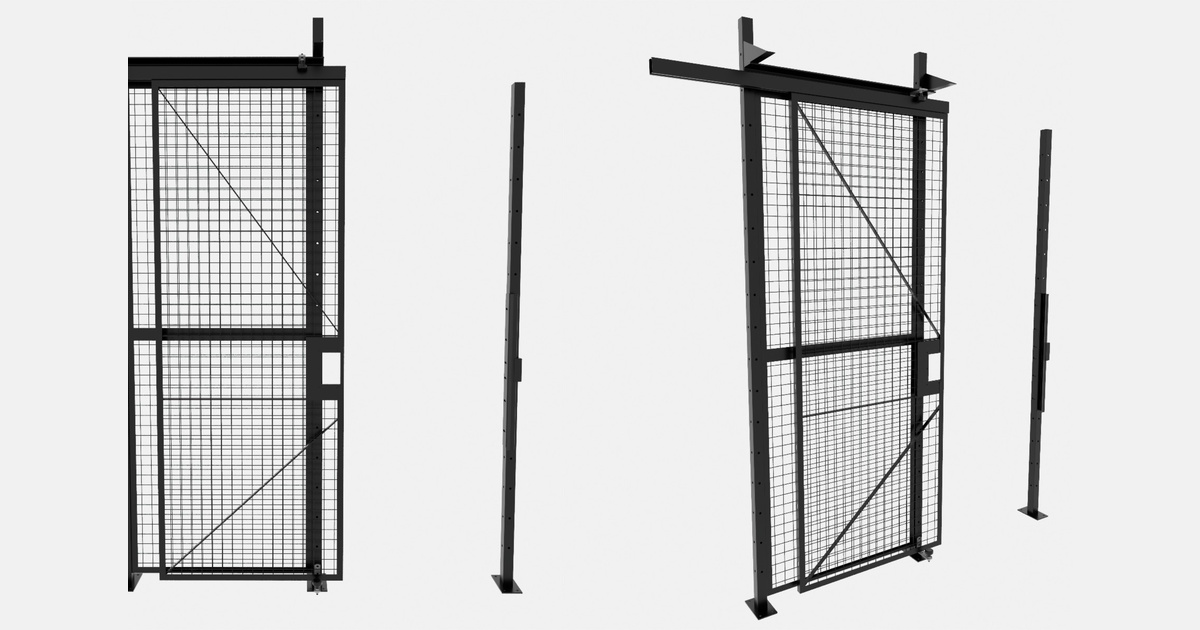
SpaceGuard Products, a North American manufacturer of wire mesh security solutions and security protection systems, has released the BeastWire® Tunnel Door. This access solution is designed to overcome the limitations of traditional balanced doors and is aimed at cannabis cultivation, processing, packaging and distribution environments. The BeastWire Tunnel Door is designed for installations that require vertical clearance, reliable movement and floor space efficiency.

The BeastWire Tunnel Door provides top clearance with no tracks in the operating path of the door. It is suitable for spaces where overhead paths are not feasible, such as facilities that use high-mast forklifts, oversized pallet loads or specialized material handling equipment. Tall equipment can pass through the opening unhindered, allowing for continuous workflow and flexibility in equipment movement.

© SpaceGuard Products

The door uses a track system designed to create consistent movement. This addresses issues such as stuttering, binding, and misalignment that can occur with conventional sliding or counterbalanced designs. The track controls the path of the door so that the locking mechanism aligns with each cycle, allowing operators to close the door with relatively low force.

Unlike lower track systems that require a soil trench, the BeastWire Tunnel Door mounts above ground. This avoids cutting the installation slab, simplifies installation and reduces maintenance requirements. The system can be installed as a retrofit or in new construction, without changing the floor.

© SpaceGuard Products

The door frame and retractable design reduces the need for side supports and additional space on the side of the door. This results in a smaller footprint and more usable surface area. The gate has the same construction approach as other BeastWire systems.

The BeastWire Tunnel Door is a high-access door designed for strength and ease of use in cannabis industry facilities.

For more information:
SpaceGuard products
Email: (email protected)
spaceguardproducts.com/


Continue Reading

Cannabis News

DEA Defends Stance That Synthetic Cannabis Compound HHC Is Federally Banned In Response To Industry Lawsuits
Published

on

By

The Drug Enforcement Administration (DEA) is resisting efforts by two hemp companies to resist the determination that it is a cannabinoid It is illegal synthetically produced from components of the cannabis plant.

The DEA issued a rule last month saying that was already the case made hexahydrocannabinol (HHC) an illegal substance Under the federal Controlled Substances Act (CSA), the agency will now assign the compound its own unique drug code for classification.

That move is being challenged in a series of lawsuits by hemp businesses that say the agency’s decision is “unlawful.”

In addition to filing petitions for review, the companies are also petitioning federal courts to block the agency’s action while the lawsuits proceed.

The DEA, in briefs filed in the cases this week, argued that each applicant “does not meet any of the factors necessary to demonstrate that it should await review.”

“The rule does not affect HHC’s previous status as a Schedule I substance; all it does is list HHC separately and assign it a separate drug code,” the agency’s brief said.

“With or without the final rule, HHC is a controlled substance. Thus, even if this Court stayed the final rule pending review, (companies) would continue to be subject to existing legal and commercial risks for HHC-related actions,” they say, “Contrary, the suspension would undermine the government’s efforts to improve the regulation of HHC, including the permitted amount or approval process for public permits for HHC. Interests also favor a stay, which would create confusion about HHC’s status as a controlled substance.”

HHC can be found in trace amounts in cannabis plants, but it is also synthesized from hydrogenated cannabidiol (CBD). Delta-9 is sometimes sprayed on cannabis flowers that are low in THC, the most well-known psychoactive ingredient in marijuana, and its psychoactive effects are said to be similar.

While the 2018 Farm Bill legalized hemp and its derivatives with less than 0.3 percent delta-9 THC, the DEA says that only applies to naturally occurring cannabinoids, not synthetic ones. Accordingly, the agency’s position is that HHC does not fall within the definition of legal hemp.

One of the pending cases, filed by Bluestar Operations, LLC before the US Court of Appeals for the Fourth Circuit, refers to a prior ruling in that jurisdiction. the hemp-derived cannabinoid THC-O-acetate is federally legal Despite the DEA’s claims to the contrary.

“Congress deliberately used broad statutory language and did not prohibit cannabinoids that are subject to common extraction, refining, conversion, hydrogenation, distillation, or similar manufacturing processes commonly used in the hemp industry,” the complaint states.

The DEA’s move “conflicts with the plain text, structure, and intent of the 2018 Farm Bill and inserts unlawful limitations that Congress neither intended nor enacted,” it says. The agency’s action “has already caused specific and immediate harm to the petitioner, including substantial compliance costs, business uncertainty, reputational damage, disruption of business relationships, and interference with ongoing operations.”

“Congress, not executive agencies such as the DEA, defines the scope of federal criminal liability. The DEA has no authority to curtail Congress’s legalization of hemp-cannabinoids through an interpretive construction that the statutory text does not support.”

Bluestar said in its new response to the DEA’s initial response brief that the agency “cannot defend the merits of treating hemp-derived HHC as a Schedule I controlled substance, which this Court rejected against binding Circuit precedent” in the previous ThC-O-acetate case.

“The respondents have recast the impugned DEA rule as a weightless ‘technical correction’ that harms no one and decides nothing,” he said. “They have then flipped the script by arguing that Bluestar lacks standing to challenge. Respondents can’t have it both ways.”

The other new lawsuit was filed by IHC Investments, Inc. in the U.S. Court of Appeals for the Ninth Circuit, which previously ruled on the federal legalization of hemp through the 2018 Farm Bill. removed the limits on the wide range of molecules produced by the cannabis plant-delta-8 including the psychoactive cannabinoid THC.

The petition states that “the DEA effectively, and therefore unlawfully, attempts to expand federal criminal liability through administrative interpretation that is not supported by the plain statutory text of the enabling legislation.”

“Congress did not prohibit converted cannabinoids, hydrogenated cannabinoids, or cannabinoids subject to common processing techniques,” the complaint states. “Congress did not expressly authorize the DEA to criminalize broad categories of hemp-derived cannabinoids through administrative interpretation.”

Both petitions argue that the DEA’s move last month violates the central question doctrine, which holds that if an agency wants to decide a matter of national importance, that action must be protected by clear authorization from Congress.

The agency’s HHC ban “has enormous economic and political significance affecting the multibillion-dollar nationwide hemp industry,” says the lawsuit brought by Bluestar.

David Sergi, the attorney leading the new Ninth Circuit case for IHC Investments, said in a press release Thursday that the DEA’s action “directly conflicts” with the 2018 federal Farm Bill legalizing hemp and its derivatives.

“The DEA’s ruling has caused immediate and specific harm to hemp businesses across the nation,” he said. “That reclassification has led to immediate cancellation of contracts, loss of banking relationships and potential destruction of important inventory.”

The DEA, for its part, said in a rule it filed last month that “only tetrahydrocannabinols in or derived from the cannabis plant — not synthetic tetrahydrocannabinols — are exempt from regulation as ‘hemp tetrahydrocannabinol.’

“For further clarification, tetrahydrocannabinols produced through chemical conversion, even when considered synthetically produced when derived from hemp for purposes of the CSA, are not classified as ‘tetrahydrocannabinol in hemp'” under the 2018 Farm Bill, the agency said.

The Federal Register notice was not the first time the DEA addressed HHC’s legal status.

In a 2023 letter, Terrance Boos, chief of the DEA’s Drug and Chemical Evaluation Section, wrote: HHC “does not occur naturally in the cannabis plant and can only be obtained syntheticallyand therefore it is not within the definition of hemp”.

The new filing, signed by DEA Administrator Terrance Cole, said, “this rule does not in any way affect the continued status of hexahydrocannabinol as a controlled substance.”

“This action, as an administrative matter, establishes a separate and specific listing of hexahydrocannabinol in Schedule I of the CSA and assigns a DEA drug code to that substance,” he said. “This action will allow the DEA to establish an aggregate production quota and issue individual manufacturing and purchase quotas to DEA-registered manufacturers of hexahydrocannabinol, which were previously issued individual quotas for these purposes under the tetrahydrocannabinol drug code.”

The DEA’s release cited a move it made last year International drug control organizations to add HHC II of the 1971 United Nations Convention on Psychotropic Substances—but the document fails to note that when the Commission on Narcotic Drugs (CND) took the measure, the US was the only country to abstain from voting.

The DEA said the US Department of Health and Human Services (HHS) “conforms to the direct listing and drug code assignment of hexahydrocannabinol in the CSA.”

Meanwhile, under provisions of a large-scale spending bill signed by President Donald Trump late last year, the federal definition of legal cannabis will change in November. If that language does not change or its the effective date has been postponed, as requested by some members of parliamentonly hemp products with a total of 0.4 milligrams of THC per container will remain legal after November 12th.

At the same time, however, the Trump administration is going wider reschedule marijuana under federal lawwith a A DEA hearing on the matter will begin next week.

Read the last one signings in the following cases:

Photo by Mike Latimer.

Marihuana Moment is made possible with the help of readers. If you rely on our pro-cannabis journalism to stay informed, consider a monthly Patreon pledge.

Continue Reading
Advertisement

Trending

Copyright © 2021 The Art of MaryJane Media