Connect with us

Cannabis News

Congress Should Delay The Federal Hemp Ban And Instead Enact Regulations For THC And CBD Products (Op-Ed)


Published

on

“Republicans, Democrats and independents understand that regulation is better than prohibition, and that good science takes time.”

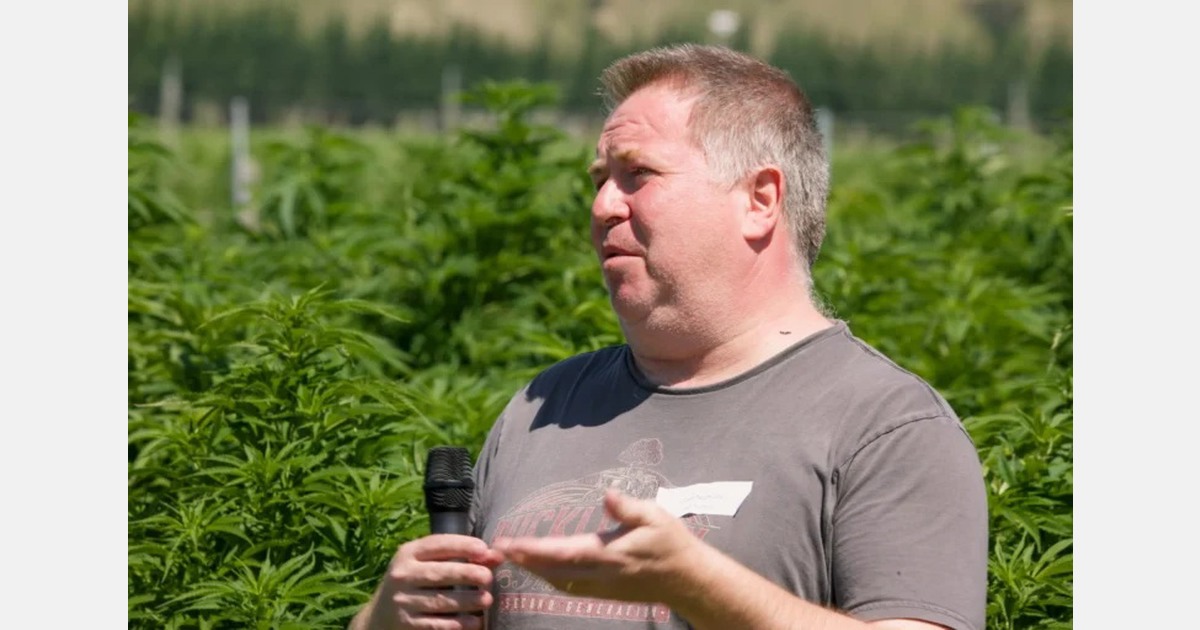
By Mike Simpson, Lovewell Farms via Rhode Island Current

At a time when Americans across the political spectrum say they want evidence-based policy, Congress is on the verge of repeating a familiar mistake: ban first, learn later.

Bipartisan legislation recently introduced in the US House and Senate would delay it federal ban on hemp-derived products. This is not to legislate anything new, but to give regulators, researchers and farmers time to do what Congress says they want to do: collect data, set clear rules and regulate responsibly.

I write this as a hemp farmer and small business owner. Having started Lovewell Farms in 2018, I know firsthand the effects a ban on hemp-derived products would have on my farm, the only USDA-certified organic hemp farm in Rhode Island. Here’s what lawmakers don’t fully understand: Hemp isn’t something that can be turned on and off with a vote. Farmers need to know in the next 100 days whether the plant they will harvest in October will be legal in November.

The seeds are planted in April. The fields are cultivated all summer. The crops are harvested in October. The federal ban, which takes effect in November, lands after farmers commit to a full season of labor, capital and compliance costs. There is no back button for farming. This uncertainty is already forcing farms to close. A sudden ban would end the job.

The Senate bill (S.3686) was introduced by Senator Amy Klobuchar, Democrat of Minnesota, and co-sponsors Rand Paul, Republican of Kentucky, and Jeff Merkley, Democrat of Oregon. delaying the ban on hemp-derived products by two yearsAllowing Congress to explore regulatory alternatives rather than default to a ban. A House Bill (H.7010)Led by Republican Jim Baird, the Indiana Republican, also with bipartisan sponsors, would do the same.

Together, these bills recognize a basic agricultural reality: Farmers need predictability before they plant.

It is important to note that Congress is not only proposing a delay, but is debating the regulations. The Hemp Enforcement, Modernization, and Protection (HEMP) Act is another bipartisan bill introduced in the House (H.7212) that would establish a federal framework for hemp-derived products, including clear safety standards, labeling requirements, enforcement authority, and potency limits defined by product type. The proposal demonstrates that per-serve and per-package limits can achieve consumer protection and responsible oversight for oral, inhalable, topical, and THC-containing hemp products.

Taken together, these bills show that Congress has viable, bipartisan alternatives to an outright ban, should it choose to use them.

At this point, this is not a discussion about the limits of THC. The question is whether hemp policy will be driven by science or fear. That distinction matters because federal science is finally catching up. In 2025, the Trump administration issued an executive order directing federal agencies to expand cannabis and cannabidiol (CBD) research, including using large federal health data sets, such as Medicare records, to analyze safety, efficacy and outcomes.

The order did not legalize CBD or add it as a Medicare benefit, but it did expressly recognize that cannabinoids require rigorous scrutiny before policy decisions can be made. Congress is pushing for a ban at a time when the federal government is building the science-based research infrastructure needed to answer tough questions.

Concerns raised by opponents of hemp-derived products also argue for regulation, not bans. Whether the products require clearer labeling, age restrictions, potency standards or enforcement tools like those already in place in Rhode Island are state-by-state regulatory challenges. Rhode Island already regulates hemp products. Farmers and businesses here should not be penalized because other states have dragged their feet to create a regulated market.

Prohibition does not solve these problems; it simply pushes them out of sight, into unregulated markets that are less safe for consumers. Banning hemp would push production overseas. If hemp cultivation in the United States collapses, demand will not disappear. It will shift to cannabinoids imported from countries like Canada or China, where regulators in the United States have far less visibility or control. The result harms local farmers, consumers and public safety.

Rhode Island Reps. Gabe Amo and Seth Magaziner previously voted against a federal hemp ban embedded in a larger spending bill. That was the right call. Senators Jack Reed and Sheldon Whitehouse, however, specifically voted to keep the hemp ban language in the same bill. Rhode Island senators have an opportunity to support local farmers and small businesses by cosponsoring this bipartisan delay bill (S.3686). Rhode Island representatives can do the same with the corresponding House bill (H.7010).

This is one of the few issues in Congress that remains truly bipartisan. Republicans, Democrats, and independents understand that regulation is better than prohibition, and that good science takes time. Congress should not dismantle the $30 billion domestic agriculture industry with more than 300,000 jobs when meaningful investigations begin. A temporary delay protects farmers, supports small businesses, keeps hemp farming rooted here in the United States and allows policymakers to regulate with evidence rather than panic.

Prohibition without evidence is not politics. Rhode Island’s delegation should stand with farmers, small businesses and science by sponsoring bipartisan bills that delay this ban and allow the regulations to catch up to reality.

He is the creator of Mike Simpson Lovewell FarmsRhode Island’s only US Department of Agriculture (USDA) organic hemp farm. He is also a historian, educator, and longtime advocate for policy reform. He previously served as Deputy Director of Regulate Rhode Island and Initiative Coordinator for the Marihuana Policy Project in Maine. He currently resides in Providence and farms in the town of Hope Valley in Hopkinton.

This story was first published by the Rhode Island Current.

Max Jackson’s photo.

Marijuana Moment is made possible with the help of readers. If you rely on our pro-cannabis journalism to stay informed, consider a monthly Patreon pledge.

Continue Reading

Cannabis News

There is much more to come

Published

on

By

After almost thirty years, Alfred Boot will leave Herkuplast, currently part of the Bachmann Group, and the horticulture sector. His career has paralleled a period of profound change in the industry: from manual and seasonal production to year-round automated supply chains with high demands for uniformity, hygiene and circularity. His successor, Kasper Rietvelt, is now ready to take Bachmann-Herku to the next stage.

© Arlette Sijmonsma | MMJDaily.comAlfred Boot and Kasper Rietveld

From 26 models to customized automation solutions
“I fell into it by accident,” says Boot, reflecting on 1987, when he got into horticulture after finishing trade school. “At Rover, I immediately found myself in a world where technology and practice go hand in hand.” In the mid-1990s he was asked to set up the export operation of Herkuplast, a German manufacturer of thermoformed trays that had already been operating for several years.

“We started with 26 models. All on one A4 sheet,” he recalled. At that time, most of Herkuplast’s range consisted of multi-purpose trays, while other tray manufacturers in the Dutch market had already switched to a wider range of single-use thin models. Boot saw the place to mark his career. “We had a thin-walled model, but more was required. I was given carte blanche to develop thin models. Mr. Kubern’s collaboration with the owner Herkuplast focused on exactly that: if you have a good idea, we make it happen.”

The rise of automation in the sector placed new demands on the trays. Accuracy became critical for shot plates and automated processing lines. “Centered drain holes, exact dimensions, everything had to be right. Otherwise the line would get stuck. We always prioritized that, and it got us recognition in the market.”

Alfred Boot from HerkuPlast has a new hydroponic lettuce propagation tray. 2013 at the OFA Short Course in Columbus, Ohio, the predecessor to Cultivate.

Internationalization and hygiene conditions
Along with the Dutch market, Boot also moved into international markets from the start, in France, Spain, the United Kingdom, the United States and beyond. The reasoning was largely practical: in the 1990s, the sector still had a clearly defined summer break. “Production was closed for three or four weeks. The demand simply dropped. But we wanted to produce all year round, so we looked for markets that demanded it: soft fruit and cuttings propagation, for example.”

The demand for trays used in strawberry, raspberry and blueberry production enabled year-round manufacturing and became a growing market segment. “Retailers and consumers expect that. That’s reflected in volumes and specifications.”

At the same time, hygiene requirements in breeding increased with increasing virus pressure and a smaller range of approved crop protection products. “Multi-use trays are easy to clean, cheaper than injection-molded alternatives, and are pocketable. And because thermoformed trays are thinner, if something goes wrong on an automated line, you lose the tray, not the robot arm,” explains Boot.

That said, the priority has always been to maximize the use of plastic through reuse. This has also changed significantly over the decades. “When I started, plastic was treated as waste. It was thrown away or burned. That is completely out of the question today.” Herkuplast, working with partners like Van Krimpen, has invested heavily in circular solutions. “Our breeding and growing trays do not enter the consumer market. They go from the dealer to the packaging operation. In the Netherlands, the used trays are collected, shredded and reprocessed as raw material for new trays or other applications. We close the loop: our trays are made from recycled materials from day one, both multi-use HerkuPaks and single-use HerkuPaks.” What started as a personal conviction became a marketing asset and has since become a retail requirement.

Alfred Boot of Herkuplast could have taken 1,000 photos at IPM, but this time, under the Bachmann Herku banner, will be the last time - he is saying goodbye soon.© Arlette Sijmonsma | MMJDaily.comAlfred Boot at IPM 2026

Internationalization and family businesses
Boot emphasizes the importance of strong chain partners. “We believe in collaboration.” In Europe, the company has always worked with operators from “Portugal to Finland”. Outside of Europe, the company markets directly, which has taken it as far as New Zealand, trips Boot describes as memorable.

North America has also been a rewarding market. There has been significant growth. “With our reusable QuickPot trays and our expertise, we can really add value there.” Is that his favorite market? He is reluctant to pick one. “I enjoyed going there, because we could make a real difference. But the Netherlands remains, perhaps, my first place. Not only because it is our biggest market, but because a lot of it originates here, seeds, ornamental gardens, plant breeding, greenhouse construction. That is the focus of knowledge and quality. Growing with minimal waste, with biological inputs, under constant price pressure. That is not always highly appreciated by the external role. The sector requires a pragmatic mentality, but the achievements are extraordinary. are”.

This has motivated him throughout his career. “This sector is essential. You are either in food or greening the world. Is ornamental horticulture necessary? Yes, I think so.”

That’s why Herkuplast, a family business at heart, chose during the pandemic to do everything in its power to continue serving its customers. After a short stoppage, the factory was opened as soon as possible, adapted to the strict requirements of Germany. “It was a huge peak for horticulture, but the prices of raw materials also rose a lot. We took the risk of buying at high prices and continued to deliver, even though it cost us the margin. But we wanted to continue to supply our customers. The importance of continuity is too great, for our customers, for our people and for our sector.”

After the pandemic, Herkuplast entered an important period of transition. Mr. Kubern had reached his seventieth birthday, and there was no succession in the family. A sale was the expected result, and in 2024 Herkuplast was bought by the Swiss company Bachmann Group. “I’m glad it was Bachmann. Our big priority was to have a private company that understood the European market, understood horticulture and would keep the factory in Germany.” With international expansion and a motivated team launching the new Bachmann-Herku brand, ambitions are high. “And when you look at how the sector is changing, automation, robotization, AI in plant selection, it’s moving at an incredible speed. It’s fascinating.”

Luckily we still have the pictures - the Bachmann Group shows off the new Bachmann Herku brand© Arlette Sijmonsma | MMJDaily.com And with the new colleagues from Bachmann Herku, IPM 2026

goodbye
But Boot is also honest: from a professional point of view, he won’t be around to see it unfold. The end of March will be his last working day at Herkuplast. “It’s a purely personal choice. I’m not tired of work, and I’m not tired of the sector. But you only live once, and life has a lot to offer.” The caravan is ready. Together with his wife Astrid (known to many in the industry) and their dog, the couple embarks on a long-distance trek. “I’ve been abroad about 100 days a year. We definitely have triplets when the kids were little, so balancing work and family was a constant juggling act. Now we go together.”

He adds: “If I had a long horizon ahead of me at 45, I would love to do again what we did with Herku in 1997. But now I feel too old for that.” He laughs. “And over the years I have become a clone of Herkuplast myself, while the product range has changed with the acquisition. Now we are Bachmann-Herku, and the portfolio is being integrated quickly. Kasper has been working in the new company since his first day. That is also a natural process. It feels good.”

For more information:
Bachmann Herkuplast

Alfred Boot
(email protected)
Kasper Rietveld
(email protected)
+31 653 215 514

Tel.: +41 41 914 72 00
(email protected)
www.bachmann.ch

Continue Reading

Cannabis News

Minnesota Lawmakers Approve Bill To Legalize Psilocybin Therapy And Reschedule The Psychedelic Under State Law

Published

on

By

Minnesota lawmakers have passed a bill that would legalize the therapeutic use of psilocybin for adults 21 and older while rescheduling the psychedelic under state statute.

Members of the House Health Finance and Policy Committee approved Rep. Andy Smith’s (DFL) legislation on a voice vote Monday. The proposal goes to the Trade Finance and Policy Committee.

Smith too He sponsored a similar measure last year, which ultimately failed to take effect.

Under the current bill, which was revised with a substitute amendment during the committee hearing, qualified patients over the age of 21 could receive psilocybin-assisted therapy “at an approved private residence or licensed treatment facility,” according to a summary from the Minnesota Department of Home Affairs.

“No one on this committee, that I know of, disputes that mental illness is one of the defining problems in our society today,” Smith said, adding that the legislation is the answer. recommendations of a task force on psychedelic states that was formed under a separate lawhe said “Today in this committee, we’re talking about a new tool: a therapeutic psilocybin program here in Minnesota that has great potential.”

“It will help Minnesotans struggling with substance use disorder, depression, PTSD, anxiety, chronic pain and many other mental illnesses,” he said, before describing key provisions of the proposed legislation.

A registered facilitator should administer the psychedelic. To begin with, the program would involve licensing 20 to 50 facilitators at three approved psilocybin testing facilities. More than 1,000 patients could not participate in psychedelic therapy in the first three years of the implementation of the law.

The Department of Health (DOH) and the Office of Cannabis Management (OCM) would be responsible for overseeing the program and implementing regulations, while the health commissioner would also be responsible for collaborating with the newly created Psychedelic Medicine Advisory Board on the initiative.

Psilocybin sessions would involve “preparation” with patient-facilitator consultation, “administration” where patients would receive the psychedelic, and “integration” where patients would work with professionals to process the therapeutic experience.

What’s more, HF 2906 as changed includes protections for health professionals who help facilitate the program. And it would impose penalties for violations of the law, such as impunity administration or growing psilocybin outside the program’s parameters.

“I think a lot when someone initially hears about this and thinks, ‘Hey, the cannabis program,’ a lot of the criticism is ‘Oh, it’s under the camel’s back for legalization,’ or whatever,” said Rep. Nolan West (R), who is sponsoring the legislation. “This is a pilot program.”

The congressman noted that interest in the therapeutic potential of psychedelics does not just cross party lines, but extends to the White House, where US Department of Health and Human Services (HHS) Secretary Robert F. Kennedy, Jr. and what other administrative officials have had. they discussed expanding access to novel therapies.

In addition to creating a psilocybin therapy program, the Minnesota bill calls for moving the psychedelic from Schedule I to Schedule IV on the state’s list of controlled substances, reflecting its low abuse potential and low risk of addiction.

One of the open questions for the reform is how to make sure it gets adequate funding, so the sponsor said he doesn’t expect much political resistance to the underlying goal of the legislation, though spending concerns may prove problematic.

“If it doesn’t happen this year, I feel very confident that we will be able to make it happen in the next budget session,” Smith. say Minnesota Star Tribune.

Kurtis Hanna, board chair of the Psychedelic Access Project, told Marijuana Moment that advancing the bill through committee with a bipartisan vote is “gratifying” when “Minnesota’s legislature is as divided as ever.”

“Veterans, mental health professionals, doctors and patients came out in full force today to provide Minnesotans with mental health issues another tool in their toolbox,” he said. “I’m excited to see this issue gain momentum as it moves through the next few committee stops on its way to a full vote in the House and Senate.”


It’s Marijuana Time tracking hundreds of cannabis, psychedelic and drug policy bills in state legislatures and Congress this year. Patreon supporters by pledging at least $25/month, you’ll get access to our interactive maps, charts, and audio calendars so you never miss a development.


Learn more about our marijuana bill tracking and become a Patreon supporter to gain access

Meanwhile, in Minnesota, The first marijuana store run by the state government recently opened its doorsmarking another milestone in the state’s adult cannabis program.

Last September, Minnesota officials issued the state’s first marijuana event organizer licenseallowing adults to purchase and consume cannabis products at a festival. The the first non-tribal marijuana stores opened to sell to adults 21 and older at the beginning of that month.

Also last year, the city of Eden Prairie, Minnesota, sought suggestions from residents what to name a new government brand cannabis gummy product for sale in municipal liquor stores.

The Minnesota House of Representatives released a survey at last year’s State Fair asking about attendees the idea of ​​towns being able to ban marijuana businesses within their borders. Most respondents with an opinion on the issue agree with the policy, even though it is not currently part of the state’s cannabis laws.

Before legalization took effect in Minnesota, lawmakers In the surveys of the State Fair, they found the support of the majority in favor of the reform.

The governor too elected a top state cannabis regulator which will oversee the expansion of the adult-use market. Last June, the OCM issued the state’s the first recreational marijuana license for a micro-growing business.

OCM said at the time that it was taking further steps to build on the industry and create opportunities for entrepreneurs, including opening a new licensing window for cannabis testing facilities, accepting the first applications for marijuana event licenses and verifying more applications for social equity status.

Separately, after Minnesota lawmakers passed a bill ending the criminalization of bong water with traces of drugs, the governor signed the measure into law last may

The change reverses an existing policy that allowed law enforcement to treat bong water quantities greater than four ounces as the equivalent of a pure, cut-down version of any drug used to consume the device.

Meanwhile, Minnesota Gov. Tim Walz (D) said in December that the state “Exploring” how to respond to federal ban on THC hemp products.It would be “very disruptive” to the “thriving industry.”

user photo CostaPPR.

Marijuana Moment is made possible with the help of readers. If you rely on our pro-cannabis journalism to stay informed, consider a monthly Patreon pledge.

Become a patron on Patreon!

Continue Reading

Cannabis News

Labor management system even more widely applicable after update

Published

on

By

In the Netherlands, greenhouse growers are increasingly looking for ways to manage energy and labor costs. This was also a key theme at the recent Aardbeiendag (Strawberry Day), where Ridder presented its work management system, Ridder Productive. The system has been updated to better meet the specific needs of strawberry growers, with further updates being developed. Sales director Niels Hiemstra explained.

Ridder Productive has been on the market for over 30 years and is widely used in the greenhouse industry. According to Hiemstra, the system has traditionally been adopted by large fruit and vegetable producers. “As Ridder, we focus on those growers in the Netherlands, Belgium and North America and Mexico as well. However, the product itself is fundamentally much broader.”

© Thijmen Tiersma | MMJDaily.comNiels Hiemstra and Arjan van der Klaauw on Strawberry Day

Adapted for strawberry cultivation
The work management system allows growers to record what tasks are done, where and when they are done and what the production is. At the request of customers, specific adjustments have been made for strawberry production, so that labor and production can be recorded more precisely.

In the early years, before the change to Ridder Productive, the system was known as P-Plus or PadPlus. It supported a work record per row. Strawberry growers, however, harvest the crop in crates that are placed in crates. Therefore, Ridder has introduced the possibility to record the activities of each box containing packaged fruit.

NFC tags or QR codes
The system uses scanners capable of reading NFC tags and QR codes. As Hiemstra explains: “In a previous version of the system, which is still widely used, growers work with fixed terminals in various places in the greenhouse. Work activities are recorded by entering the corresponding codes. This can lead to errors. When an NFC tag is reduced in a row, on a harvest trolley or in a box or box in strawberry production, it mainly reduces errors by the user. Terminal-based registration in scanners with NFC tags.”

The option to scan QR codes or barcodes also creates opportunities for traceability. QR codes could already be scanned for punnets, and this functionality has now been extended to other elements, such as rows. A QR code or barcode from an external party can also be used, allowing the scanned product to be tracked to the customer throughout the supply chain. This allows growers to see where, when and by whom a specific crate or crate was harvested.

With these adaptations, Ridder Productive has become more suitable for strawberry cultivation, which is increasingly carried out in high-tech greenhouses. As a result, cultivation has come closer to Ridder’s traditional approach. Hiemstra occasionally knows strawberry growers who don’t use labor record systems, but who are considering it as their business expands. “As they grow, they realize that more professionalization is necessary. They move from basic time recording to a more detailed and comprehensive work management system.”

© RidderWith the Scanner app, an employee scans NFC tags or QR codes

Combining greenhouse and outdoor cultivation
In the Netherlands, Ridder has traditionally been active in high-tech greenhouses. However, Ridder Productive can also be used in open ground production, for example by strawberry growers who combine greenhouse cultivation with outdoor fields. In both situations, a detailed and accurate work record is required.

“Measuring who does what and where can be done both in the greenhouse and in field crops,” says Niels Hiemstra. “Instead of linking data to a specific row in the greenhouse, you can just as easily link it to a specific area.”

He recognizes that the labor management system is still relatively little used in outdoor cultivation. However, he hopes that may change as strawberry production continues to expand. Lettuce and herb producers, for example, combine greenhouse and outdoor production.

Outside the Netherlands, Hiemstra knows users of Ridder Productive in lettuce production. The ability to scan NFC tags or QR codes plays an important role. “When we only worked with fixed terminals, it was less practical to use in open areas, partly because of the cable requirements. Hardware was a limitation. Now that we work with scanners and can equip robust smartphones for scanning, the system has become more accessible for outdoor crops.”

In principle, ornamental producers can also use the system. However, Hiemstra points out that there is generally less demand for detailed employment records in this segment. “Often, more attention is paid to the entire production. But for companies that want to accurately measure work performance, the system can certainly be applied there as well.”

© RidderRidder also offers a manager application in Ridder Productive. There, a work manager can see the performance of the employees.

New version coming soon
Ridder Productive, which has been in the market for more than three decades, continues to evolve. According to Niels Hiemstra, continuous development is essential, especially in software. “If you get stuck in software, you quickly fall behind.”

The ’26 version is expected to be introduced this year. “It includes many small improvements that make everyday use easier. They may not all be very visible, but they make a difference in practice.”

This is on purpose, he explained. Satisfied users aren’t necessarily looking for major changes every six to twelve months. They prefer stability in features that work well and are popular. Ridder takes this into account in the upcoming update.

One area where the changes will be more noticeable is the dashboard environment. In cooperation with various manufacturers, the design and information display have been significantly improved. “We offer a standard configuration, but it is possible to create a custom panel at the request of the user with the help of our service department.”

© Thijmen Tiersma | MMJDaily.com

Combining with other data sources
In addition to work management systems, many greenhouse companies know Ridder for their drive systems, Hortimax climate computers and climate monitors.

In terms of software, Ridder deliberately keeps the Ridder Productive and the Hortimax climate computer as separate systems. “Both products are part of the management of a modern greenhouse operation,” says Niels Hiemstra, “but growers can choose from us whether they want to use both systems.”

Growers who work with a different climate computer can also use Ridder Productive. According to Hiemstra, Ridder is open to creating data links with other systems upon user request. “This way, we ensure that our systems fit into the wider greenhouse ecosystem and that the grower is properly protected.”

For more information:
Niels Hiemstra
Equestrian
(email protected)
www.ridder.com/nl/arbeidsmanagement

Continue Reading
Advertisement

Trending

Copyright © 2021 The Art of MaryJane Media