Connect with us

Cannabis News

Congress Should Delay The Federal Hemp Ban And Instead Enact Regulations For THC And CBD Products (Op-Ed)

Published

on

“Republicans, Democrats and independents understand that regulation is better than prohibition, and that good science takes time.”

By Mike Simpson, Lovewell Farms via Rhode Island Current

At a time when Americans across the political spectrum say they want evidence-based policy, Congress is on the verge of repeating a familiar mistake: ban first, learn later.

Bipartisan legislation recently introduced in the US House and Senate would delay it federal ban on hemp-derived products. This is not to legislate anything new, but to give regulators, researchers and farmers time to do what Congress says they want to do: collect data, set clear rules and regulate responsibly.

I write this as a hemp farmer and small business owner. Having started Lovewell Farms in 2018, I know firsthand the effects a ban on hemp-derived products would have on my farm, the only USDA-certified organic hemp farm in Rhode Island. Here’s what lawmakers don’t fully understand: Hemp isn’t something that can be turned on and off with a vote. Farmers need to know in the next 100 days whether the plant they will harvest in October will be legal in November.

The seeds are planted in April. The fields are cultivated all summer. The crops are harvested in October. The federal ban, which takes effect in November, lands after farmers commit to a full season of labor, capital and compliance costs. There is no back button for farming. This uncertainty is already forcing farms to close. A sudden ban would end the job.

The Senate bill (S.3686) was introduced by Senator Amy Klobuchar, Democrat of Minnesota, and co-sponsors Rand Paul, Republican of Kentucky, and Jeff Merkley, Democrat of Oregon. delaying the ban on hemp-derived products by two yearsAllowing Congress to explore regulatory alternatives rather than default to a ban. A House Bill (H.7010)Led by Republican Jim Baird, the Indiana Republican, also with bipartisan sponsors, would do the same.

Together, these bills recognize a basic agricultural reality: Farmers need predictability before they plant.

It is important to note that Congress is not only proposing a delay, but is debating the regulations. The Hemp Enforcement, Modernization, and Protection (HEMP) Act is another bipartisan bill introduced in the House (H.7212) that would establish a federal framework for hemp-derived products, including clear safety standards, labeling requirements, enforcement authority, and potency limits defined by product type. The proposal demonstrates that per-serve and per-package limits can achieve consumer protection and responsible oversight for oral, inhalable, topical, and THC-containing hemp products.

Taken together, these bills show that Congress has viable, bipartisan alternatives to an outright ban, should it choose to use them.

At this point, this is not a discussion about the limits of THC. The question is whether hemp policy will be driven by science or fear. That distinction matters because federal science is finally catching up. In 2025, the Trump administration issued an executive order directing federal agencies to expand cannabis and cannabidiol (CBD) research, including using large federal health data sets, such as Medicare records, to analyze safety, efficacy and outcomes.

The order did not legalize CBD or add it as a Medicare benefit, but it did expressly recognize that cannabinoids require rigorous scrutiny before policy decisions can be made. Congress is pushing for a ban at a time when the federal government is building the science-based research infrastructure needed to answer tough questions.

Concerns raised by opponents of hemp-derived products also argue for regulation, not bans. Whether the products require clearer labeling, age restrictions, potency standards or enforcement tools like those already in place in Rhode Island are state-by-state regulatory challenges. Rhode Island already regulates hemp products. Farmers and businesses here should not be penalized because other states have dragged their feet to create a regulated market.

Prohibition does not solve these problems; it simply pushes them out of sight, into unregulated markets that are less safe for consumers. Banning hemp would push production overseas. If hemp cultivation in the United States collapses, demand will not disappear. It will shift to cannabinoids imported from countries like Canada or China, where regulators in the United States have far less visibility or control. The result harms local farmers, consumers and public safety.

Rhode Island Reps. Gabe Amo and Seth Magaziner previously voted against a federal hemp ban embedded in a larger spending bill. That was the right call. Senators Jack Reed and Sheldon Whitehouse, however, specifically voted to keep the hemp ban language in the same bill. Rhode Island senators have an opportunity to support local farmers and small businesses by cosponsoring this bipartisan delay bill (S.3686). Rhode Island representatives can do the same with the corresponding House bill (H.7010).

This is one of the few issues in Congress that remains truly bipartisan. Republicans, Democrats, and independents understand that regulation is better than prohibition, and that good science takes time. Congress should not dismantle the $30 billion domestic agriculture industry with more than 300,000 jobs when meaningful investigations begin. A temporary delay protects farmers, supports small businesses, keeps hemp farming rooted here in the United States and allows policymakers to regulate with evidence rather than panic.

Prohibition without evidence is not politics. Rhode Island’s delegation should stand with farmers, small businesses and science by sponsoring bipartisan bills that delay this ban and allow the regulations to catch up to reality.

He is the creator of Mike Simpson Lovewell FarmsRhode Island’s only US Department of Agriculture (USDA) organic hemp farm. He is also a historian, educator, and longtime advocate for policy reform. He previously served as Deputy Director of Regulate Rhode Island and Initiative Coordinator for the Marihuana Policy Project in Maine. He currently resides in Providence and farms in the town of Hope Valley in Hopkinton.

This story was first published by the Rhode Island Current.

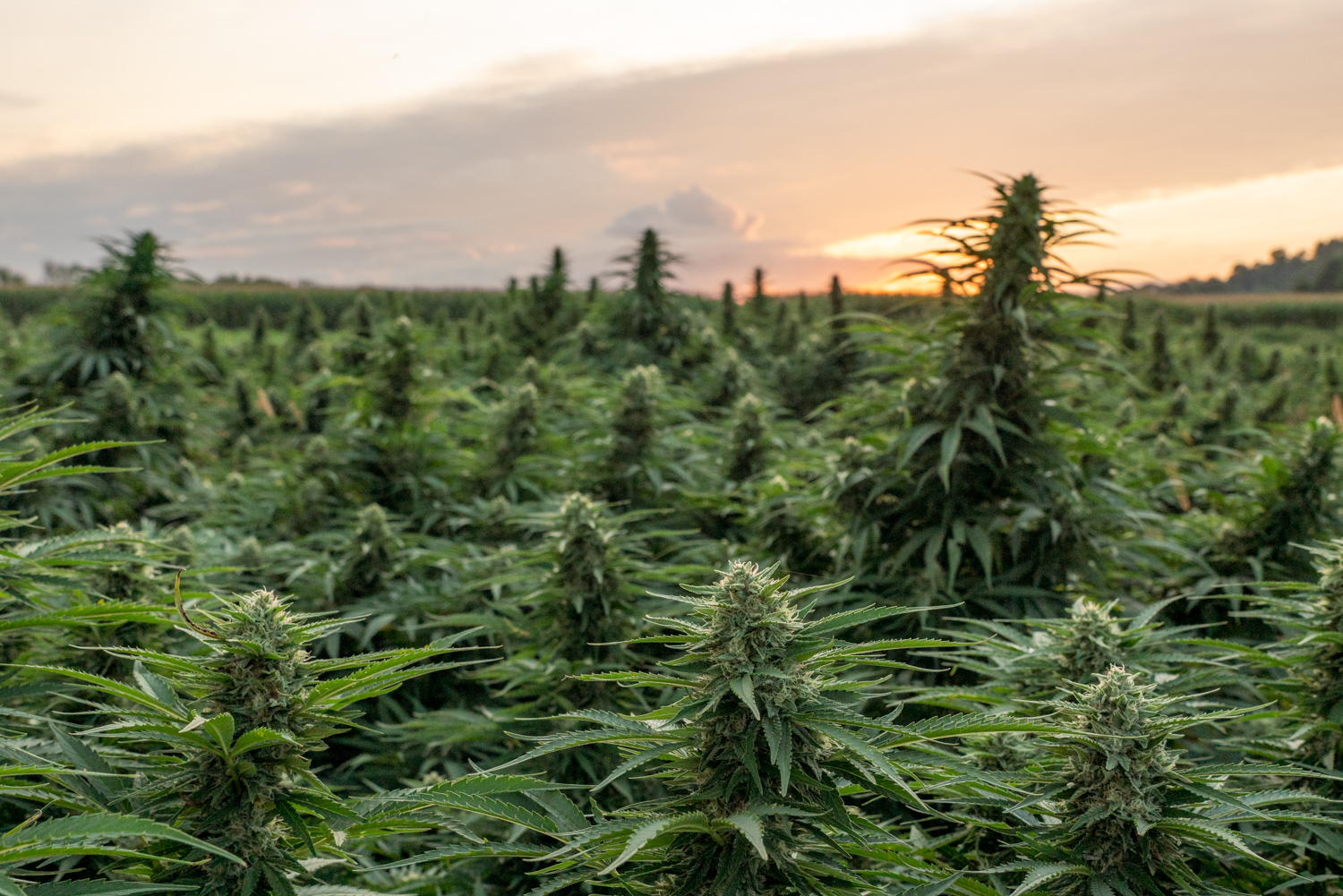
Max Jackson’s photo.

Marijuana Moment is made possible with the help of readers. If you rely on our pro-cannabis journalism to stay informed, consider a monthly Patreon pledge.

Continue Reading

Cannabis News

Not an average greenhouse at NC State University

Published

on

By

It takes a minute to adjust your eyes to Joe Chierak and Mike Beddoe in hats through the greenhouse doors of NC State University’s Plant Sciences Building.

It’s so bright there’s a sunglasses case in the entryway.

“When the sun shines on the white floor, it’s like being blinded by snow,” says Beddoe.

The 24-foot-tall glass and steel behemoth that sits atop the Centennial Campus building might look like an ordinary greenhouse.

© NC State UniversityThe 10,000-square-foot Plant Sciences Building controlled-environment laboratory has 11 greenhouse bays (top left) that provide fully conditioned, glass-bottom growth environments for research.

But inside computer-controlled facilities, researchers work year-round to tackle the biggest challenges farmers face from disease, pests and extreme weather.

Plants for dozens of changing research projects are grown at any given time, all with different needs, requirements, growing seasons, and Chiera and Beddoe are tasked with overseeing them.

“We serve the entire campus,” says Chiera.

Increasing innovation
Researchers in one room have rows of blue-green plants. They are mostly eucalyptus© NC State University Widely planted hardwood trees throughout the world.

By editing specific genes in eucalyptus, NC State researchers like forestry professor Jack Wang and genome editing expert Rodolphe Barrangou are developing trees to make paper and other wood products, reducing emissions and promoting the sustainability of paper mills.

In another room, they set up chain-like runners of hanging strawberry plant racks, which can be used to root and grow more strawberries.

Associate Professor of Horticultural Sciences Mark Hoffmann is researching new ways to propagate strawberry plants to minimize the spread of pathogens before they are shipped from nurseries to growers.

Growing plants for this job requires precise control of light, humidity and other conditions.

Controlled environments for research accuracy
Shouting over the hum of fans, sprinklers and other equipment, Beddoe leads her down the hall to a back office.

© NC State UniversityEach greenhouse bay is individually monitored, helping to ensure that experiments meet the researchers’ exacting standards. Pictured: Mike Beddoe.

“This is the brains of the entire greenhouse,” Beddoe says, tapping into a control system that allows the researchers to adjust the environment in each room to their needs.

© NC State UniversityThe Plant Sciences building has 25 growing chambers of various sizes where plants are grown for food, fiber and even erosion control.

The facility includes 11 independently controlled greenhouse rooms spanning more than 10,000 square feet, as well as 25 plant growth chambers.

Sensors in each room continuously monitor temperature, soil moisture, CO2 concentration and more.

The data is then sent to a central computer, where it is analyzed and compared to optimal standards before issuing commands to the system, such as adjusting shade screens or turning on misters. Watering schedules are also programmed.

“We try to automate everything,” says Beddoe.

Safety first
Passing pots and earthenware, Chiera leads to one of the most unique rooms on the fifth floor.

The biocontainment greenhouse is one of the few facilities nationwide designed to safely screen for agricultural pests and pathogens.

Every year, farmers around the world lose up to 40% of their crops to pests and diseases.

As new threats continue to emerge that could threaten global food security, NC State is not taking any chances.

So they have converted one wing into a specialized high-capacity facility known as a biosafety level 3 laboratory.

Research here could be used to test treatments for crop diseases, for example, or to develop fruit and vegetables with greater resistance to insect pests.

The space itself is only accessible to credentialed staff, who work under the watchful eye of security cameras.

Chiera walks through the automatically closing doors and the researcher dons gowns, gloves, face shields and other protective gear before entering the lab.

What comes here, stays here
From air and water handling to waste disposal, it’s designed to ensure that what comes here stays here.

All water discharged from the BSL-3 greenhouse is run down pipes and boiled before leaving the facility.

Solid waste is treated in a special oven called an autoclave, which uses steam and pressure to ensure that any microbes are dead.

Air is also designed for safety.

A negative pressure ventilation system creates a flow of air in a direction to prevent anything in the air from escaping, and all the exhausted air is filtered out.

“So if we’re dealing with a pathogenic plant that produces spores, for example, it will trap them and not release them,” says Chiera.

Supporting diverse research in the face of tough challenges
Back in the main corridor, Chiera and Beddoe make their way through the hall to their next meeting, passing thousands of green plants along the way.

© NC State UniversityAlex Woodley (left) and Raine Lookabill study greenhouse gas emissions from greenhouse soils as part of efforts to find ways to reduce them and mitigate their effects.

Back in the main corridor, Chiera and Beddoe make their way through the hall to their next meeting, passing thousands of green plants along the way.

In one room, tests are being done on the sweet potato. Electrical and Computer Engineering Professor Wenye Wang and his team are developing ways to help farmers monitor starchy and swollen roots as they grow underground, using low-cost Wi-Fi signals (PDF) instead of expensive buried sensors.

in another room, NC State Professor Dorith Rotenberg, Department of Entomology and Plant Pathology, is growing corn. Plants will eventually become dinner for insects, such as plant eaters and aphids, to better understand how these insects spread viruses that can stunt growth and reduce yield in one of the world’s largest crops.

A fan favorite
Beddoe stops in front of a room at the end of the corridor. “This is my favorite bay,” he says.

© NC State UniversityGrayson Cothran tends plants in a popular greenhouse bay where students have the opportunity to care for various plants and learn about greenhouse operations.

Inside, there are soybeans and banana plants basking in the sun, cotton plants with their hibiscus-like blooms, as well as a genetically engineered petunia that looks like an ordinary white flower during the day but glows at night using bioluminescent mushroom genes.

“These plants are mostly for our students,” explained Beddoe. “So they can learn different ways to water and breed and things like that.”

Always called
Beddoe will return here before heading home as part of his twice-daily inspections.

Because keeping the greenhouse running requires a lot of hands-on work.

“One of us is always on call,” says Beddoe, whose phone buzzes on evenings and weekends if something needs attention.

“Plants don’t take vacations,” he added.

Source: NC State University

Continue Reading

Cannabis News

As Massachusetts Marijuana Legalization Rollback Nears Ballot, New State Report Shows Regulated Market Reaching Most Consumers

Published

on

By

As Massachusetts voters face a November ballot initiative to roll back the state’s recreational marijuana law, a new report from officials finds legalization is achieving one of its main goals: stopping the illegal sale of cannabis as adults move into the regulated market.

A Cannabis Control Commission (CCC) report released Friday found that among adults who used marijuana in the past year, 84 percent said they got their cannabis from a licensed source.

“Adult consumers are moving away from mostly unregulated sources as the state’s adult marijuana industry enters its eighth year of operation,” says a CCC press release about the report.

with that More than $9 billion in gross sales since the launch of the adult-use market in 2018this data point indicates that illegal sales are becoming very successful; Advocates worked to drive home the impact of the policy while building support for legalization.

The analysis — which also looked at usage trends, self-reported health benefits, public opinion on legalization and more — interviewed 11,635 Massachusetts residents ages 16-65. (State law prohibits the sale of recreational cannabis to those under 21, but the CCC included younger people in the survey to understand trends in that cohort, t0o.)

“This new research shows that Massachusetts residents are moving away from the illegal market when safe and well-regulated options are available,” CCC Executive Director Travis Ahern said in a press release. “We will continue to monitor sources like the (International Cannabis Policy Study or ICPS) to guide our mission to oversee an efficient and fair cannabis market in Massachusetts.”

Here are some other findings from the report:

  • Nearly half of cannabis users (43%) said they used it to “manage or improve mental health.”
  • The frequency of cannabis use “generally increased year-on-year across all 16-20 age groups, where it decreased from 2019 to 2023.”
  • People are more likely to report using marijuana flower products (70 percent) than other product categories.
  • Overall, 81 percent said they supported legalizing adult use based on the 2023 survey data, which was “a slight decline from 83 percent support in the 2022 wave.”

“New analysis of ICPS data provides valuable insight into patterns of use and levels of education around cannabis use,” said CCC Research Lead Julie Johnson. he said.

“We are also making recommendations to help strengthen future data analysis and collection, including future research collaborations with other regulators and public health professionals and the initiation of larger studies to guide cannabis-related impairment and assess health care utilization,” he said. “We also encourage more resources to be directed to public awareness and youth education, with ample funding available through tax revenue generated from the sale of cannabis.”

The fact that 81 percent of Massachusetts residents said they supported legalization in a recent poll raises questions about the chances of anti-cannabis initiatives getting the majority needed to pass the November ballot.

A separate survey published earlier this month Residents were specifically asked about their position on the measure of withdrawal It found that 63% were against it, including 48% who said they were “strongly” against it. Only 20 percent of respondents said they supported the proposed initiative, while 11 percent “strongly” supported repeal.

The survey comes a month after cannabis activists filed a complaint with the State Voting Law Commission under the Secretary of State, alleging that petitioners with anti-cannabis campaigns used deceptive tactics to convince voters to allow them to cast their ballots.

The commission withdrew the complaint in January, however, and the ballot measure was challenged, advocates said raised “unsupported allegations” about the adequacy of the signature collection process they said he needed an official exam.

The decision marked a setback for advocates and industry players who have reported numerous accounts of alleged misconduct by applicants working on behalf of the Coalition for a Healthy Massachusetts.

He came anyway A separate survey found that nearly half of those who signed a petition to repeal marijuana sales felt cheatedaccording to many, the measure was presented to them as a proposal to deal with unrelated issues such as public education and expanded housing.

The anti-marijuana coalition has denied any wrongdoing in the signature collection process and dismissed the poll results.

The initiative would still allow adults 21 and older to possess and give away an ounce of cannabis, but it would repeal provisions of the voter-approved legalization law that allow commercial sales and home cultivation by adults. The medical cannabis program would remain intact under that measure.

A state association of marijuana companies urged voters to report them to local officials if they observe them Instances of “spoof mail” or other fraudulent solicitation tactics.

The office of Massachusetts Attorney General Andrea Campbell (D), that is He cleared the signature collection campaign in September—stressed the importance of voters reading the summary at the top of the signature form before signing any petition.

The Massachusetts legislature took up the initiative earlier this month when the 2026 session began. Since the state electoral commission has issued a resolution on the complaint, the members of parliament have until May 5 to act on the proposal. If they decide not to pass it in the legislature, the campaign would have to go through another round of petitions and get at least 12,429 certified signatures by July 1 to get on the November ballot.

Meanwhile, the head of Massachusetts’ marijuana regulatory agency recently suggested measures to effectively recriminalize the sale of recreational cannabis. dangerous tax revenues being used to support substance abuse treatment efforts and other public programs.

Massachusetts lawmakers recently joined a bicameral conference committee to hammer out a deal. double the legal limit for possession of marijuana for adults and review the regulatory framework for the state’s adult cannabis market.

In December, state regulators, too established rules for social marijuana consumption halls.


It’s Marijuana Time tracking hundreds of cannabis, psychedelic and drug policy bills in state legislatures and Congress this year. Patreon supporters by pledging at least $25/month, you’ll get access to our interactive maps, charts, and audio calendars so you never miss a development.


Learn more about our marijuana bill tracking and become a Patreon supporter to gain access

CCC has recently launched a targeted online platform helping people find work, on-the-job training and networking opportunities in the state’s legal cannabis industry.

State legislators have also been pondering imposing stricter restrictions on intoxicating hemp-derived products and a plan allowing individual entities to control a greater number of cannabis establishments.

Also in Massachusetts Legislators working on state budgets butted heads with CCC officialswho said critical technology improvements can’t be made without more money from the legislature.

Massachusetts lawmakers also passed a bill establishing a pilot program for the regulated therapeutic use of psychedelics. And they have two committees Hearings to discuss additional measures related to psilocybin were held separately.

user photo Brian Shamblen.

Marijuana Moment is made possible with the help of readers. If you rely on our pro-cannabis journalism to stay informed, consider a monthly Patreon pledge.

Become a patron on Patreon!

Continue Reading

Cannabis News

EFI Champions Farmworker Recognition Nationwide

Published

on

By

The Equitable Food Initiative, a workforce development and certification organization that partners with growers, farmers, marketers and consumer groups, is encouraging the agricultural community to recognize and celebrate National Farmer Awareness Week with free and impactful tools offered in its communications tools.

Observed annually during the last week of March culminating in Cesar Chavez’s birthday, Farmers’ Awareness Week honors the essential contributions of the men and women who move our food supply chain. From planting and harvesting to packing and shipping, farm workers bring deep knowledge, technical skills and pride to their work every day.

“Farmworker Awareness Week is an important reminder to pause and recognize the highly skilled and physically demanding work that farmworkers do every day to bring healthy, nutritious food to our tables,” said LeAnne Ruzzamenti, EFI’s director of marketing and communications. “Our toolbox is designed to help businesses and communities celebrate their employees and community members and share employee stories that educate consumers about the experience and dedication behind the food.”

EFI’s toolset makes it easy for businesses, retailers, industry organizations, educators and community leaders to show appreciation and raise awareness. The toolkit, available at equitablefood.org/toolkit, includes:

· Social media graphics, sample posts and videos to share

· Posters, technical sheets and printable infographics for offices, shops and workplaces

· A model proclamation to share with local and state officials

· Color a page for children

· Ideas for organizing weekly events or internal celebrations

· And more…

All materials are customizable and free to download, making participation easy and accessible for organizations of all sizes.

Farm workers are not only essential for production, but also essential for farm innovation and continuous improvement. Many bring years, even decades, of experience providing insights that improve quality, efficiency and food safety. Their pride in their craft and their commitment to doing the job well are the foundations for a strong and resilient farming system.

Alexandra Martinez, head of digital marketing and sales at the Equitable Food Initiative, emphasized the importance of industry-wide participation. “We hope that this special week is just the beginning for our industry to shine a light on the experience, resilience and professionalism that our employees provide throughout the year,” said Martinez. “To encourage this, EFI provides resources and reminders to highlight our essential workers with ongoing initiatives like #FarmworkerFriday and other digital tools.”

EFI encourages manufacturers, retailers, brands, allied organizations and consumers to download the toolkit and incorporate its resources into newsletters, in-store promotions, team meetings, classroom activities and community events. By raising awareness and appreciation during Farmworker Awareness Week, the industry can collectively highlight the hard work that sustains our food system year-round.

A free Farmworker Awareness Week Communication Toolkit is available here www.equitablefood.org/toolkit

Continue Reading
Advertisement

Trending

Copyright © 2021 The Art of MaryJane Media