Connect with us

Cannabis News

Federal Drug Testing Rule Will Require ‘Directly Observed’ Urine Collection From Truck Drivers

Published

on

“A month that goes by without an oral fluid test is another month when federal employees with paruresis face anxiety, discrimination, and barriers.”

By Kastalia Medrano, Filter

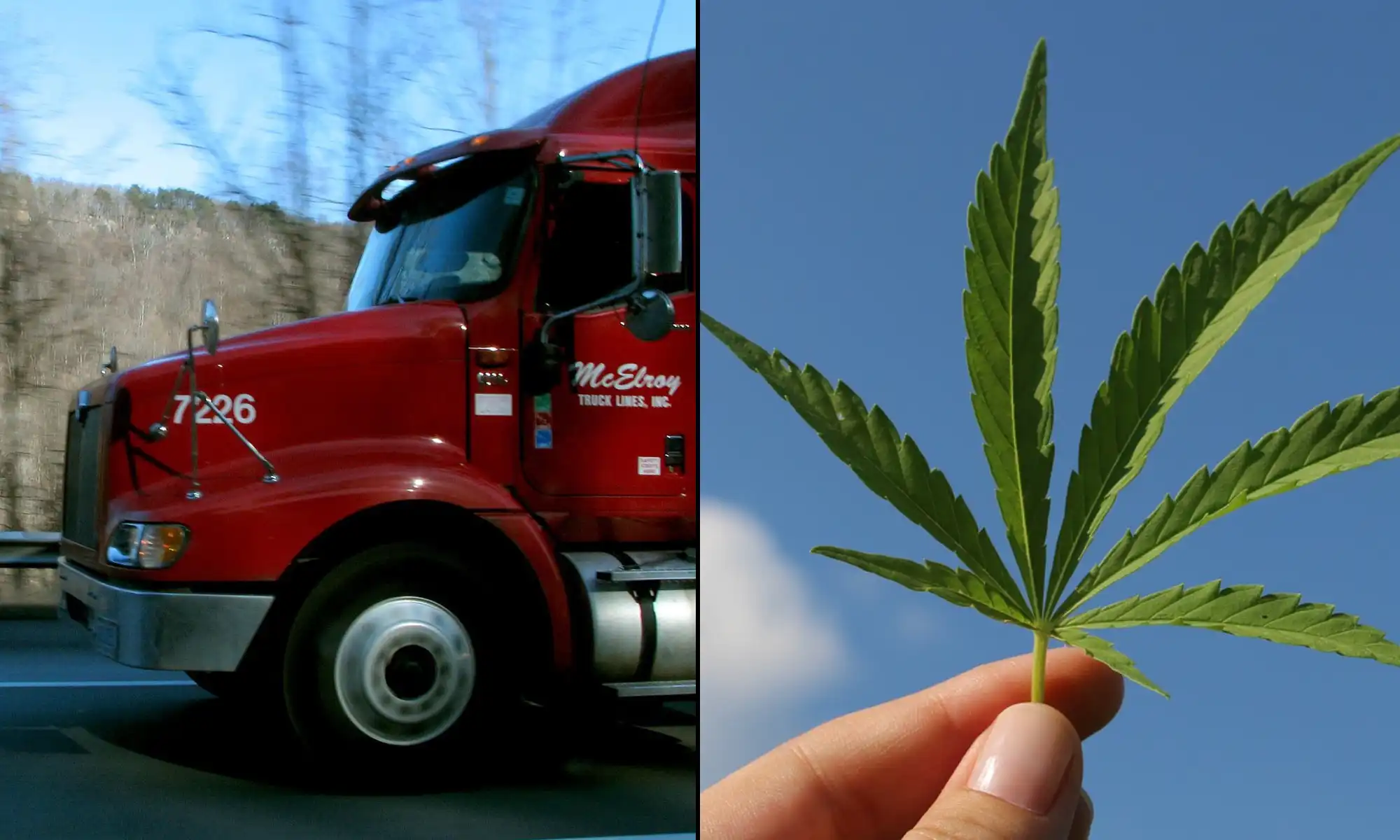
The Department of Transportation will require “directly observed” urine drug testing in federal employment situations where saliva testing is required but not possible. The clarification of DOT drug and alcohol testing procedures is the latest development in a years-long push by the trucking industry. oral fluid testing as an alternative to urine testing.

The new rule was published in the Federal Register on May 11, and will go into effect on June 10.

Truck drivers, who are subject to a large number of federal regulations, do not choose the method of drug testing, while DOT-regulated employers do. The campaign to implement oral fluid testing has been led by the American Trucking Association (ATA), which believes it is necessary to “keep drivers with disabilities off the road and maintain the trucking industry’s commitment to safety.”

The Substance Abuse and Mental Health Services Administration (SAMHSA) approved lab-based oral fluid testing in 2019, and the DOT finalized its regulations in 2023 allowing employers to choose this as an alternative to urine testing. But the actual implementation requires at least. Two laboratories approved by the Food and Drug Administration to process tests—one for the initial analysis and another to confirm the results. There are currently zero.

Oral fluid testing is attractive to many employers for a number of reasons, one of which is its effectiveness in detecting drug use within hours compared to urine drug testing. While the trucking industry has become the public face of the campaign, the regulations also affect federal workers in the commercial aviation, railroad, public transportation and pipeline sectors.

One of the main concerns expressed by the trucking industry has been that urine drug screens are not visible, making it easier to avoid oral fluid testing. Another concern is paruresis, commonly referred to as “shy bladder” syndrome: if a driver can’t urinate when they need to, they’re stuck for a three-hour wait, which obviously affects their arrival time. And if they still cannot produce urine during this period, they are considered to have refused to take the test and are removed from their duties. To return, they must “pass” a urine test watched by a same-sex observer.

New DOT the rule also updates existing terminology by replacing the word “gender” with the word “sex” in accordance with President Donald Trump’s January 2025 executive order “Defending Women from Gender Ideological Extremism and Restoring Biological Truth to the Federal Government.”

“A month that goes without an oral fluid test is another month when federal employees with paruresis face anxiety, discrimination and professional barriers,” Dr. Steven Soifer, co-founder of the International Paruresis Society, said in March. “We have been working on this issue since our inception (30 years ago). Our members ask the same question every day: When will the federal government finish the work it has already approved?”

In April, at the request of ATA, six members of Congress he wrote Robert F. Kennedy Jr. to the Secretary of the Department of Health and Human Services citing FDA regulatory hurdles as the reason why laboratories in the United States are not certified to process oral fluid tests.

They cited an analysis by Quest Diagnostics that showed a 370 percent increase in “replaced” urine specimens from 2022 to 2023. Quest has its own laboratory-based oral fluid collection method, Quantisal™, and has therefore been an ardent supporter of the campaign.

On May 1, the FDA a notice with the intention of considering revising the requirements for toxicology studies. That same day SAMHSA a the list It confirms that currently certified laboratories, which will probably be updated in the future, but are not available at the moment.

However, at the end of the day, HHS handles oral fluid testing in a similar scenario to hair follicle testing. The department promised to create guidelines for hair testing in 2015, but has yet to do so.

This the article originally posted by The filteran online magazine that deals with drug use, drug policy and human rights from a harm reduction perspective. Follow Filter on Bluesky, X or Facebookand sign up for their newsletter.

Marijuana Moment is made possible with the help of readers. If you rely on our pro-cannabis journalism to stay informed, consider a monthly Patreon pledge.

Continue Reading

Cannabis News

Columbia hemp business Burning Acre to close and move to North Carolina over new Tennessee rules

Published

on

By


Burning Acre, a Columbia, Tennessee-based hemp company, says it will close its retail store and move operations to North Carolina ahead of new state regulations that take effect July 1, according to WSMV.

The business says its last day to open in Columbia will be June 30, the same day the Tennessee Department of Agriculture licenses for hemp-derived cannabinoids expire. As of July 1, businesses that continue to operate in the state will be required to be licensed under a new regulatory framework led by the Tennessee Alcoholic Beverage Commission.

Burning Acre says the changes have forced it to abandon plans for a new sandwich shop and bakery and close its Tennessee retail operations and relocate to Murphy, North Carolina. “I won’t sugarcoat it, it’s a very hard video for me and a message I should never have written,” the business wrote.

The business puts the annual cost of manufacturing, distribution and running the retail store at about $750. Under the new rules, he says, those costs would rise by tens of thousands of dollars, citing new licensing fees, a required $25,000 annual bond and increased testing fees.

The law, which took effect in July, changes the regulation of hemp-derived cannabinoid businesses from the Department of Agriculture to the ABC. The Department of Agriculture stopped issuing licenses at the end of 2025, and the licenses issued by the TDA will remain valid until June 30, 2026.

“Columbia, we absolutely love being a part of this community,” said Burning Acre. “We are truly heartbroken to have to say goodbye to this location.”

Read more at WSMV4


Continue Reading

Cannabis News

North Carolina Lawmakers Advance Bill To Set A Minimum Age Limit For Hemp And Kratom Products

Published

on

By

“Many other details about cannabis have been debated and will continue to be debated.”

By Christine Zhu, NC Newsline

Lawmakers in North Carolina are considering banning people under 21 from buying or possessing certain hemp-derived consumables, including combustible hemp flower, hemp cigarettes, gummies and drinks, or items that include the drug kratom.

The House Agriculture and Environment Committee approved a rewrite of Senate Bill 59 on Wednesday. This is the latest attempt by state legislators after years of proposals to regulate the sale of hemp products that didn’t work out in the end.

This measure would prohibit companies from selling such products to under-21s. If the seller has “reasonable grounds” to believe that the buyer is under the age of 21, the seller must verify the buyer’s ID.

Rep. Jimmy Dixon (R-Duplin), who introduced the bill, said he was motivated to bring public attention to issues surrounding cannabis. He said there was a 14-year-old boy in his neighborhood who had an emergency after buying a hemp-derived product.

“There are a lot of other details about cannabis that have been debated and will continue to be debated, but ladies and gentlemen, to make sure we have the good sense to be agents of these kinds of issues, that’s the lowest hanging fruit,” he said.

Violators would face a Class 2 felony, as well as a fine of $500 for a first offense, $1,000 for a second offense and $1,500 for subsequent offenses.

asked Rep. Pricey Harrison (D-Guilford). of the bill language resulted in potential changes to hemp-derived products. It is common for manufacturers of synthetic recreational drugs to make changes to the chemical composition of their products to avoid legal bans or restrictions.

“I assume the definition as written is broad enough to capture any future manipulation of molecules,” he said. Dixon nodded.

Legislators also voted in favor correction To add kratom products to the under-21 ban.

Rep. Jeffrey McNeely (R-Iredell), who proposed the amendment, said it was necessary to add those elements to the bill.

“I’ve been working on this for quite some time, trying to get these bills passed,” McNeely said. “We definitely have a problem. So I’m hoping we can keep posting this and we’ll get something done before we get out of the short session here.”

Both the amendment and the legislation passed unanimously without debate.

The bill moves next to the House Rules Committee. Other amendments will be heard when they appear on the House floor, which could be as soon as next week.

This story was first published by NC Newsline.

Marijuana Moment is made possible with the help of readers. If you rely on our pro-cannabis journalism to stay informed, consider a monthly Patreon pledge.

Continue Reading

Cannabis News

GreenTech Amsterdam 2026 in 2026 photos

Published

on

By


Well, it’s not 2026 photos, but with around 600 photos, we definitely did our best. For the past two days, the Netherlands has been the place to be for the global greenhouse industry. From Flower Trials for the horticulture sector, company visits to growers and technical suppliers, as well as dinners, get-togethers, drinks, knowledge sessions and much more. And of course with GreenTech Amsterdam.

The event brought together professionals from around the world to connect, network, share knowledge and do business.

Next week, we’ll be sharing more information on market developments, trends, what’s on display, news, business news, innovations and whatever else you can think of, but for now we’ll stick to photo reporting.

Click here for the photo report.

© Arlette Sijmonsma | MMJDaily.com


Continue Reading
Advertisement

Trending

Copyright © 2021 The Art of MaryJane Media