
Cannabis News
Florida Marijuana Campaign Asks Supreme Court To Restore 71,000 Legalization Ballot Signatures State Officials Tossed

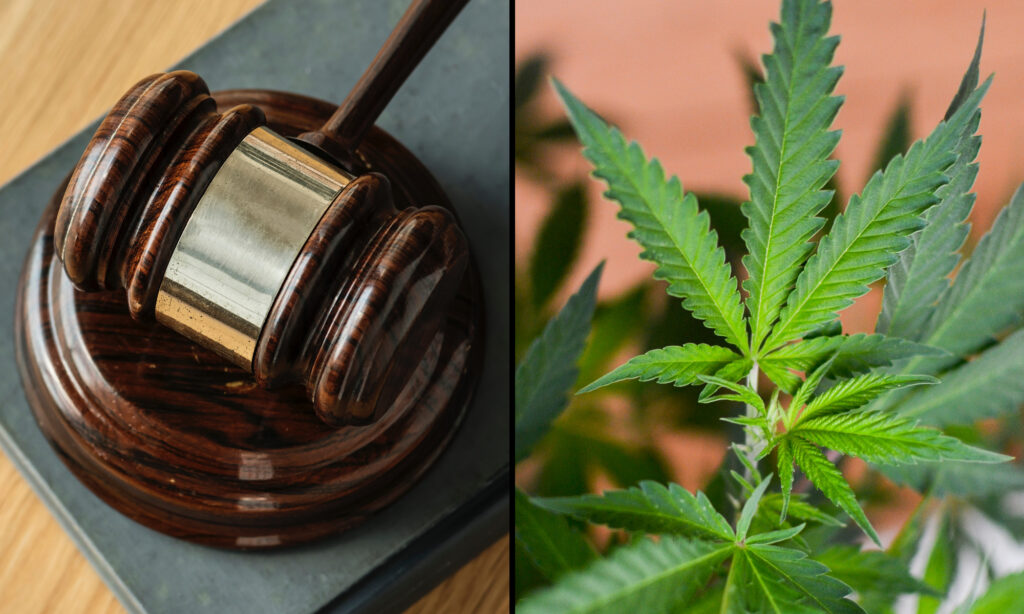
A Florida campaign has yet to throw in the towel on its proposal to put marijuana legalization on the November ballot, with an appeal of the nullification of about 71,000 signatures now in the state Supreme Court.
The courts again they recently agreed to drop a separate case involving a statutory review of the ballot measure From Smart & Safe Florida, he has now been given another case challenging the cancellation of the earlier mass signature.
The state’s First District Court of Appeals filed a notice calling for discretionary jurisdiction and a notice of appeal to the Florida Supreme Court on Monday, opening the door for voters to decide on legalization at the polls this year. This is, of course, conditional on the judges accepting the case and the campaign winning.
Smart & Safe Florida “states that approximately 70,000 petitions that have been declared invalid must be counted as the number of signed petitions needed to be placed on the ballot.” notice the states “Smart & Safe Florida asserts the discretionary jurisdiction of the Florida Supreme Court to review this court’s decision issued on January 23, 2026. The decision expressly affects a class of constitutional or state officers.”
In December, advocates filed a lawsuit in Leon County Circuit Court alleging that Secretary of State Cord Byrd (R) illegally ordered county election officials to invalidate about 42,000 signatures from so-called “inactive” voters and about 29,000 signatures collected by out-of-state petitioners.
That lawsuit came after another court upheld an earlier decision to strike with about 200,000 signatures, which the state said were invalid because the petition did not include the full text of the proposed initiative. The campaign challenged the legal interpretation, but declined to appeal the decision, confident it had collected enough signatures to settle the dispute.
Smart & Safe Florida has generally disputed the secretary of state’s signature count, confirming that the campaign has submitted more than 1.4 million petitions, hundreds of thousands more than the 880,062 valid signatures needed before voters.
In a recent filing with the Supreme Court, Attorney General James Uthmeier (R) said his office was withdrawing a previous request for legal review of the constitutionality of the proposed cannabis initiative because the state claimed it did not have enough petitions signed by the campaign. The final count, according to the secretary of state, was 783,592 validated signatures.
In a brief response, Smart & Safe Florida said the Secretary of State’s campaign did not meet the requirements to be on the ballot because “the sponsor did not meet the signature threshold in light of the cancellations that the sponsor contests.”
In return for the signature, Florida’s attorney general and several businesses and anti-marijuana groups has asked the state Supreme Court to block the cannabis initiativecalling it a “fatal flaw” and unconstitutional.
The Florida Chamber of Commerce, the Florida Legal Foundation and Judge Frank Shepherd filed another joint document, stating that the parties “remain particularly vigilant about the abuse of the citizen initiative process by out-of-state interests who believe that Florida is another market and that the citizen initiative process is another means of exploiting that market.”
The Florida Chamber of Commerce has consistently opposed attempts to move forward with adult-use legalization, as well his polls have shown a majority in favor of reform.
The campaign fought several legal battles this cycle to get its initiative on the ballot.
Last month, the state attorney general’s office opened dozens of criminal investigations and issued records subpoenas to Smart & Safe Florida and its contractors and subcontractors over alleged fraud related to the application effort.
Activists said in November they had collected more than a million signatures to put the cannabis measure on the ballot, but still He has sued state Supreme Court officials for delaying the certification processarguing that the review of ballot content and summary should have gone ahead several months ago when the initial signature threshold was reached. The state then he agreed to proceed with the processing.
Gov. Ron DeSantis (R) campaigned hard against an earlier version of the legalization proposal, which received a majority of voters in 2024 but fell short of the 60 percent threshold needed to pass a constitutional amendment. Former Attorney General Ashley Moody (R) unsuccessfully challenged the earlier initiative in court.
Last March, however, two Democratic members of Congress representing Florida asked the federal government to investigate What they described as an “illegal diversion” of millions in state Medicaid funds Through a group with ties to DeSantis. The money was used to fight a popular ballot initiative the governor vehemently opposed that would have legalized adult marijuana.
The lawmakers’ letter alleges that a $10 million donation from a state legislative settlement was misappropriated to the Hope Florida Foundation, which later sent the money to two political nonprofits, and sent $8.5 million to the anti-Amendment 3 campaign.
The governor said last February The latest measure to legalize marijuana is in “big trouble” with the state Supreme Courthe announced that it would be blocked from going before the voters this year.
“There are a lot of different views on marijuana,” DeSantis said. “It shouldn’t be in our Constitution. If you feel strongly about it, you have a legislative election. Bring back the candidates you think will be able to deliver what you think about it.”
“But when you put these things in the Constitution, and I think, I mean, the way they were written, there’s all kinds of things going on here. I think it’s going to have a lot of trouble getting passed by the Florida Supreme Court,” he said.
the last the initiative It was introduced to the secretary of state just months after initial versions failed in the November 2024 election, despite President Donald Trump’s endorsement.
Smart & Safe Florida expressed optimism that the revised version would be successful in 2026. The campaign — which received tens of millions of dollars from cannabis industry players in the last election cycle, notably from multi-state operator Trulieve — introduced some changes in the new version that address criticisms of the 2024 push by opponents.
For example, it now specifically states that “smoking and vaping marijuana in any public place is prohibited.” Another section states that the legislature should adopt rules governing the “time, place and public manner of consuming marijuana.”
In 2023, the governor accurately predicted this The campaign’s 2024 cannabis measure would survive a legal challenge From the state attorney general. It’s not entirely clear why he thinks this version will face a different outcome.
Although there is uncertainty about how the state’s highest court will navigate the measure, a poll released last February It showed the overwhelming support of a bipartisan voter for reform— 67% of Florida voters support legalization, including 82% of Democrats, 66% of independents and 55% of Republicans.
—
It’s Marijuana Time tracking hundreds of cannabis, psychedelic and drug policy bills in state legislatures and Congress this year. Patreon supporters by pledging at least $25/month, you’ll get access to our interactive maps, charts, and audio calendars so you never miss a development.
Learn more about our marijuana bill tracking and become a Patreon supporter to gain access
—
In the background, a recent survey by a Trump-linked research firm found this Nearly 9 in 10 Florida voters say they should have the right to decide whether to legalize marijuana in the state
Meanwhile, last week, Florida senators passed an amended bill to increase the amount of medical marijuana a registered patient can purchase and reduce the fee for medical cannabis identification cards for military veterans.
The vote was approved by the Regulated Industries Committee in the Senate separate legislation to prohibit the smoking or vaping of marijuana in public places. Rep. Alex Andrade (R) sponsors a similar one bill to ban public smoking of cannabis at home
Here’s an overview of some of the pending Florida marijuana bills:
Photo elements courtesy of the user rawpixel and Philip Steffan.
Marijuana Moment is made possible with the help of readers. If you rely on our pro-cannabis journalism to stay informed, consider a monthly Patreon pledge.





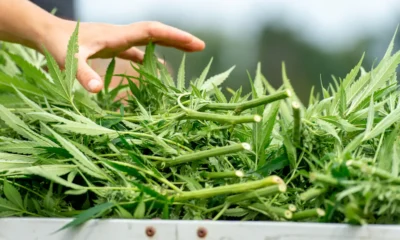

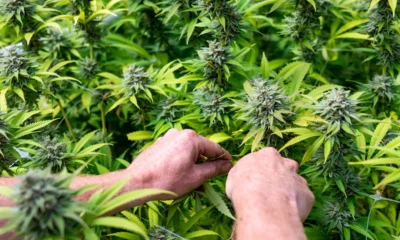

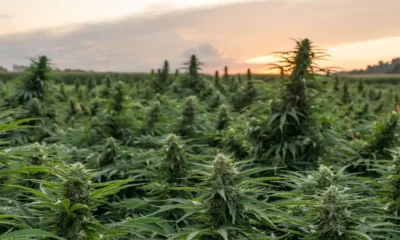


Dalgety Ltd has entered into a partnership with Curaleaf Laboratories to supply pharmaceutical grade cannabis medicines to the UK cannabis market. The arrangement combines Dalgety’s cultivation operations, which are certified to EU-GMP standards, with Curaleaf Laboratories’ pharmaceutical manufacturing and distribution capabilities. According to the companies, this creates a UK-based supply route that does not rely on imported cannabis flowers, as Dalgety cultivates its product in-house. Dalgety claims it was the first company in the UK to grow, manufacture and supply EU-GMP medical cannabis from a single site.
 © Curaleaf Laboratories
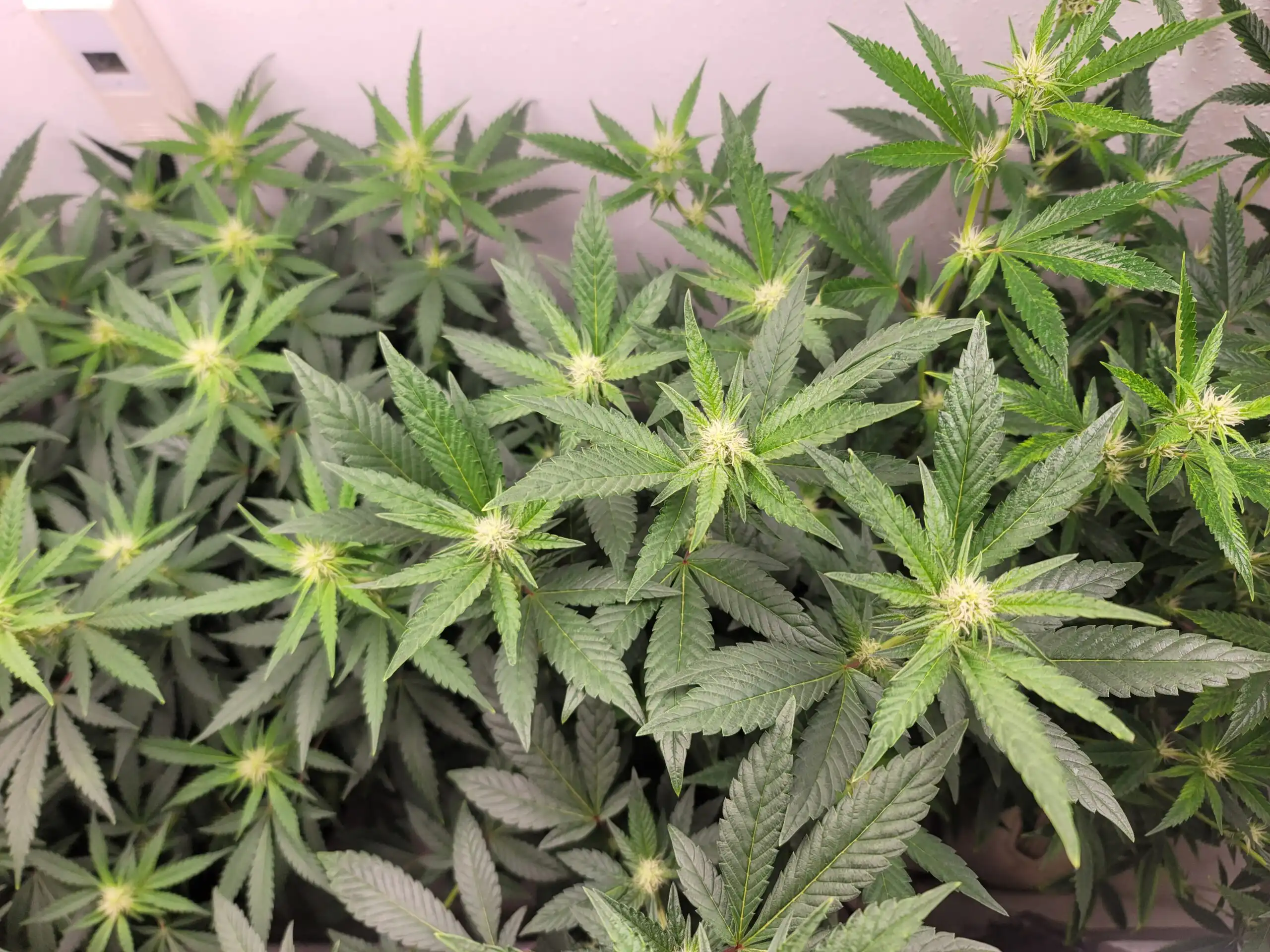
The growing facility, which is more than 30,000 square feet, is located indoors and uses hydroponic growing methods along with automated lighting, irrigation, humidity and temperature control systems. The company reports that it uses AI-assisted environmental monitoring, which extends the traceability of batches to the final product and compares them to operating standards for air filtration systems. Post-harvest processing is said to follow EU-GMP protocols, including microbial and cannabinoid testing.
The stated goal of this approach is to reduce between-harvest variation in terms of THC and CBD content, terpene profiles, and microbial safety. Dalgety says his cultivation is overseen by staff with experience in horticulture and biochemistry, some of whom have worked on cannabis cultivation projects internationally.
Through a partnership with Curaleaf Laboratories, Dalgety’s UK-grown cannabis is processed and distributed through a UK-based supply chain, rather than imported from overseas. Companies suggest that this arrangement can shorten the time it takes to get products to market compared to importing, and reduce the likelihood of supply disruptions. Because Dalgety and Curaleaf Laboratories are involved in cultivation, manufacturing and distribution, the companies say this oversees the product at every stage, making it clearer for prescribers to see where and how the product was made.
 © Curaleaf Laboratories
Dalgety operates to EU-GMP standards and has been subject to regulatory review by the MHRA and the Home Office. Its operations include environmental monitoring, microbial testing, stability testing, controlled drying and curing procedures and quality assurance processes, along with controlled and secure facilities.
The company describes its work as controlled environment farming, hydroponic systems, environmental control technology, and efforts to stabilize cannabis genetics and phenotypes for batch-to-batch consistency.
 © Curaleaf Laboratories
Dalgety has also opened its cultivation facilities for visits to healthcare professionals, clinicians, pharmacists, researchers and other industry stakeholders. The company says this is in response to the fact that much of the cannabis historically supplied to UK patients has been grown overseas, which has limited opportunities for UK clinicians to see first-hand the cultivation and quality control processes. These tours aim to provide visitors with information on cultivation standards, EU-GMP compliance procedures, environmental control systems, testing processes and the regulatory framework governing cannabis manufacturing in the UK.
Dalgety and Curaleaf Laboratories describe their partnership as expanding access to UK-grown medical cannabis, improving supply chain reliability and helping to meet sector regulations, placing it in the wider context of growing demand for cannabis-based treatments from UK patients.
For more information:
Curaleaf Laboratories
Email: (email protected)
https://curaleaflaboratories.co.uk/
Cannabis News
Arkansas GOP Governor And Democratic Challenger Agree On Opposing Marijuana Legalization
Cannabis News
Will the top World Cup expert in the fruit, vegetable, and horticulture sector come from Canada, the U.S. or Belgium?

FreshPublishers 2026 World Cup Group Stage
The World Cup is coming to an end, with the third-place play-off between France and England on Saturday, and the final between Spain and Argentina the following day. It won’t be long until the grand winner of FreshPublishers’ first World Cup pool is revealed.
 © Fresh Publishers
As previously reported, Slim Kooli from Courchesne Laros is the favorite to win the €1,000 prize. He has secured a comfortable lead over Nol Batist of North American Interstate Greenhouse Company, while buyer Bjorn Van Ryckeghem of Deprez Construct is currently in third place.
| 1 | Sim School | Spain | 1–0 | 2–1 | 737 | 9716 | |
| 2 | Nol Batist | France | 2–1 | 1–1 | 674 | 9433 | |
| 3 | Bjorn Van Ryckeghem | France | 2–2 | 3–1 | 674 | 9264 | |
| 4 | Christian Anton Smedshaug | England | 1–2 | 1–2 | 659 | 9134 | |
| 5 | Perry Springintveld | Spain | 1–1 | 2–1 | 647 | 9105 | |
| 6 | Willem Tijssen | Spain | 2–0 | 2–1 | 710 | 9098 | |
| 7 | Hans Borsboom | Spain | 2–1 | 2–1 | 528 | 9058 | |
| 8 | Bart Triemstra | Spain | 2–1 | 2–1 | 737 | 9052 | |
| 9 | Youness Bensaid | Spain | 2–1 | 1–1 | 722 | 8954 | |
| 10 | Vijay Dijkstra | Portugal | 2–0 | 2–1 | 382 | 8953 |
However, there have been some surprises during the tournament, and bonus points must be added, so we will keep the suspense a little longer. On Monday we will find out who is the main World Cup announcer in the international fruit, vegetable and horticulture sector…

BREAKING NEWS DEA RESCHEDULES CANNABIS TO SCHEDULE 3!

ASK ME ANYTHING | MONTEL

Marijuana Retail Report

Redefining the standards of UK cannabis

Arkansas GOP Governor And Democratic Challenger Agree On Opposing Marijuana Legalization

Michigan Cannabis Brand Forced to Close After Investigation Finds Inventory Discrepancies, Out-of-State Transport

The C Block…more 420 recaps on Weed Talk News …recorded 4_29_24

PART 1 TAKING A KNEE | NATE BOYER

Marijuana Retail Report

Will the top World Cup expert in the fruit, vegetable, and horticulture sector come from Canada, the U.S. or Belgium?

“Our system can manage equipment across 10,000+ m² using just a few wires”

Mazar-i-Sharif Hash Wednesday

Florida Workshop to Discuss What Constitutes a ‘Cartoon’ in Hemp Packaging

Afghan Black Hash Wednesday

From Finance to Wellness: Brad Zerman’s Impactful Pivot

Weak Michigan Cannabis Sales Again in July – New Cannabis Ventures

Re-release of the full show of Cannabis Coast to Coast news. Republican Texas DA Fires Up vs. laws;

DEA’s Cole Reverses His “priorities” ; Prohibitionists Dig In; Dead & Co Celebrates 60 years in SF

Texas DA Fires Up for Change! Mass. Sheriff arrested on Extortion charges; GOP vs Industry in state

Your Cannabis Business: Consistent Filings Are Critical
-
 Cannabis News11 months ago
“Our system can manage equipment across 10,000+ m² using just a few wires”
-
 Video10 months ago
Mazar-i-Sharif Hash Wednesday
-
 Florida11 months ago
Florida Workshop to Discuss What Constitutes a ‘Cartoon’ in Hemp Packaging
-
 Video9 months ago
Afghan Black Hash Wednesday
-
 Video11 months ago
From Finance to Wellness: Brad Zerman’s Impactful Pivot
-
 aawh11 months ago
Weak Michigan Cannabis Sales Again in July – New Cannabis Ventures
-
 Video11 months ago
Re-release of the full show of Cannabis Coast to Coast news. Republican Texas DA Fires Up vs. laws;
-
 Video11 months ago
DEA’s Cole Reverses His “priorities” ; Prohibitionists Dig In; Dead & Co Celebrates 60 years in SF