
Cannabis News
Florida Marijuana Campaign Sues State Over Invalidation Of 71,000 Signatures With Turn-In Deadline Weeks Away


A Florida campaign seeking to put marijuana legalization on the state’s 2026 ballot has filed a new lawsuit against state officials, alleging they improperly directed the cancellation of about 71,000 signatures as the filing deadline quickly approaches.
Smart & Safe Florida has fought several legal battles this cycle to ensure its initiative can be put on the ballot.
The latest lawsuit, filed Monday in Leon County courts, alleges that Secretary of State Cord Byrd (R) ordered county election officials to invalidate about 42,000 signatures from so-called “inactive” voters and about 29,000 signatures collected by out-of-state petitioners.
This comes after another court upheld a previous decision to strike with around 200,000 signatures, which the state said were invalid because the petition did not contain the full text of the proposed initiative. The campaign challenged the legal interpretation, but declined to appeal the decision, confident it had collected enough signatures to settle the dispute.
Now, about a month away from submitting 880,062 valid signatures by the Feb. 1 deadline, Smart & Safe Florida points out that additional cancellations could jeopardize their chances of getting on the ballot. Currently, the state has validated 675,307 signatures.
“Time is of the essence,” the new lawsuit says. according to Florida News Service. “Florida’s Secretary of State has issued two illegal directives that, unless stopped, will invalidate citizen initiative petitions signed by more than 70,000 registered voters.”
As for “inactive” voters, the term refers to those who are registered but marked as undeliverable, resulting in their addresses being considered unconfirmed. This group can remain unregistered if they do not vote in two consecutive general elections.
“The absurd result of the Secretary’s directive is that ‘active’ voters can vote for the proposed amendment, but cannot count their petitions to vote to place the proposed amendment on the ballot,” the lawsuit states.
The out-of-state petitioner lawsuit, on the other hand, is about enforcement of a law passed earlier this year that prohibits the collection of signatures by non-Florida residents. Among the legal challenges, a federal court ordered its enforcement blocked for about two months before another judge lifted that order.
Smart & Safe Florida is arguing that the signatures collected during the mandate window should not be invalidated because they were obtained legally while the law was not in effect.
Meanwhile, earlier this month, Florida’s attorney general asked the state Supreme Court to review the constitutionality of the legalization initiative. The court granted the request and set a schedule for state officials and the cannabis campaign to file briefs next month.
The campaign said last month it had collected more than a million signatures to put the cannabis measure on the ballot, but it’s not. He has sued state Supreme Court officials for delaying the certification processarguing that the review of ballot content and summary should have gone ahead several months ago when the initial signature threshold was reached. The state then he agreed to proceed with the processing.
Florida Gov. Ron DeSantis (R) campaigned hard against an earlier version of the proposed legislation, which won a majority of voters last year but fell short of the 60 percent threshold needed to pass a constitutional amendment. Former Attorney General Ashley Moody (R) unsuccessfully challenged the earlier initiative in court.
In March, two Democratic members of Congress representing Florida asked the federal government to investigate What they described as an “illegal diversion” of millions in state Medicaid funds through a group with ties to Gov. Ron DeSantis (R). The money was used to fight a popular ballot initiative the governor vehemently opposed that would have legalized adult marijuana.
The lawmakers’ letter alleges that a $10 million donation from a state legislative settlement was misappropriated to the Hope Florida Foundation, which later sent the money to two political nonprofits, and sent $8.5 million to the anti-Amendment 3 campaign.
The governor said this in February The latest measure to legalize marijuana is in “big trouble” with the state Supreme CourtHe announced that it will be blocked from going before the voters next year.
“There are a lot of different views on marijuana,” DeSantis said. “It shouldn’t be in our Constitution. If you feel strongly about it, you have a legislative election. Bring back the candidates you think will be able to deliver what you think about it.”
“But when you put these things in the Constitution, and I think, I mean, the way they were written, there’s all kinds of things going on here. I think it’s going to have a lot of trouble getting passed by the Florida Supreme Court,” he said.
the last the initiative It was introduced to the secretary of state just months after initial versions failed in the November 2024 election, despite President Donald Trump’s endorsement.
The revised version of Smart & Safe Florida is expected to be successful in 2026. The campaign — which received tens of millions of dollars from cannabis industry players in the last election cycle, notably from multi-state operator Trulieve — introduced some changes in the new version that address criticisms of opponents of the 2024 push.
For example, it now specifically states that “smoking and vaping marijuana in any public place is prohibited.” Another section states that the legislature should adopt rules governing the “time, place and public manner of consuming marijuana.”
Last year, the governor accurately predicted this The campaign’s 2024 cannabis measure would survive a legal challenge From the state attorney general. It’s not entirely clear why he thinks this version will face a different outcome.
Although there is uncertainty about how the state’s highest court will navigate the measure, a poll released in February It showed the overwhelming support of a bipartisan voter for reform— 67% of Florida voters support legalization, including 82% of Democrats, 66% of independents and 55% of Republicans.
—
It’s Marijuana Time tracking hundreds of cannabis, psychedelic and drug policy bills in state legislatures and Congress this year. Patreon supporters by pledging at least $25/month, you’ll get access to our interactive maps, charts, and audio calendars so you never miss a development.
Learn more about our marijuana bill tracking and become a Patreon supporter to gain access
—
In hindsight, a recent survey by a Trump-linked research firm found that Nearly 9 in 10 Florida voters say they should have the right to decide whether to legalize marijuana in the state
Meanwhile, a pro-legalization GOP state lawmaker has just introduced a bill to change state law code that the public use of marijuana is prohibited.
Rep. Alex Andrade (R), the sponsor, said earlier this year Passing cannabis reform is a way for the Republican Party to get more votes from young people
Separately, there are medical marijuana officials in Florida actively expunging the records of patients and caregivers with drug-related criminal records. The policy is part of the sweeping budget legislation that DeSantis signed into law earlier this year. The aforementioned provisions address the State Department of Health (DOH). void the records of medical marijuana patients and caregivers if convicted of drug offenses, or pleaded guilty or no contest.
Mike Latimer’s photo.
Marijuana Moment is made possible with the help of readers. If you rely on our pro-cannabis journalism to stay informed, consider a monthly Patreon pledge.








Cannabis News
Transportation Groups Warn Feds Of Marijuana Rescheduling’s ‘Consequences’ For Drug Testing Of Truck Drivers And Pilots

The full show from week of 5-20-24 of Weed Talk News with Alaina Pinto

PAPA & BARKLEY CANNABIS | GUY ROCOURT

Marijuana Retail Report

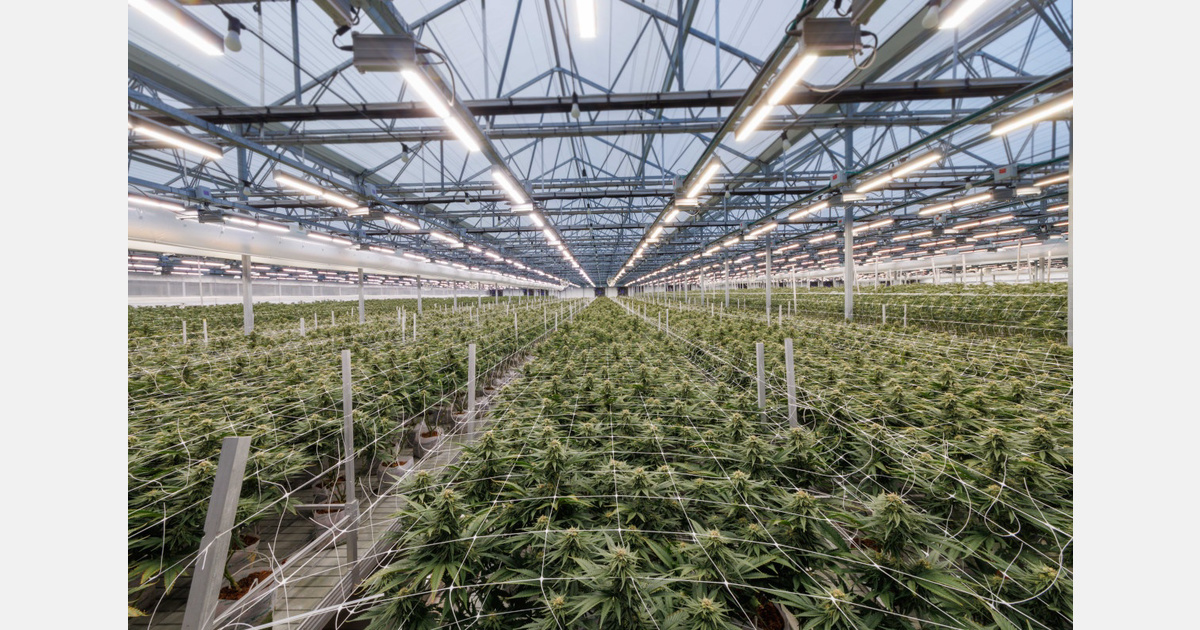
Maximizing cannabis yields with intercanopy and subcanopy lighting

Transportation Groups Warn Feds Of Marijuana Rescheduling’s ‘Consequences’ For Drug Testing Of Truck Drivers And Pilots

DEA Argues in Favor of Moving Cannabis to Schedule III

Cannabis Contest Reporter Tara Rosenblum from News 12 on Weed Talk News 1vs1 with PCM’s Jimmy Young

NEXT GEN CANNABIS ENTREPRENEUR | ZEKE THOMAS

Experts say THC percentage is the wrong way to shop for cannabis

DOJ Marijuana Lawsuit Filing Cites Drug Testing Industry And Pharma Company ‘Pocketbook Interests’ In Opposing Rescheduling

“Our system can manage equipment across 10,000+ m² using just a few wires”

Florida Workshop to Discuss What Constitutes a ‘Cartoon’ in Hemp Packaging

Mazar-i-Sharif Hash Wednesday

Afghan Black Hash Wednesday

Weak Michigan Cannabis Sales Again in July – New Cannabis Ventures

From Finance to Wellness: Brad Zerman’s Impactful Pivot

Re-release of the full show of Cannabis Coast to Coast news. Republican Texas DA Fires Up vs. laws;

DEA’s Cole Reverses His “priorities” ; Prohibitionists Dig In; Dead & Co Celebrates 60 years in SF

Your Cannabis Business: Consistent Filings Are Critical

Curaleaf Q2 Revenue Falls 8% – New Cannabis Ventures
-
 Cannabis News10 months ago
“Our system can manage equipment across 10,000+ m² using just a few wires”
-
 Florida11 months ago
Florida Workshop to Discuss What Constitutes a ‘Cartoon’ in Hemp Packaging
-
 Video9 months ago
Mazar-i-Sharif Hash Wednesday
-
 Video9 months ago
Afghan Black Hash Wednesday
-
 aawh11 months ago
Weak Michigan Cannabis Sales Again in July – New Cannabis Ventures
-
 Video11 months ago
From Finance to Wellness: Brad Zerman’s Impactful Pivot
-
 Video11 months ago
Re-release of the full show of Cannabis Coast to Coast news. Republican Texas DA Fires Up vs. laws;
-
 Video10 months ago
DEA’s Cole Reverses His “priorities” ; Prohibitionists Dig In; Dead & Co Celebrates 60 years in SF