Connect with us

Cannabis News

GOP Lawmaker Circulates Bill To Keep Hemp THC Drinks Federally Legal

Published

on

A Republican member of Congress is pushing a bill that would keep THC hemp drinks legal under federal law, creating a sweeping recriminalization of products derived from the crop that will take effect later this year, Marijuana Moment has learned.

Rep. Beth Van Duyne’s (R-TX) Hemp-Derived Beverage Clarity Act, in its current form, would allow adults 21 and older to purchase and consume hemp-THC beverages with 5 milligrams of delta-9 THC per serving.

It would also impose a federal tax of 10 cents per milligram of any hemp-derived cannabinoid in beverages.

Hemp beverages would be regulated by the Treasury Department’s Tax and Trade Bureau (TTB) in consultation with the Department of Health and Human Services, and the TTB could set testing, packaging, labeling, and serving and container sizes for hemp beverages.

Legal beverages can only contain natural cannabinoids that are cultivated and processed in the USA.

“(Under the bill) a regulated natural cannabinoid would be considered safe and could be added to a hemp-derived beverage intended for human consumption,” the bill, obtained by Marihuana Moment, states.

Manufacturers, distributors, wholesalers and sellers of hemp beverages would be required to obtain federal permits.

Companies could not sell multi-serve containers of more than 750 milliliters under the legislation.

It also directs the National Academies of Sciences, Engineering, and Medicine to publish a report on the safety and use of naturally occurring cannabinoids in beverages, and requires TTB to issue a separate report on the appropriate serving sizes of hemp-derived beverages.

The legislation further clarifies that states, Indian tribes and localities can enact rules that are “more stringent” than federal regulations, but says they cannot prohibit the shipping or transportation of hemp beverages across their borders into other jurisdictions.

The bill has not yet been formally introduced, and its provisions may change before that happens.

Staff at Van Duyne did not respond to Marihuana Moment’s request for comment for this story.

Hemp derivatives containing less than 0.3 percent delta-9 THC by dry weight were made federally legal under the 2018 Farm Bill signed by President Donald Trump in his first term. But late last year, he signed new legislation with provisions that will redefine hemp, so that only products with a total of 0.4 milligrams of THC per container will remain legal starting November 12.

The circulation of the new bill comes as the White House is separately clarifying that Trump wants Congress to take action to change the law that threatens to federally recriminalize hemp-derived products.

The administration “welcomes the opportunity to work with Congress on at least update the legal definition of the final hemp-derived cannabinoid products Americans have access to appropriate full-spectrum CBD products,” the Office of Management and Budget (OMB) said this month, “while Congress remains intent on limiting the sale of products that pose serious health risks.”

The call to avoid a broad ban on hemp CBD products was included in the Administration’s policy statement on the annual agriculture spending bill passed by the House of Representatives.

Several members of parliament had it He introduced amendments to that legislation to keep hemp products legalbut the House Rules Committee blocked each from going to a vote or its sponsor withdrew.

“The administration supports the progress of this legislation, but hopes to address its concerns before moving forward,” OMB said in the administration’s policy statement. “The administration looks forward to working with Congress to provide further input as the bill’s legislative process develops.”

in April, the president himself has asked members of Congress to redefine hemp to prevent the recriminalization of full-spectrum CBD products.

“I call on Congress to update the Act so that Americans can continue to have access to the full-spectrum CBD products they trust and support, while upholding Congress’ intent to limit the sale of products that pose health risks,” Trump said in a Truth Social post the same day his administration announced it was moving forward with marijuana reregulation.

“We need to do this RIGHT and FAST, especially for those who have found CBD to help them,” he said. “Also, I’m told it will help our BIG FARMERS that we love and will always be around.”

Industry advocates say the law passed last year not only threatens to ban intoxicating and synthetic cannabinoids, but also take popular full-spectrum CBD products used therapeutically by many Americans off the market.

“ONE IN FIVE adults used it in the past year, and many say it dramatically improved their chronic pain,” the president said in the social media post, adding that hemp-derived CBD “has made a HUGE difference for so many people.”

The administration also referred to a new initiative launched in April Cover up to $500 of hemp-derived products annually for eligible Medicare patients. The program being implemented by the Centers for Medicare and Medicaid Services (CMS) focuses largely on CBD, but allows products to contain a total of 3 milligrams of THC per serving.

“In December, I signed a very important Executive Order calling for Research and Innovation into Hemp-derived CBD,” Trump said. “Our wonderful Dr. Mehmet Oz moved quickly to follow the Executive Order directive, and set a model in motion for some Seniors this month. But more needs to be done!”

“Please do it, and SOON,” the president said, referring to the sweeping recriminalization congressional fix that will take effect in November. “Thank you for your attention to this matter!”

It’s unclear how far Trump wants to reduce the scope of planned federal restrictions on hemp products and what kinds of revised THC rules and limits he’d prefer to sign into law.

Separately, White House officials recently briefed a congressional office on hemp regulation.

In April, Vince Haley, director of the White House Domestic Policy Council, and James Braid, assistant to the president for legislative affairs, sent hemp policy suggestions to Rep. Andy Barr (R-KY).

“We appreciate your work to advance policy,” the executive order Trump signed in December, which included provisions to protect Americans’ access to CBD products, the staff wrote in a letter to Congress.

“We are submitting draft legislation and comments to your account to address the final statutory definition of hemp-derived cannabinoid products to ensure that Americans have access to adequate full-spectrum CBD products while maintaining Congress’ intent to limit the sale of products that pose serious health risks,” White House officials said, according to a social media screencast. “We are open to discussion and further technical assistance.”

Separately, Anti-marijuana organizations filed a lawsuit against the Medicare hemp CBD coverage policy– but adjudge dismissed the suit last month, ruling they lack standing. Health and Human Services lawyers section. Robert F. Kennedy Jr. and CMS director Mehmet Oz He submitted a letter requesting the filing of the case.

The White House Management and Budget Office has also held a series of meetings a Food and Drug Administration (FDA) CBD product enforcement policy.

The FDA issued the guidance making it clear that it does not intend to interfere Establish a Medicare coverage plan for hemp-derived products.

CMS finalized a rule that will be adopted separately Coverage of certain hemp products, primarily as specialized health-related benefits, through Medicare Advantage the plans

As hemp products become more popular among consumers, some big brands are trying to get in on the action.

The main retailer Target, for example, is expanding its market share of hemp-derived THC beverages. Last year, the company began a pilot program in 10 stores in Minnesota that sell cannabis drinks. That apparently went well, and now the company has secured licenses from Minnesota regulators to sell lower-potency edible hemp products — including THC drinks — in 72 stores in the state.

A report from the US Department of Agriculture published in April shows this US farmers grow $3 billion in hemp crops by 2025— 64% increase compared to the previous year.

Read the full draft hemp drink invoice below:

Marijuana Moment is made possible with the help of readers. If you rely on our pro-cannabis journalism to stay informed, consider a monthly Patreon pledge.

Cannabis News

How New Zealand showed up in London’s cannabis industry

Published

on

By

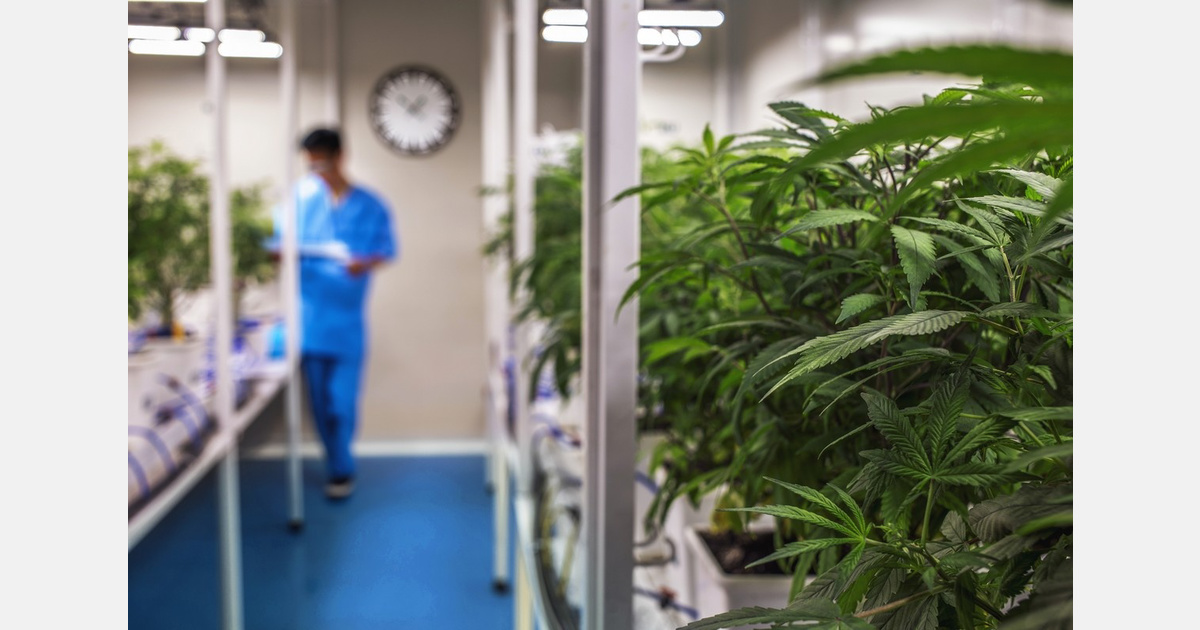
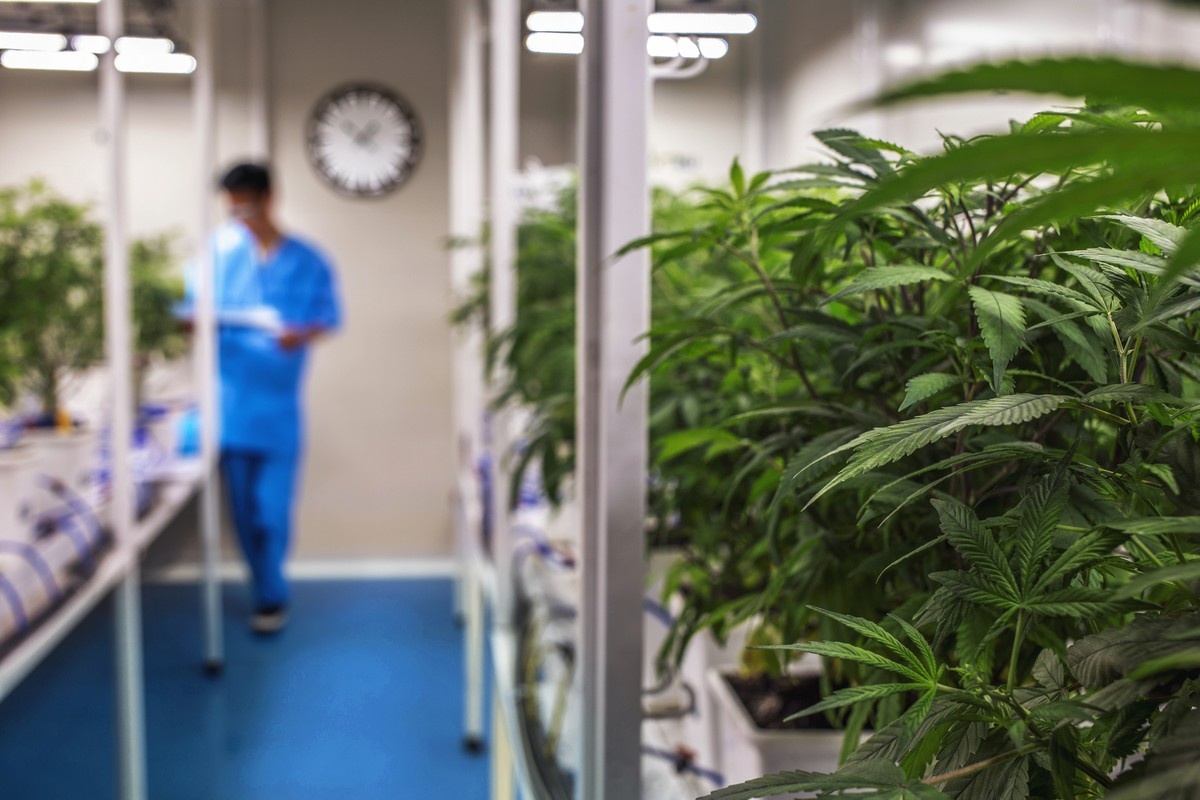
The medical cannabis market is expected to grow from $47 billion to $149 billion by 2031, and New Zealand has a real role to play in that story. And thanks in large part to New Zealand Trade and Enterprise (NZTE), the government’s international business development agency, Puro is starting to play.

At Cannabis Europa 2026 London, NZTE hosted an evening event at the City Arts Bar with Puro, New Zealand companies Bluelab, Rua Bioscience and CannFX. Puro called it The NZ Room.

Beyond all things Kiwiana – including Puro brand kiwifruit, Kiwi’d – the room was filled with some pretty amazing people: Ivy League scientists, company founders, patients, advocates, industry players, government officials, Maori tribal leaders and a tough Scotsman. All in the same space with the same true passion for where this industry is going.

It was one of those rooms where conversations went well when they had to end. That’s usually a sign of something well done.

Made possible by NZTE
For Puro, the NZTE relationship has been formative. With ongoing support, Puro has entered the Australian market with 47 unique product SKUs and signed a £7 million supply agreement with UK distributor IPS Pharma.

NZTE understands the potential of the New Zealand cannabis industry. The willingness to support this nascent industry and put New Zealand in the spotlight at events like Cannabis Europa is very significant. New Zealand is a small country and the country’s credibility in international markets is built from relationship to relationship, room by room. NZTE helps build those rooms.

© Cigar

what’s next
For the first time, patients in the UK have access to medicinal cannabis grown in New Zealand. That’s the direct result of years of work by Puro’s team, but it’s not worth much if you can’t connect with buyers globally. Creating international relationships that events like Cannabis Europa make this possible.

“We are grateful for the extensive support from the New Zealand Government that drives our progress, including the Ministry of Primary Industries’ support for our genetic breeding, product innovation and market access goals. This collective effort from agencies such as the Ministry of Business, Innovation and Employment, NZTE and the New Zealand Export Credit Bureau ensures that Mail that started in London will continue to grow in Puro’s international goals,” he said. a statement

For more information:
clean
www.puro.co.nz

Continue Reading

Cannabis News

Aurora Cannabis announces full results for 2026 fiscal year

Published

on

By

Aurora Cannabis Inc., a Canadian medical cannabis company, released its financial results for the fourth quarter and full year 2026 (ended March 31, 2026).

CEO Miguel Martin said the company achieved record results in fiscal 2026, saw strong global growth in medical cannabis revenue and met profit targets. This success was attributed to the company’s regulatory expertise, network of EU certified production facilities and ability to execute business plans. Aurora plans to continue growing internationally while maintaining its market position.

Note: On February 17, 2026, Aurora sold its majority stake in a plant company called Bevo Agtech. Because of this sale, Bevo’s numbers are not included in the results, and the previous year’s data has been adjusted.

Total revenue for the quarter was $84.8 million, up 10% from $76.8 million a year earlier. This growth was primarily due to a 14% increase in medical cannabis sales and increased wholesale sales, although this was partially offset by lower sales of consumer cannabis.

Medical cannabis revenue reached $77.1 million (up 14%, 91% of revenue). This growth was driven by strong sales in Germany and Poland, and increased sales to insured patients in Canada. However, medical cannabis profit margins fell from 71% to 66% due to selling more low-margin products and price cuts.

Consumer cannabis revenue fell to $3.6 billion from $8.2 billion, as the company is deliberately shrinking this part of the business to focus on medical cannabis. Here, too, profit margins fell, from 27% to 22%, due to higher costs.

Overall, the company’s adjusted gross profit margin (a measure of profitability before certain accounting adjustments) was 60%, up from 65% a year ago.

Operating costs (adjusted GEA) increased to $40.3 million from $35.4 million due to additional employees, higher labor costs in Europe and Australia, bad debt from two bankrupt clients and extraordinary professional fees.

The company reported a net loss of $27.6 million for the quarter, higher than last year’s loss of $12.1 million, mainly due to one-time charges. However, “adjusted net income,” a measure that strips out unusual items, was $5.6 million, down from $15.3 million, due to higher costs and lower currency gains.

Adjusted EBITDA (a measure of profitability) was $9.2 million, down from $14.1 million. Free cash flow was just $0.3 million, down from $5.2 million.

Aurora completed the sale of its stake in Bevo (the plant breeding business) on February 17, 2026. Separately, on April 15, 2026, Aurora acquired Safari Flower Company for $26.5 million, consisting of $15 million in cash plus stock, and acquired a large certified cultivation facility to support international supply.

By 2027, Aurora will exit the low-margin Canadian cannabis and plant breeding businesses to focus on global medical cannabis. The company expects total revenue to decline, approaching 2025 levels, primarily due to lower medical reimbursement rates in Canada starting in April 2026, although this will be partially offset in Europe, particularly Germany and Poland. Gross profit margins are expected to be in the mid to high 50% range, supported by stronger contributions from Europe and exits from low-margin businesses, although medical margins in Canada remain under pressure. Operating costs are expected to be similar to last year. Overall, annualized profit as measured by adjusted EBITDA is expected to be lower than in fiscal year 2026, reflecting the impact of lower reimbursement prices on revenue and gross profit.

A conference call to discuss these results was scheduled for June 11, 2026.

For more information:
Aurora Cannabis Inc.
auroramj.com

Continue Reading

Cannabis News

More Than 100 Alabama Patients Bought Medical Marijuana In First Week Of Legal Sales

Published

on

By

“Our store manager saw a patient coming out, and as silly as it sounds, they jumped up and hit their heels. Yes, they were very happy to have that medicine.”

By Anna Barrett, Alabama Reflector

More than 100 qualifying patients have it purchased medical cannabis since the opening of Alabama’s first dispensaryThe Alabama Medical Cannabis Board said Thursday.

The state’s first purveyor of medical cannabis, Callie’s Apothecary, opened its first location in Montgomery on June 4 after a “soft opening” the day before. Justin Aday, the commission’s general counsel, said Thursday that 102 patients have purchased medical cannabis products in 111 transactions. Those transactions generated about $14,600 in pretax sales, with the average transaction being $131.56, Aday said.

Vince Schilleci, owner of Callie’s, said in a phone interview Thursday afternoon that the last week of business has been rewarding.

“I’m seeing a lot of happy patients,” he said. “Our store manager saw a patient coming out, and as silly as it sounds, they jumped up and hit their heels. Yes, they were very happy to have that medicine.”

According to the patient menu on Callie’s website, each item ranges from $42 to $52. Schilleci said the dispensary got its second shipment of products on Thursday and expects another on Friday, which will help meet patient demand.

“We had to, I hate to use this term ration, but we limited how much patients could buy because we knew how many patients were coming in, and we wanted people to at least have a chance to have something,” Schilleci said. “We’ve removed rationing now so patients can go down and buy their full 60-day allotment if they want.”

Aday said that since Thursday morning, 481 patients have applied for a cannabis card, of which 446 have been issued by AMCC.

Alabama’s cannabis law, passed in 2021, allows registered doctors to prescribe cannabis for about 15 medical conditions, including cancer, depression, Parkinson’s disease, PTSD, sickle cell anemia, chronic pain and terminal illnesses. Acceptable product forms are limited to pills, tinctures, patches, oils and gel cubes (peach flavor only), plant raw and smoking forms are prohibited.

As of Thursday, there are 52 doctors in Alabama certified to recommend medical cannabis to patients, according to the Alabama Board of Medical Examiners. Aday said 39 are registered with the AMCC, three are pending, and 21 of the doctors have prescribed medicinal cannabis to their patients.

“We certainly hope to see more of these patients come to that dispensary and other dispensaries open that will provide more geographic coverage,” Aday said. “We’re working with the lab processors on the new products that are being manufactured so that the dispensary has an inventory of the products and various products in that inventory to serve the patients that are visiting.”

Lawsuits have also hindered access to medical cannabis. Some companies sued the commission for not issuing licenses, citing a discriminatory process. In another case five parents sued the board over delays in accessing cannabis, which was dismissed in August.

Licenses for three of the four potential dispensary companies were not approved until December.

Three of the companies, CCS of Alabama, LLC, GP6 Wellness, LLC and RJK Holdings, LLC, have licenses and are expected to open storefronts this summer, according to AMCC Director John McMillan. A fourth license is pending litigation, but is likely to go to Yellowhammer Medical Dispensaries, LLC.

“I would do it all over again to see the smile on these patients’ faces. Now, I would have expected it to be a little easier, but it was worth it,” Schilleci said. “It’s been worth it. There’s no doubt about it.”

This story was first published by the Alabama Reflector.

user photo Max Pixel.

Marijuana Moment is made possible with the help of readers. If you rely on our pro-cannabis journalism to stay informed, consider a monthly Patreon pledge.

Continue Reading
Advertisement

Trending

Copyright © 2021 The Art of MaryJane Media