
Cannabis News
Italian hemp sector keeps growing despite legal uncertainties

Despite the initial boom and great promises of great opportunities, the hemp sector is struggling in many countries around the world. From the recent hemp ban in the US, to a similar ban in Italy, which has effectively halted the growth of this industry.
Effects of hemp prohibition
Among the 3,000 companies associated with Canapa Sativa Italia (CSI) – the Italian hemp industry association – 10% closed after the hemp ban amendment was signed. Another 10% are preparing to go abroad. Numbers can be interpreted in many ways, one of these interpretations paints a space under pressure. The reality is that the Italian hemp market continues to expand despite a regulatory structure that struggles to treat it as agriculture.
Research commissioned by CSI and conducted by MPG Consulting in April 2025 shows a very detailed picture. The flower market is worth 1,960 million euros, with 22,379 full-time employees in the supply chain. The study of the economist Davide Fortin and the lawyer Maria Paola Liotti, presented in the Chamber of Deputies on April 2, portrays an area that already behaves like modern agriculture. “It creates value, it supports jobs, and it does so with a sustainability profile that many other crops would envy. What it still lacks is institutional recognition,” they say.
Mattia Cusani, one of the first members of CSI and now its president, farms legal hemp on the Sila plateau. For him, potential is not an abstraction. He describes the hemp chain as a ready-made model of the circular economy. “Production methods, crop variability, use of residues from crop lines. It all exists,” he says. “All that is missing is a technical desk for operation and the removal of several long-standing legal knots. At the center of this stalled system sit workers between the ages of 25 and 40. They form one of the few agricultural sectors that is expanding rapidly in the country. Moreover, they belong to the generation that has experienced the worst economic shocks in recent years.”
Along with other associations, the CSI also demands a basic alignment from Brussels. “The express inclusion of flowers among the plant parts authorized for use. Treating open field and greenhouse cultivation equally. Maintaining the full legality of industrial uses such as seeds and fibers. And unifying police controls through a single ministerial decree, because today’s practices vary a lot and create uncertainty and pressure on farms.”
 © Azienda Agricola Vamperti
Stories from the field
Two entrepreneurs who built their businesses legally now face confiscations caused by changes to the hemp ban.
In Rome, Noemi closed her shop at the beginning of November. He is 34 years old, with a degree in archaeology. For years he worked paid shifts at restaurants to cover expenses. In 2017, he and a flatmate invested what little they had to enter the hemp market. They opened a small shop selling Carmagnola and Futura 75, two of the varieties allowed for cultivation. Over the years, that store became a reference in a difficult neighborhood without a real meeting place. They refused to expand the franchise of foreign chains and focused on a single local store. A few days of legal confusion erased all that.
In Sardinia, the agricultural company Orti Castello seized more than 8,000 plants at the end of October 2025. The intervention report lists 2,467 items, even counting already cut stems mislabeled as sprouts. Each plant was grown from certified seed and was low in THC. Now the company is waiting to release its crop. For Massimiliano Quai and his colleagues, the shock is not limited to the lost inventory. The farm has already had thefts in the field despite the presence of guards. All this within a company that has grown continuously since 2018, through biological methods and consistent demand.
Massimiliano repeats the same idea. “Our best year has always been the next,” he says. “The store moves about 500 euros a day. Tea and honey sell fast. Only since the beginning of 2025, purchases have reached 62,910 euros. In all these years, we have had 6 months of flat or negative results. Everything else has been a constant upward movement. The plan is simple. Stay in Sardinia and consolidate. We only have to be open once, we have chosen a second site abroad. In Italy, in 2018, the political climate seemed favorable.”
MPG Consulting research places these stories within two possible futures. “According to the current model, the diverse ecosystem of shops, e-commerce platforms and tobacco shops keeps the market close to 1,960 million euros. Employment remains high, the supply chain remains diverse. The alternative is a state monopoly controlled by tobacco shops, with a tax burden of 56.5. In this scenario, the market would have a direct and indirect impact of more than 144,000 million euros. evaporate, and employment would fall to around 6,000 workers.”
However, demand grows. “The lack of commercial communication is not slowing down the market. Many are choosing hemp flowers as a substitute for tobacco rather than a substitute. It becomes part of the process of moving away from one of the most harmful and addictive substances available.”
A bunch of growers
MPG Consulting also maps the crop side. Small growers sell everything directly. Medium producers divided between retail and wholesale. Large growers rely on standardized varieties and volumes. Medium plants are the innovative key of the whole chain. They test varieties, refine phenotypes and drive the system forward. They are also the weakest link if a monopoly model becomes a reality, unlike large growers who can operate in a rigid centralized environment. “The Italian hemp sector grows anyway. The question hanging in the air is not whether it can grow, but whether the rules will ever grow with it.”









Dalgety Ltd has entered into a partnership with Curaleaf Laboratories to supply pharmaceutical grade cannabis medicines to the UK cannabis market. The arrangement combines Dalgety’s cultivation operations, which are certified to EU-GMP standards, with Curaleaf Laboratories’ pharmaceutical manufacturing and distribution capabilities. According to the companies, this creates a UK-based supply route that does not rely on imported cannabis flowers, as Dalgety cultivates its product in-house. Dalgety claims it was the first company in the UK to grow, manufacture and supply EU-GMP medical cannabis from a single site.
 © Curaleaf Laboratories
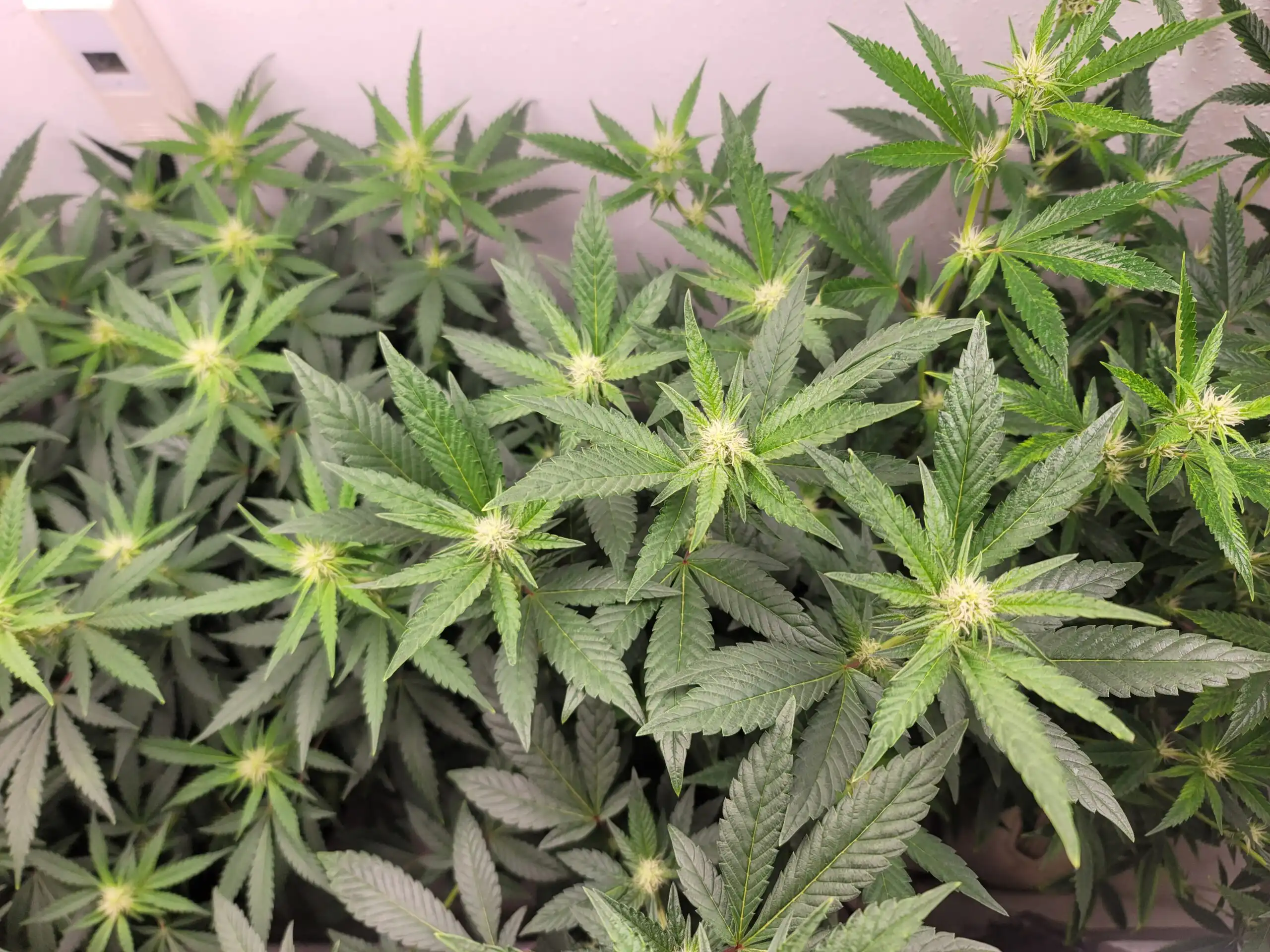
The growing facility, which is more than 30,000 square feet, is located indoors and uses hydroponic growing methods along with automated lighting, irrigation, humidity and temperature control systems. The company reports that it uses AI-assisted environmental monitoring, which extends the traceability of batches to the final product and compares them to operating standards for air filtration systems. Post-harvest processing is said to follow EU-GMP protocols, including microbial and cannabinoid testing.
The stated goal of this approach is to reduce between-harvest variation in terms of THC and CBD content, terpene profiles, and microbial safety. Dalgety says his cultivation is overseen by staff with experience in horticulture and biochemistry, some of whom have worked on cannabis cultivation projects internationally.
Through a partnership with Curaleaf Laboratories, Dalgety’s UK-grown cannabis is processed and distributed through a UK-based supply chain, rather than imported from overseas. Companies suggest that this arrangement can shorten the time it takes to get products to market compared to importing, and reduce the likelihood of supply disruptions. Because Dalgety and Curaleaf Laboratories are involved in cultivation, manufacturing and distribution, the companies say this oversees the product at every stage, making it clearer for prescribers to see where and how the product was made.
 © Curaleaf Laboratories
Dalgety operates to EU-GMP standards and has been subject to regulatory review by the MHRA and the Home Office. Its operations include environmental monitoring, microbial testing, stability testing, controlled drying and curing procedures and quality assurance processes, along with controlled and secure facilities.
The company describes its work as controlled environment farming, hydroponic systems, environmental control technology, and efforts to stabilize cannabis genetics and phenotypes for batch-to-batch consistency.
 © Curaleaf Laboratories
Dalgety has also opened its cultivation facilities for visits to healthcare professionals, clinicians, pharmacists, researchers and other industry stakeholders. The company says this is in response to the fact that much of the cannabis historically supplied to UK patients has been grown overseas, which has limited opportunities for UK clinicians to see first-hand the cultivation and quality control processes. These tours aim to provide visitors with information on cultivation standards, EU-GMP compliance procedures, environmental control systems, testing processes and the regulatory framework governing cannabis manufacturing in the UK.
Dalgety and Curaleaf Laboratories describe their partnership as expanding access to UK-grown medical cannabis, improving supply chain reliability and helping to meet sector regulations, placing it in the wider context of growing demand for cannabis-based treatments from UK patients.
For more information:
Curaleaf Laboratories
Email: (email protected)
https://curaleaflaboratories.co.uk/
Cannabis News
Arkansas GOP Governor And Democratic Challenger Agree On Opposing Marijuana Legalization
Cannabis News
Will the top World Cup expert in the fruit, vegetable, and horticulture sector come from Canada, the U.S. or Belgium?

FreshPublishers 2026 World Cup Group Stage
The World Cup is coming to an end, with the third-place play-off between France and England on Saturday, and the final between Spain and Argentina the following day. It won’t be long until the grand winner of FreshPublishers’ first World Cup pool is revealed.
 © Fresh Publishers
As previously reported, Slim Kooli from Courchesne Laros is the favorite to win the €1,000 prize. He has secured a comfortable lead over Nol Batist of North American Interstate Greenhouse Company, while buyer Bjorn Van Ryckeghem of Deprez Construct is currently in third place.
| 1 | Sim School | Spain | 1–0 | 2–1 | 737 | 9716 | |
| 2 | Nol Batist | France | 2–1 | 1–1 | 674 | 9433 | |
| 3 | Bjorn Van Ryckeghem | France | 2–2 | 3–1 | 674 | 9264 | |
| 4 | Christian Anton Smedshaug | England | 1–2 | 1–2 | 659 | 9134 | |
| 5 | Perry Springintveld | Spain | 1–1 | 2–1 | 647 | 9105 | |
| 6 | Willem Tijssen | Spain | 2–0 | 2–1 | 710 | 9098 | |
| 7 | Hans Borsboom | Spain | 2–1 | 2–1 | 528 | 9058 | |
| 8 | Bart Triemstra | Spain | 2–1 | 2–1 | 737 | 9052 | |
| 9 | Youness Bensaid | Spain | 2–1 | 1–1 | 722 | 8954 | |
| 10 | Vijay Dijkstra | Portugal | 2–0 | 2–1 | 382 | 8953 |
However, there have been some surprises during the tournament, and bonus points must be added, so we will keep the suspense a little longer. On Monday we will find out who is the main World Cup announcer in the international fruit, vegetable and horticulture sector…

BREAKING NEWS DEA RESCHEDULES CANNABIS TO SCHEDULE 3!

ASK ME ANYTHING | MONTEL

Marijuana Retail Report

Redefining the standards of UK cannabis

Arkansas GOP Governor And Democratic Challenger Agree On Opposing Marijuana Legalization

Michigan Cannabis Brand Forced to Close After Investigation Finds Inventory Discrepancies, Out-of-State Transport

The C Block…more 420 recaps on Weed Talk News …recorded 4_29_24

PART 1 TAKING A KNEE | NATE BOYER

Marijuana Retail Report

Will the top World Cup expert in the fruit, vegetable, and horticulture sector come from Canada, the U.S. or Belgium?

“Our system can manage equipment across 10,000+ m² using just a few wires”

Mazar-i-Sharif Hash Wednesday

Florida Workshop to Discuss What Constitutes a ‘Cartoon’ in Hemp Packaging

Afghan Black Hash Wednesday

From Finance to Wellness: Brad Zerman’s Impactful Pivot

Weak Michigan Cannabis Sales Again in July – New Cannabis Ventures

Re-release of the full show of Cannabis Coast to Coast news. Republican Texas DA Fires Up vs. laws;

DEA’s Cole Reverses His “priorities” ; Prohibitionists Dig In; Dead & Co Celebrates 60 years in SF

Texas DA Fires Up for Change! Mass. Sheriff arrested on Extortion charges; GOP vs Industry in state

Your Cannabis Business: Consistent Filings Are Critical
-
 Cannabis News11 months ago
“Our system can manage equipment across 10,000+ m² using just a few wires”
-
 Video10 months ago
Mazar-i-Sharif Hash Wednesday
-
 Florida11 months ago
Florida Workshop to Discuss What Constitutes a ‘Cartoon’ in Hemp Packaging
-
 Video9 months ago
Afghan Black Hash Wednesday
-
 Video11 months ago
From Finance to Wellness: Brad Zerman’s Impactful Pivot
-
 aawh11 months ago
Weak Michigan Cannabis Sales Again in July – New Cannabis Ventures
-
 Video11 months ago
Re-release of the full show of Cannabis Coast to Coast news. Republican Texas DA Fires Up vs. laws;
-
 Video11 months ago
DEA’s Cole Reverses His “priorities” ; Prohibitionists Dig In; Dead & Co Celebrates 60 years in SF