
Cannabis News
Kentucky Governor Announces Medical Marijuana Gummies Are Now Available, While Pushing Lawmakers To Approve New Qualifying Conditions


Kentucky’s governor is urging lawmakers to give more patients legal access to medical marijuana, announcing that cannabis gummies can now be purchased at state-licensed dispensaries.
Gov. Andy Beshear (D) said Thursday that his administration has sent a letter urging legislative leadership to pass a bill that lists ALS, Parkinson’s disease, Crohn’s disease, sickle cell anemia, fibromyalgia, glaucoma, terminal illnesses and other conditions as conditions for medical cannabis.
“In most other states that have a medical marijuana program, these are conditions that are covered, and conditions that are deemed appropriate by our board of physicians and counselors,” he said. “Expanding the list could help the approximately 430,000 Kentuckians who currently lack access but face these challenges.”
The governor said state officials are “making great strides” in expanding the medical marijuana program to “increase access for those who are already eligible.”
“We currently have 510 registered professionals and over 18,500 approved cards, and those numbers continue to grow,” Beshear said, adding that regulators are making “steady progress” in accepting businesses at every step of the cannabis supply chain.
“As the supply chain expands, patients are starting to see more options online,” he said. “We can announce that gummies are on the market in Kentucky and showing progress in communities across Kentucky.”
The governor’s latest update comes about a month after he took the podium and said “not happy” with the time it’s taken to roll out the state’s medical marijuana program—but predicts that the pace of patient access will “significantly increase” in 2026.
Also last month, Beshear said two more dispensaries will open their doors “once additional product becomes available.” The The state’s first medical cannabis plant was launched in December.
The governor, who has long championed cannabis reform, he anticipated a market launch that monthwhile claiming that medical marijuana will help thousands of patients find an alternative to opioids for pain management.
He at the end of October it passed the milestone of registering 15,000 patientsbut that has grown significantly in recent weeks.
Beshear previously acknowledged that “it’s taken longer than we would have liked” to sustain the industry since he signed off on legalizing medical marijuana in 2023.
Considering this delayed implementation, he signed an executive order this year to waive renewal fees for patients who get the cards so that they are not charged again before the stores open. And another order he signed to provide protections for qualified patients who obtain medical marijuana outside of Kentucky “will remain in place.”
Beshear announced separately that in May the state launched a new online directory that allows people to see where medicinal cannabis will open next to them
He noted that the state is working to provide access to patients “as soon as possible,” which includes speeding up the licensing process. Last January, so did the governor ceremoniously issued the first medical marijuana cards in the commonwealth.
—
It’s Marijuana Time tracking hundreds of cannabis, psychedelic and drug policy bills in state legislatures and Congress this year. Patreon supporters by pledging at least $25/month, you’ll get access to our interactive maps, charts, and audio calendars so you never miss a development.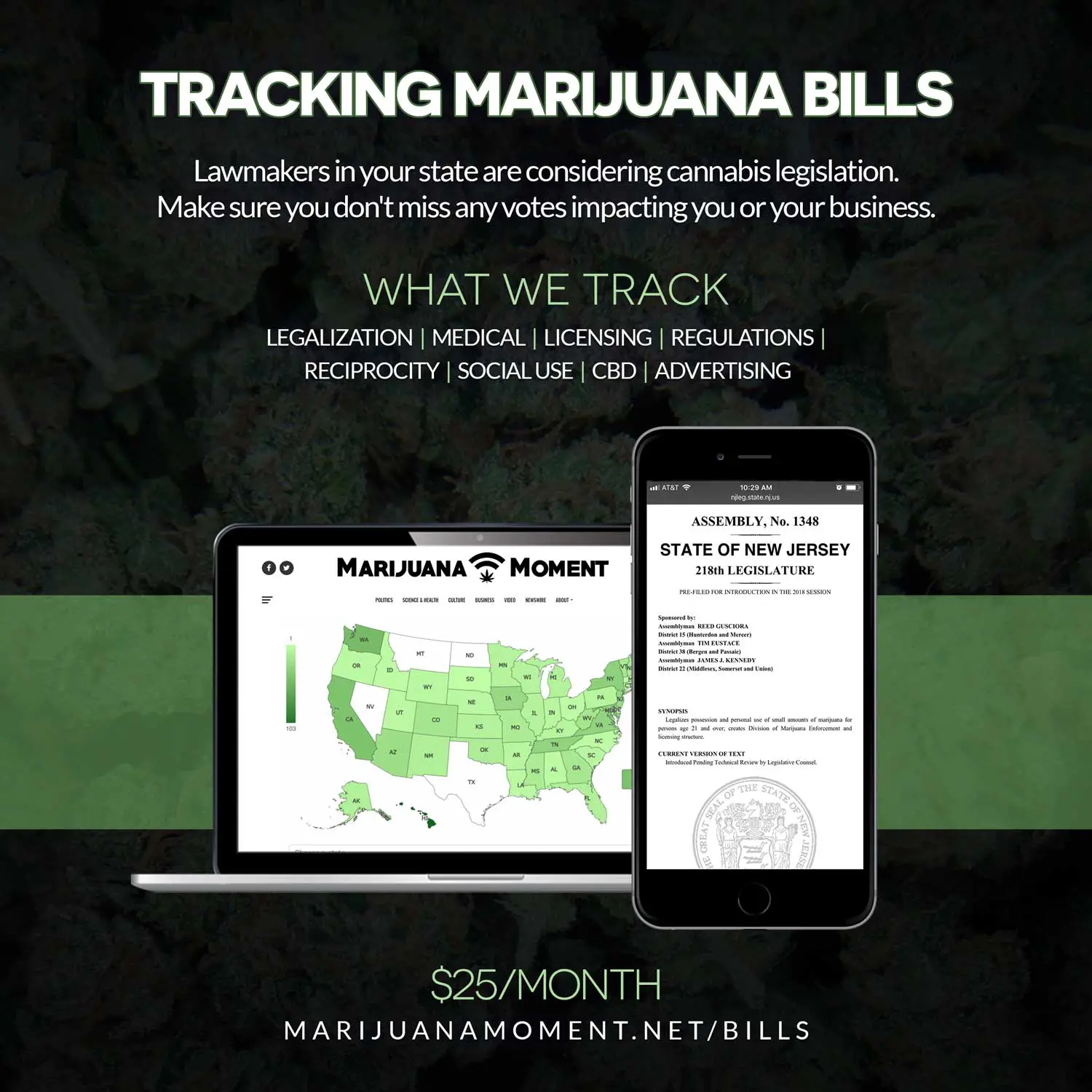
Learn more about our marijuana bill tracking and become a Patreon supporter to gain access
—
Meanwhile, the governors sent a letter to Kentucky’s congressional delegation last yearurging them to “take decisive action to protect the constitutional rights of our law-abiding medical cannabis patients” by repealing the federal ban on possession of firearms by marijuana users.
Bipartisan Kentucky senators introduced similar legislation asked the federal representatives of the state to take corrective measuresBeshear said he agrees but would I would like to see even more significant changes at the federal level.
The federal Bureau of Alcohol, Tobacco, Firearms and Explosives (ATF) warned Kentucky residents that in 2024, if they choose to participate in the state’s medical marijuana program, they will be prohibited from buying or possessing firearms under federal law.
Health professionals have been able to Patients began to evaluate the recommendations from the beginning of last December.
While there are currently no operational dispensaries for patients, Beshear also confirmed that an executive order he signed in 2023 will be in place in the interim, protecting patients. Those with medical cannabis purchased from licensed out-of-state retailers.
In the November 2024 election, Kentucky also saw more than 100 cities and counties pass local ordinances to allow medical cannabis businesses in their jurisdictions. The governor said the election results show that “the jury is no longer out” on the issue this is clearly supported by voters across party and geographic lines.
Marihuana Moment is made possible with the help of readers. If you rely on our pro-cannabis journalism to stay informed, consider a monthly Patreon pledge.










Entourage Health Corp. has entered creditor protection. The company and six related entities filed on June 17 under the Companies’ Creditors’ Arrangement Act owed approximately $240.1 million to the sole affiliate of the LiUNA Pension Fund, its owner, its secured creditor and the lender that is now funding the money (First Report pp. 3-6-9
That affiliate, 2437653 Ontario Inc. No. 1 company, Entourage, secured a 2024 deal that took the former WeedMD private and off the TSX Venture Exchange (December 2024 PR). Shareholders were paid half a Canadian cent per share, or C$0.005, and the board recommended a sale in December 2024 (December 2024 PR).
Jason Alexander, head of the special committee of independent directors, recommended to shareholders. “The transaction ensures that shareholders will receive immediate tangible value while positioning the Company for future growth and flexibility,” Alexander said (December 2024 PR). The company took on $167.6 million in debt in that sale, having already breached the covenant with the same guarantee (December 2024 PR). Eighteen months later that debt was $240.1 million when it was filed, and the growth promised by the sale is a settlement (First Report 6-18 p.

Adult use is off, medical is still running
The leisure business is closing, not saving. Entourage laid off about 53 workers in early June before the order, and 22 remain (First Report p. 6 Adult use inventory is being cleared, finished products are shipped to provincial distributors, and flowers are sold in bulk to the market to other licensed growers (First Report p. 12 Color Cannabis, Dime Bag and Saturday Cannabis are the brands going down with it (First Report p. 5
What remains open is the doctor’s arm as the exclusive supplier of cannabis under the Starseed brand to local residents of the Workers International Union of North America (First Report p. 5 The pension fund that funds the procedure is tied to the same union that the medical brand serves, and the part of Entourage that serves union members is the part that is kept alive while the rest is sold for parts.
At the end of July the money runs out with no new money (First Report p. 11 The money comes again from the pension fund affiliate, a $1.1 million debtor-in-possession facility at 5% per annum, no commitment fee, no exit fee (First Report pp. 10-11). The monitor, Ernst & Young, checked terms against other DIP loans in the cannabis sector from January 2024 and concluded that a third-party lender would not lend on better terms given the state of the business (First Report p. 11 The lender, which already owed $240 million, is the only one willing to advance another million to keep the lights on through the sale.
Health Canada is the largest unsecured creditor, owed $494,505, ahead of all suppliers and competitors on the company’s books (List of Creditors p. 1 Supreme Cannabis is owed $262,133, medical platform HelloMD is owed $169,564, the Town of Aylmer is owed $144,815, the Independent Retail Cannabis Board is owed $137,098 and High Tide is owed $124,583 (List of Creditors p. 1 Unsecured claims total $3,288,333 in more than 100 names, many of which have yet-to-be-determined amounts by medical clinics (List of Creditors 1-5 p. Against $240 million guaranteed, none of them will see much.
In the June 29 return, the lender asks the judge to extend the stay until August 28, approve the DIP facility, and double the Administrative and Directors fees to $500,000 each (First Report 4-8-12. p. The directorship is rising as directors face payroll, holiday pay and excise duties over a longer period of time, and the company’s directors and officers insurance expires at the start of July (First Report p. 12
The sales process starts on the same day, based on a marketing effort that started around May and was presented before the deal that sparked interest but no one could make a deal (First Report p. 13 Insiders and affiliates have until July 6th to say they intend to bid, the bid deadline is July 30th, the successful bid must be received by August 7th, and the outside deadline is August 28th (First Report p. 15 The affiliate of the pension fund has written to the Monitor that it will not make an offer (First Report p. 16), and any other affiliate that does so must be removed from the process (First Report p. 16 The settlement request for non-cannabis equipment and the sale of the Aylmer facility, a 26,000-square-foot extraction and processing facility that has been the company’s production base at 250 Elm St.
For more information:
Neighborhood Health
1.844.933.3636
(email protected)
entouragehealthcorp.com
Cannabis News
DEA And FDA Highlight How Marijuana Is Safer Than Alcohol And Opioids During Rescheduling Hearing’s Opening Day
cbdMD welcomes the Administration’s call for Congress to ensure fair treatment of hemp-derived products under federal law and calls for immediate action to revise hemp regulations to ensure fair treatment of hemp products under federal law.
In a letter to congressional leadership this week, the White House Office of Management and Budget identified hemp reform as a priority strongly supported by the Administration. The petition calls on Congress to ensure fair treatment of hemp-derived products by maintaining access to appropriate full-spectrum CBD products, and by maintaining Congress’ intent to reduce products that pose health risks. The administration also urged Congress to pass a responsible federal framework or at least extend the current implementation period to give lawmakers time to get policy right. The request builds on the president’s previous public statements urging lawmakers to protect access to full-spectrum CBD products that millions of Americans rely on.
“We are encouraged to see the administration so clearly championing the responsible, scientific hemp products that consumers depend on every day,” said Ronan Kennedy, CEO of cbdMD. “cbdMD has always believed that the future of this category is built on quality, transparency, and clear rules that separate them from bad actors. A federal framework that protects consumer access, promotes safety, and provides certainty to companies that provide certainty is what this industry and the people it serves deserve. We applaud the policymakers who are working to achieve this outcome.”
“We believe CbdMD is purpose-built for this next phase of the market,” added Kennedy. “Our focus remains on serving our customers with reliable and effective products, supporting responsible regulation and building long-term value for our shareholders as the category continues to evolve. Along the way, we will continue to evaluate the opportunities this evolving environment holds.”
For more information:
cbdMD 
cbdmd.com/

Weed Talk News with Alaina Pinto The B Block -5-29-24

CANNABIS CAREERS | KARSON HUMISTON

Marijuana Retail Report

Entourage Health, formerly WeedMD, enters creditor protection

DEA And FDA Highlight How Marijuana Is Safer Than Alcohol And Opioids During Rescheduling Hearing’s Opening Day

Cannabis Cultivation Workers at Ascend Wellness Strike In Illinois Over Unfair Labor Practices

Weed Talk News Special Report & Interview Redefining Hemp Throws Industry into Turmoil

INVESTING IN CANNABIS | EMILY PAXHIA

cbdMD welcomes White House call for fair treatment of hemp-derived products

Industry Sentiment vs Reality – Could The Hemp Ban Be Extended?

“Our system can manage equipment across 10,000+ m² using just a few wires”

Florida Workshop to Discuss What Constitutes a ‘Cartoon’ in Hemp Packaging

Mazar-i-Sharif Hash Wednesday

Afghan Black Hash Wednesday

Weak Michigan Cannabis Sales Again in July – New Cannabis Ventures

From Finance to Wellness: Brad Zerman’s Impactful Pivot

DEA’s Cole Reverses His “priorities” ; Prohibitionists Dig In; Dead & Co Celebrates 60 years in SF

Re-release of the full show of Cannabis Coast to Coast news. Republican Texas DA Fires Up vs. laws;

Curaleaf Q2 Revenue Falls 8% – New Cannabis Ventures

Your Cannabis Business: Consistent Filings Are Critical
-
 Cannabis News10 months ago
“Our system can manage equipment across 10,000+ m² using just a few wires”
-
 Florida11 months ago
Florida Workshop to Discuss What Constitutes a ‘Cartoon’ in Hemp Packaging
-
 Video9 months ago
Mazar-i-Sharif Hash Wednesday
-
 Video9 months ago
Afghan Black Hash Wednesday
-
 aawh11 months ago
Weak Michigan Cannabis Sales Again in July – New Cannabis Ventures
-
 Video11 months ago
From Finance to Wellness: Brad Zerman’s Impactful Pivot
-
 Video10 months ago
DEA’s Cole Reverses His “priorities” ; Prohibitionists Dig In; Dead & Co Celebrates 60 years in SF
-
 Video11 months ago
Re-release of the full show of Cannabis Coast to Coast news. Republican Texas DA Fires Up vs. laws;