Connect with us

Cannabis News

North Carolina Hemp Businesses Brace For Impact Of New Federal THC Product Ban

Published

on

“We have a year to figure it out or we have a year to like it, crush it and fight for the plant and we hope to change that with the legislation.”

By Brandon Kingdollar, NC Newsline

For Hannah DeLange, the most rewarding aspect of running Redhead Hemp’s Durham location has been “creating a space where people feel comfortable and safe,” creating an inviting social atmosphere much like a coffee shop or bar.

Shelves are stocked with CBD gummies, Delta-9 sangrias and THC caramels, among other drinks and treats with promises like “sleep with benefits” and “lower calories, bigger vibes.”

The interior of the store looks cozy, with plants covering the brick walls with brightly colored artwork and plush sofas and chairs for relaxing. At the store’s “Canna Cafe,” customers can sit down with hemp-infused tea and coffee.

“It’s kind of a space for everybody,” DeLang said. “It has to be a plant for all people, and it has to be accessible, and to create a space that can really personify that.”

Now, the future of that space and many others like it are in jeopardy, with the majority of hemp-based cannabinoid products set to become illegal in November 2026.

Hemp business owners in North Carolina and their counterparts across the US are grappling with the impact of the ban, with some mounting advocacy efforts to reverse the ban and others working to narrow the range of CBD products that will remain legal.

“I think there is a lot of fear”

“We found out the morning of the Senate vote that this was happening,” said Emma MacAdam, owner of Redhead Hemp. “It was pretty clear when they put it in the bill that that bill was going to pass, so it just seemed like a vicious way for them to push their agenda into a bill that was so necessary and important to so many people.”

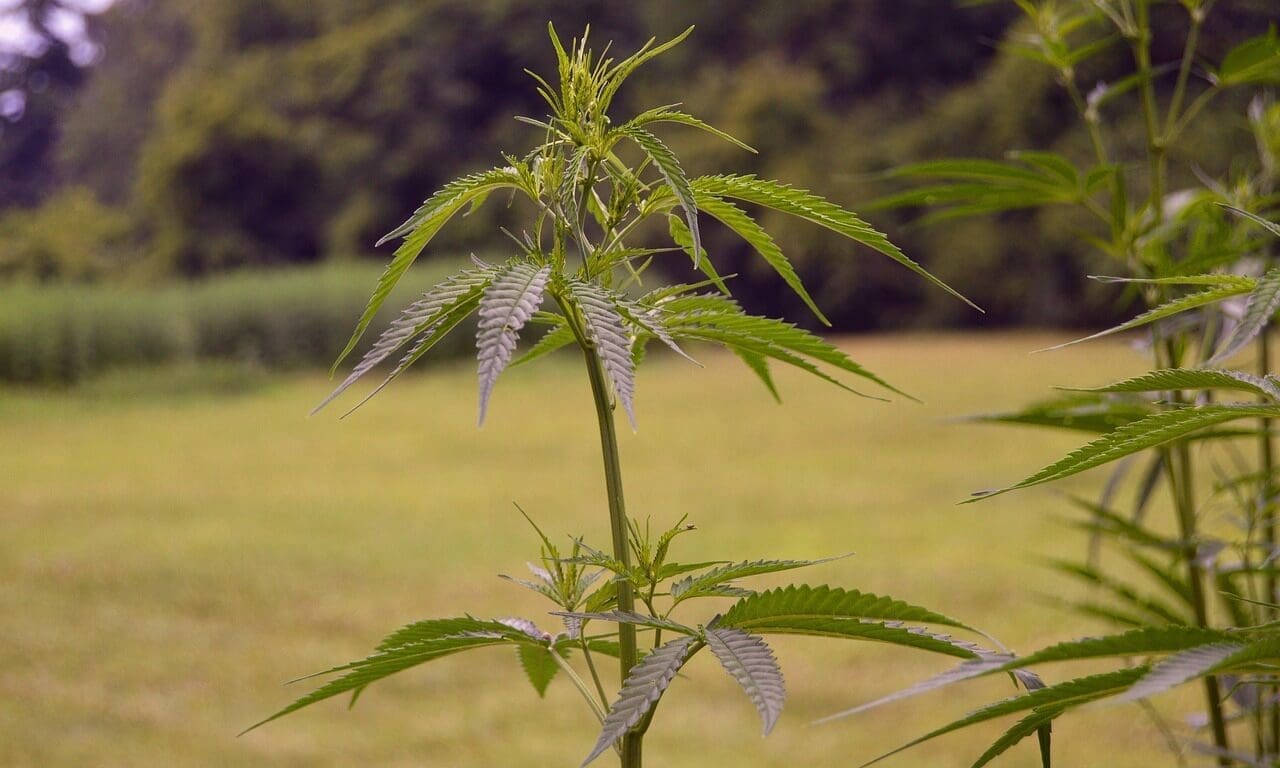
Hemp and marijuana are varieties of the cannabis plant, which differ mainly in levels of the psychoactive compound THC, with hemp containing much less. CBD, another chemical produced by the cannabis plant, does not have an intoxicating effect by itself, but it does produce a calming effect and has been shown to help treat pain and anxiety.

The ban, which significantly lowers the acceptable level of THC in hemp products, was passed earlier this week as part of a farm credit bill along with a stopgap funding deal to end the federal government shutdown.

It bans the sale of hemp products, including CBD products, that contain more than 0.4 milligrams of THC per container, DeLange and MacAdam said, about 99.5 percent of their stock. That would eliminate “full-spectrum” hemp products, which they said make up the most typical CBD products.

“They’re basically saying we can only use the non-intoxicating parts of the plant,” DeLange said. “For a lot of people, the compound THC, even that small amount that you see across the spectrum, that’s really important for pain relief, anxiety, sleep and things like that.”

DeLange said using CBD products has also helped some clients stop using opioids or stop drinking heavily. “Beverages have been a great resource for a lot of people who want a healthier alternative to that.”

The ban comes after lobbying by the marijuana industry and state law enforcement that the hemp industry exploited a loophole to sell products with many of marijuana’s effects but without regulatory oversight. The senators say they never intended to open up a recreational hemp market and only wanted to allow the cultivation of industrial hemp.

The reason, according to Sen. Mitch McConnell (R-Ky.) and other co-sponsors of the Farm Bill, is to “keep these dangerous products out of the hands of children, keeping the hemp industry to farmers,” and to do so, it closes a loophole that allows CBD products to be sold with less than 0.3 percent THC, a threshold that the Farm Bill originally helped overcome.

“Unfortunately, companies have exploited a loophole in the 2018 law by taking legal amounts of THC from hemp and turning it into an intoxicating substance, then marketing it to children in candy-like containers and selling it in easily accessible places like gas stations and convenience stores across our country,” McConnell said.

MacAdam and DeLange pushed back that the products are aimed at younger customers. They said their store has a strict 21+ policy.

“It’s very easy to use the iconic ‘save the children’ flag for a lot of things, I think there’s a lot of fear around cannabis – that’s the history of cannabis, period,” DeLange said.

“And there’s no talk of parental responsibility in that matter, or the fact that liquor isn’t safe for kids, and a lot of the new liquor companies are pretty and colorful,” MacAdam added. “I think it’s a complete escape.”

‘Wild West’

The rapid change to the ban represents a significant change for an industry that has seen little regulation in many states, including North Carolina, for the past seven years.

North Carolina has not enacted regulations on intoxicating hemp products, even with basic age restrictions, despite the support of the state Senate, Gov. Josh Stein (D) and Attorney General Jeff Jackson (D).

In February, the state’s child welfare task force reported a 600 percent increase in emergency room visits for minors related to cannabis use since 2019. Stein launched the Cannabis Products Advisory Council in June, saying “our state’s unregulated cannabis market is a wild west and is crying out for order.”

Last month, Jackson joined attorneys general in 38 states to ask Congress to regulate the sale of CBD products, asking lawmakers to “clarify the federal definition of hemp” during the appropriations process.

“Efforts by states to outlaw hemp-derived psychoactive products to protect their citizens cannot solve this problem,” the attorney general’s letter says. “Such efforts can only lead to unique and ineffective prohibitions and regulations that differ from state to state and will not stop the flood of THC mail order products from being transmitted through interstate commerce.”

Bills proposed in North Carolina that have not advanced this year include bans on sales to minors and sales permit requirements and child-friendly packaging and printed warnings. A bill passed by the Senate in June, which Jackson spoke for, would ban the sale of hemp-derived drinks, gummies and other products to anyone under 21 and prohibit their use on school grounds, among other rules, like a licensing process.

That bill and many others died in the powerful House Rules Committee, now chaired by Rep. John Bell (R-Wayne), who in 2024 became chairman of the hemp company Asterra Labs. Bell did not respond to multiple requests for comment for this story.

MacAdam said the lack of regulation has been a boon in some ways, such as making the industry more accessible to those with relatively few resources, creating greater opportunities for traditional business owners.

“It’s really nice when there’s no barrier to seeing what an industry can do. There’s no license that you have to pay $100,000 for. I started this business with a little money and a big goal, and I’m so grateful for all the people we’ve met along the way,” he said.

“It’s part of our way of life”

Also stopping are farm owners of flowering or smokeable hemp, a crop grown to make CBD products. Dana Rider, co-owner of Otherside Farm in rural Buncombe County, said the industry has been “disgusted” since hemp products were legalized in 2018 thanks to potential bans.

“We’d freak out and then everything would be fine, or they’d put it off for another year,” Rider said. “Obviously, (the ban) is going to strike a chord somewhere because, you know, it’s part of our livelihood.”

He said his family started growing hemp a year after starting their farm. Other farmers he knows have switched to hemp to revive their run-down tobacco farms and dairies. They now operate an online store, Otherside Hemp, and also sell their products in stores across the state. “It’s part of our income and helps keep the farm going,” he said.

He said that for many clients, the goal is not to undergo a chemical, but to manage pain and other conditions such as insomnia and anxiety.

“Your grandmother and your aunt and your parents don’t want to feel different, they don’t want to have that altered consciousness,” Rider said. “They just want to feel better.”

MacAdam and Rider both say they have been in conversation with other business owners who are working to push back against the ban before it goes into effect.

“We carry a lot of small businesses, a lot of family-run businesses, so we’re very concerned about our friends,” MacAdam said.

Otherside Farm plans to ask its supporters to contact state and local representatives about the ban, Rider said. “We have a year to figure it out or we have a year to like it, crush it and fight for the plant and we hope to change that with the legislation.”

“We will wait,” he added. “Until they tell us we can’t sell our stuff anymore, we’re going to keep selling our stuff and growing and producing our products.”

While some farms and shops will be able to continue to legally sell products processed to remove THC, also known as “CBD isolates,” Rider said his farm does not have the equipment to produce them. Since they only sell full-spectrum products, their entire product range would be wiped out by the ban.

“For us, we can’t really pivot, can we?” said Rider. “We wouldn’t be around anymore, basically, and that’s sad to think about.”

This story was first published by NC Newsline.

Marijuana Moment is made possible with the help of readers. If you rely on our pro-cannabis journalism to stay informed, consider a monthly Patreon pledge.

Continue Reading

Cannabis News

US (FL): Cannabis company countersues competitor for AI-fabricated extortion

Published

on

By


Leafwell Inc. filed a federal lawsuit against medical marijuana company My Florida Green, alleging that its competitor used artificial intelligence to make legal claims as part of an extortion scheme designed to harm Leafwell’s business. The lawsuit was filed in U.S. District Court…

Continue Reading

Cannabis News

Maine Officials Approve 2026 Ballot Initiative To Largely Repeal Marijuana Legalization Law For Signature Collection

Published

on

By

Maine officials have given permission to prohibition activists to begin gathering signatures for a proposal A ballot initiative that would roll back the state’s voter-approved marijuana legalization law. The measure, if passed, would also overhaul the regulatory structure of the medical cannabis program by establishing product testing requirements.

The proposal — called the “Cannabis Legalization Act and Maine Medical Use of Cannabis Act” — is a revamped version of a marijuana initiative introduced in September, sponsored by a Republican state senator and a former top staffer for then-Gov. Paul LePage (R), staunch prohibitionist.

The latest proposal, a petition approved by the Secretary of State on Monday, would remove and amend multiple sections of the current state statute, which voters approved in 2016 to effectively repeal the legalization of recreational marijuana sales.

Adults over the age of 21 would remain legal to possess 2.5 ounces of cannabis under the proposal, but a section of the law allowing home cultivation would be repealed. The sale and home cultivation of medical marijuana would be legal.

Madison Carey, who was listed as a lead petitioner in the original version of the repeal initiative and remains involved in the current campaign, told Marihuana Momenti on Tuesday that “there needs to be regulation of marijuana,” arguing that her own experience recovering from opioid misuse disorder speaks to the inadequacy of the current law.

“My hope is to raise awareness of the reality of the potential dangers of not having regulation,” he said. “I think people are fed up with the constant use — the constant (retail businesses) coming up where people can legally buy marijuana.”

Of course, repealing the voter-approved law that established the adult-licensed sales system would eliminate the current regulatory infrastructure in place, which reform advocates say helps mitigate public health and safety risks associated with the illegal market.

Rep. David Boyer (R), who led the fight to get a cannabis legalization initiative on Maine’s ballot in 2016 when he was a staff member at the Marihuana Policy Project, said voters should refuse to sign petitions for the new initiative.

“Don’t stop Maine’s progress, don’t stop signing this unfair repeal initiative,” he told Marijuana Moment on Tuesday. “Repealing the legalization of cannabis would shut down an industry larger than lobsters, potatoes and blueberries combined, costing our state jobs, revenue and economic growth.”

According to the new measure, the director of the Office of Cannabis Policy will “advance policies that promote the health and welfare of the people of the state and protect their health and safety, emphasizing the health and welfare of minors as a priority consideration in the performance of all duties.”

They should also “ensure that eligible patients maintain access to high-quality, effective, and affordable medical cannabis under this Act.”

Under the proposal, the Department of Administrative and Financial Services would create a testing program for cannabis products that would require dispensaries and dispensaries to send those products to a licensed facility for safety evaluation before dispensing them to qualified patients.

The testing facility “should ensure that cannabis or cannabis products do not exceed acceptable levels of contamination for any contaminants that are harmful to health and require testing and ensure proper labeling.”

“The department shall adopt rules establishing a testing program under this section, rules identifying the types of pollutants harmful to health, which must be tested for cannabis and cannabis products under this chapter, and rules regarding the maximum level of contamination for each pollutant,” the vote said. the initiative the text says

Additionally, regulators should administer a system to track cannabis plants from seed to the point of retail sale or disposal. That system “should be able to track cannabis plants in groups during the cultivation phase and when passing from the cultivation phase to another registrar”.

Entrepreneurs must submit at least 67,682 valid voter signatures by February 2, 2026 to be eligible for next year’s ballot. If approved by voters, the initiative would take effect on January 1, 2028.


It’s Marijuana Moment tracking hundreds of cannabis, psychedelic and drug policy bills in state legislatures and Congress this year. Patreon supporters by pledging at least $25/month, you’ll get access to our interactive maps, charts, and audio calendars so you never miss a development.


Learn more about our marijuana bill tracking and become a Patreon supporter to gain access

Maine lawmakers passed a bill in June legalize possession of an ounce of psilocybin Adults over 21 years of age.

After a different effort in the state last year legalize psilocybin and allow adults to access the psychedelic in state-licensed facilities. But lawmakers watered down that bill—instead, they changed it to create a committee to study further reforms—and in the end it was not approved.

Meanwhile, Maine legislators in February A top marijuana official voted to investigate possible conflicts of interest.

And last year, the law that allowed people came into force now apply for legal marijuana crime records to be sealed.

Marijuana Moment is made possible with the help of readers. If you rely on our pro-cannabis journalism to stay informed, consider a monthly Patreon pledge.

Become a patron on Patreon!

Continue Reading

Cannabis News

By concentrating our portfolio, we create room for innovation and growth

Published

on

By


Viscon transfers the range fork product portfolio to Flier


Viscon Plant Technology will transfer its spacer fork product portfolio (including spacer forks and fixed forks) to Flier Systems effective January 1, 2026.

“The furrows are a proven solution for spacing within the sector. By transferring this portfolio to Flier Systems, the technology will remain available to both existing and new customers, with continued quality and support. Flier Systems will take over development, sales and technical service, while Viscon Plant Technology focuses on its core activities,” the team says.

© Viscon

“The transfer of the fields is a deliberate strategic step to strengthen our focus on automation solutions for plant growers and young breeders. In addition to concentrating our portfolio on technologies such as tissue culture automation, phenotypic sorting and somatic embryogenesis automation, we create room for further innovation and growth. We are pleased to have found a reliable and dedicated partner in Flier Systems,” said Nigela, who will continue the same product portfolio. Viscon Plant Technology.

“Acquiring spacer forks fits perfectly into our strategy to automate the entire production process for professional plant growers. Having just introduced the upgraded SPH transplanter/sorter, we have already taken an important step in the automation of potted plants. Acquiring spacer forks is a logical addition as it allows us to offer a complete and integrated package. Viscon,” said Ad Kranendonk, Flier Systems.


Publication date:


Continue Reading
Advertisement

Trending

Copyright © 2021 The Art of MaryJane Media