
Cannabis News
Proposed Texas Hemp License Fee Hike Will Force Businesses To Close, Advocates Say

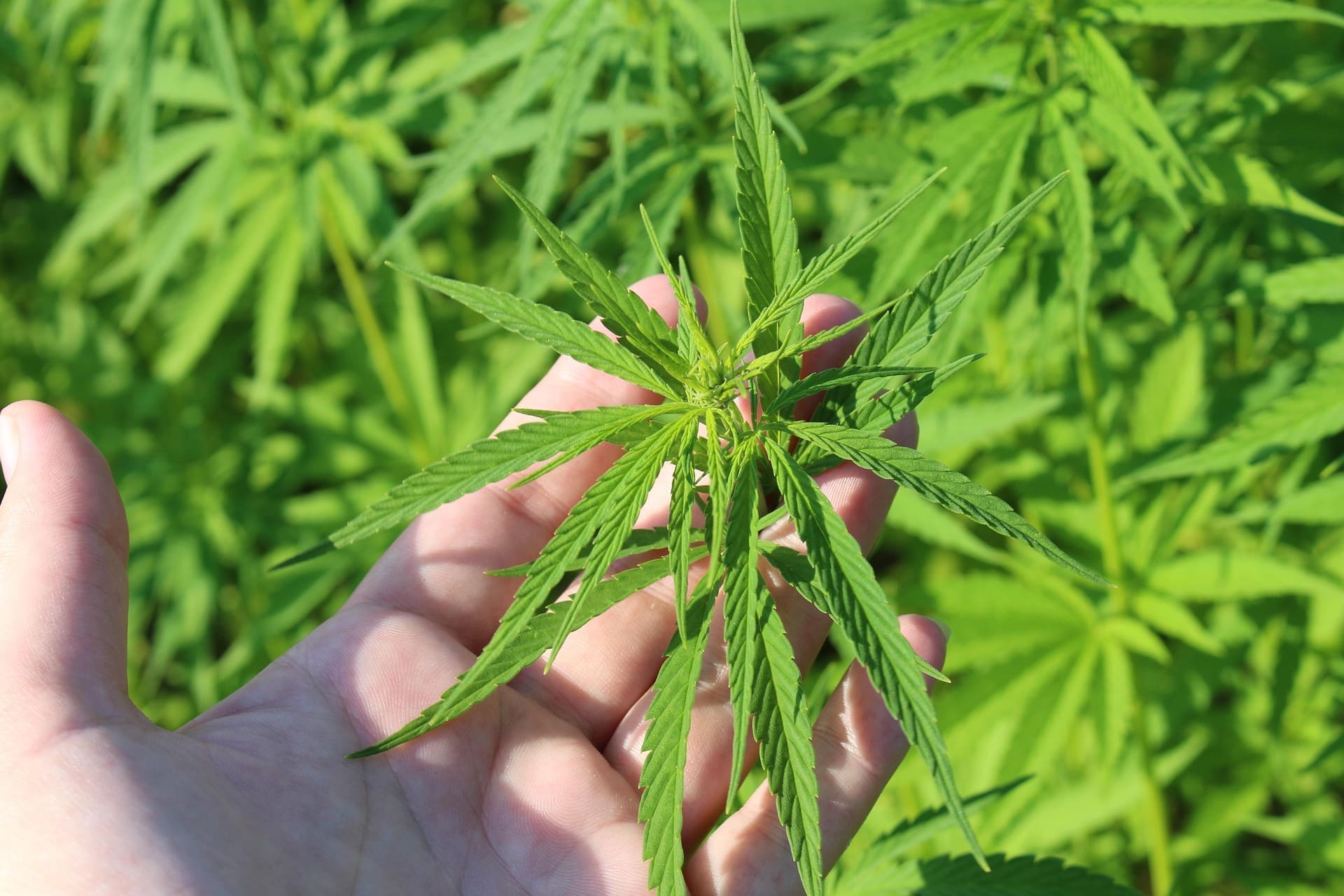
“Many small businesses cannot absorb this level of cost and will be forced to close rather than innovate.”
By Stephen Simpson, The Texas Tribune
Texas state health officials have proposed raising licensing fees for some hemp businesses by 13,000 percent, among changes that many industry members and advocates say will shut down small operations in favor of larger out-of-state companies.
Proponents of this change say it is necessary to strengthen oversight of an industry that has grown out of control.
At the end of last monthThe Texas Department of State Health Services published a set has proposed rules to tighten regulations on consumable hemp productsThis includes establishing a minimum purchase age of 21, along with age verification requirements and mandatory product recalls, all of which are measures supported by the hemp industry.
However, the two proposed rules that have caused the most heartburn among advocates and businesses are new testing requirements and increases in licensing fees. Manufacturer licenses would increase from $250 to $25,000 per facility per year and retail registrations from $150 to $20,000 per location per year, an increase of more than 13,000 percent.
Industry members say the new requirements to test THC levels in consumable hemp products would eliminate the use of hemp flower to manufacture products such as edibles and combustibles because hemp flowers contain THC levels higher than the new limit. They say eliminating the use of hemp flowers would allow more synthetically derived THC, such as delta-9, to flourish.
“The proposed rules eliminate about 80 percent of what every store sells, including ours, which is natural hemp flower, and it would certainly eliminate the entire THC rule,” Kemah-based owner Scott Stubb. Sublingwell Cannabinoids and Euphoricshe said in a public health agency of the state hearing in the rules on Friday. “Then you add in the fees it’s $20,000 per store, I don’t know, honestly, how we would stay open.”
Hemp distributors say the new license fee is a fundamental restructuring of their ability to operate legally in Texas.
“DSHS’ fiscal analysis assumes that nearly all currently registered retailers will pay the proposed $20,000 fee, generating more than $200 million in annual revenue. This assumption is unrealistic. Many small businesses cannot absorb this level of cost and will be forced to close rather than innovate,” said Heather Fazio, director of the Cannabis Policy Center of Texas. has been submitted for public comment.
Fazio said licensing and registration fees should be structured to recover the reasonable costs of effective regulation, not to function as a revenue mechanism that drives companies out of the regulated market.
“The department’s own calculations show that the increased costs of administering these rules are minimal. In that context, it is not clear why the dramatic fee increases are necessary or justified,” he said.
Supporters of the license fee increase said this is a necessary step to protect children from cannabis products and want more enforcement of penalties for cannabis shops operating without a license.
“Cannabis advocates say it’s a billion-dollar industry. It’s only fair and appropriate to create fees that help cover the cost of regulating the product and the burden on society for people who profit from the sale of billions of dollars in intoxicating products,” said Betsy Jones, director of policy and strategy for Texans for Safe and Drug-Free Youth.
Aubree Adams, director of Citizens for a Safe and Healthy Texas, called for more regulations on the industry, including raising the minimum purchase age to 25 and requiring hemp companies to also help pay for public education, data collection, processing, infrastructure and more.
“This problem facing the state is the normalization and promotion of retail groups driven by chemical manipulations and misleading information,” he said.
Multiple veterans also opposed the elimination of products derived from hemp flowers, which many rely on to help them sleep or deal with issues like PTSD and anxiety.
“I spent 16 months overseas and used many different pharmaceuticals that were dangerous and caused me seizures and physical damage. These health products have given me my life back and allowed me to go back to work,” said San Antonio combat veteran Adam Peterson. “A total ban on THC will basically take away access to good medicine that helps me.”
Fazio said removing regulated access to hemp flower won’t take away consumer demand. It will push people into the unregulated market.
“The result goes against the public health goals these rules are intended to advance,” he said.
The Texas Alcoholic Beverage Commission and the Texas Department of State Health Services have proposed new rules aimed at regulating the edible hemp market to comply with Governor Greg Abbott’s (R) executive order.
The two agencies are working together, as neither has jurisdiction over the entire landscape of retailers selling hemp consumables.
For example, the TABC rules would not apply to licensed hemp sellers under the state Department of Health Services, including online stores, gas stations, and online retailers that do not sell liquor and are presumed not to have a liquor license. The same can be said for the 60,000 TABC licensees, such as restaurants and liquor stores. The TABC has yet to propose any changes to licensing fees for businesses selling hemp consumables.
The executive order came after the Texas Legislature spent most of last year debating whether to ban consumer hemp products or impose stricter regulations on the industry. Abbott vetoed the outright ban passed by the House and Senate last summer. The governor then put THC regulations on the agenda for two consecutive special sessions, but lawmakers did unable to find a compromise before the end of the second session.
Instead of calling a third special session, Abbott issued his own executive order, bypassing the Legislature. The decision pits Abbott against Gov. Dan Patrick (R), who has been a staunch supporter of banning consumer hemp products.
After months of uncertainty over whether the Legislature would consider a full ban, THC industry representatives celebrated Abbott’s order at the time, saying it would allow THC to further establish itself as a legal industry in the state.
However, the rules proposed by some industry members are very similar to the ban.
“When the governor vetoed that bill, our voice was being amplified and taking the fee structure in the same bill undermines that outcome,” said Hayden Meek, owner of Denton-based Delta Denton. “A $20,000 fee falls on a multi-state corporation fee; for a single-location store like mine, 20,000 is death by cutbacks.”
This the article appeared for the first time Texas Tribune.
Max Jackson’s photo.
Marijuana Moment is made possible with the help of readers. If you rely on our pro-cannabis journalism to stay informed, consider a monthly Patreon pledge.



Dalgety Ltd has entered into a partnership with Curaleaf Laboratories to supply pharmaceutical grade cannabis medicines to the UK cannabis market. The arrangement combines Dalgety’s cultivation operations, which are certified to EU-GMP standards, with Curaleaf Laboratories’ pharmaceutical manufacturing and distribution capabilities. According to the companies, this creates a UK-based supply route that does not rely on imported cannabis flowers, as Dalgety cultivates its product in-house. Dalgety claims it was the first company in the UK to grow, manufacture and supply EU-GMP medical cannabis from a single site.
 © Curaleaf Laboratories
The growing facility, which is more than 30,000 square feet, is located indoors and uses hydroponic growing methods along with automated lighting, irrigation, humidity and temperature control systems. The company reports that it uses AI-assisted environmental monitoring, which extends the traceability of batches to the final product and compares them to operating standards for air filtration systems. Post-harvest processing is said to follow EU-GMP protocols, including microbial and cannabinoid testing.
The stated goal of this approach is to reduce between-harvest variation in terms of THC and CBD content, terpene profiles, and microbial safety. Dalgety says his cultivation is overseen by staff with experience in horticulture and biochemistry, some of whom have worked on cannabis cultivation projects internationally.
Through a partnership with Curaleaf Laboratories, Dalgety’s UK-grown cannabis is processed and distributed through a UK-based supply chain, rather than imported from overseas. Companies suggest that this arrangement can shorten the time it takes to get products to market compared to importing, and reduce the likelihood of supply disruptions. Because Dalgety and Curaleaf Laboratories are involved in cultivation, manufacturing and distribution, the companies say this oversees the product at every stage, making it clearer for prescribers to see where and how the product was made.
 © Curaleaf Laboratories
Dalgety operates to EU-GMP standards and has been subject to regulatory review by the MHRA and the Home Office. Its operations include environmental monitoring, microbial testing, stability testing, controlled drying and curing procedures and quality assurance processes, along with controlled and secure facilities.
The company describes its work as controlled environment farming, hydroponic systems, environmental control technology, and efforts to stabilize cannabis genetics and phenotypes for batch-to-batch consistency.
 © Curaleaf Laboratories
Dalgety has also opened its cultivation facilities for visits to healthcare professionals, clinicians, pharmacists, researchers and other industry stakeholders. The company says this is in response to the fact that much of the cannabis historically supplied to UK patients has been grown overseas, which has limited opportunities for UK clinicians to see first-hand the cultivation and quality control processes. These tours aim to provide visitors with information on cultivation standards, EU-GMP compliance procedures, environmental control systems, testing processes and the regulatory framework governing cannabis manufacturing in the UK.
Dalgety and Curaleaf Laboratories describe their partnership as expanding access to UK-grown medical cannabis, improving supply chain reliability and helping to meet sector regulations, placing it in the wider context of growing demand for cannabis-based treatments from UK patients.
For more information:
Curaleaf Laboratories
Email: (email protected)
https://curaleaflaboratories.co.uk/
Cannabis News
Arkansas GOP Governor And Democratic Challenger Agree On Opposing Marijuana Legalization
Cannabis News
Will the top World Cup expert in the fruit, vegetable, and horticulture sector come from Canada, the U.S. or Belgium?

FreshPublishers 2026 World Cup Group Stage
The World Cup is coming to an end, with the third-place play-off between France and England on Saturday, and the final between Spain and Argentina the following day. It won’t be long until the grand winner of FreshPublishers’ first World Cup pool is revealed.
 © Fresh Publishers
As previously reported, Slim Kooli from Courchesne Laros is the favorite to win the €1,000 prize. He has secured a comfortable lead over Nol Batist of North American Interstate Greenhouse Company, while buyer Bjorn Van Ryckeghem of Deprez Construct is currently in third place.
| 1 | Sim School | Spain | 1–0 | 2–1 | 737 | 9716 | |
| 2 | Nol Batist | France | 2–1 | 1–1 | 674 | 9433 | |
| 3 | Bjorn Van Ryckeghem | France | 2–2 | 3–1 | 674 | 9264 | |
| 4 | Christian Anton Smedshaug | England | 1–2 | 1–2 | 659 | 9134 | |
| 5 | Perry Springintveld | Spain | 1–1 | 2–1 | 647 | 9105 | |
| 6 | Willem Tijssen | Spain | 2–0 | 2–1 | 710 | 9098 | |
| 7 | Hans Borsboom | Spain | 2–1 | 2–1 | 528 | 9058 | |
| 8 | Bart Triemstra | Spain | 2–1 | 2–1 | 737 | 9052 | |
| 9 | Youness Bensaid | Spain | 2–1 | 1–1 | 722 | 8954 | |
| 10 | Vijay Dijkstra | Portugal | 2–0 | 2–1 | 382 | 8953 |
However, there have been some surprises during the tournament, and bonus points must be added, so we will keep the suspense a little longer. On Monday we will find out who is the main World Cup announcer in the international fruit, vegetable and horticulture sector…

BREAKING NEWS DEA RESCHEDULES CANNABIS TO SCHEDULE 3!

ASK ME ANYTHING | MONTEL

Marijuana Retail Report

Redefining the standards of UK cannabis

Arkansas GOP Governor And Democratic Challenger Agree On Opposing Marijuana Legalization

Michigan Cannabis Brand Forced to Close After Investigation Finds Inventory Discrepancies, Out-of-State Transport

The C Block…more 420 recaps on Weed Talk News …recorded 4_29_24

PART 1 TAKING A KNEE | NATE BOYER

Marijuana Retail Report

Will the top World Cup expert in the fruit, vegetable, and horticulture sector come from Canada, the U.S. or Belgium?

“Our system can manage equipment across 10,000+ m² using just a few wires”

Mazar-i-Sharif Hash Wednesday

Florida Workshop to Discuss What Constitutes a ‘Cartoon’ in Hemp Packaging

Afghan Black Hash Wednesday

From Finance to Wellness: Brad Zerman’s Impactful Pivot

Weak Michigan Cannabis Sales Again in July – New Cannabis Ventures

Re-release of the full show of Cannabis Coast to Coast news. Republican Texas DA Fires Up vs. laws;

DEA’s Cole Reverses His “priorities” ; Prohibitionists Dig In; Dead & Co Celebrates 60 years in SF

Texas DA Fires Up for Change! Mass. Sheriff arrested on Extortion charges; GOP vs Industry in state

Texas DA Partakes on Tik Tok to prove a point; Boston Sheriff arrested for Extortion of $ w/ Ascend
-
 Cannabis News11 months ago
“Our system can manage equipment across 10,000+ m² using just a few wires”
-
 Video10 months ago
Mazar-i-Sharif Hash Wednesday
-
 Florida11 months ago
Florida Workshop to Discuss What Constitutes a ‘Cartoon’ in Hemp Packaging
-
 Video9 months ago
Afghan Black Hash Wednesday
-
 Video11 months ago
From Finance to Wellness: Brad Zerman’s Impactful Pivot
-
 aawh11 months ago
Weak Michigan Cannabis Sales Again in July – New Cannabis Ventures
-
 Video11 months ago
Re-release of the full show of Cannabis Coast to Coast news. Republican Texas DA Fires Up vs. laws;
-
 Video11 months ago
DEA’s Cole Reverses His “priorities” ; Prohibitionists Dig In; Dead & Co Celebrates 60 years in SF