Connect with us

Cannabis News

Rhode Island Officials Support Ban On Serving Hemp THC Drinks In Bars And Restaurants With Liquor Licenses

Published

on

“All retailers selling intoxicating hemp products must be held to the same high safety standards as cannabis sellers.”

By Christopher Shea, Rhode Island Currant

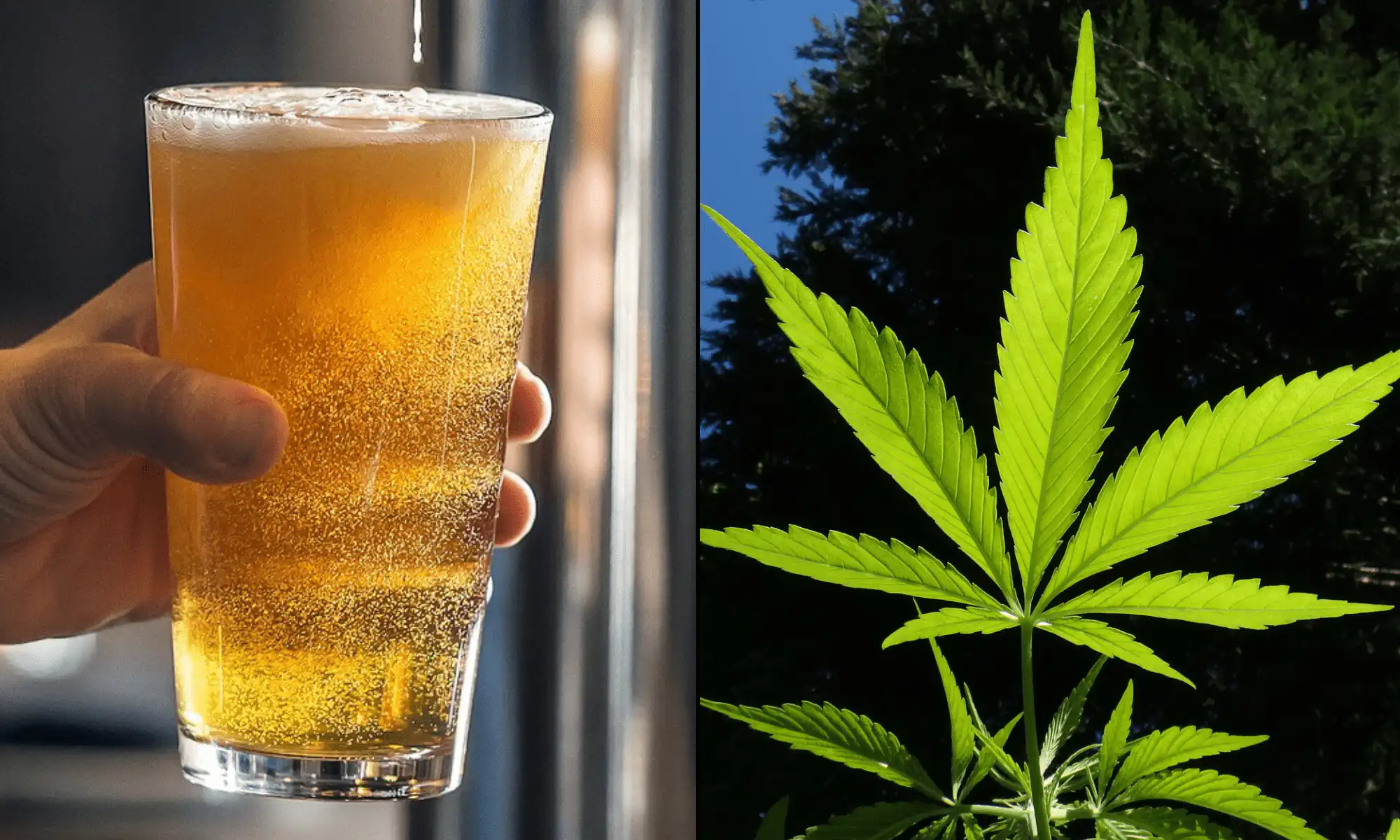
For a year, bars and restaurants in Rhode Island were able to obtain a license from the state’s former Office of Cannabis Regulation to sell THC-infused alcoholic beverages, despite state regulations that prohibit combining them with alcohol, tobacco or nicotine.

More than 100 licensed retailers obtained their licenses between August 2024 and July 2025, when the Cannabis Control Commission suspended issuing a new license to establishments that allow alcohol consumption on the premises “in the interest of public health and safety”.

Now, as regulators race to codify rules to match the market, the association representing the state’s hospitality industry is voicing strong opposition to a commission recommendation by lawmakers to codify a ban on selling THC beverages at liquor-licensed premises.

“They’re assuming we’re not going to follow the law,” Farouk Rajab, president and CEO of the Rhode Island Hospitality Association, said in an interview Monday.

Rajab said he was disappointed that the commission recommends a ban in its latest report presented to the General Assembly on March 1. But he wasn’t surprised that cuts had yet to be made.

“I think decisions are made even before the listening sessions,” he said. “This is aimed at an industry, that’s all.”

11 page report details Rules governing hemp-derived beverages in Rhode Islandalong with recommendations on product labelling, testing and taxation.

Carla Aveledo, head of policy for the committee, said that no single industry was targeted.

“All retailers selling intoxicating hemp products must be held to the same high safety standards as those selling cannabis,” he said.

Hemp became legal at the federal level after the passage of the 2018 Farm Bill, when the beverage hit the Rhode Island market as regulators were working on licensing rules for retail cannabis establishments. The rules allowing the sale of the beverage were adopted by the former Office of Cannabis Regulation in 2024, and the rules have since been adopted by the state Office of Cannabis.

But the proliferation of hemp-derived THC drinks has led to debate over whether they should be legal at all in Rhode Island. Members of the state’s recreational cannabis industry have opposed the possibility of selling THC products outside of the few existing pot shops.

That’s why last year the General Assembly tasked the Cannabis Control Commission with making recommendations to combat hemp-derived beverages, most of which are produced outside the state.

Rajab said the association had created “training modules that enable safe handling” of the drinks. The online course explains how receptors in the brain react to cannabis, onset times, and how to avoid THC overdose.

The association’s module also mandates catering staff to never serve THC beverages with alcohol.

“Mixing THC-infused drinks with alcohol can lead to unpredictable and dangerous situations,” he says. “As a server, it is your responsibility to discourage customers from consuming THC beverages alongside alcoholic beverages. Educate them about the risks and encourage safer consumption practices to ensure their well-being.”

Drinks are often sold in four-can packs at liquor stores. State regulations limit 1 milligram of THC per drink and no more than 5 milligrams of THC “per pack.”

Rajab said instead of banning restaurants from selling drinks, the state should codify rules to guide the hospitality industry. He pointed to Minnesota, which has allowed liquor stores, grocery stores and bars to sell liquor since 2023.

“It’s safe to serve there,” he said.

of the committee the report it also highlights how “low-potency edible hemp” is regulated in the 10,000 Lakes lands. In order for a Minnesota bar to serve hemp-derived products, it must obtain an on-site consumption endorsement, which is selected when filling out the license application.

But even Minnesota regulators admit there is a big question mark over whether they will continue to sell the drinks when federal restrictions governing the potency of hemp take effect in November.

“This threw the whole industry out of business across the nation,” Jim Walker, a spokesman for the Minnesota Office of Cannabis Management, told the Rhode Island Current. “If we get to November and there’s no safety net, we as an office would help eliminate a lot of these businesses.”

Congress is still considering legislation that would delay enforcement of the ban for two years allow the sale of THC-derived beverages.

Aveledo said the Rhode Island Cannabis Control Commission continues to monitor federal hemp policy and acknowledged that it could affect regulators’ plans to update the state’s hemp regulations.

“The commission intends to make updates to the hemp regulations in 2026,” he said. “However, recent federal activity and future actions are uncertain, which may delay regulatory writing until early 2027 to ensure our framework is fully informed and strategically aligned.”

This story was first published by the Rhode Island Currant.

Marijuana Moment is made possible with the help of readers. If you rely on our pro-cannabis journalism to stay informed, consider a monthly Patreon pledge.

Continue Reading

Cannabis News

Concert Series Specials launched for state medical cannabis patients

Published

on

By


Post Dispensary, Kentucky’s first medical cannabis dispensary, is connecting with patients in Owensboro, Henderson, Bowling Green, Elizabethtown, Madisonville, Hopkinsville and surrounding areas by aligning unique specials with the region’s summer concert calendar. Located at 300 N Main St. in Beaver Dam, minutes from major highways connecting these vibrant cities.

This summer, The Post Dispensary is offering special pricing and incentives for Concert Series Events at the Beaver Dam Amphitheater, SPARKS in the Park 4th of July celebration and surrounding events, such as Owensboro’s ROMP Festival (June 24-27, 2026). Patients can stop by before or after shows for big savings.

“We’re more than just a booty,” said a dispensary representative. “From Owensboro’s world-class ROMP Festival to Beaver Dam’s Amphitheater events, we’re making it convenient and budget-friendly for patients in Owensboro, Henderson, Bowling Green, Elizabethtown, Hartford and beyond to combine our love of music with compassionate care and an affordable product.”

The Post Dispensary hosts regular Patient Guidance events on the second Saturday of every month. These units have professionals on hand to assess patients and issue written certificates at low cost, application support and expert consultations in a welcoming environment. The next Patient Drive aligns perfectly with summer travel patterns, making it easy for patients from Owensboro, Bowling Green, Elizabethtown, Madisonville, Henderson, Madisonville and surrounding towns to plan a trip to Beaver Dam that combines care with community and entertainment.

For more information:
Post-Dispensary
thepostdispensary.com/


Continue Reading

Cannabis News

Missouri GOP Lawmakers Hope Trump’s Psychedelics Order Boosts Efforts To Allow Military Veteran Access In The State

Published

on

By

“Congratulations to President Trump for stepping up and taking the lead on this. PTSD is a killer among veterans.”

By Rebecca Rivas, Missouri Independent

Missouri state representative Dave Griffith has spent the past five years researching how psychedelic-assisted therapy has helped veterans struggling with post-traumatic stress disorder and depression.

His last legislative session in the House ended this May, and he pushed legislation for the last time allow clinical trials of psychedelic-assisted therapy in Missouri. In the final days of the session, the bill stalled in the Missouri Senate after passing the House with overwhelming support.

“I’m not going to be there next year, I’m term-limited,” said Griffith, a Republican who served as chairman of the House Veterans Affairs and Armed Services Committee. “It’s really about passing the torch to a lot of other veterans who are on the Veterans Commission and see the value in that.”

He was hopeful when he saw an announcement The US Department of Veterans Affairs announced last week a new clinical trial to evaluate the safety and effectiveness of methylenedioxymethamphetamine-assisted therapy.or MDMA-assisted therapy. MDMA is a synthetic substance made in a laboratory, according to the department, and is also called “ecstasy” or “molly” in recreational use.

“Congratulations to President Trump for stepping up and taking the lead on this,” said Griffith of Jefferson City. “PTSD is a killer among veterans. If you just listen to the testimony that’s been happening over the last five years in the Missouri House, the life-changing it’s been for them is a compelling reason why something like this works.”

A new trial follows Trump signed an executive order in April, “Expediting Medical Treatment for Serious Mental Illness.” The order aims to increase participation in clinical trials and accelerate innovative research models and drug approvals for psychedelics.

Directs the Secretary of Health and Human Services to allocate at least $50 million to support and collaborate with state governments that “have established or are developing programs to advance psychedelic drugs for serious mental illness.”

Without passing the legislation, Missouri will miss this opportunity, said Republican state representative Matthew Overcast of Ava.

Cloud hoped that Trump’s April order would help “grease the wheels” this year by state Rep. Richard West and state Rep. Richard West who sponsored the state to conduct a study on psilocybin and ibogaine therapy.

“The last couple of months there’s been a lot of feds on things that the states are reluctant to move forward with here,” Overcast said. “So it’s exciting.”

According to the VA’s announcement, the department is involved in 19 other active clinical trials focused on psychedelic therapies for mental health conditions that have received more than $23 million in outside funding.

The new trial, called “A Randomized Controlled Trial of MDMA-Assisted Therapy for PTSD and Alcohol Use Disorder in US Veterans,” will enroll about 80 veterans and compare outcomes between those receiving MDMA-assisted therapy and those receiving the same psychotherapy with an active placebo. VA is coordinating with the US Food and Drug Administration and plans to share trial data with FDA.

The trial will be conducted at the VA Providence Healthcare System, and will recruit veterans from the Providence, Rhode Island, campus in West Haven, Connecticut, and the VA Connecticut Healthcare System.

Trump’s executive order says there have been more than 6,000 veteran suicides per year for more than 20 years, and the current veteran suicide rate is twice that of the adult non-veteran population.

He says people with major depressive disorder and substance abuse disorder, among other serious mental illnesses, may relapse or fail to respond fully to standard medical and psychiatric therapies.

“Despite significant federal investment in research into potential advances in mental health care and treatment, our medical research system has yet to produce approved therapies that promote lasting improvements in the mental health status of the most complex patients,” the order states. “Innovative methods are needed to find long-term solutions for these Americans beyond existing prescription drugs.”

Missouri veterans John and Kara Grady, who own a hemp shop in Rosebud, strongly agree with the statement, they said. And they’d like to see Missouri’s veterans health system participate in clinical trials already underway.

“President Trump is opening up investigations for the veteran community,” said John Grady, “If you look at the numbers … we’ve lost more in the wars with mental health than we’ve lost.”

The lack of movement on psychedelic-assisted therapy legislation is among the reasons why John Grady is running for state representative over Bruce Sassmann in the state’s Republican primary.

“If you don’t agree with Trump on everything, at least he’s addressing this veteran issue right here,” Grady said. “Hopefully, we’ll be able to stop that number, we’ll stop that flow of our precious veterans dying by their own hands because they don’t have treatment.”

This story was first published by the Missouri Independent.

Marijuana Moment is made possible with the help of readers. If you rely on our pro-cannabis journalism to stay informed, consider a monthly Patreon pledge.

Continue Reading

Cannabis News

Germany’s medical cannabis imports post first quarterly decline since early 2024

Published

on

By

German imports of medical cannabis flowers fell to 50.5 tonnes in the first quarter of 2026, down from 60.8 tonnes in the previous quarter, the decline from the first quarter of 2024. According to a new EU and UK market update from Whitney Economics.

The drop lands against a year that went backwards. Germany took in more than 2025 tonnes of the product in 2025, more than double the 72,850 kilograms recorded in 2024, and import volumes have risen every year since 2018, when the figure remained below 4,500 kilograms. The first quarter number continues to match the high pace of 2025, which is why the report treats it as an early sign of stabilization rather than a turnaround.

Prices
The volume has not created a stable price. A gram of cannabis in a German pharmacy is approaching 4 euros, while a gram on the illegal market is around 8 euros, reversing the usual relationship between regulated and unregulated supply. The wholesale price is around 2 euros per gram, roughly half the retail price at the pharmacy. Pharmacy prices breached 3.99 euros in November 2025, and the report puts the overall compression close to 25% in two and a half years.

Germany legalized ownership in 2024 and restricted sales to pharmaceutical and telemedicine providers. Two access roads run parallel. Medical cannabis is mainly prescribed through private prescriptions, and recreational cannabis is available through membership of a cannabis association, with 400 licensed cultivation associations across the country, although the exact count varies by source. It is the medical segment that drives market growth, not the recreational segment.

Growth is based on telemedicine
Patients fill out an online questionnaire, receive a prescription from an affiliated physician, and in many cases have their order filled through an integrated pharmacy partner, with delivery within days and, in some cities, within hours. Between 600,000 and 700,000 self-employed consumers are supported by the telemedicine industry, compared to 200,000 to 300,000 medical patients supported by pharmacies. Total imports are now sufficient to supply between 900,000 and one million consumers.

© Philiprowe | Dreamstime

Market exposure
Critics argue that commercial interests risk overshadowing the medical nature of the system, and treatment does not always meet the required standard of control. Legislative initiatives that would tighten the framework are already on the table, including mandatory in-person inquiries and a ban on distribution of mail requests. The likely result of both measures is a significant decline in demand for medical cannabis flowers. Many telemedicine companies are preparing for the opportunity by building networks with local doctors and pharmacies.

Where patients and consumers would go if medical access is curtailed is an open question, as the recreational market lacks a real alternative for patients and cannabis clubs continue to face licensing hurdles at the state level.

Part of the difficulty in reading the market is that import figures say less than they seem. More cannabis is entering the country than ever before, but how much is reaching consumers and what the actual demand is is unclear. Without a nationwide data framework, the market functions as a black box, and excess supply and actual demand are difficult to measure with great precision. Supply has tended to expand faster than the market can absorb, with no forecast to confirm mature demand, and prices have adjusted downward as a result.

Germany has had a signal effect across Europe since the start of its reform, although its model has drawn criticism, with the mixing of medical and recreational consumption a recurring complaint. Countries that have traditionally taken a conservative line, France among them, have gone to a more formalized medical field, under stricter conditions and without adopting the medical flower like Germany.

For more information:
Whitney Economics
Beau Whitney
(503) 724-3084
www.whitneyeconomics.com

Continue Reading
Advertisement

Trending

Copyright © 2021 The Art of MaryJane Media