
Cannabis News
There is much more to come

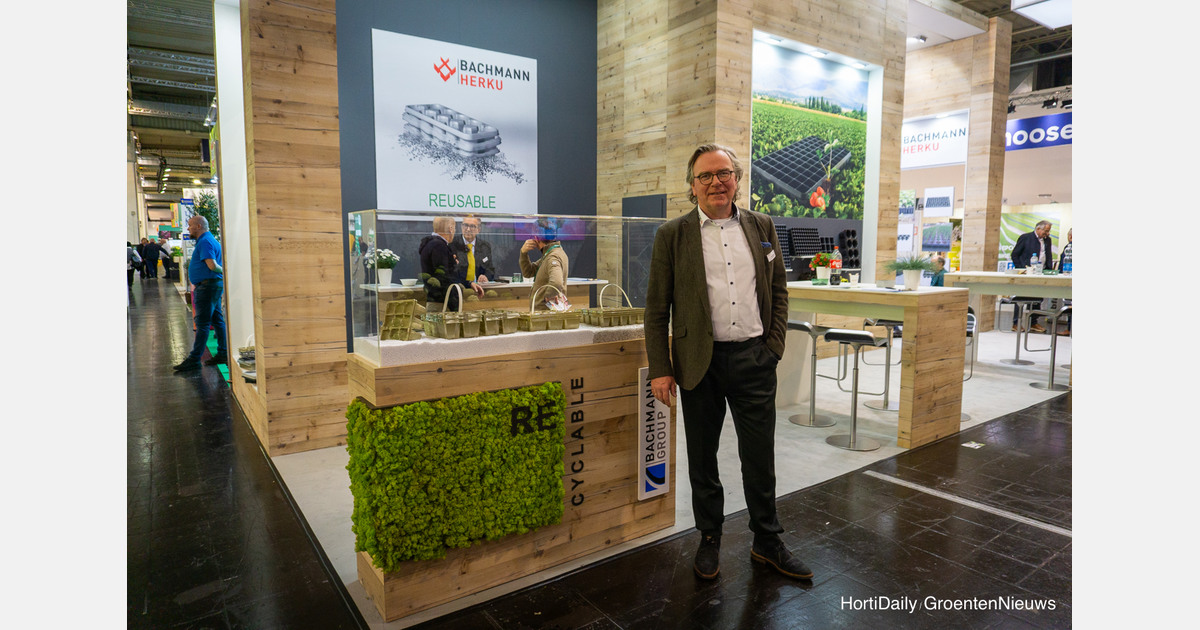
After almost thirty years, Alfred Boot will leave Herkuplast, currently part of the Bachmann Group, and the horticulture sector. His career has paralleled a period of profound change in the industry: from manual and seasonal production to year-round automated supply chains with high demands for uniformity, hygiene and circularity. His successor, Kasper Rietvelt, is now ready to take Bachmann-Herku to the next stage.
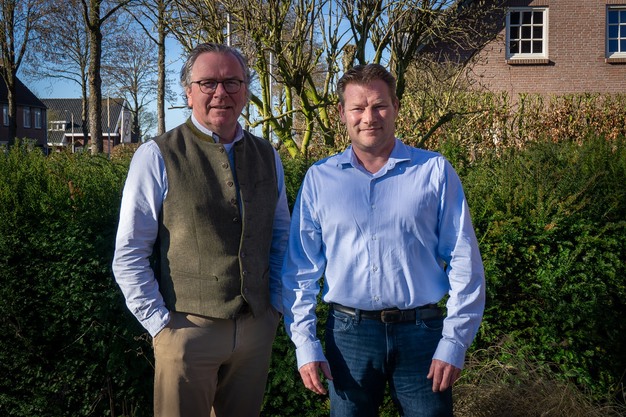 © Arlette Sijmonsma | MMJDaily.comAlfred Boot and Kasper Rietveld
From 26 models to customized automation solutions
“I fell into it by accident,” says Boot, reflecting on 1987, when he got into horticulture after finishing trade school. “At Rover, I immediately found myself in a world where technology and practice go hand in hand.” In the mid-1990s he was asked to set up the export operation of Herkuplast, a German manufacturer of thermoformed trays that had already been operating for several years.
“We started with 26 models. All on one A4 sheet,” he recalled. At that time, most of Herkuplast’s range consisted of multi-purpose trays, while other tray manufacturers in the Dutch market had already switched to a wider range of single-use thin models. Boot saw the place to mark his career. “We had a thin-walled model, but more was required. I was given carte blanche to develop thin models. Mr. Kubern’s collaboration with the owner Herkuplast focused on exactly that: if you have a good idea, we make it happen.”
The rise of automation in the sector placed new demands on the trays. Accuracy became critical for shot plates and automated processing lines. “Centered drain holes, exact dimensions, everything had to be right. Otherwise the line would get stuck. We always prioritized that, and it got us recognition in the market.”
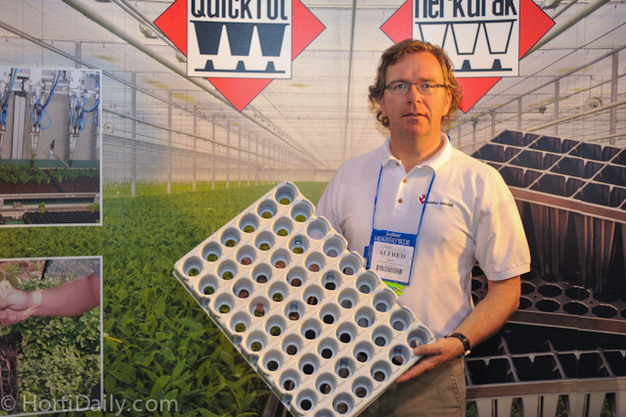 2013 at the OFA Short Course in Columbus, Ohio, the predecessor to Cultivate.
Internationalization and hygiene conditions
Along with the Dutch market, Boot also moved into international markets from the start, in France, Spain, the United Kingdom, the United States and beyond. The reasoning was largely practical: in the 1990s, the sector still had a clearly defined summer break. “Production was closed for three or four weeks. The demand simply dropped. But we wanted to produce all year round, so we looked for markets that demanded it: soft fruit and cuttings propagation, for example.”
The demand for trays used in strawberry, raspberry and blueberry production enabled year-round manufacturing and became a growing market segment. “Retailers and consumers expect that. That’s reflected in volumes and specifications.”
At the same time, hygiene requirements in breeding increased with increasing virus pressure and a smaller range of approved crop protection products. “Multi-use trays are easy to clean, cheaper than injection-molded alternatives, and are pocketable. And because thermoformed trays are thinner, if something goes wrong on an automated line, you lose the tray, not the robot arm,” explains Boot.
That said, the priority has always been to maximize the use of plastic through reuse. This has also changed significantly over the decades. “When I started, plastic was treated as waste. It was thrown away or burned. That is completely out of the question today.” Herkuplast, working with partners like Van Krimpen, has invested heavily in circular solutions. “Our breeding and growing trays do not enter the consumer market. They go from the dealer to the packaging operation. In the Netherlands, the used trays are collected, shredded and reprocessed as raw material for new trays or other applications. We close the loop: our trays are made from recycled materials from day one, both multi-use HerkuPaks and single-use HerkuPaks.” What started as a personal conviction became a marketing asset and has since become a retail requirement.
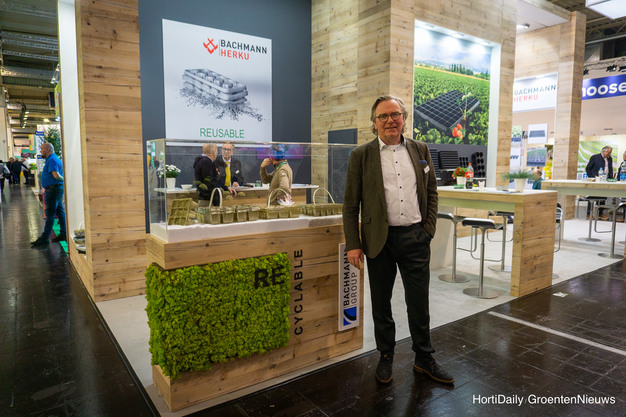 © Arlette Sijmonsma | MMJDaily.comAlfred Boot at IPM 2026
Internationalization and family businesses
Boot emphasizes the importance of strong chain partners. “We believe in collaboration.” In Europe, the company has always worked with operators from “Portugal to Finland”. Outside of Europe, the company markets directly, which has taken it as far as New Zealand, trips Boot describes as memorable.
North America has also been a rewarding market. There has been significant growth. “With our reusable QuickPot trays and our expertise, we can really add value there.” Is that his favorite market? He is reluctant to pick one. “I enjoyed going there, because we could make a real difference. But the Netherlands remains, perhaps, my first place. Not only because it is our biggest market, but because a lot of it originates here, seeds, ornamental gardens, plant breeding, greenhouse construction. That is the focus of knowledge and quality. Growing with minimal waste, with biological inputs, under constant price pressure. That is not always highly appreciated by the external role. The sector requires a pragmatic mentality, but the achievements are extraordinary. are”.
This has motivated him throughout his career. “This sector is essential. You are either in food or greening the world. Is ornamental horticulture necessary? Yes, I think so.”
That’s why Herkuplast, a family business at heart, chose during the pandemic to do everything in its power to continue serving its customers. After a short stoppage, the factory was opened as soon as possible, adapted to the strict requirements of Germany. “It was a huge peak for horticulture, but the prices of raw materials also rose a lot. We took the risk of buying at high prices and continued to deliver, even though it cost us the margin. But we wanted to continue to supply our customers. The importance of continuity is too great, for our customers, for our people and for our sector.”
After the pandemic, Herkuplast entered an important period of transition. Mr. Kubern had reached his seventieth birthday, and there was no succession in the family. A sale was the expected result, and in 2024 Herkuplast was bought by the Swiss company Bachmann Group. “I’m glad it was Bachmann. Our big priority was to have a private company that understood the European market, understood horticulture and would keep the factory in Germany.” With international expansion and a motivated team launching the new Bachmann-Herku brand, ambitions are high. “And when you look at how the sector is changing, automation, robotization, AI in plant selection, it’s moving at an incredible speed. It’s fascinating.”
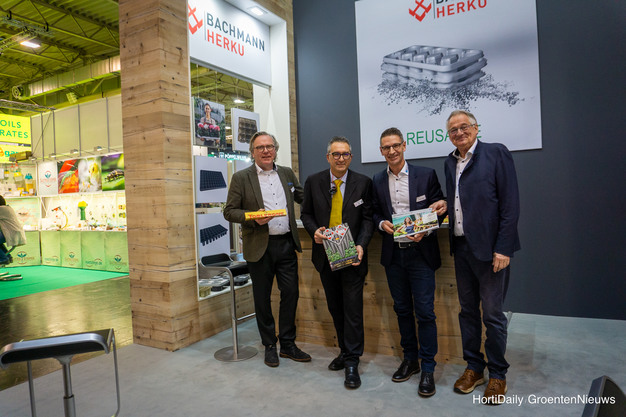 © Arlette Sijmonsma | MMJDaily.com And with the new colleagues from Bachmann Herku, IPM 2026
goodbye
But Boot is also honest: from a professional point of view, he won’t be around to see it unfold. The end of March will be his last working day at Herkuplast. “It’s a purely personal choice. I’m not tired of work, and I’m not tired of the sector. But you only live once, and life has a lot to offer.” The caravan is ready. Together with his wife Astrid (known to many in the industry) and their dog, the couple embarks on a long-distance trek. “I’ve been abroad about 100 days a year. We definitely have triplets when the kids were little, so balancing work and family was a constant juggling act. Now we go together.”
He adds: “If I had a long horizon ahead of me at 45, I would love to do again what we did with Herku in 1997. But now I feel too old for that.” He laughs. “And over the years I have become a clone of Herkuplast myself, while the product range has changed with the acquisition. Now we are Bachmann-Herku, and the portfolio is being integrated quickly. Kasper has been working in the new company since his first day. That is also a natural process. It feels good.”
For more information:
Bachmann Herkuplast
Alfred Boot
(email protected)
Kasper Rietveld
(email protected)
+31 653 215 514
Tel.: +41 41 914 72 00
(email protected)
www.bachmann.ch


Dalgety Ltd has entered into a partnership with Curaleaf Laboratories to supply pharmaceutical grade cannabis medicines to the UK cannabis market. The arrangement combines Dalgety’s cultivation operations, which are certified to EU-GMP standards, with Curaleaf Laboratories’ pharmaceutical manufacturing and distribution capabilities. According to the companies, this creates a UK-based supply route that does not rely on imported cannabis flowers, as Dalgety cultivates its product in-house. Dalgety claims it was the first company in the UK to grow, manufacture and supply EU-GMP medical cannabis from a single site.
 © Curaleaf Laboratories
The growing facility, which is more than 30,000 square feet, is located indoors and uses hydroponic growing methods along with automated lighting, irrigation, humidity and temperature control systems. The company reports that it uses AI-assisted environmental monitoring, which extends the traceability of batches to the final product and compares them to operating standards for air filtration systems. Post-harvest processing is said to follow EU-GMP protocols, including microbial and cannabinoid testing.
The stated goal of this approach is to reduce between-harvest variation in terms of THC and CBD content, terpene profiles, and microbial safety. Dalgety says his cultivation is overseen by staff with experience in horticulture and biochemistry, some of whom have worked on cannabis cultivation projects internationally.
Through a partnership with Curaleaf Laboratories, Dalgety’s UK-grown cannabis is processed and distributed through a UK-based supply chain, rather than imported from overseas. Companies suggest that this arrangement can shorten the time it takes to get products to market compared to importing, and reduce the likelihood of supply disruptions. Because Dalgety and Curaleaf Laboratories are involved in cultivation, manufacturing and distribution, the companies say this oversees the product at every stage, making it clearer for prescribers to see where and how the product was made.
 © Curaleaf Laboratories
Dalgety operates to EU-GMP standards and has been subject to regulatory review by the MHRA and the Home Office. Its operations include environmental monitoring, microbial testing, stability testing, controlled drying and curing procedures and quality assurance processes, along with controlled and secure facilities.
The company describes its work as controlled environment farming, hydroponic systems, environmental control technology, and efforts to stabilize cannabis genetics and phenotypes for batch-to-batch consistency.
 © Curaleaf Laboratories
Dalgety has also opened its cultivation facilities for visits to healthcare professionals, clinicians, pharmacists, researchers and other industry stakeholders. The company says this is in response to the fact that much of the cannabis historically supplied to UK patients has been grown overseas, which has limited opportunities for UK clinicians to see first-hand the cultivation and quality control processes. These tours aim to provide visitors with information on cultivation standards, EU-GMP compliance procedures, environmental control systems, testing processes and the regulatory framework governing cannabis manufacturing in the UK.
Dalgety and Curaleaf Laboratories describe their partnership as expanding access to UK-grown medical cannabis, improving supply chain reliability and helping to meet sector regulations, placing it in the wider context of growing demand for cannabis-based treatments from UK patients.
For more information:
Curaleaf Laboratories
Email: (email protected)
https://curaleaflaboratories.co.uk/
Cannabis News
Arkansas GOP Governor And Democratic Challenger Agree On Opposing Marijuana Legalization
Cannabis News
Will the top World Cup expert in the fruit, vegetable, and horticulture sector come from Canada, the U.S. or Belgium?

FreshPublishers 2026 World Cup Group Stage
The World Cup is coming to an end, with the third-place play-off between France and England on Saturday, and the final between Spain and Argentina the following day. It won’t be long until the grand winner of FreshPublishers’ first World Cup pool is revealed.
 © Fresh Publishers
As previously reported, Slim Kooli from Courchesne Laros is the favorite to win the €1,000 prize. He has secured a comfortable lead over Nol Batist of North American Interstate Greenhouse Company, while buyer Bjorn Van Ryckeghem of Deprez Construct is currently in third place.
| 1 | Sim School | Spain | 1–0 | 2–1 | 737 | 9716 | |
| 2 | Nol Batist | France | 2–1 | 1–1 | 674 | 9433 | |
| 3 | Bjorn Van Ryckeghem | France | 2–2 | 3–1 | 674 | 9264 | |
| 4 | Christian Anton Smedshaug | England | 1–2 | 1–2 | 659 | 9134 | |
| 5 | Perry Springintveld | Spain | 1–1 | 2–1 | 647 | 9105 | |
| 6 | Willem Tijssen | Spain | 2–0 | 2–1 | 710 | 9098 | |
| 7 | Hans Borsboom | Spain | 2–1 | 2–1 | 528 | 9058 | |
| 8 | Bart Triemstra | Spain | 2–1 | 2–1 | 737 | 9052 | |
| 9 | Youness Bensaid | Spain | 2–1 | 1–1 | 722 | 8954 | |
| 10 | Vijay Dijkstra | Portugal | 2–0 | 2–1 | 382 | 8953 |
However, there have been some surprises during the tournament, and bonus points must be added, so we will keep the suspense a little longer. On Monday we will find out who is the main World Cup announcer in the international fruit, vegetable and horticulture sector…

Maine Governor Collins Seals Records – Weed Talk News with Alaina Pinto The B Block

Montel talks about taking a knee

BREAKING NEWS DEA RESCHEDULES CANNABIS TO SCHEDULE 3!

ASK ME ANYTHING | MONTEL

Marijuana Retail Report

Redefining the standards of UK cannabis

Arkansas GOP Governor And Democratic Challenger Agree On Opposing Marijuana Legalization

Michigan Cannabis Brand Forced to Close After Investigation Finds Inventory Discrepancies, Out-of-State Transport

The C Block…more 420 recaps on Weed Talk News …recorded 4_29_24

PART 1 TAKING A KNEE | NATE BOYER

“Our system can manage equipment across 10,000+ m² using just a few wires”

Mazar-i-Sharif Hash Wednesday

Florida Workshop to Discuss What Constitutes a ‘Cartoon’ in Hemp Packaging

Afghan Black Hash Wednesday

Weak Michigan Cannabis Sales Again in July – New Cannabis Ventures

From Finance to Wellness: Brad Zerman’s Impactful Pivot

Re-release of the full show of Cannabis Coast to Coast news. Republican Texas DA Fires Up vs. laws;

DEA’s Cole Reverses His “priorities” ; Prohibitionists Dig In; Dead & Co Celebrates 60 years in SF

Texas DA Fires Up for Change! Mass. Sheriff arrested on Extortion charges; GOP vs Industry in state

Your Cannabis Business: Consistent Filings Are Critical
-
 Cannabis News11 months ago
“Our system can manage equipment across 10,000+ m² using just a few wires”
-
 Video10 months ago
Mazar-i-Sharif Hash Wednesday
-
 Florida11 months ago
Florida Workshop to Discuss What Constitutes a ‘Cartoon’ in Hemp Packaging
-
 Video10 months ago
Afghan Black Hash Wednesday
-
 aawh11 months ago
Weak Michigan Cannabis Sales Again in July – New Cannabis Ventures
-
 Video11 months ago
From Finance to Wellness: Brad Zerman’s Impactful Pivot
-
 Video11 months ago
Re-release of the full show of Cannabis Coast to Coast news. Republican Texas DA Fires Up vs. laws;
-
 Video11 months ago
DEA’s Cole Reverses His “priorities” ; Prohibitionists Dig In; Dead & Co Celebrates 60 years in SF