
Cannabis News
Top Veterans Group Warns Congress That Hemp Ban Could ‘Slam The Door Shut’ On Medical Research

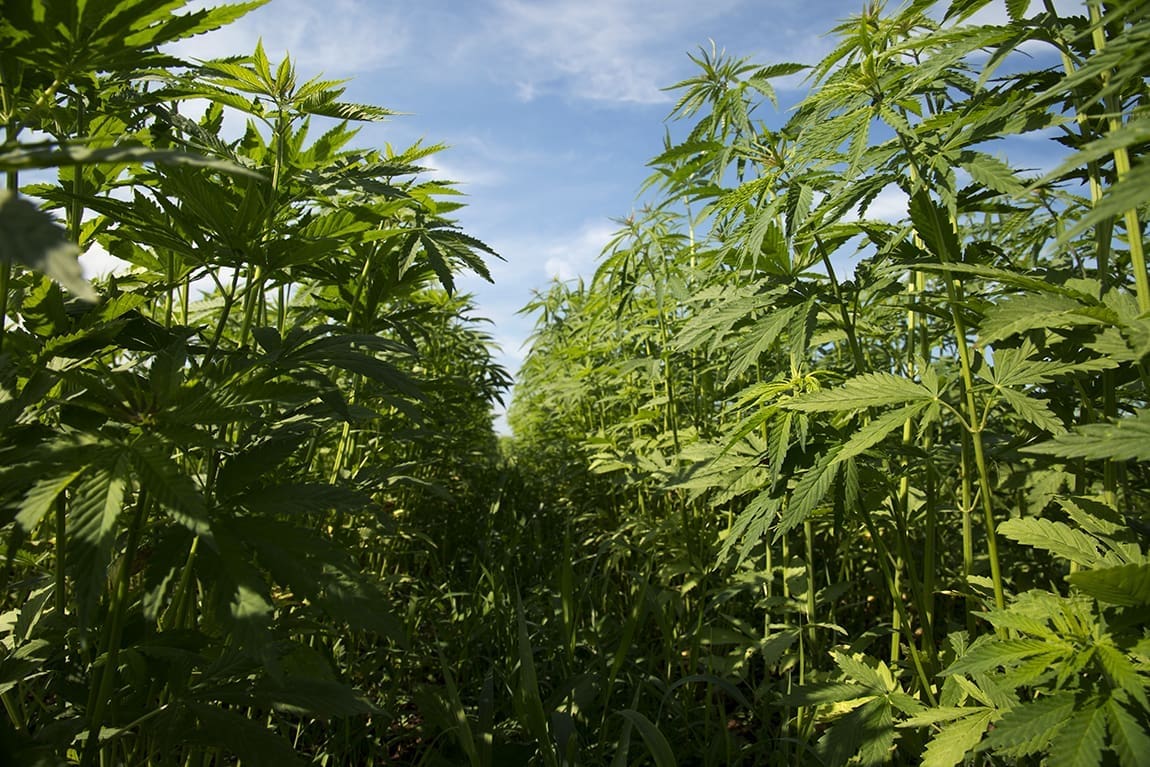
A leading veterans’ organization has warned congressional leaders that a newly approved blanket ban on consumable hemp products could inadvertently “close the door” on critical research.
In a letter to House and Senate leaders on Wednesday, American Veterans of Foreign Wars (VFW) executives stressed the importance of “supporting robust scientific research into hemp-derived cannabinoids,” which they said could be at risk. President Donald Trump has signed provisions of a spending bill into law.
Hemp-based cannabinoid products “can offer a real alternative to heavy prescription drugs, so many of our veterans prescribe them for PTSD, anxiety, pain and sleep problems,” wrote the VFW’s Carol Whitmore and Dan West.
“Every day, doctors dispense powerful sedatives and psychoactive drugs to help veterans cope. They work for some, but they’re too hooked, numb, or dealing with brutal side effects,” they wrote. “We’ve all seen good men and women get caught in a cycle of pills that dull the pain but don’t fix the problem.”
“It’s time to explore safer options. Early research on certain hemp compounds suggests they can manage symptoms and reduce physical pain without the risk of addiction,” the letter says, citing recent research showing that hemp-derived cannabinoids improve PTSD symptoms and may be an effective alternative treatment for pain and anxiety.
“This is not evidence of a miracle cure, just clear signs that we should continue to study. But broad movements to ‘close the hemp loophole’ could close the door. A blanket ban on hemp cannabinoids would make it nearly impossible for researchers and (US Department of Veterans Affairs) hospitals to examine the rules by which even small businesses that have legally acquired these compounds are acting legally. Seriously, it would drive veterans seeking relief into black market junk, making things more dangerous. making it not safer.”
The VFW said it is not promoting “wild, unregulated products or recreational use,” but instead “is calling for smart policy: protect the public, but don’t kill research.”
“Let science do its job, regulate what’s proven safe, and give veterans every legitimate tool available to reclaim their lives,” the letter says. “Our veterans have earned the best care we can give them. We urge Congress to take a balanced approach that protects consumers, promotes research, and gives veterans hope for safer alternatives.”
In the last month, The VFW announced that it has entered into a first-of-its-kind partnership with hemp THC beverage company Torch Drinkswith a licensed branding agreement to support various veterans services and promote cannabis beverages as a potential alternative to alcohol. In addition to the brand licensing agreement, the cannabis beverages will be available at VFW posts across the country in jurisdictions where they are locally legal.
Debate over the current appropriations bill’s hemp ban has been fueled by some who believe recriminalizing cannabis products will alleviate public health concerns, particularly regarding youth access to unregulated markets, and others who insist Congress should address the challenges by enacting regulations, including age requirements and testing requirements.
Many hemp participants argue that a ban would effectively wipe out the industry, even if enforced Non-toxic CBD products that people use for medical reasons— There is a hidden hope that they can reach an agreement with the legislators before the ban is implemented next year.
Lawmakers like Sen. Chris Van Hollen (D-MD) also say the window could allow them to advance legislation to create an alternative regulatory model for consumer hemp products.
There were Attempts by GOP lawmakers in both chambers to kill the hemp ban provision. But amendments proposed by Senators Rand Paul (R-KY) and Thomas Massie (R-KY) were not included in the final package.
On the Senate side, Paul was joined by 22 Democrats, and especially Sen. Ted Cruz (R-TX) anti-marijuana: voting against the motion to introduce the amendment to avoid the ban, but was eventually overturned by the majority.
Massie tried to revive momentum in the House with an amendment mirroring Paul’s, but its chances of passage were dubious at best, as there was general agreement within the Republican caucus that the spending bill could return to the Senate without further changes.
—
It’s Marijuana Time tracking hundreds of cannabis, psychedelic and drug policy bills in state legislatures and Congress this year. Patreon supporters by pledging at least $25/month, you’ll get access to our interactive maps, charts, and audio calendars so you never miss a development.
Learn more about our marijuana bill tracking and become a Patreon supporter to gain access
—
Since 2018, cannabis products have been considered legal hemp if they contain less than 0.3 percent delta-9 THC by dry weight.
The new legislation specifies that, within a year of taking effect, the weight will be applied to total THC—including delta-8 and other isomers. Also, “as tetrahydrocannabinol (or any other marketed cannabinoid) with similar effects in humans or animals (as determined by the Secretary of Health and Human Services).”
The new definition of legal hemp will also prohibit “any hemp-derived cannabinoid intermediate product marketed or sold as an end product or directly to an end consumer for personal or home use” as well as products containing cannabinoids that are synthesized or manufactured outside of the cannabis plant or are unable to produce it naturally.
Legal hemp products will be limited to a total of 0.4 milligrams of total THC or any other cannabinoid with similar effects per container.
Within 90 days of the bill’s passage, the Food and Drug Administration (FDA) and other agencies must “publish a list of all cannabinoids known to the FDA to be naturally produced by a Cannabis sativa L. plant, as reflected in the peer-reviewed literature,” which include “all tetrahydrocannabinol classes known” in natural plants and “known cannabinoids.” cannabinoids that have or are marketed as having effects similar to cannabinoids of the tetrahydrocannabinol class.
The language differs slightly from provisions in legislation advanced out of the House and Senate Appropriations panels, which would have banned products with “quantifiable” amounts of THC, to be determined by the HHS secretary and the agriculture secretary.
Meanwhile, advocates are strongly criticizing congressional leaders for advancing a spending bill ahead of Veterans Day on Tuesday, which also omits bipartisan provisions. Allowing the US Department of Veterans Affairs (VA) to prescribe medical cannabis to doctors to patients in states where it is legal—although the policy was approved by the full Senate and House earlier this year.
Read about the VFWs the letter To Congress on the hemp ban below:
Brendan Cleak’s photo.
Marihuana Moment is made possible with the help of readers. If you rely on our pro-cannabis journalism to stay informed, consider a monthly Patreon pledge.








Ora Pharm has confirmed that New Zealand patients, prescribers and pharmacies continue to have uninterrupted access to Helius Therapeutics products following the successful acquisition of the business and its key assets, directly challenging the misinformation being circulated to patients and prescribers by cannabis importer MW Pharma Limited (trading as NUBU).
Industry monitoring was highlighted on Monday, July 20th, when Helius Therapeutics announced that NZ Grow Co. As he inaugurated Growers Day. The event demonstrated the full operational strength, advanced capabilities and integrated supply chain now fully operational under Ora Pharm’s leadership to support the growth of the NZ sector.
At the event, CEO Zoë Reece addressed concerns stemming from a July 9 industry bulletin distributed by NUBU, which stated that “Helius Therapeutics has ceased production and all products are now discontinued.”
 © Ora Pharm
Ora Pharm said the statement was incorrect and had the potential to create unnecessary uncertainty in a highly regulated healthcare sector.
“Inaccurate information about the availability of medicines can cause unnecessary worry for patients, prescribers and pharmacies, interfere with treatment decisions and undermine confidence in the New Zealand cannabis industry.”
Ora Pharm completed the business and acquisition of key assets of Helius Therapeutics on June 18, 2026, resuming manufacturing, packaging and nationwide distribution the following day. All Helius brand formulated products and locally grown products remain approved and available for patient supply.
CEO Zoë Reece said the company’s focus is on ensuring continuity of care while strengthening New Zealand’s medicinal cannabis industry.
“The Helius facility gives New Zealand growers direct access to world-class pharmaceutical drying, extraction and manufacturing capabilities. Combined with NZ Grow Co., we are creating a secure and integrated pathway from cultivation to finished products and international markets. Our focus is on clinical continuity, quality assurance and confidence in patients and prescribing physicians every day.”
 © Ora Pharm
The integration of the GMP-certified Auckland manufacturing facility with NZ Grow Co.’s cultivation network creates New Zealand’s largest medicinal cannabis supply chain. This unified network insulates domestic patients from volatile international import dependencies while providing independent local growers with a transparent, high-standard route to export markets.
Ora Pharm remains committed to working collaboratively across the sector to support patient access, strengthen confidence in the New Zealand cannabis industry and continue to invest in New Zealand’s pharmaceutical manufacturing capacity.
For more information:
Ora Pharm
(email protected)
www.orapharm.co.nz
Increasing public scrutiny has questioned whether the use of peat is environmentally sustainable. A new review According to Dr. James Altland, research director of the USDA’s Agricultural Research Service, and Dr. Bruce Bugbee of Utah State University, they present a more nuanced picture than much of the current evidence portrays.
“Much of the debate in the popular press suggests that the use of peat in horticulture is unsustainable because it causes global warming and other environmental impacts,” shares James. “We have seen that agriculture is much more sustainable than some parties in the media want us to believe.”
 © USDA
Differences between regions matter
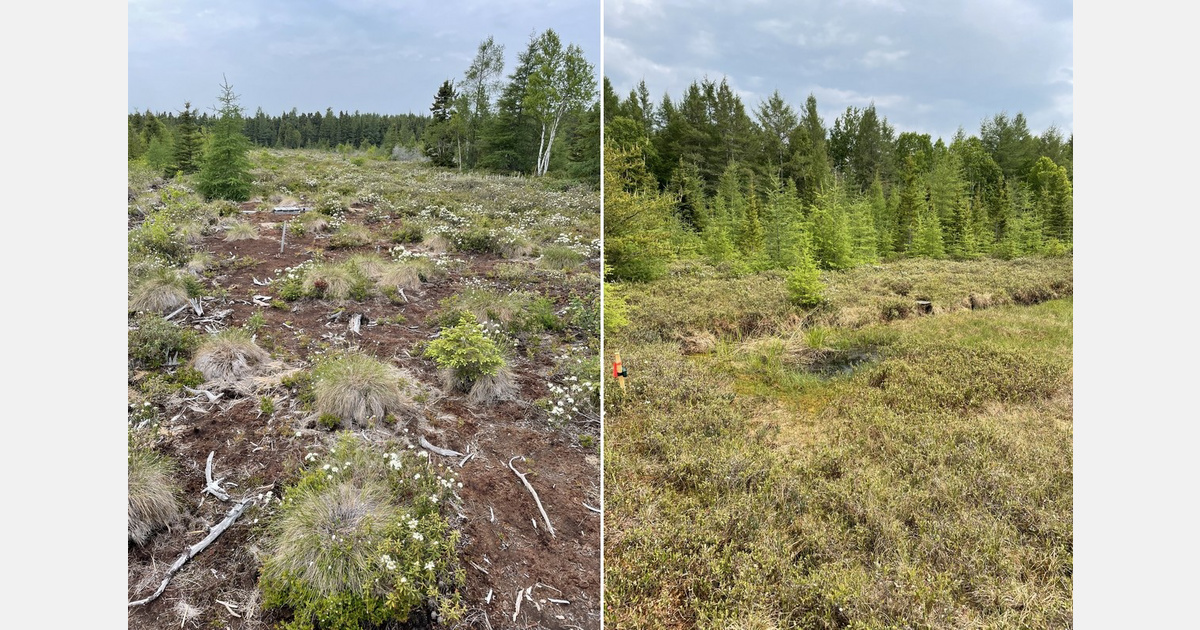
The review states that assessments of peatland sustainability should differentiate between regions. While European peatlands have been heavily impacted by centuries of drainage and peat extraction, most Canadian peatlands remain undisturbed, with only a small proportion used for horticulture. According to the authors, this distinction is important when assessing the environmental impact of peat production.
“Currently, Canadian peatlands are sequestering carbon faster than the rate of extraction from container crop production. At current rates of extraction and with appropriate restoration, peatland use in North America is environmentally sustainable.”
The authors note that horticultural peat extraction in Canada accounts for only a small fraction of the total peatland area and that harvested sites are routinely restored after production.
 © USDA
Restoration supports long-term recovery
The paper highlights the role of restoration practices, particularly the Moss Layer Transfer Technique (MLTT), in restoring peat-forming ecosystems.
“Restoration techniques, such as the moss layer transfer technique, can turn harvested peatlands into carbon sinks over decades,” he added. The review found that restored peatlands can restore vegetation, biodiversity and carbon sequestration functions over time, while improvements in water storage and hydrological performance are also documented.
 © USDA
Alternatives also have environmental impacts
The researchers also looked at published life cycle assessments comparing them to substrates such as peat, korea, wood fiber, perlite and rock wool. “Life cycle assessments show that alternative substrates often have environmental impacts comparable to or greater than peat, especially when considering water use, transport and fertilizer inputs.”
The review concludes that comparisons depend on system limitations and assumptions, and that broad claims that alternatives are inherently more sustainable than peat are not consistently supported by published analyses.
 © USDA
Figure A: Global carbon storage in natural systems (Gt, gigatons)
(Hirschler and Osterburg, 2022; Cleary et al, 2005; IPCC, 2023)
Performance remains an important consideration
Beyond sustainability, the paper reviews the functional characteristics that have made peat the reference substrate for container production.
“Soil’s high cation exchange capacity, water retention and stability support optimal plant growth and nutrient uptake,” shares James. The authors point out that these properties contribute to efficient irrigation and fertilizer management, maintaining good root zone conditions.
Although wood fibers, coir, and other materials can reduce peat use in mixes, each introduces its own management considerations, such as nutrient immobilization, water use, or processing requirements.
 © USDA
Figure B: Annual carbon flux from human activities and sequestration through natural processes (Gt CO2-eq per year)
(Hirschler and Osterburg, 2022; Cleary et al, 2005; IPCC, 2023)
Managing future demand
As the global demand for soilless growth media is expected to increase significantly in the coming decades, the authors believe that a variety of substrate materials will be required.
“At current rates of extraction and with appropriate restoration, peat use in North America is environmentally sustainable and remains essential for horticulture and urban greening.”
For more information:
US Department of Agriculture
James Altland, Head of Research
Application Technologies Research Unit
(email protected)
www.usda.gov

420 Recap-Records & POTUS Tweet Support for Cannabis Justice & Dutchie Crashes, Again Weed Talk News

Racial Injustice, Protests & Lack of Leadership

Marijuana Retail Report

Ora Pharm affirms uninterrupted access to Helius products

Cannabis Is Being Rebuilt From The Ground Up

California Treasurer Announces Hearing On Marijuana Business Banking Access Issues

Lollapalooza Partners with Cannabis Brand to Bring THC Drinks to the Festival for the First Time

Weed Talk News Open voice over 420 National cannabis headlines: POTUS Tweet and Dutchie Crashs again

CANNABIS NURSE | JANNA CHAMPAGNE

Marijuana Retail Report

“Our system can manage equipment across 10,000+ m² using just a few wires”

Mazar-i-Sharif Hash Wednesday

Florida Workshop to Discuss What Constitutes a ‘Cartoon’ in Hemp Packaging

Afghan Black Hash Wednesday

From Finance to Wellness: Brad Zerman’s Impactful Pivot

Weak Michigan Cannabis Sales Again in July – New Cannabis Ventures

Re-release of the full show of Cannabis Coast to Coast news. Republican Texas DA Fires Up vs. laws;

DEA’s Cole Reverses His “priorities” ; Prohibitionists Dig In; Dead & Co Celebrates 60 years in SF

Texas DA Fires Up for Change! Mass. Sheriff arrested on Extortion charges; GOP vs Industry in state

Your Cannabis Business: Consistent Filings Are Critical
-
 Cannabis News11 months ago
“Our system can manage equipment across 10,000+ m² using just a few wires”
-
 Video10 months ago
Mazar-i-Sharif Hash Wednesday
-
 Florida11 months ago
Florida Workshop to Discuss What Constitutes a ‘Cartoon’ in Hemp Packaging
-
 Video10 months ago
Afghan Black Hash Wednesday
-
 Video11 months ago
From Finance to Wellness: Brad Zerman’s Impactful Pivot
-
 aawh11 months ago
Weak Michigan Cannabis Sales Again in July – New Cannabis Ventures
-
 Video11 months ago
Re-release of the full show of Cannabis Coast to Coast news. Republican Texas DA Fires Up vs. laws;
-
 Video11 months ago
DEA’s Cole Reverses His “priorities” ; Prohibitionists Dig In; Dead & Co Celebrates 60 years in SF