
Cannabis News
Christians Will Be Able To Use Medical Marijuana After Trump ‘Inevitably’ Reschedules It, Former DOJ Official Says In New Religious Analysis



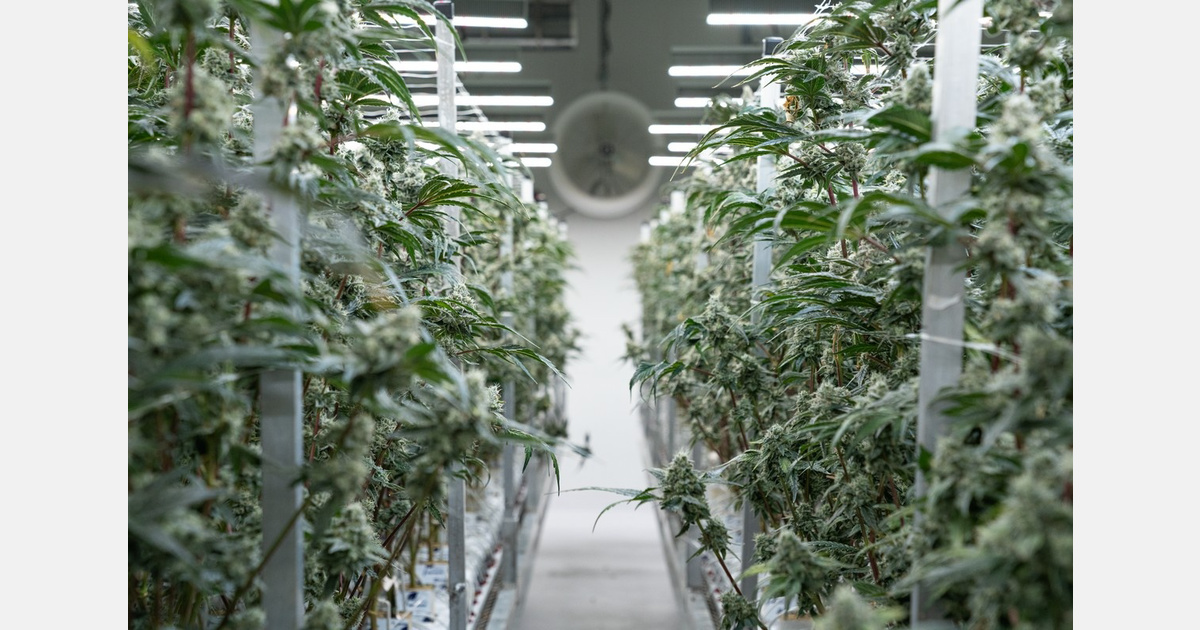
Aurora Cannabis Inc., a Canadian medical cannabis company, released its financial results for the fourth quarter and full year 2026 (ended March 31, 2026).
CEO Miguel Martin said the company achieved record results in fiscal 2026, saw strong global growth in medical cannabis revenue and met profit targets. This success was attributed to the company’s regulatory expertise, network of EU certified production facilities and ability to execute business plans. Aurora plans to continue growing internationally while maintaining its market position.
Note: On February 17, 2026, Aurora sold its majority stake in a plant company called Bevo Agtech. Because of this sale, Bevo’s numbers are not included in the results, and the previous year’s data has been adjusted.
Total revenue for the quarter was $84.8 million, up 10% from $76.8 million a year earlier. This growth was primarily due to a 14% increase in medical cannabis sales and increased wholesale sales, although this was partially offset by lower sales of consumer cannabis.
Medical cannabis revenue reached $77.1 million (up 14%, 91% of revenue). This growth was driven by strong sales in Germany and Poland, and increased sales to insured patients in Canada. However, medical cannabis profit margins fell from 71% to 66% due to selling more low-margin products and price cuts.
Consumer cannabis revenue fell to $3.6 billion from $8.2 billion, as the company is deliberately shrinking this part of the business to focus on medical cannabis. Here, too, profit margins fell, from 27% to 22%, due to higher costs.
Overall, the company’s adjusted gross profit margin (a measure of profitability before certain accounting adjustments) was 60%, up from 65% a year ago.
Operating costs (adjusted GEA) increased to $40.3 million from $35.4 million due to additional employees, higher labor costs in Europe and Australia, bad debt from two bankrupt clients and extraordinary professional fees.
The company reported a net loss of $27.6 million for the quarter, higher than last year’s loss of $12.1 million, mainly due to one-time charges. However, “adjusted net income,” a measure that strips out unusual items, was $5.6 million, down from $15.3 million, due to higher costs and lower currency gains.
Adjusted EBITDA (a measure of profitability) was $9.2 million, down from $14.1 million. Free cash flow was just $0.3 million, down from $5.2 million.
Aurora completed the sale of its stake in Bevo (the plant breeding business) on February 17, 2026. Separately, on April 15, 2026, Aurora acquired Safari Flower Company for $26.5 million, consisting of $15 million in cash plus stock, and acquired a large certified cultivation facility to support international supply.
By 2027, Aurora will exit the low-margin Canadian cannabis and plant breeding businesses to focus on global medical cannabis. The company expects total revenue to decline, approaching 2025 levels, primarily due to lower medical reimbursement rates in Canada starting in April 2026, although this will be partially offset in Europe, particularly Germany and Poland. Gross profit margins are expected to be in the mid to high 50% range, supported by stronger contributions from Europe and exits from low-margin businesses, although medical margins in Canada remain under pressure. Operating costs are expected to be similar to last year. Overall, annualized profit as measured by adjusted EBITDA is expected to be lower than in fiscal year 2026, reflecting the impact of lower reimbursement prices on revenue and gross profit.
A conference call to discuss these results was scheduled for June 11, 2026.
For more information:
Aurora Cannabis Inc.
auroramj.com

Cannabis News
Columbia hemp business Burning Acre to close and move to North Carolina over new Tennessee rules


Burning Acre, a Columbia, Tennessee-based hemp company, says it will close its retail store and move operations to North Carolina ahead of new state regulations that take effect July 1, according to WSMV.
The business says its last day to open in Columbia will be June 30, the same day the Tennessee Department of Agriculture licenses for hemp-derived cannabinoids expire. As of July 1, businesses that continue to operate in the state will be required to be licensed under a new regulatory framework led by the Tennessee Alcoholic Beverage Commission.
Burning Acre says the changes have forced it to abandon plans for a new sandwich shop and bakery and close its Tennessee retail operations and relocate to Murphy, North Carolina. “I won’t sugarcoat it, it’s a very hard video for me and a message I should never have written,” the business wrote.
The business puts the annual cost of manufacturing, distribution and running the retail store at about $750. Under the new rules, he says, those costs would rise by tens of thousands of dollars, citing new licensing fees, a required $25,000 annual bond and increased testing fees.
The law, which took effect in July, changes the regulation of hemp-derived cannabinoid businesses from the Department of Agriculture to the ABC. The Department of Agriculture stopped issuing licenses at the end of 2025, and the licenses issued by the TDA will remain valid until June 30, 2026.
“Columbia, we absolutely love being a part of this community,” said Burning Acre. “We are truly heartbroken to have to say goodbye to this location.”
Read more at WSMV4

Trulieve Fined $350,000! Massachusetts Allows Sea and Air Import of Weed to their islands

2020 CANNABIS STRAIN OF THE YEAR | LEAFLY

Marijuana Retail Report

Aurora Cannabis announces full results for 2026 fiscal year

More Than 100 Alabama Patients Bought Medical Marijuana In First Week Of Legal Sales

FDA Grants Breakthrough Therapy Designation to Cannabis-Derived Drug for Chronic Back Pain

One on One with Talking Joints Memo Chris Faraone in Boston with PCM Founder Jimmy Young

HUMBOLDT CANNABIS SEED CO | NATHANIAL PENNINGTON

Drakken Glass: Making Magic

Columbia hemp business Burning Acre to close and move to North Carolina over new Tennessee rules

“Our system can manage equipment across 10,000+ m² using just a few wires”

Florida Workshop to Discuss What Constitutes a ‘Cartoon’ in Hemp Packaging

Mazar-i-Sharif Hash Wednesday

Afghan Black Hash Wednesday

Weak Michigan Cannabis Sales Again in July – New Cannabis Ventures

From Finance to Wellness: Brad Zerman’s Impactful Pivot

DEA’s Cole Reverses His “priorities” ; Prohibitionists Dig In; Dead & Co Celebrates 60 years in SF

Re-release of the full show of Cannabis Coast to Coast news. Republican Texas DA Fires Up vs. laws;

Curaleaf Q2 Revenue Falls 8% – New Cannabis Ventures

Your Cannabis Business: Consistent Filings Are Critical
-
 Cannabis News10 months ago
“Our system can manage equipment across 10,000+ m² using just a few wires”
-
 Florida10 months ago
Florida Workshop to Discuss What Constitutes a ‘Cartoon’ in Hemp Packaging
-
 Video8 months ago
Mazar-i-Sharif Hash Wednesday
-
 Video8 months ago
Afghan Black Hash Wednesday
-
 aawh10 months ago
Weak Michigan Cannabis Sales Again in July – New Cannabis Ventures
-
 Video10 months ago
From Finance to Wellness: Brad Zerman’s Impactful Pivot
-
 Video10 months ago
DEA’s Cole Reverses His “priorities” ; Prohibitionists Dig In; Dead & Co Celebrates 60 years in SF
-
 Video10 months ago
Re-release of the full show of Cannabis Coast to Coast news. Republican Texas DA Fires Up vs. laws;