
Cannabis News
Top Veterans Group Warns Congress That Hemp Ban Could ‘Slam The Door Shut’ On Medical Research


A leading veterans’ organization has warned congressional leaders that a newly approved blanket ban on consumable hemp products could inadvertently “close the door” on critical research.
In a letter to House and Senate leaders on Wednesday, American Veterans of Foreign Wars (VFW) executives stressed the importance of “supporting robust scientific research into hemp-derived cannabinoids,” which they said could be at risk. President Donald Trump has signed provisions of a spending bill into law.
Hemp-based cannabinoid products “can offer a real alternative to heavy prescription drugs, so many of our veterans prescribe them for PTSD, anxiety, pain and sleep problems,” wrote the VFW’s Carol Whitmore and Dan West.
“Every day, doctors dispense powerful sedatives and psychoactive drugs to help veterans cope. They work for some, but they’re too hooked, numb, or dealing with brutal side effects,” they wrote. “We’ve all seen good men and women get caught in a cycle of pills that dull the pain but don’t fix the problem.”
“It’s time to explore safer options. Early research on certain hemp compounds suggests they can manage symptoms and reduce physical pain without the risk of addiction,” the letter says, citing recent research showing that hemp-derived cannabinoids improve PTSD symptoms and may be an effective alternative treatment for pain and anxiety.
“This is not evidence of a miracle cure, just clear signs that we should continue to study. But broad movements to ‘close the hemp loophole’ could close the door. A blanket ban on hemp cannabinoids would make it nearly impossible for researchers and (US Department of Veterans Affairs) hospitals to examine the rules by which even small businesses that have legally acquired these compounds are acting legally. Seriously, it would drive veterans seeking relief into black market junk, making things more dangerous. making it not safer.”
The VFW said it is not promoting “wild, unregulated products or recreational use,” but instead “is calling for smart policy: protect the public, but don’t kill research.”
“Let science do its job, regulate what’s proven safe, and give veterans every legitimate tool available to reclaim their lives,” the letter says. “Our veterans have earned the best care we can give them. We urge Congress to take a balanced approach that protects consumers, promotes research, and gives veterans hope for safer alternatives.”
In the last month, The VFW announced that it has entered into a first-of-its-kind partnership with hemp THC beverage company Torch Drinkswith a licensed branding agreement to support various veterans services and promote cannabis beverages as a potential alternative to alcohol. In addition to the brand licensing agreement, the cannabis beverages will be available at VFW posts across the country in jurisdictions where they are locally legal.
Debate over the current appropriations bill’s hemp ban has been fueled by some who believe recriminalizing cannabis products will alleviate public health concerns, particularly regarding youth access to unregulated markets, and others who insist Congress should address the challenges by enacting regulations, including age requirements and testing requirements.
Many hemp participants argue that a ban would effectively wipe out the industry, even if enforced Non-toxic CBD products that people use for medical reasons— There is a hidden hope that they can reach an agreement with the legislators before the ban is implemented next year.
Lawmakers like Sen. Chris Van Hollen (D-MD) also say the window could allow them to advance legislation to create an alternative regulatory model for consumer hemp products.
There were Attempts by GOP lawmakers in both chambers to kill the hemp ban provision. But amendments proposed by Senators Rand Paul (R-KY) and Thomas Massie (R-KY) were not included in the final package.
On the Senate side, Paul was joined by 22 Democrats, and especially Sen. Ted Cruz (R-TX) anti-marijuana: voting against the motion to introduce the amendment to avoid the ban, but was eventually overturned by the majority.
Massie tried to revive momentum in the House with an amendment mirroring Paul’s, but its chances of passage were dubious at best, as there was general agreement within the Republican caucus that the spending bill could return to the Senate without further changes.
—
It’s Marijuana Time tracking hundreds of cannabis, psychedelic and drug policy bills in state legislatures and Congress this year. Patreon supporters by pledging at least $25/month, you’ll get access to our interactive maps, charts, and audio calendars so you never miss a development.
Learn more about our marijuana bill tracking and become a Patreon supporter to gain access
—
Since 2018, cannabis products have been considered legal hemp if they contain less than 0.3 percent delta-9 THC by dry weight.
The new legislation specifies that, within a year of taking effect, the weight will be applied to total THC—including delta-8 and other isomers. Also, “as tetrahydrocannabinol (or any other marketed cannabinoid) with similar effects in humans or animals (as determined by the Secretary of Health and Human Services).”
The new definition of legal hemp will also prohibit “any hemp-derived cannabinoid intermediate product marketed or sold as an end product or directly to an end consumer for personal or home use” as well as products containing cannabinoids that are synthesized or manufactured outside of the cannabis plant or are unable to produce it naturally.
Legal hemp products will be limited to a total of 0.4 milligrams of total THC or any other cannabinoid with similar effects per container.
Within 90 days of the bill’s passage, the Food and Drug Administration (FDA) and other agencies must “publish a list of all cannabinoids known to the FDA to be naturally produced by a Cannabis sativa L. plant, as reflected in the peer-reviewed literature,” which include “all tetrahydrocannabinol classes known” in natural plants and “known cannabinoids.” cannabinoids that have or are marketed as having effects similar to cannabinoids of the tetrahydrocannabinol class.
The language differs slightly from provisions in legislation advanced out of the House and Senate Appropriations panels, which would have banned products with “quantifiable” amounts of THC, to be determined by the HHS secretary and the agriculture secretary.
Meanwhile, advocates are strongly criticizing congressional leaders for advancing a spending bill ahead of Veterans Day on Tuesday, which also omits bipartisan provisions. Allowing the US Department of Veterans Affairs (VA) to prescribe medical cannabis to doctors to patients in states where it is legal—although the policy was approved by the full Senate and House earlier this year.
Read about the VFWs the letter To Congress on the hemp ban below:
Brendan Cleak’s photo.
Marihuana Moment is made possible with the help of readers. If you rely on our pro-cannabis journalism to stay informed, consider a monthly Patreon pledge.









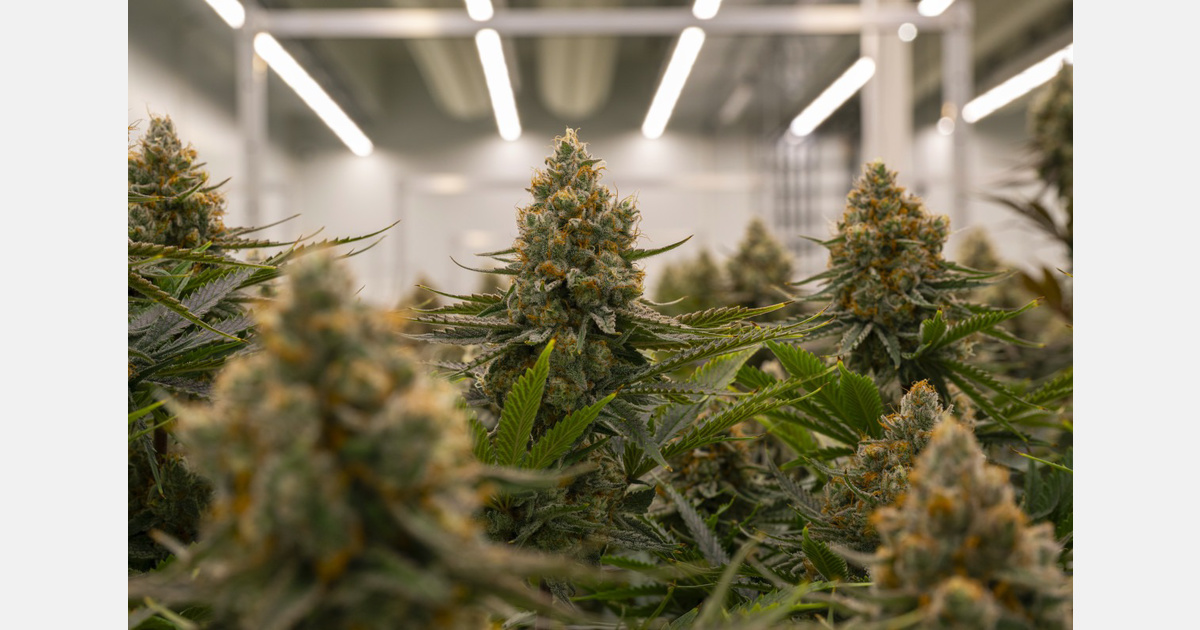
Village Farms International, one of the world’s largest cannabis production facilities located in Delta, BC, increased its export volumes by more than 500 percent by the end of 2025, with international sales reaching US$37.9 million, or just over 20 percent of total cannabis revenue of US$188 million. The main export markets are Germany, Australia, the United Kingdom, New Zealand and Israel.
The company is also expanding, developing an additional 550,000 square feet of greenhouse space across the street from its main facility, designed to support both domestic and international cultivation. Orville Bovenschen, VFI’s global president of operations, points to the excise burden as a permanent strain on the domestic economy: “If you look at how much we paid in excise last year, it’s astronomical,” he says, although VFI declined to provide specific figures.
Walker Patton, one of the founders of the BC Cannabis Alliance, which represents about 50 licensed growers in the province, frames the domestic regulatory environment in stark terms: “With the rules that this industry was set up for, it’s like doing business right out of the gate.” Canada’s excise tax structure charges by weight instead of market price, meaning that since wholesale prices have fallen to roughly half of initial projections, effective tax rates for producers have risen.
 © This is Holland
Sweetgrass Cannabis, a micro-farm located in the Kootenay region, now derives 60 to 70 percent of its sales from international markets after retreating from provinces such as Ontario and Alberta. Company CEO Gemma Hayes says: “Margins, as well as export opportunities, drove our decision.” Ontario’s wholesale markup of up to 25 per cent, layered with excise taxes, spurred what Hayes described as a “race to the bottom.”
Rubicon Organics, a Vancouver-based publicly traded company, entered international markets last year and recently opened a 47,500-square-foot facility in Hope in part to meet overseas demand. Speaking from the International Cannabis Conference in Berlin, Mathieu Aubin, director of marketing and new business, said: “Canada is very well positioned to access international markets for reliable and safe cannabis,” noting that reliability and product integrity are key to gaining access to the medical market.
Not all producers have equal access to these markets. Alex Rumi, founder of grower Good Buds out of Salt Spring Island, said established export markets are structured around an indoor pharmaceutical-style model that hurts sun-grown cannabis, and that Canada’s export system “works for big growers and doesn’t work for craft.” Julia Cameron, president of Cannabis Cultivators of BC and chair of communications and corporate affairs for the VFI, added that growers must secure permits for each shipment while navigating different rules across countries, creating a prohibitive barrier for small operators.
BC has more than 200 licensed growers and accounts for roughly a quarter of Canada’s legal cannabis production, but represents only 14 percent of national exports. Lana Popham, B.C.’s Minister of Agriculture and Food, points to the FIFA World Cup games in Vancouver as a near-term possibility: “It will be interesting to see how many people engage with what is a great product here in B.C.”
Cannabis News
Congressman And Other Media Outlets Join Marijuana Moment’s Push For DEA To Livestream Rescheduling Hearing
Cannabis News
New access solution for cannabis facilities designed to address limitations of traditional gates
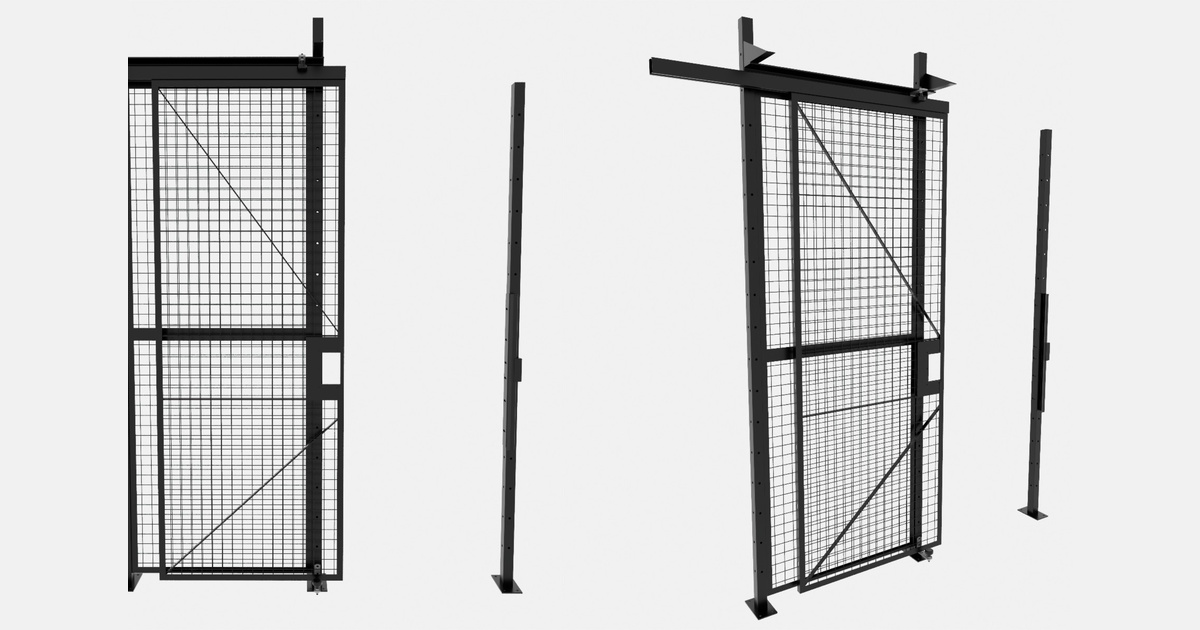
SpaceGuard Products, a North American manufacturer of wire mesh security solutions and security protection systems, has released the BeastWire® Tunnel Door. This access solution is designed to overcome the limitations of traditional balanced doors and is aimed at cannabis cultivation, processing, packaging and distribution environments. The BeastWire Tunnel Door is designed for installations that require vertical clearance, reliable movement and floor space efficiency.
The BeastWire Tunnel Door provides top clearance with no tracks in the operating path of the door. It is suitable for spaces where overhead paths are not feasible, such as facilities that use high-mast forklifts, oversized pallet loads or specialized material handling equipment. Tall equipment can pass through the opening unhindered, allowing for continuous workflow and flexibility in equipment movement.
 © SpaceGuard Products
The door uses a track system designed to create consistent movement. This addresses issues such as stuttering, binding, and misalignment that can occur with conventional sliding or counterbalanced designs. The track controls the path of the door so that the locking mechanism aligns with each cycle, allowing operators to close the door with relatively low force.
Unlike lower track systems that require a soil trench, the BeastWire Tunnel Door mounts above ground. This avoids cutting the installation slab, simplifies installation and reduces maintenance requirements. The system can be installed as a retrofit or in new construction, without changing the floor.
 © SpaceGuard Products
The door frame and retractable design reduces the need for side supports and additional space on the side of the door. This results in a smaller footprint and more usable surface area. The gate has the same construction approach as other BeastWire systems.
The BeastWire Tunnel Door is a high-access door designed for strength and ease of use in cannabis industry facilities.
For more information:
SpaceGuard products 
Email: (email protected)
spaceguardproducts.com/

Tell YOUR Cannabis Story to the DEA! Public Comment is on – Weed Talk News from Coast to Coast

ONE WORLD PHARMA | DR KENNETH PEREGO

A New York Apple Orchard Bet The Farm On Cannabis

Village Farms International leads B.C. cannabis producers in global export push

ALJ Timeline + CBD Data That Could Influence Federal Decision

Congressman And Other Media Outlets Join Marijuana Moment’s Push For DEA To Livestream Rescheduling Hearing

Trump Admin Asks Congress to Regulate Full-Spectrum Hemp Products or Delay Federal Crackdown

Coast to Coast Cannabis News Reports – Massachusetts Rids THC Infused Drinks from Liquor Stores

CANNABIS GLASS HOUSE | KYLE KAZAN

Marijuana Retail Report

“Our system can manage equipment across 10,000+ m² using just a few wires”

Florida Workshop to Discuss What Constitutes a ‘Cartoon’ in Hemp Packaging

Mazar-i-Sharif Hash Wednesday

Afghan Black Hash Wednesday

From Finance to Wellness: Brad Zerman’s Impactful Pivot

Weak Michigan Cannabis Sales Again in July – New Cannabis Ventures

DEA’s Cole Reverses His “priorities” ; Prohibitionists Dig In; Dead & Co Celebrates 60 years in SF

Re-release of the full show of Cannabis Coast to Coast news. Republican Texas DA Fires Up vs. laws;

Curaleaf Q2 Revenue Falls 8% – New Cannabis Ventures

Your Cannabis Business: Consistent Filings Are Critical
-
 Cannabis News10 months ago
“Our system can manage equipment across 10,000+ m² using just a few wires”
-
 Florida10 months ago
Florida Workshop to Discuss What Constitutes a ‘Cartoon’ in Hemp Packaging
-
 Video9 months ago
Mazar-i-Sharif Hash Wednesday
-
 Video9 months ago
Afghan Black Hash Wednesday
-
 aawh10 months ago
Weak Michigan Cannabis Sales Again in July – New Cannabis Ventures
-
 Video10 months ago
From Finance to Wellness: Brad Zerman’s Impactful Pivot
-
 Video10 months ago
DEA’s Cole Reverses His “priorities” ; Prohibitionists Dig In; Dead & Co Celebrates 60 years in SF
-
 Video10 months ago
Re-release of the full show of Cannabis Coast to Coast news. Republican Texas DA Fires Up vs. laws;