
Cannabis News
Cannabis labelling, cloud printing to be on display at MJBizCon


Star Micronics has announced its participation in MJBizCon 2025. The event will take place December 3-5, 2025 at the Las Vegas Convention Center, where Star will welcome attendees at booth C25822.
At MJBizCon 2025, Star will demonstrate how cannabis retailers, vertically integrated operators and POS software providers can improve accuracy, compliance and operational efficiency by integrating Star’s Customer First Solutions into their workflows.
Star will be hosting live demonstrations of its cannabis-ready hardware and cloud tools, including the one below
mC-Label2 Multifunction Printer: Compact 2-inch front-loading printer with ultra-sharp 300 DPI resolution. Ideal for cannabis bottling stations and weigh counters, it prints receipts, labels, strain labels, shelf labels, linerless labels and die-fill labels from a single device. The X4 models offer four connectivity options (USB, LAN, Bluetooth and Wi-Fi) and support One Touch Label for fast label printing in high volume environments.
TSP143IV X4 and SK X4 Series: Advanced thermal printers with four connectivity interfaces, Bluetooth-assisted Wi-Fi setup and CloudPRNT Next compatibility for reliable multi-location and delivery routing. The SK X4 model supports detachable linerless sticky labels, perfect for prescription bags, order picking, curbside/walk-in and online cannabis ordering workflows.
StarIO.Online: A fully managed cloud printing service that eliminates the need for local servers or custom infrastructure. Cannabis retailers and ISVs can use a single dashboard to monitor device health, push remote updates and manage printers across multiple dispensaries, improving visibility and control for delivery services, growing facilities and vertically integrated operators.
CD5 Max Series Cash Drawers: Star’s most durable line of cash drawers, built for cash-heavy cannabis sales. With all-steel construction, dual printer and USB interfaces, a five-year warranty and optional accessories, the CD5 Max Series offers secure and durable cash management for high-volume medications.
Star Blue Eco Receipt Paper and Labels: Eco-friendly, BPA/BPS-free, Prop 65 Compliant paper and label rolls that support printing for weight cards, product labels, collection slips and customer transactions. Designed for optimal performance with Star printers, Star Blue Eco helps cannabis companies meet sustainability expectations without sacrificing print clarity.
Attendees are encouraged to visit booth C25822 to see these innovations firsthand and schedule one-on-one demonstrations with the Star team.
For more information:
Star Micronics
Email: (email protected) 
https://starmicronics.com/








Cannabis News
New access solution for cannabis facilities designed to address limitations of traditional gates
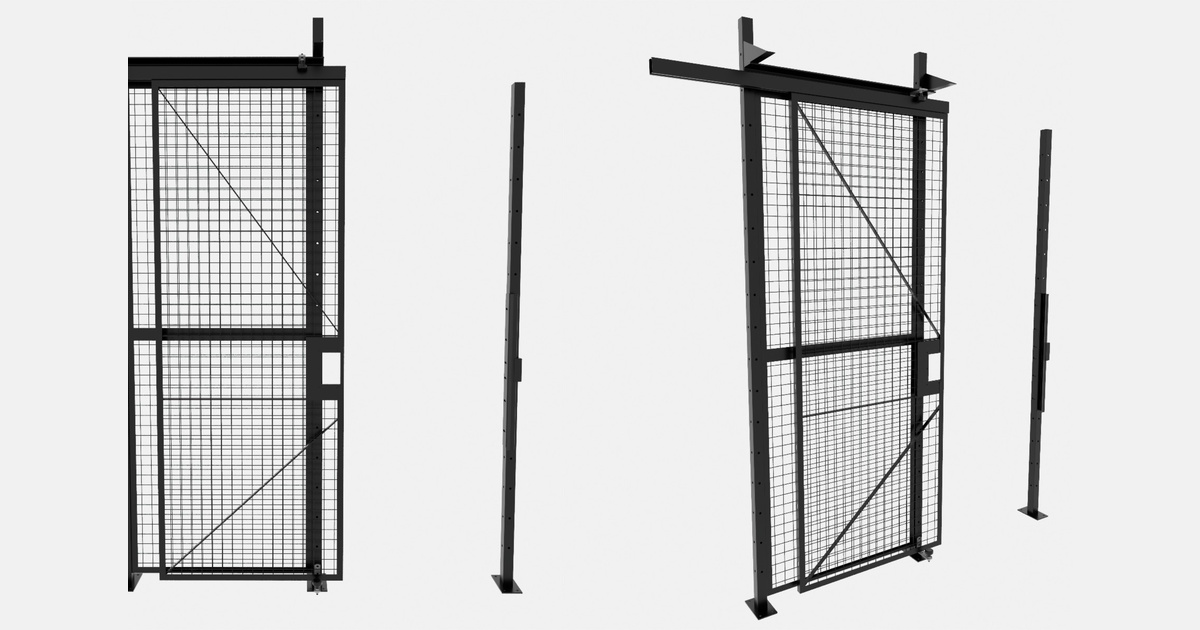
SpaceGuard Products, a North American manufacturer of wire mesh security solutions and security protection systems, has released the BeastWire® Tunnel Door. This access solution is designed to overcome the limitations of traditional balanced doors and is aimed at cannabis cultivation, processing, packaging and distribution environments. The BeastWire Tunnel Door is designed for installations that require vertical clearance, reliable movement and floor space efficiency.
The BeastWire Tunnel Door provides top clearance with no tracks in the operating path of the door. It is suitable for spaces where overhead paths are not feasible, such as facilities that use high-mast forklifts, oversized pallet loads or specialized material handling equipment. Tall equipment can pass through the opening unhindered, allowing for continuous workflow and flexibility in equipment movement.
 © SpaceGuard Products
The door uses a track system designed to create consistent movement. This addresses issues such as stuttering, binding, and misalignment that can occur with conventional sliding or counterbalanced designs. The track controls the path of the door so that the locking mechanism aligns with each cycle, allowing operators to close the door with relatively low force.
Unlike lower track systems that require a soil trench, the BeastWire Tunnel Door mounts above ground. This avoids cutting the installation slab, simplifies installation and reduces maintenance requirements. The system can be installed as a retrofit or in new construction, without changing the floor.
 © SpaceGuard Products
The door frame and retractable design reduces the need for side supports and additional space on the side of the door. This results in a smaller footprint and more usable surface area. The gate has the same construction approach as other BeastWire systems.
The BeastWire Tunnel Door is a high-access door designed for strength and ease of use in cannabis industry facilities.
For more information:
SpaceGuard products 
Email: (email protected)
spaceguardproducts.com/
Cannabis News
DEA Defends Stance That Synthetic Cannabis Compound HHC Is Federally Banned In Response To Industry Lawsuits



A cannabis company called Good Behavior is seeking approval from the city of Yorkville, Illinois, to open a dispensary on a 0.93-acre plot along Saravanos Drive, west of South Bridge Street and south of Stagecoach Trail, becoming the latest entrant in a string of cannabis proposals the city has previously rejected. The company has filed a special-use application with the city and is staking its case on the tax revenue a dispensary would generate for Yorkville.
Full details of the application, including projected tax figures, the company’s ownership structure and details of any board discussions, are available to Shaw Local News Network subscribers. The article, reported by Shaw Local News Network’s Joey Weslo and published on June 23, 2026, notes that cannabis companies had previously failed to get city approval before Good Behavior presented its proposal.
The proposed site places the dispensary in a commercial corridor to the south of the city. Good Behavior’s application requires a special use permit from Yorkville before the project can proceed.
Source: local Shaw

Marijuana Retail Report

New access solution for cannabis facilities designed to address limitations of traditional gates

Canopy Growth’s Year of Reinvention Under Luc Mongeau

DEA Defends Stance That Synthetic Cannabis Compound HHC Is Federally Banned In Response To Industry Lawsuits

Report: Cannabis Industry Jobs Fell 2.7% Year-Over-Year

Is New Hampshire ready to go Adult use legal? CWCB & Flower Expo previews C Block of Weed Talk News

TOMMY CHONG

Marijuana Retail Report

Good Behavior dispensary applies to open in Yorkville

Virginia Legalization Is Back On Track

“Our system can manage equipment across 10,000+ m² using just a few wires”

Florida Workshop to Discuss What Constitutes a ‘Cartoon’ in Hemp Packaging

Mazar-i-Sharif Hash Wednesday

Afghan Black Hash Wednesday

Weak Michigan Cannabis Sales Again in July – New Cannabis Ventures

From Finance to Wellness: Brad Zerman’s Impactful Pivot

DEA’s Cole Reverses His “priorities” ; Prohibitionists Dig In; Dead & Co Celebrates 60 years in SF

Re-release of the full show of Cannabis Coast to Coast news. Republican Texas DA Fires Up vs. laws;

Your Cannabis Business: Consistent Filings Are Critical

Curaleaf Q2 Revenue Falls 8% – New Cannabis Ventures
-
 Cannabis News10 months ago
“Our system can manage equipment across 10,000+ m² using just a few wires”
-
 Florida10 months ago
Florida Workshop to Discuss What Constitutes a ‘Cartoon’ in Hemp Packaging
-
 Video9 months ago
Mazar-i-Sharif Hash Wednesday
-
 Video9 months ago
Afghan Black Hash Wednesday
-
 aawh10 months ago
Weak Michigan Cannabis Sales Again in July – New Cannabis Ventures
-
 Video10 months ago
From Finance to Wellness: Brad Zerman’s Impactful Pivot
-
 Video10 months ago
DEA’s Cole Reverses His “priorities” ; Prohibitionists Dig In; Dead & Co Celebrates 60 years in SF
-
 Video10 months ago
Re-release of the full show of Cannabis Coast to Coast news. Republican Texas DA Fires Up vs. laws;