
Cannabis News
New Hampshire Lawmakers Take Up Bipartisan Bills To Legalize Psilocybin For Medical Use


New Hampshire lawmakers on Wednesday took up a pair of bipartisan bills to legalize the regulated use of psilocybin for medical purposes.
At a hearing before the House Health, Human Services and Aging Committee, members heard public testimony on the proposals: HB 1809 by Rep. Buzz Scherr (D) and HB 1796 by Rep. Michael Moffett (R).
Both measures seek to create a regulatory pathway for patients with certain conditions to access psychedelics for therapeutic use through a program overseen by the state Department of Health and Human Services (DHHS). But Moffett’s legislation has more mandates about the regulatory framework.
“I’m hardly a major supporter of a measure like this,” Moffett told lawmakers at the hearing, saying he’s “always been very wary and skeptical” of psychedelics and has “always been averse to marijuana for many reasons, including the fact that I was constantly drug tested over many years in the Marine Corps and developed zero tolerance for illegal drug use.”
He said he changed his mind after seeing a presentation on psychedelic therapies at a national veterans conference last summer, where he learned that “a psilocybin treatment option can work for almost anyone, beyond military or ex-military.”
Scher, for his part, said that “a large amount of research is currently being done on the therapeutic uses of psilocybin.”
“Research to help those with treatment-resistant depression is pretty important right now,” he said. “Research is being developed on its broader use for those suffering from other types of PTSD. Research is also being developed on its use with people with other types of substance abuse.”
Jenny O’Higgins of the state Department of Health and Human Services said officials have some concerns about the lack of matching funds in Moffett’s legislation, saying the department “wouldn’t be able to absorb” the program under its current budget.
A representative of Smart Approaches to Marijuana’s New Hampshire affiliate testified against the proposals, saying psilocybin is an illegal Schedule I drug. He also argued that there is insufficient evidence to support the therapeutic potential of psychedelics.
Here are the main provisions HB 1809:
- DHHS would be responsible for approving licensed medical professionals who are able to act as psilocybin providers for patients.
- To qualify for the program, patients must be diagnosed with treatment-resistant depression, post-traumatic stress disorder (PTSD), substance use disorder, or another condition approved by an advisory board and DHHS.
- The legislation specifically states that only natural psilocybin could be administered, excluding synthetic versions of the psychedelic.
- Suppliers would also have to be approved by the department to grow and harvest their psilocybin products.
- The process of treating qualifying patients with psychedelics should include a preparation session, an administration session, and an integration session.
- A Medical Psilocybin Advisory Committee would be established, consisting of a DHHS representative, a qualified patient, a veterans advocate, and eight medical professionals.
- Those medical experts should include a psychedelic researcher, two regulators overseeing existing medical psilocybin programs, and specialists in addiction treatment, palliative care, veterans affairs, naturopathy, nursing and mental health counseling.
- The commission would look at DHHS’ data on patient outcomes, add requirements for participation in the program and decide whether to expand the law.
- The program would be implemented if the advisory committee, within two years of the bill’s passage, notifies lawmakers, regulators and the governor that it can be effectively administered.
“The medical community has always recognized that patients have serious conditions that are highly resistant to effective treatments,” reads a statement of purpose for the measure. “Recently, studies have begun to show that some of these patients have had positive outcomes with closely supervised use of psilocybin for treatment.”
“Patients with significant post-traumatic stress disorder, treatment-resistant clinical depression, and severe substance use disorder have been shown to benefit from controlled, therapeutic use of psilocybin in a supervised setting,” he says. “The purpose of this action is to create a carefully controlled and closely supervised environment in which an approved medical provider can treat a carefully selected patient with appropriate doses of psilocybin produced by the same provider for a medical intervention.”
Here are the main details HB 1796:
- The bill would allow for the regulated use of psilocybin in a medically supervised setting, and DHHS would be responsible for overseeing the program.
- To be eligible for psilocybin treatment, a patient 21 years of age or older must be diagnosed with treatment-resistant depression, PTSD, substance abuse disorder, a terminal illness requiring end-of-life care, or any other condition authorized by DHHS.
- A Psilocybin Licensing Board under the department will be responsible for licensing independent medical psilocybin suppliers, therapy providers, cultivation and testing laboratories.
- There would be specific guidelines for facilities where psychedelics can be administered, including safety requirements and other safety protocols, such as ensuring that rescue medication is on site in case a patient experiences an adverse event.
- The legislation would also establish a Psilocybin Therapeutic Treatment Fund, which would be funded by revenue from licensing taxes and fees. The funds would go towards studies on the possibility of expanding the program to include additional psychedelics in the program.
- If the law is approved, it would take effect on January 1, 2027.
“The purpose of the Therapeutic Psilocybin Act is to allow the beneficial use of psilocybin for the relief of qualified medical conditions in a regulated system,” the bill’s purpose statement reads.
The chances of the bill moving forward this session are unclear, but lawmakers have become increasingly active in recent years in support of psychedelic reform.
Last June, the New Hampshire Senate voted to repeal the compromise legislation It would lower the state’s criminal penalty for first-time possession of psilocybin also creating mandatory minimum sentences for fentanyl.
As originally introduced, the legislation would completely remove the penalties for obtaining, purchasing, transporting, possessing or using psilocybin, effectively legalizing it on an off-trade basis. However a The House Committee amended the bill before it could advance unanimously last march
Meanwhile in New Hampshire, the House last week passed a bill to legalize marijuana in the state– Although his chances of passing to the Senate remain doubtful, and the governor has expressed a clear position against the reform.
Also last week, the chamber approved a proposal to make medical cannabis dispensaries into non-profit businesses.
The legalization bill sponsored by Rep. Jared Sullivan (D) is one of several cannabis proposals filed for the 2026 session, including legislation by Rep. Jonah Wheeler (D) that seeks to put a constitutional amendment on the state ballot. let voters decide whether they want to legalize marijuana for adults 21 and older“having a modest amount of cannabis for their personal use.”
Gov. Kelly Ayotte (R) has already threatened to veto the legalization bill that reaches his desk, even though the proposal to amend the Constitution would not require gubernatorial action.
The governor said in August his position on the reform it would not change, even if the federal government moved forward with reorganizing the plant. Since then, President Donald Trump has ordered the attorney general to complete the process of moving cannabis from Schedule I to III of the Controlled Substances Act (CSA).
At a committee meeting last year, Sullivan ultimately made a persuasive argument for moving forward with his legalization bill, pointing out. The House has repeatedly passed similar legislation and that the House should stand its ground, forcing the Senate and the governor to once again oppose a policy that is popular with voters.
“We know where it’s going. Let’s send a virtue signal,” Sullivan said. “Let them be the ones to piss off the voters who care about this.”
Meanwhile, the House also passed a bill by Rep. Wendy Thomas (D) last week allow medical marijuana dispensaries (known in the state as “alternative treatment centers” or ATCs) to convert their dispensary licenses into nonprofit entities.. HB 54, which adopted a concurrence schedule with other laws, had previously advanced unanimously out of the House Finance Committee.
Part of the motivation behind the legislation is the fact that medical marijuana dispensaries are not for-profit federal states. But in the state, they are considered non-profit organizations, which has disproportionately increased their operating costs.
Other bills introduced in 2026 include two proposals to protect the gun rights of medical cannabis patients.
There’s also some legislation aimed at regulating the sale of hemp, an issue that’s getting a lot of attention since Congress passed and Trump signed an appropriations bill that would effectively re-criminalize most consumable hemp products.
Meanwhile, after the House added provisions to a bill passed by the Senate last year that would have allowed medical marijuana patients to grow cannabis at home, those measures were removed in the conference.
user photo CostaPPR.
Marijuana Moment is made possible with the help of readers. If you rely on our pro-cannabis journalism to stay informed, consider a monthly Patreon pledge.















The Jefferson City Council unanimously approved “Green Leevs” as the city’s first cannabis micro-farm at its May 6 meeting. This is the third cannabis business approved by the municipality in order to bring income to the municipality. Retail dispensaries “Greenlight Apothecary” and “Gas and Grass” were previously approved.
Green Leevs are owned by Bill Comeford, Elliot McClendon and Josh Moskowitz. All three are from the local area, Comeford grew up in Jefferson. In New Jersey, a micro-enterprise is a facility with 2,500 square feet of growing space. A micro-farm relies on the craftsmanship of cannabis rather than mass production.
“We have more control, we have more hands, the smaller grow rooms make it easier to inspect each plant,” Comeford said. “If you’re careful, it makes for a better product at the end of the day.”
Green Leeves understands that there are mixed feelings about the Council’s approval of the cannabis industry and hopes that this will ease over time.
Read more at Press Jefferson
Cannabis News
Virginia Governor Signs Marijuana Resentencing Bill After Lawmakers Rejected Her Amendments

Cannabis News
Cannabis operators report mixed results as rescheduling reshapes the financial outlook
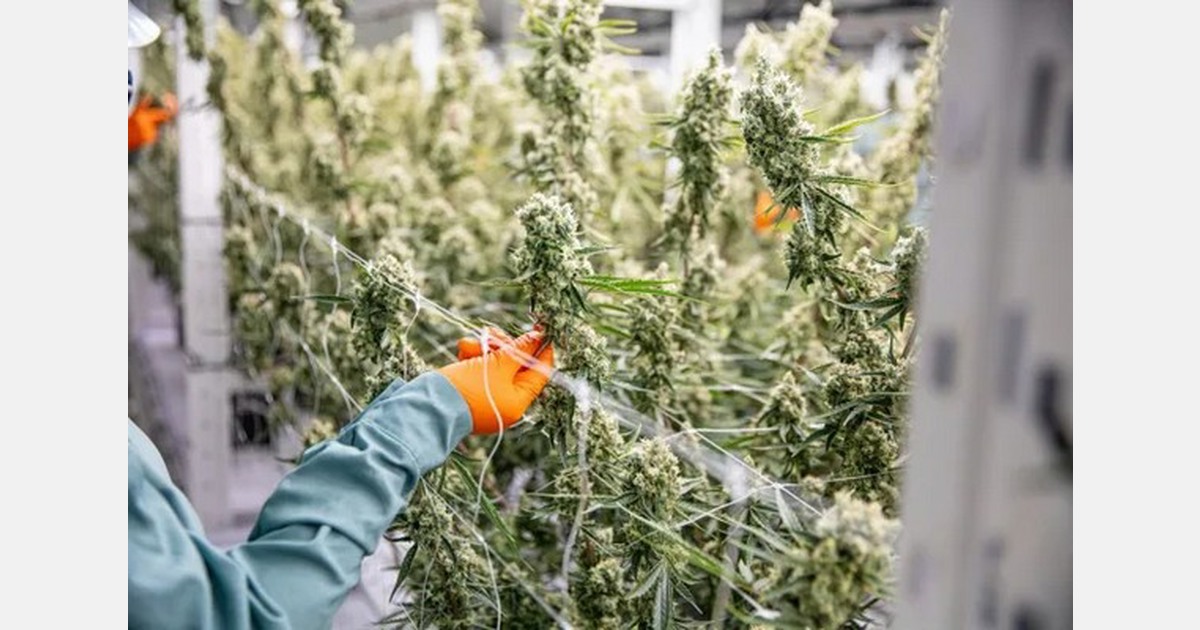
The rescheduling came mid-quarter and rewrote the tax math for each medical sales operator, but the underlying revenue picture remained uneven in early 2026, with acquisitions driven at one end of the scale and continued top-line compression at the other.
Vireo Growth: Back on $106 million deal
Vireo Growth Inc. reported Q1 GAAP revenue of $106.2 million, up 333.5% year-over-year, driven almost entirely by recent acquisitions rather than organic growth. The company completed the Schwazze acquisition in March, adding 45 dispensaries and two manufacturing facilities in Colorado and New Mexico. At the end of the quarter, it closed Eaze and Hawthorne Gardening, FLUENT Corp. announced an acquisition agreement and executed a California dispensary joint venture with Glass House Brands. Treating all acquisitions as closed on January 1, 2025 on a pro forma basis, revenue was $210.2 million and adjusted EBITDA was $42.2 million. The company ended the quarter with $137.8 million in cash.
John Mazarakis, CEO of Vireo, said: “Performance in the first quarter met our expectations and we are excited to welcome Schwazze, Eaze and Hawthorne to Vireo. We are focused on integration and optimization across the platform, while remaining opportunistic regarding growth opportunities associated with further acquisitions.”
Cresco Labs: $151 million, 280E relief and Texas license
Cresco Labs reported Q1 revenue of $151 million, down from $165.8 million in Q1 2025. Adjusted gross margin was 50.7% and adjusted EBITDA margin of $33 million was 21.7%. Cash at the end of the quarter was $67 million against a $310 million secured term loan. The company was conditionally granted a Texas Compassionate Use Program license after the quarter ended and opened two new dispensaries in Ohio.
Management said, “Moving the state’s legal medical cannabis from Schedule I to Schedule III is the most impactful reform this industry has seen, and it validates the work we’ve been executing for years. We’ve built the operational foundation and balance sheet discipline to reap the immediate benefits of rescheduling, and position Cresco to take advantage of the broader path to normalization.”
Jushi Holdings: 4% growth, 460 basis point margin expansion
Jushi Holdings reported first-quarter revenue of $66.4 million, up 4% year-over-year, with gross profit margin up 460 basis points to 45%. Adjusted EBITDA was $11.4 million, up 17.2%. The margin improvement was driven by higher production volumes in Ohio, Massachusetts and Pennsylvania and the performance of grower processors. Jushi brand products accounted for 58% of retail revenue in vertical markets. The company refinanced $132.3 million in debt during the quarter, providing $160 million in new debt through 2029.
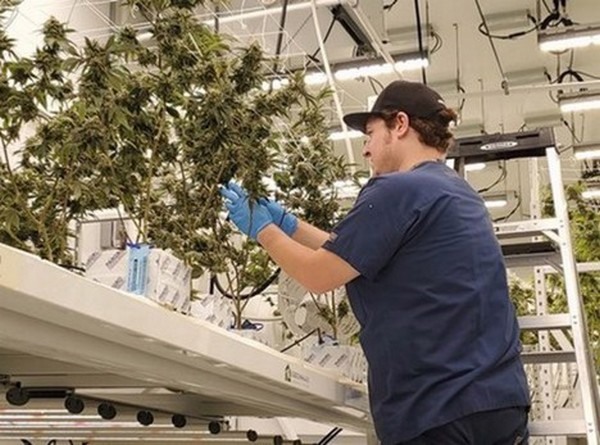
Jim Cacioppo, president and CEO, said: “The recent scheduling of state-licensed medical marijuana for Schedule III is an important milestone for the industry, eliminating 280E tax limitations for medical operations and supporting a more favorable long-term operating environment.” Medical sales accounted for about 60% of Jushi’s 2025 revenue, making this material relief.
iAnthus Capital: Revenue falls to $33.5 million
iAnthus Capital reported first-quarter revenue of $33.5 million, down $4.6 million from 2025’s first quarter. Gross margin was 47.5%, up 477 basis points from the 2025 quarter. The company did not provide a management comment in the press release.
Country farms: international export record, fourth consecutive quarter of net income
Village Farms International reported first quarter consolidated net sales of $50.2 million, up 27% year-over-year, with net income of $2.9 million and adjusted EBITDA of $9.9 million, up 118% year-over-year. International export sales increased 171% to a record $14.6 million, driven by demand for EU-GMP compliant products in Germany. Pure Sunfarms had the top Canadian market share in dried flowers for the 15th consecutive month. The company started planting the first half of its Delta 2 greenhouse expansion and expects its Phase II facility in the Netherlands to reach full capacity by the end of 2026, which would quadruple Dutch production.
Michael DeGiglio, President and CEO, said: “Our first quarter results reflect a strong start to the year and continued momentum in our largest markets, with adjusted EBITDA growth of 118% year-over-year, significantly outpacing revenue growth of 27%, driven by our international business and continued leadership in Canada.
Cronos Group: Record revenue, $822 million in cash
Cronos Group reported Q1 net income of $45.2 million, up 40% year-over-year and a record quarter, with net income of $15.7 million and adjusted EBITDA of $5.1 million. Israel led growth PEACE NATURALS grew 53% for ninth consecutive record quarter. In Canada, the Spinach brand took first place in vapes with a 9.8% share of the national market, and maintained its top spot in edibles at 20.8%. The company ended the quarter with $821.9 million in cash and authorized a new $50 million stock repurchase program. The deadline to close the acquisition of CanAdelaar, one of the ten licensed growers in the Dutch Controlled Cannabis Supply Chain Experiment, has been extended to September 9, 2026 to allow time for regulatory approvals.
Mike Gorenstein, chairman, president and CEO, said, “Cronos achieved net earnings and gross profit in the first quarter as we continue to execute against our unlimited product strategy and the additional supply from Cronos GrowCo’s expansion fuels the next phase of our growth.”
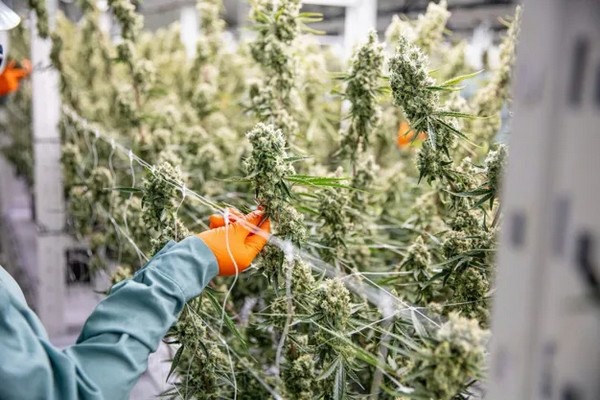
Org chart: Revenue down 9%, Sanity Group acquisition closes after quarter
Organigram Global reported fiscal second quarter net income of $59.8 million, down 9% year-over-year, with adjusted EBITDA of $0.9 million, down 82%. Lower vape and pre-infusion sales drove the decline, along with a $5.8 billion dent in the U.S. hemp business. The company achieved a record quarterly harvest of over 32,000kg at its Moncton facility, up 56% year-on-year, and launched 10 SKUs in Australia targeting over 4,000 pharmacies. At the end of the quarter, Organigram acquired Sanity Group, one of Germany’s leading cannabis companies, and updated its 2026 guidance to net revenue of more than $350 million.
James Yamanaka, CEO, said: “Q2 reflected our poor performance in vaporizers and temporary challenges in pre-infusion production, compounded by slower industry growth. We have acted quickly to address these issues, and the operational changes and product improvements we have implemented are already beginning to stabilize performance.”
Greg Guyatt, Chief Financial Officer, said: “The financial impact of the competitive and operational challenges encountered earlier in fiscal 2026 is believed to have materialized in the first half of the year, and we are now beginning to stabilize performance. We expect to resume a trajectory of margin expansion and improved profitability during the second half of the year, supported by positive revenue and international sales growth. The Sanity Group.”

FULL SHOW: Cannabis Legalization Right in the Middle of Dems & GOP! Ohio Opening Day for Adult Sales

THE LOTUS AND THE BUD | MEDICINE MAN [botanical medicine]

Cannabis Stock Q1 Financial Reports Were Not the Story – New Cannabis Ventures

Third cannabis business approved by Jefferson Town Council

Cannabis Earnings, Consolidation & The Healthcare Shift

Virginia Governor Signs Marijuana Resentencing Bill After Lawmakers Rejected Her Amendments

Freedom Grow Expands Its Mission from Prisoner Support to Nationwide Community Activation

081924WeedTalkNews- 1st Week Ohio Sales Results; Missouri Recall, Is Big Alcohol Ready to “Help”?

VETERANS FOR CANNABIS [medical marijuana]

Cannabis operators report mixed results as rescheduling reshapes the financial outlook

“Our system can manage equipment across 10,000+ m² using just a few wires”

Florida Workshop to Discuss What Constitutes a ‘Cartoon’ in Hemp Packaging

Mazar-i-Sharif Hash Wednesday

Afghan Black Hash Wednesday

Re-release of the full show of Cannabis Coast to Coast news. Republican Texas DA Fires Up vs. laws;

Weak Michigan Cannabis Sales Again in July – New Cannabis Ventures

From Finance to Wellness: Brad Zerman’s Impactful Pivot

DEA’s Cole Reverses His “priorities” ; Prohibitionists Dig In; Dead & Co Celebrates 60 years in SF

Your Cannabis Business: Consistent Filings Are Critical

Curaleaf Q2 Revenue Falls 8% – New Cannabis Ventures
-
 Cannabis News9 months ago
“Our system can manage equipment across 10,000+ m² using just a few wires”
-
 Florida9 months ago
Florida Workshop to Discuss What Constitutes a ‘Cartoon’ in Hemp Packaging
-
 Video7 months ago
Mazar-i-Sharif Hash Wednesday
-
 Video7 months ago
Afghan Black Hash Wednesday
-
 Video9 months ago
Re-release of the full show of Cannabis Coast to Coast news. Republican Texas DA Fires Up vs. laws;
-
 aawh9 months ago
Weak Michigan Cannabis Sales Again in July – New Cannabis Ventures
-
 Video9 months ago
From Finance to Wellness: Brad Zerman’s Impactful Pivot
-
 Video9 months ago
DEA’s Cole Reverses His “priorities” ; Prohibitionists Dig In; Dead & Co Celebrates 60 years in SF