
Cannabis News
Florida appeals court ruling tightens path for adult use cannabis ballot initiative


Florida appellate judgment last week It has added another layer of difficulty to efforts to place a recreational cannabis amendment on the state’s November 2026 ballot, reinforcing how narrow and procedural the road to voter initiatives has become in the state.
A three-judge 1st District Court of Appeal sided with state officials in a dispute over the validity of more than 70,000 petition signatures. The court upheld Secretary of State Cord Byrd’s guidelines that allow county election officials to void petitions signed by voters classified as inactive, as well as those collected by out-of-state circulators.
Smart & Safe Florida, the political committee sponsoring the amendment, is working to meet the state’s Feb. 1 deadline. The campaign must submit at least 880062 valid signatures to vote. According to the latest state count, just over 760,000 valid signatures have been verified so far.
 © GÜD EssenceJasmine Johnson, CEO of GŪD Essence
Proponents of the measure have argued that the decision increases the already rigorous petition process and increases the chance that voters will again be denied the chance to weigh in on adult-use legalization. However, state officials and opponents say the ruling reflects existing legal requirements and is intended to protect the integrity of the ballot initiative system.
“This decision highlights how complex and procedural Florida’s voting process is, especially when it comes to an issue as highly regulated as cannabis,” said Jasmine Johnson, CEO of GŪD Essence. “Regardless of where one stands on adult use, the ruling underscores that ballot initiatives are being closely scrutinized and that courts continue to delay enforcement of state law requirements.”
According to Jasmine, Florida already operates one of the most restrictive cannabis frameworks in the US, with a limited licensing structure and extensive compliance requirements for medical marijuana treatment centers. Jasmine says the uncertainty surrounding the voting effort reinforces the need for realism among operators and policymakers. “From the perspective of a soon-to-be MMTC operator preparing to enter the Florida market, this moment reinforces some important realities,” he said. “Florida’s cannabis landscape is already one of the most regulated in the country, and any expansion, whether for medical or adult use, will require careful implementation, strong enforcement infrastructure and clear guardrails.”
For industry participants, Jasmine noted that the focus cannot be on a single regulatory outcome. “The uncertainty surrounding the ballot initiative makes it even more important for regulators, policymakers and industry stakeholders to have transparent conversations about how legalization will unfold in practice. For operators building now, the focus is on serving care patients responsibly, investing in compliant facilities, and planning for multiple possible regulatory outcomes rather than assuming a single path forward.”
For more information:
GÜD Essence
https://greenessenceflorida.com








Cannabis News
New access solution for cannabis facilities designed to address limitations of traditional gates
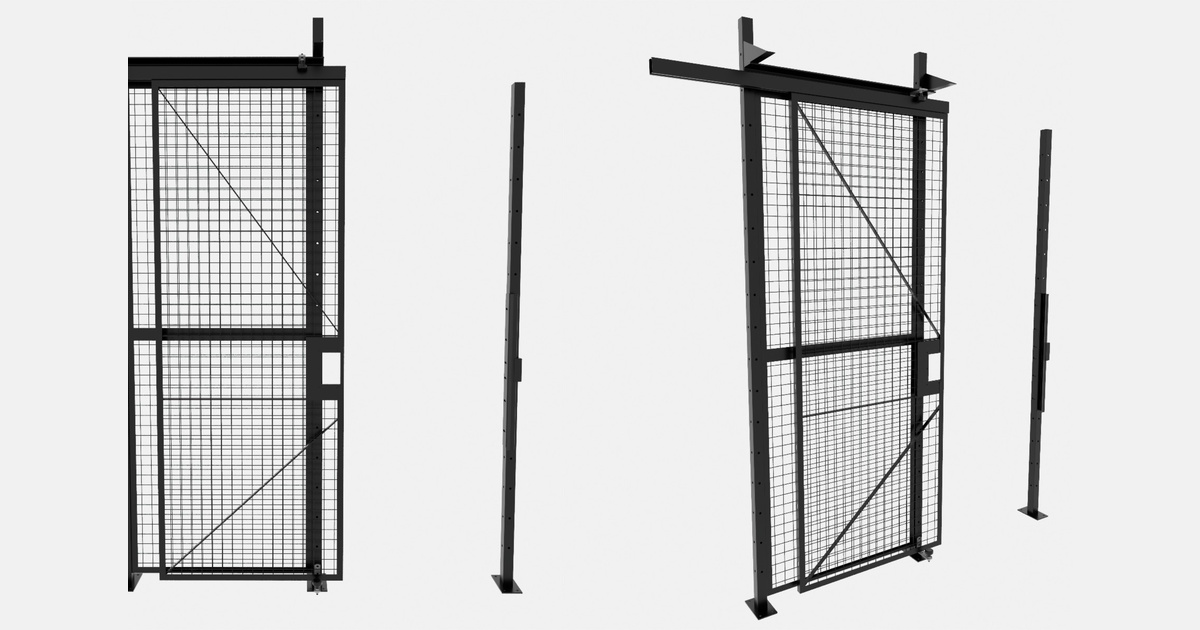
SpaceGuard Products, a North American manufacturer of wire mesh security solutions and security protection systems, has released the BeastWire® Tunnel Door. This access solution is designed to overcome the limitations of traditional balanced doors and is aimed at cannabis cultivation, processing, packaging and distribution environments. The BeastWire Tunnel Door is designed for installations that require vertical clearance, reliable movement and floor space efficiency.
The BeastWire Tunnel Door provides top clearance with no tracks in the operating path of the door. It is suitable for spaces where overhead paths are not feasible, such as facilities that use high-mast forklifts, oversized pallet loads or specialized material handling equipment. Tall equipment can pass through the opening unhindered, allowing for continuous workflow and flexibility in equipment movement.
 © SpaceGuard Products
The door uses a track system designed to create consistent movement. This addresses issues such as stuttering, binding, and misalignment that can occur with conventional sliding or counterbalanced designs. The track controls the path of the door so that the locking mechanism aligns with each cycle, allowing operators to close the door with relatively low force.
Unlike lower track systems that require a soil trench, the BeastWire Tunnel Door mounts above ground. This avoids cutting the installation slab, simplifies installation and reduces maintenance requirements. The system can be installed as a retrofit or in new construction, without changing the floor.
 © SpaceGuard Products
The door frame and retractable design reduces the need for side supports and additional space on the side of the door. This results in a smaller footprint and more usable surface area. The gate has the same construction approach as other BeastWire systems.
The BeastWire Tunnel Door is a high-access door designed for strength and ease of use in cannabis industry facilities.
For more information:
SpaceGuard products 
Email: (email protected)
spaceguardproducts.com/
Cannabis News
DEA Defends Stance That Synthetic Cannabis Compound HHC Is Federally Banned In Response To Industry Lawsuits

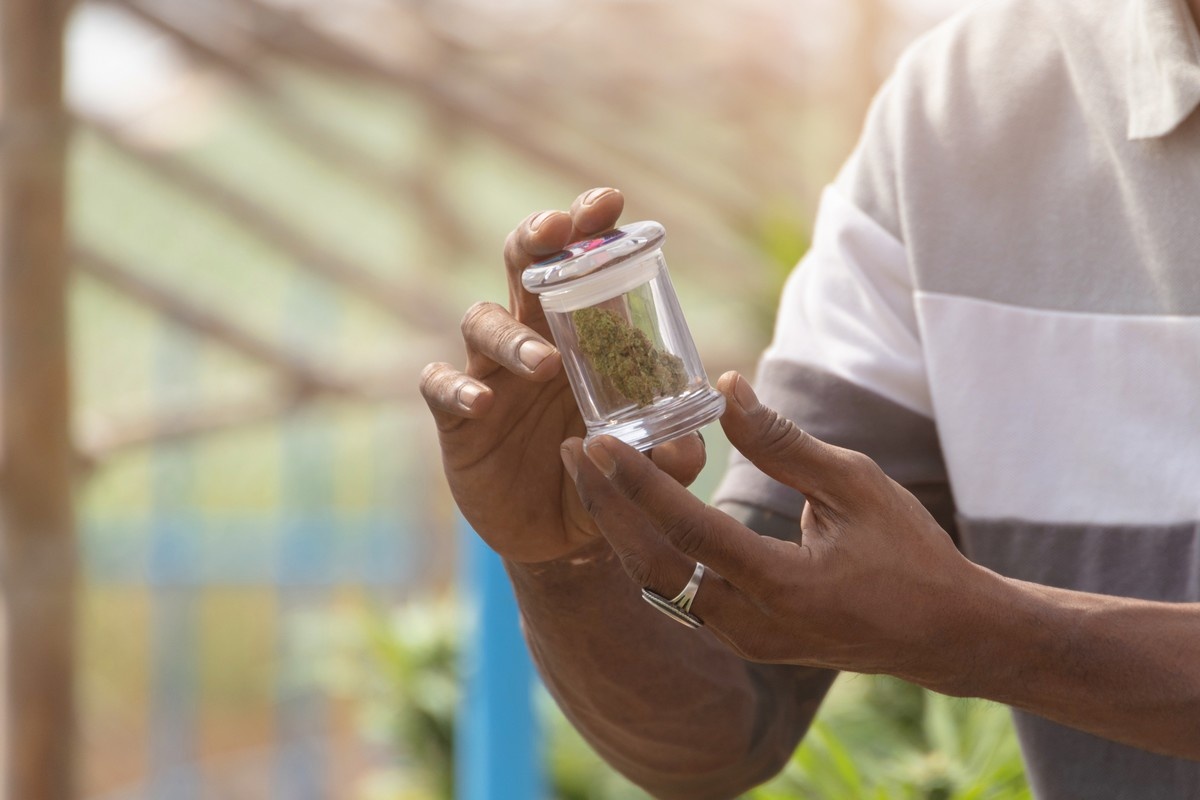
A cannabis company called Good Behavior is seeking approval from the city of Yorkville, Illinois, to open a dispensary on a 0.93-acre plot along Saravanos Drive, west of South Bridge Street and south of Stagecoach Trail, becoming the latest entrant in a string of cannabis proposals the city has previously rejected. The company has filed a special-use application with the city and is staking its case on the tax revenue a dispensary would generate for Yorkville.
Full details of the application, including projected tax figures, the company’s ownership structure and details of any board discussions, are available to Shaw Local News Network subscribers. The article, reported by Shaw Local News Network’s Joey Weslo and published on June 23, 2026, notes that cannabis companies had previously failed to get city approval before Good Behavior presented its proposal.
The proposed site places the dispensary in a commercial corridor to the south of the city. Good Behavior’s application requires a special use permit from Yorkville before the project can proceed.
Source: local Shaw

Coast to Coast Cannabis News Reports – Massachusetts Rids THC Infused Drinks from Liquor Stores

CANNABIS GLASS HOUSE | KYLE KAZAN

Marijuana Retail Report

New access solution for cannabis facilities designed to address limitations of traditional gates

Canopy Growth’s Year of Reinvention Under Luc Mongeau

DEA Defends Stance That Synthetic Cannabis Compound HHC Is Federally Banned In Response To Industry Lawsuits

Report: Cannabis Industry Jobs Fell 2.7% Year-Over-Year

Is New Hampshire ready to go Adult use legal? CWCB & Flower Expo previews C Block of Weed Talk News

TOMMY CHONG

Marijuana Retail Report

“Our system can manage equipment across 10,000+ m² using just a few wires”

Florida Workshop to Discuss What Constitutes a ‘Cartoon’ in Hemp Packaging

Mazar-i-Sharif Hash Wednesday

Afghan Black Hash Wednesday

Weak Michigan Cannabis Sales Again in July – New Cannabis Ventures

From Finance to Wellness: Brad Zerman’s Impactful Pivot

DEA’s Cole Reverses His “priorities” ; Prohibitionists Dig In; Dead & Co Celebrates 60 years in SF

Re-release of the full show of Cannabis Coast to Coast news. Republican Texas DA Fires Up vs. laws;

Your Cannabis Business: Consistent Filings Are Critical

Curaleaf Q2 Revenue Falls 8% – New Cannabis Ventures
-
 Cannabis News10 months ago
“Our system can manage equipment across 10,000+ m² using just a few wires”
-
 Florida10 months ago
Florida Workshop to Discuss What Constitutes a ‘Cartoon’ in Hemp Packaging
-
 Video9 months ago
Mazar-i-Sharif Hash Wednesday
-
 Video9 months ago
Afghan Black Hash Wednesday
-
 aawh10 months ago
Weak Michigan Cannabis Sales Again in July – New Cannabis Ventures
-
 Video10 months ago
From Finance to Wellness: Brad Zerman’s Impactful Pivot
-
 Video10 months ago
DEA’s Cole Reverses His “priorities” ; Prohibitionists Dig In; Dead & Co Celebrates 60 years in SF
-
 Video10 months ago
Re-release of the full show of Cannabis Coast to Coast news. Republican Texas DA Fires Up vs. laws;