Connect with us

Cannabis News

Michigan Sheriff Running For Governor Pledges To Repeal Marijuana Tax Increase

Published

on

“We cannot balance state budgets on the backs of one industry. Excessive taxation drives consumers back to the illegal market and shrinks the legal one.”

By Katherine Dailey, Michigan Advance

Genesee County Sheriff and Democratic gubernatorial candidate Chris Swanson was adamant. A 24 percent cannabis tax was approved as part of the 2026 budget Gov. Gretchen Whitmer’s (D) plan to fund road repairs across the state.

In a video posted to Facebook Friday evening, Swanson promised that, if elected, he would work to repeal the tax, saying it is “not fair and just” to an industry that provides goods and services, as well as jobs, to the state of Michigan.

Swanson’s campaign added in a press release that the tax “undermines the legal market and the intent of voter-approved legalization,” referring to the 2018 ballot initiative that legalized cannabis in the state of Michigan.

“As governor, I will work to roll back the 24 percent wholesale excise tax to ensure fairness and equity,” the press release continued. “We cannot balance state budgets on the backs of one industry. Excessive taxation drives consumers back to the illegal market and shrinks the legal one.”

“I’ve never been a fan of fixing budget issues by targeting one industry, and that’s what happened,” Swanson said in the video. “The people spoke. This is an industry that’s here to stay. And anything that tries to disrupt that is going to be non-negotiable for this administration. And we’re also going to keep it from expanding into the black market, where they can lead to other, more dangerous situations. So we’re going to make sure that this industry is taken care of.”

The tax narrowly passed the State Legislature in early October and came into force in early 2026, and has been heavily criticized…and even taken to court—the leaders of the cannabis industry— because they harm the industry and the small companies that make it up.

Swanson’s press release also quoted Robin Schneider, executive director of the Michigan Cannabis Industry Association, as praising his opposition to the tax, a law enforcement agency focused primarily on keeping the industry out of the black market.

“Candidate Chris Swanson came out publicly against a 24 percent wholesale tax,” Schneider said. “Now it’s up to us to build momentum behind the message that we’re brave enough to carry.”

Swanson also emphasized in the press release that he still plans to fund the kinds of infrastructure projects that cannabis taxes will fund.

“It’s about doing what’s right for Michigan. Even with the repeal of this tax, I’m 100 percent committed to funding all future road and bridge projects. That’s a priority, too,” he said. “Supporting a fair system protects people, strengthens small businesses and respects voters who have made their voices heard.”

Swanson has trailed Secretary of State Jocelyn Benson (D) in polls and campaign fundraising in the primary, but has continued to campaign ahead of the August primary.

This story was first published by the Michigan Advance.

Marihuana Moment is made possible with the help of readers. If you rely on our pro-cannabis journalism to stay informed, consider a monthly Patreon pledge.

Continue Reading

Cannabis News

New access solution for cannabis facilities designed to address limitations of traditional gates
Published

on

By


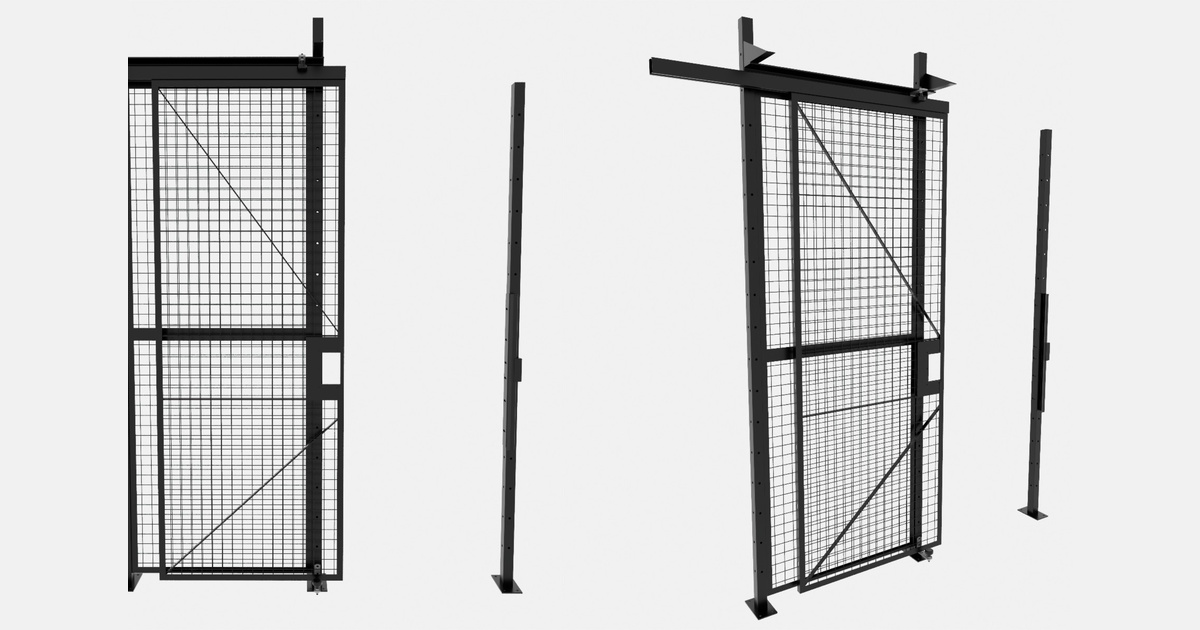
SpaceGuard Products, a North American manufacturer of wire mesh security solutions and security protection systems, has released the BeastWire® Tunnel Door. This access solution is designed to overcome the limitations of traditional balanced doors and is aimed at cannabis cultivation, processing, packaging and distribution environments. The BeastWire Tunnel Door is designed for installations that require vertical clearance, reliable movement and floor space efficiency.

The BeastWire Tunnel Door provides top clearance with no tracks in the operating path of the door. It is suitable for spaces where overhead paths are not feasible, such as facilities that use high-mast forklifts, oversized pallet loads or specialized material handling equipment. Tall equipment can pass through the opening unhindered, allowing for continuous workflow and flexibility in equipment movement.

© SpaceGuard Products

The door uses a track system designed to create consistent movement. This addresses issues such as stuttering, binding, and misalignment that can occur with conventional sliding or counterbalanced designs. The track controls the path of the door so that the locking mechanism aligns with each cycle, allowing operators to close the door with relatively low force.

Unlike lower track systems that require a soil trench, the BeastWire Tunnel Door mounts above ground. This avoids cutting the installation slab, simplifies installation and reduces maintenance requirements. The system can be installed as a retrofit or in new construction, without changing the floor.

© SpaceGuard Products

The door frame and retractable design reduces the need for side supports and additional space on the side of the door. This results in a smaller footprint and more usable surface area. The gate has the same construction approach as other BeastWire systems.

The BeastWire Tunnel Door is a high-access door designed for strength and ease of use in cannabis industry facilities.

For more information:
SpaceGuard products
Email: (email protected)
spaceguardproducts.com/


Continue Reading

Cannabis News

DEA Defends Stance That Synthetic Cannabis Compound HHC Is Federally Banned In Response To Industry Lawsuits
Published

on

By

The Drug Enforcement Administration (DEA) is resisting efforts by two hemp companies to resist the determination that it is a cannabinoid It is illegal synthetically produced from components of the cannabis plant.

The DEA issued a rule last month saying that was already the case made hexahydrocannabinol (HHC) an illegal substance Under the federal Controlled Substances Act (CSA), the agency will now assign the compound its own unique drug code for classification.

That move is being challenged in a series of lawsuits by hemp businesses that say the agency’s decision is “unlawful.”

In addition to filing petitions for review, the companies are also petitioning federal courts to block the agency’s action while the lawsuits proceed.

The DEA, in briefs filed in the cases this week, argued that each applicant “does not meet any of the factors necessary to demonstrate that it should await review.”

“The rule does not affect HHC’s previous status as a Schedule I substance; all it does is list HHC separately and assign it a separate drug code,” the agency’s brief said.

“With or without the final rule, HHC is a controlled substance. Thus, even if this Court stayed the final rule pending review, (companies) would continue to be subject to existing legal and commercial risks for HHC-related actions,” they say, “Contrary, the suspension would undermine the government’s efforts to improve the regulation of HHC, including the permitted amount or approval process for public permits for HHC. Interests also favor a stay, which would create confusion about HHC’s status as a controlled substance.”

HHC can be found in trace amounts in cannabis plants, but it is also synthesized from hydrogenated cannabidiol (CBD). Delta-9 is sometimes sprayed on cannabis flowers that are low in THC, the most well-known psychoactive ingredient in marijuana, and its psychoactive effects are said to be similar.

While the 2018 Farm Bill legalized hemp and its derivatives with less than 0.3 percent delta-9 THC, the DEA says that only applies to naturally occurring cannabinoids, not synthetic ones. Accordingly, the agency’s position is that HHC does not fall within the definition of legal hemp.

One of the pending cases, filed by Bluestar Operations, LLC before the US Court of Appeals for the Fourth Circuit, refers to a prior ruling in that jurisdiction. the hemp-derived cannabinoid THC-O-acetate is federally legal Despite the DEA’s claims to the contrary.

“Congress deliberately used broad statutory language and did not prohibit cannabinoids that are subject to common extraction, refining, conversion, hydrogenation, distillation, or similar manufacturing processes commonly used in the hemp industry,” the complaint states.

The DEA’s move “conflicts with the plain text, structure, and intent of the 2018 Farm Bill and inserts unlawful limitations that Congress neither intended nor enacted,” it says. The agency’s action “has already caused specific and immediate harm to the petitioner, including substantial compliance costs, business uncertainty, reputational damage, disruption of business relationships, and interference with ongoing operations.”

“Congress, not executive agencies such as the DEA, defines the scope of federal criminal liability. The DEA has no authority to curtail Congress’s legalization of hemp-cannabinoids through an interpretive construction that the statutory text does not support.”

Bluestar said in its new response to the DEA’s initial response brief that the agency “cannot defend the merits of treating hemp-derived HHC as a Schedule I controlled substance, which this Court rejected against binding Circuit precedent” in the previous ThC-O-acetate case.

“The respondents have recast the impugned DEA rule as a weightless ‘technical correction’ that harms no one and decides nothing,” he said. “They have then flipped the script by arguing that Bluestar lacks standing to challenge. Respondents can’t have it both ways.”

The other new lawsuit was filed by IHC Investments, Inc. in the U.S. Court of Appeals for the Ninth Circuit, which previously ruled on the federal legalization of hemp through the 2018 Farm Bill. removed the limits on the wide range of molecules produced by the cannabis plant-delta-8 including the psychoactive cannabinoid THC.

The petition states that “the DEA effectively, and therefore unlawfully, attempts to expand federal criminal liability through administrative interpretation that is not supported by the plain statutory text of the enabling legislation.”

“Congress did not prohibit converted cannabinoids, hydrogenated cannabinoids, or cannabinoids subject to common processing techniques,” the complaint states. “Congress did not expressly authorize the DEA to criminalize broad categories of hemp-derived cannabinoids through administrative interpretation.”

Both petitions argue that the DEA’s move last month violates the central question doctrine, which holds that if an agency wants to decide a matter of national importance, that action must be protected by clear authorization from Congress.

The agency’s HHC ban “has enormous economic and political significance affecting the multibillion-dollar nationwide hemp industry,” says the lawsuit brought by Bluestar.

David Sergi, the attorney leading the new Ninth Circuit case for IHC Investments, said in a press release Thursday that the DEA’s action “directly conflicts” with the 2018 federal Farm Bill legalizing hemp and its derivatives.

“The DEA’s ruling has caused immediate and specific harm to hemp businesses across the nation,” he said. “That reclassification has led to immediate cancellation of contracts, loss of banking relationships and potential destruction of important inventory.”

The DEA, for its part, said in a rule it filed last month that “only tetrahydrocannabinols in or derived from the cannabis plant — not synthetic tetrahydrocannabinols — are exempt from regulation as ‘hemp tetrahydrocannabinol.’

“For further clarification, tetrahydrocannabinols produced through chemical conversion, even when considered synthetically produced when derived from hemp for purposes of the CSA, are not classified as ‘tetrahydrocannabinol in hemp'” under the 2018 Farm Bill, the agency said.

The Federal Register notice was not the first time the DEA addressed HHC’s legal status.

In a 2023 letter, Terrance Boos, chief of the DEA’s Drug and Chemical Evaluation Section, wrote: HHC “does not occur naturally in the cannabis plant and can only be obtained syntheticallyand therefore it is not within the definition of hemp”.

The new filing, signed by DEA Administrator Terrance Cole, said, “this rule does not in any way affect the continued status of hexahydrocannabinol as a controlled substance.”

“This action, as an administrative matter, establishes a separate and specific listing of hexahydrocannabinol in Schedule I of the CSA and assigns a DEA drug code to that substance,” he said. “This action will allow the DEA to establish an aggregate production quota and issue individual manufacturing and purchase quotas to DEA-registered manufacturers of hexahydrocannabinol, which were previously issued individual quotas for these purposes under the tetrahydrocannabinol drug code.”

The DEA’s release cited a move it made last year International drug control organizations to add HHC II of the 1971 United Nations Convention on Psychotropic Substances—but the document fails to note that when the Commission on Narcotic Drugs (CND) took the measure, the US was the only country to abstain from voting.

The DEA said the US Department of Health and Human Services (HHS) “conforms to the direct listing and drug code assignment of hexahydrocannabinol in the CSA.”

Meanwhile, under provisions of a large-scale spending bill signed by President Donald Trump late last year, the federal definition of legal cannabis will change in November. If that language does not change or its the effective date has been postponed, as requested by some members of parliamentonly hemp products with a total of 0.4 milligrams of THC per container will remain legal after November 12th.

At the same time, however, the Trump administration is going wider reschedule marijuana under federal lawwith a A DEA hearing on the matter will begin next week.

Read the last one signings in the following cases:

Photo by Mike Latimer.

Marihuana Moment is made possible with the help of readers. If you rely on our pro-cannabis journalism to stay informed, consider a monthly Patreon pledge.

Continue Reading

Cannabis News

Good Behavior dispensary applies to open in Yorkville

Published

on

By


A cannabis company called Good Behavior is seeking approval from the city of Yorkville, Illinois, to open a dispensary on a 0.93-acre plot along Saravanos Drive, west of South Bridge Street and south of Stagecoach Trail, becoming the latest entrant in a string of cannabis proposals the city has previously rejected. The company has filed a special-use application with the city and is staking its case on the tax revenue a dispensary would generate for Yorkville.

Full details of the application, including projected tax figures, the company’s ownership structure and details of any board discussions, are available to Shaw Local News Network subscribers. The article, reported by Shaw Local News Network’s Joey Weslo and published on June 23, 2026, notes that cannabis companies had previously failed to get city approval before Good Behavior presented its proposal.

The proposed site places the dispensary in a commercial corridor to the south of the city. Good Behavior’s application requires a special use permit from Yorkville before the project can proceed.

Source: local Shaw


Continue Reading
Advertisement

Trending

Copyright © 2021 The Art of MaryJane Media