Connect with us

Cannabis News

How Psychedelics Helped Me Manage Grief From A Career In Law Enforcement (Op-Ed)

Published

on

“What I experienced with ayahuasca was not an escape from grief, but a direct engagement with it… It was a fundamentally different process than what I had relied on throughout my career: not control or oppression, but forgiveness, surrender and understanding.”

By: Kemmi Sadler, Law Enforcement Action Partnership

Life has an interesting way of opening the eyes and the mind. Throughout my law enforcement career, I built my identity around evidence, discipline, and control. And to my surprise, it was this mindset that eventually led me to rethink everything I thought I knew about psychedelics.

My story begins with Amel. He was sixty years old and working for the US embassy in Iraq on his second tour when I arrived in 2006 as a bright-eyed young agent in the Diplomatic Security Service. In early 2007, her husband was kidnapped. He decided to save her, went to rescue her, and was taken away. Neither of them survived.

For the next 18 years, I felt I had to protect him—or at least stop him from going.

That guilt had a way of surfacing at unexpected moments. I felt how deeply grief had shaped me, even though I had kept it buried. But in a profession built around helping others, it’s hard to admit when you need help yourself.

So I went back to work.

My career included investigating fraud and human trafficking, followed by two years in internal affairs handling sexual assault and crimes against children. I prided myself on approaching each case without bias, following the evidence, testing hypotheses, and letting the facts guide me.

This commitment to evidence was ingrained early on, and it led me to question some basic assumptions about law enforcement. As a young police officer with the St. Augustine Police Department in Florida, I began to notice gaps between what the system was supposed to do and what it actually did. Not everyone was as afraid of arrest as I expected. Drug users, dealers, sex workers—they were often considered part of the equation. This time I got caught. Next time, I’ll be more careful.

Those early experiences brought to the fore a question I couldn’t shake: If consequences are supposed to change behavior, why not? I saw the same people over and over again through the system. A man, known to our department, got drunk, called 911 from a pay phone and yelled, “CHICKEN GEORGE IS COMING!” until the officers arrive. Looking back, I wonder if the detention itself offered something he didn’t get anywhere else—human interaction or just a night on the street.

The same instinct that led me to rethink aspects of my work also shaped how I began to deal with my unresolved grief. For years, I relied on the same framework to get by: control, compartmentalization, moving forward. But eventually, I began to wonder if the assumptions I made about trauma, like the ones I questioned at work, were incomplete.

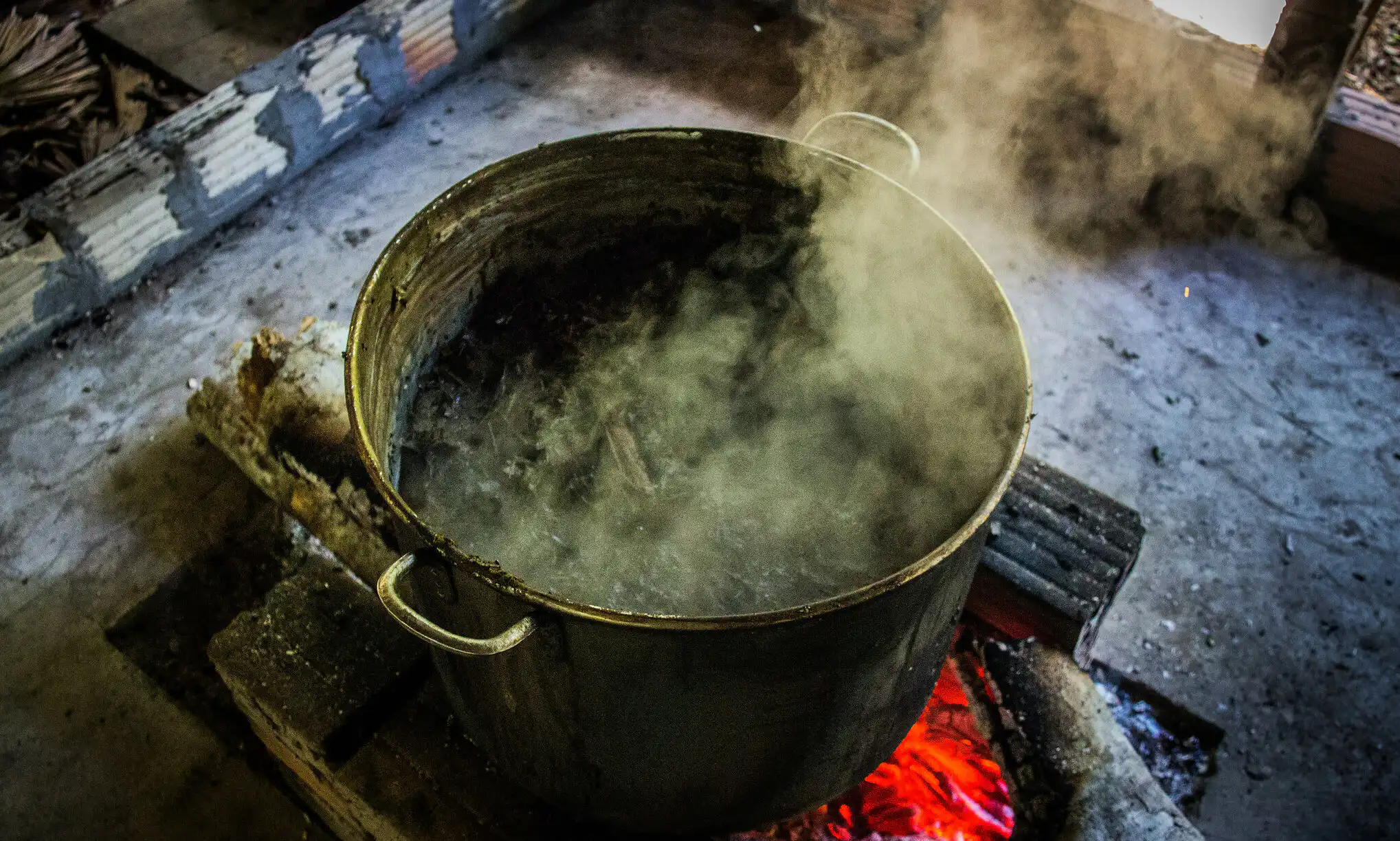
Two years before I retired, I heard about ayahuasca on a podcast. It is a psychedelic preparation made from an Amazonian vine and a companion plant, used in ceremonial traditions for generations. What surprised me was not just what it was, but how it was discussed: with respect, even reverence.

This challenged a fundamental tenet of my law enforcement programming. As a product of the war on drugs, I believed that all illegal drugs were dangerous and destructive.

But after decades of watching cycles of addiction repeat themselves, and after losing my younger brother to heroin, I was forced to question whether this understanding was too simplistic.

So I did what I was trained to do. I researched it.

For over a year, I immersed myself in research on trauma and psychedelic therapy. I read clinical studies and heard veterans and others describe deep and often lasting healing and relief. At first, I was driven by intellectual curiosity and a commitment to follow the evidence, even if the conclusion directly contradicted what I had been taught. But beneath that curiosity was something more personal: the recognition that the tools I had relied on to manage my grief for decades were no longer working for me.

For years, I dealt with grief as many in our field do, mostly by repressing it and soldiering on. These skills were enough to keep me in the job. But in the retreat, they left me stuck, circling the same unresolved loss with no way out.

After careful consideration, I chose to attend an ayahuasca ceremony. At that time, I had never used illegal drugs. My substances were limited to alcohol and tobacco, both legal, socially acceptable and, in my case, convenient ways to deal with the grief bubbling under the skin.

What I experienced with Ayahuasca was not an escape from grief, but a direct engagement with it. The breakthrough wasn’t immediate, but with deliberate work and preparation, I was finally able to sit with the loss of Amel and the deaths of my father and brother without walking away. It was a different process than what I’ve relied on throughout my career, not control or oppression, but forgiveness, surrender and understanding.

This experience ultimately led me to write From the Badge to the Vine, a memoir about what it took to deal with years of trauma and the limitations of the tools I once relied on to manage it.

After a career spent investigating other people’s problems, I saw how rarely first responders are equipped or willing to examine their own injuries. The skills that define the profession—control, composure, endurance—can also make it harder to recognize when something deeper needs attention.

Trauma does not go away because it is repressed or managed. For some of us, that reality may not come into focus until after work is done and the radio is turned off. For others, the impact appears much earlier, in strained relationships, harmful behaviors, or a growing sense that something is not right but cannot be easily named.

What I have learned through this process is that ignoring these signs comes at a cost. Even assuming that the tools we were given at the beginning of our careers are the only ones available to us.

It is my hope that others in this profession will allow themselves to turn their investigative eyes inward in an effort to serve themselves. Ask the tough questions. Do your research. Follow the evidence where it leads. Not all things we were taught to fear are the same, and not all wounds are visible.

Special Agent in Charge Kemmi Sadler (Ret.) is the founder of Legalize the Divine, which advocates for safe and legal access to ancient healing traditions. A former St.Augustine, Florida Police Department officer, he is also a speaker for the Law Enforcement Action Partnership, and the author of From the Badge to the Vine: A Federal Agent’s Awakening Through Ayahuasca.

Marijuana Moment is made possible with the help of readers. If you rely on our pro-cannabis journalism to stay informed, consider a monthly Patreon pledge.

Continue Reading
Click to comment

Leave a Reply

Your email address will not be published. Required fields are marked *

Cannabis News

Village Farms opens Groningen facility to quintuple Dutch cannabis output

Published

on

By

Village Farms opened its new cannabis facility this morning in Groningen, the Netherlands, a building designed from the ground up around the crop, with an aroma system so precisely calibrated, the surrounding businesses could stand next to a tomato grower.

Dutch roots run deeper than the board members’ accents might suggest. The company’s relationship with the Netherlands goes back many years, and the Groningen location is an extension of the work begun in Drachten, where Village Farms began farming last year using practices carried over from its Canadian operations. The new facility is where that learning is applied at scale.

“Nearly four decades ago, we started bringing Dutch technology to North America. We’ve always worked with Dutch partners, and many of our producers and engineers are Dutch or have Dutch heritage. It’s like coming home.”

© Arlette Sijmonsma | MMJDaily.com

Village Farms entered the Dutch market through its majority-owned subsidiary Leli Holland, which holds one of ten licenses granted by the Dutch government to legally produce recreational cannabis and distribute it to participating cafes.

Once fully ramped up, Village Farms anticipates a production capacity of around 10 tonnes in the Netherlands, enough to quintuple its production for the Dutch cannabis trial and position the company for wider access to the European market. Orville Bovenschen, President of Canadian Cannabis and Leli Holland and Mike DeGiglio, CEO and founder, highlighted their confidence in the Dutch market, as well as growing in Europe. “We believe in the power of cannabis.”

© Arlette Sijmonsma | MMJDaily.com

Village Farms started its Dutch farming operations in the nearby town of Drachten last year, using farming practices developed through its Canadian experience to set up the facility. The new Groningen location represents a continuation and improvement of this established direction, with the building completely designed around the cultivation requirements. Special attention was paid to the odor control system, ensuring that nearby businesses could be located next to a tomato plant.

The opening featured an artwork by local artist Ben that reflects the company’s history: strong roots in vegetables and a future in cannabis.

More technical details to follow on Monday!

© Arlette Sijmonsma | MMJDaily.com

© Arlette Sijmonsma | MMJDaily.com

© Arlette Sijmonsma | MMJDaily.com

For more information:
Village Farms International Inc.
Phone: +1 (407) 936-1190
villagefarms.com

Continue Reading

Cannabis News

White House Weighs In On Hemp Legislation As GOP Lawmaker Pushes Accelerated THC Product Ban

Published

on

By

White House officials are commenting on pending legislation to create a regulatory framework for hemp amid a flurry of lawmakers’ proposals on the issue, including a new amendment slated for November to speed up the recriminalization of hemp-derived THC products.

On Tuesday, Vince Haley, director of the White House Domestic Policy Council, and James Braid, assistant to the president for legislative affairs, sent suggestions on hemp policy to Rep. Andy Barr (R-KY), who is helping lead efforts to establish regulations for the plant as an alternative to prohibition.

“We appreciate your work to advance policy” in an executive order President Donald Trump signed in December that included provisions to protect Americans’ access to CBD products, the staff wrote in a letter to the congressman.

“We are submitting draft legislation and comments to your account to address the final statutory definition of hemp-derived cannabinoid products to ensure that Americans have access to adequate full-spectrum CBD products while maintaining Congress’ intent to limit the sale of products that pose serious health risks,” White House officials said, according to a social media screencast. “We are open to discussion and further technical assistance.”

An attachment to the administration’s proposed legislative text was not included in the message, and the White House and Barr’s office did not immediately respond to Marihuana Moment’s request for more details.

Barr introduced a hemp amendment to the pending Farm Bill this weekbut later withdrew for reasons he did not announce.

It’s not clear from the text of the letter whether the White House was proactively sending legislative proposals to the lawmaker or whether they were responding to something sent by his office, though two cannabis industry sources suggested to Marihuana Moment that Barr was sending the language to the administration, and then providing technical feedback.

Barr’s now-withdrawn amendment, according to the sponsor’s summary, “changes the definition of hemp to protect the legal hemp market by creating a regulatory framework that protects children, bans synthetics, and ensures that products on the market are of American origin.”

Meanwhile, Rep. Mary Miller (R-IL) also introduced a new Farm Bill amendment to take effect on November 12 that she said “accelerates the implementation of the hemp reduction provisions.”

Instead, under his proposal, the ban would go into effect the day the new Farm Bill takes effect — though it’s unclear when that will be based on current progress in Congress, and the legislation could not be passed until after the current recriminalization date, making the change controversial.

Hemp derivatives containing less than 0.3 percent delta-9 THC by drug weight were made federally legal under the 2018 Farm Bill signed by Trump during his first term. But late last year, the president signed new legislation containing provisions that will redefine hemp so that only products with a total of 0.4 milligrams of THC per container will be legal starting November 12th.

Trump this week It inspired lawmakers in Congress to take action to change the currently planned hemp banand suggested that this threatens to federally recriminalize full-spectrum CBD products.

“I’m calling on Congress to update the Act so Americans can continue to have access to the full-spectrum CBD products they trust and support, while maintaining Congress’ intent to restrict the sale of products that pose health risks,” the president said in a Truth Social message Thursday, the same day his administration announced it is moving forward to re-regulate marijuana.

“We need to do this RIGHT and FAST, especially for those who have found CBD to help them,” he said. “Also, I’m told it will help our BIG FARMERS that we love and will always be around.”

Barr echoed the president’s comments, saying in his message that he is “working in Congress to pass these critical reforms so farmers can have certainty and Americans continue to have access to safe and reliable hemp-derived products.”

An additional Farm Bill amendment by Reps. James Comer (R-KY) and Kelly Morrison (D-MN) would push back the federal recriminalization of THC hemp products for another year.

Amendments to the Farm Bill, known as the Farm, Food and National Security Act of 2026, or HR 7567, will be considered by the Rules Committee next week. That panel will decide whether or not the proposals can receive votes on the House floor.

Rep. Jim Baird (R-IN) had it introduced the hemp ban delay amendment before the House Agriculture Committee when it took up the Farm Bill last month, but the president of that panel determined that the proposal was not in line with the legislation.

The Farm Bill passed by the previous committee includes provisions to help the hemp industry and farmers who grow cannabis for industrial purposes, such as fiber and grain. For example, the legislation would amend statutes related to states and tribes developing regulatory plans for industrial hemp production, including policies on testing, sampling, background checks and record keeping.

Other bipartisan hemp reform bills are pending in Congress.

Last week, for example, it was introduced by Senators Rand Paul (R-KY), Amy Klobuchar (D-MN) and Joni Ernst (R-IA). The Hemp Safety Enforcement Act, which would give states the option of federal recriminalization of THC hemp products. it will be established this year.

Ernst on Wednesday, however, withdrew his name as a sponsor of the legislation. His office did not respond to Marihuana Moment’s request for clarification on the move.


It’s Marijuana Time tracking hundreds of cannabis, psychedelic and drug policy bills in state legislatures and Congress this year. Patreon supporters by pledging at least $25/month, you’ll get access to our interactive maps, charts, and audio calendars so you never miss a development.


Learn more about our marijuana bill tracking and become a Patreon supporter to gain access

The US Department of Agriculture published this month shows that US farmers grow $3 billion in hemp crops by 2025— 64% increase compared to the previous year.

Meanwhile, this month the Trump administration launched a new initiative Cover up to $500 of hemp-derived products annually for eligible Medicare patients. The program being implemented by the Centers for Medicare and Medicaid Services (CMS) focuses largely on CBD, but also allows a certain amount of THC in products.

Anti-marijuana organizations filed a lawsuit against the Medicare hemp coverage policyand Health and Human Services attorneys. Robert F. Kennedy Jr. and CMS Director Mehmet Oz recently He submitted a letter requesting the filing of the case.

Meanwhile, the White House Management and Budget Office has held a series of meetings a Food and Drug Administration (FDA) CBD product enforcement policy.

The FDA also issued guidance making it clear that it does not intend to interfere Establish a Medicare coverage plan for hemp-derived products.

CMS finalized a rule that will be adopted separately Coverage of certain hemp products, primarily as specialized health-related benefits, through Medicare Advantage the plans

As hemp products become more popular among consumers, some big brands are trying to get in on the action.

The main retailer Target, for example, is expanding its market share of hemp-derived THC beverages. Last year, the company began a pilot program selling cannabis beverages at 10 stores in Minnesota. That apparently went well, and now the company has secured licenses from Minnesota regulators to sell lower-potency edible hemp products — including THC drinks — in 72 stores in the state.

Marijuana Moment is made possible with the help of readers. If you rely on our pro-cannabis journalism to stay informed, consider a monthly Patreon pledge.

Become a patron on Patreon!

Continue Reading

Cannabis News

Australian medicinal cannabis sales fall nearly 30% in second half of 2025

Published

on

By

Australian medicinal cannabis sales fell 28.5% in the second half of 2025 compared to the first half of the year, according to new data released by the Penington Institute in April 2026, marking the first significant drop in sales recorded since the country’s medicinal cannabis framework was introduced in 2016.

Data obtained by the Penington Institute from the Australian Department of Health, Disability and Aging through a freedom of information request shows sales peaked at 3.72 million units in the second half of 2024 and remained at 3.70 million units in the first half of 2025, before falling to 2.65 million units in the second half of the year. The decline followed a period of particularly significant growth in late 2023 and 2024, driven by increasing scrutiny from regulators and medical organizations over prescribing practices.

The Penington Institute attributes the reversal largely to a stepped-up enforcement campaign that has unfolded on multiple regulatory fronts since 2023. The Therapeutic Goods Administration banned the importation, advertising and supply of medicinal cannabis in 2023, and then issued millions of dollars in fines to non-compliant companies. The Australian Health Practitioner Regulation Agency published new clinical guidance for prescribers in July 2025 and, by mid-2025, had taken enforcement action against more than 50 doctors, with further investigations underway. Ahpra also issued explicit warnings warning health officials to prioritize patient well-being over profits.

The enforcement push was in response to documented concerns about high-volume, commercially driven prescriptions, some clinics conducting very brief clinical consultations, illegally advertising the drug to the public, failing to check real-time prescription monitoring systems, and using closed-loop business models in which medical cannabis brand companies also ran clinics prescribing their own products.

A wider TGA review of the patient access framework is ongoing. As of early April 2026, no reform recommendations have been announced. The Penington Institute’s report warns against major restrictions on patient access, the therapeutic benefits the drug provides to a large number of Australian patients, the lack of clear evidence linking medicinal cannabis to significant public health harm, and the presence of a robust illicit market that would absorb patients who would not be able to access legal avenues if access were restricted.

The report also points to product compliance testing as an area where existing standards are not applied consistently. Australian quality standards cover all medicinal cannabis products, but the TGA does not check compliance before the products reach patients, only conducting limited post-market risk-based testing, the results of which are not published. The issue is particularly relevant given that almost two-thirds of the flower volume sold in Australia in 2024 was imported, with some countries of origin maintaining lower regulatory standards than Australia. In April 2024, the TGA confirmed that it had not carried out tests on imported products in the previous 12 months.

The full Pennington Institute report, Medicinal Cannabis Sales and Regulatory Enforcement, can be seen here

Continue Reading
Advertisement

Trending

Copyright © 2021 The Art of MaryJane Media