Connect with us

Cannabis News

How Psychedelics Helped Me Manage Grief From A Career In Law Enforcement (Op-Ed)

Published

on

“What I experienced with ayahuasca was not an escape from grief, but a direct engagement with it… It was a fundamentally different process than what I had relied on throughout my career: not control or oppression, but forgiveness, surrender and understanding.”

By: Kemmi Sadler, Law Enforcement Action Partnership

Life has an interesting way of opening the eyes and the mind. Throughout my law enforcement career, I built my identity around evidence, discipline, and control. And to my surprise, it was this mindset that eventually led me to rethink everything I thought I knew about psychedelics.

My story begins with Amel. He was sixty years old and working for the US embassy in Iraq on his second tour when I arrived in 2006 as a bright-eyed young agent in the Diplomatic Security Service. In early 2007, her husband was kidnapped. He decided to save her, went to rescue her, and was taken away. Neither of them survived.

For the next 18 years, I felt I had to protect him—or at least stop him from going.

That guilt had a way of surfacing at unexpected moments. I felt how deeply grief had shaped me, even though I had kept it buried. But in a profession built around helping others, it’s hard to admit when you need help yourself.

So I went back to work.

My career included investigating fraud and human trafficking, followed by two years in internal affairs handling sexual assault and crimes against children. I prided myself on approaching each case without bias, following the evidence, testing hypotheses, and letting the facts guide me.

This commitment to evidence was ingrained early on, and it led me to question some basic assumptions about law enforcement. As a young police officer with the St. Augustine Police Department in Florida, I began to notice gaps between what the system was supposed to do and what it actually did. Not everyone was as afraid of arrest as I expected. Drug users, dealers, sex workers—they were often considered part of the equation. This time I got caught. Next time, I’ll be more careful.

Those early experiences brought to the fore a question I couldn’t shake: If consequences are supposed to change behavior, why not? I saw the same people over and over again through the system. A man, known to our department, got drunk, called 911 from a pay phone and yelled, “CHICKEN GEORGE IS COMING!” until the officers arrive. Looking back, I wonder if the detention itself offered something he didn’t get anywhere else—human interaction or just a night on the street.

The same instinct that led me to rethink aspects of my work also shaped how I began to deal with my unresolved grief. For years, I relied on the same framework to get by: control, compartmentalization, moving forward. But eventually, I began to wonder if the assumptions I made about trauma, like the ones I questioned at work, were incomplete.

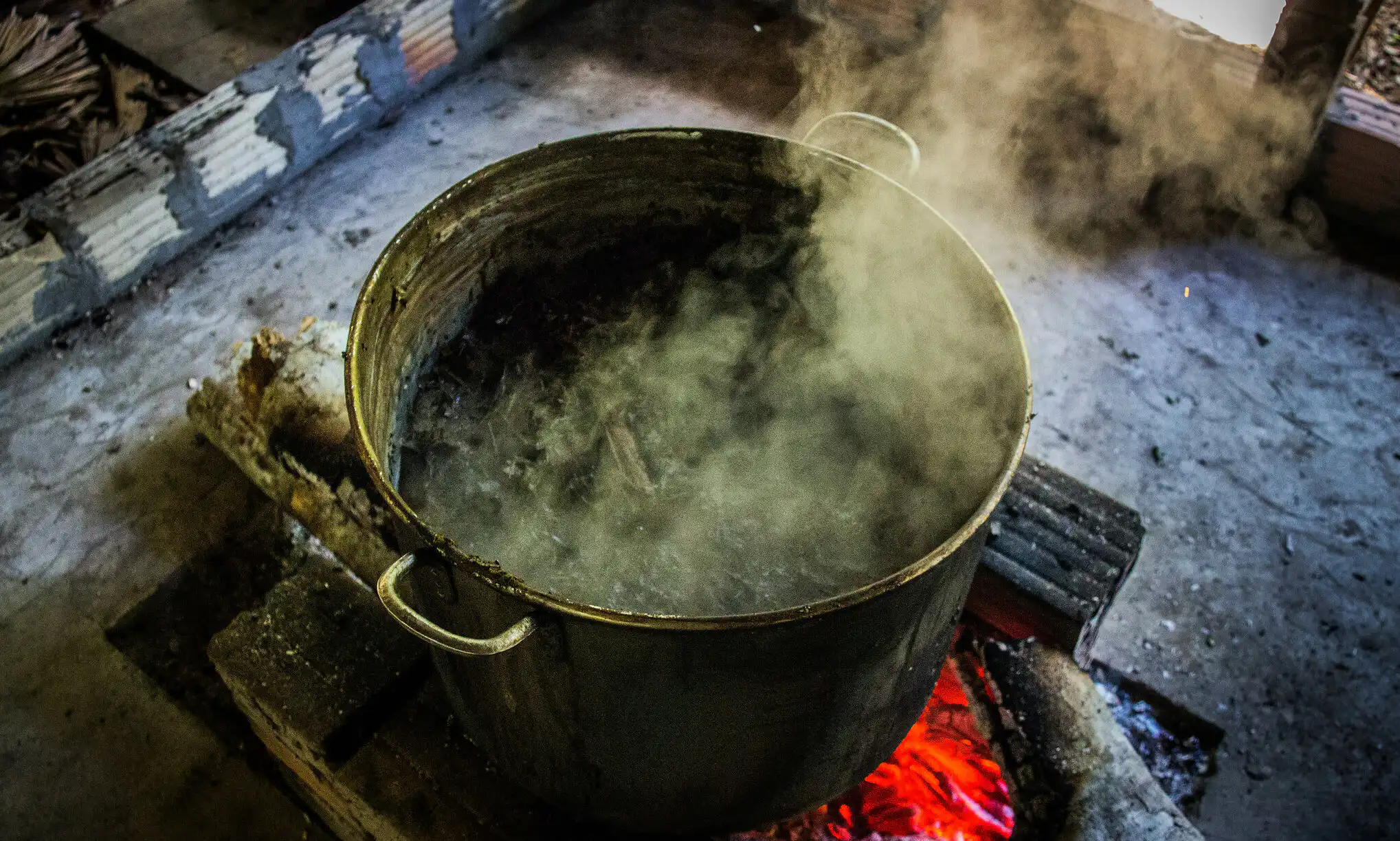
Two years before I retired, I heard about ayahuasca on a podcast. It is a psychedelic preparation made from an Amazonian vine and a companion plant, used in ceremonial traditions for generations. What surprised me was not just what it was, but how it was discussed: with respect, even reverence.

This challenged a fundamental tenet of my law enforcement programming. As a product of the war on drugs, I believed that all illegal drugs were dangerous and destructive.

But after decades of watching cycles of addiction repeat themselves, and after losing my younger brother to heroin, I was forced to question whether this understanding was too simplistic.

So I did what I was trained to do. I researched it.

For over a year, I immersed myself in research on trauma and psychedelic therapy. I read clinical studies and heard veterans and others describe deep and often lasting healing and relief. At first, I was driven by intellectual curiosity and a commitment to follow the evidence, even if the conclusion directly contradicted what I had been taught. But beneath that curiosity was something more personal: the recognition that the tools I had relied on to manage my grief for decades were no longer working for me.

For years, I dealt with grief as many in our field do, mostly by repressing it and soldiering on. These skills were enough to keep me in the job. But in the retreat, they left me stuck, circling the same unresolved loss with no way out.

After careful consideration, I chose to attend an ayahuasca ceremony. At that time, I had never used illegal drugs. My substances were limited to alcohol and tobacco, both legal, socially acceptable and, in my case, convenient ways to deal with the grief bubbling under the skin.

What I experienced with Ayahuasca was not an escape from grief, but a direct engagement with it. The breakthrough wasn’t immediate, but with deliberate work and preparation, I was finally able to sit with the loss of Amel and the deaths of my father and brother without walking away. It was a different process than what I’ve relied on throughout my career, not control or oppression, but forgiveness, surrender and understanding.

This experience ultimately led me to write From the Badge to the Vine, a memoir about what it took to deal with years of trauma and the limitations of the tools I once relied on to manage it.

After a career spent investigating other people’s problems, I saw how rarely first responders are equipped or willing to examine their own injuries. The skills that define the profession—control, composure, endurance—can also make it harder to recognize when something deeper needs attention.

Trauma does not go away because it is repressed or managed. For some of us, that reality may not come into focus until after work is done and the radio is turned off. For others, the impact appears much earlier, in strained relationships, harmful behaviors, or a growing sense that something is not right but cannot be easily named.

What I have learned through this process is that ignoring these signs comes at a cost. Even assuming that the tools we were given at the beginning of our careers are the only ones available to us.

It is my hope that others in this profession will allow themselves to turn their investigative eyes inward in an effort to serve themselves. Ask the tough questions. Do your research. Follow the evidence where it leads. Not all things we were taught to fear are the same, and not all wounds are visible.

Special Agent in Charge Kemmi Sadler (Ret.) is the founder of Legalize the Divine, which advocates for safe and legal access to ancient healing traditions. A former St.Augustine, Florida Police Department officer, he is also a speaker for the Law Enforcement Action Partnership, and the author of From the Badge to the Vine: A Federal Agent’s Awakening Through Ayahuasca.

Marijuana Moment is made possible with the help of readers. If you rely on our pro-cannabis journalism to stay informed, consider a monthly Patreon pledge.

Continue Reading
Click to comment

Leave a Reply

Your email address will not be published. Required fields are marked *

Cannabis News

US Representatives introduce the Higher Education Marijuana Research Act

Published

on

By

Cannabis Caucus Co-Chairs Ilhan Omar (D-MN) and Dina Titus (D-NV) yesterday introduced the Higher Education Marijuana Research Act to remove barriers to academic cannabis research, protect universities and researchers, and promote the responsible study of marijuana.
“As Chair of the Congressional Cannabis Caucus, I am proud to support the Higher Education Marijuana Research Act, which removes outdated federal barriers that have long prevented universities from conducting critical cannabis research. This legislation protects universities and researchers while removing barriers so they can make better public health decisions,” said Congressman Ilhan Omar.
“The legal and responsible use of cannabis in Nevada has been an important economic driver across the country and deserves further investigation,” said Congressman Titus. “The Higher Education Marijuana Research Act would eliminate outdated federal restrictions that prevent universities and researchers from studying the full range of cannabis products that Americans actually use.”
Although 40 states have legalized medical marijuana and 24 states have legalized it for recreational use, federal law continues to impose significant barriers that limit meaningful research. Cannabis remains subject to restrictive federal controls that dictate who can conduct research, what products can be studied, and how studies are designed. Researchers are often limited to federally licensed cannabis that does not reflect the potency or variety available in state legal markets. Compounding these challenges, researchers must navigate stringent compliance requirements and uncertainty about legal liability. These obstacles have delayed clinical trials, limited understanding of long-term health effects, and left critical gaps in knowledge.

“It makes no sense for the federal government to interfere with this research when millions of Americans are already using marijuana, whether for medical or recreational purposes,” said Congressman Titus.

The Higher Education Marijuana Research Act is supported by the National Organization for Reform of Marijuana Laws (NORML), the National Cannabis Industry Association, the Drug Policy Alliance, and the UNLV Cannabis Policy Institute.

“This legislation is needed more than ever as states continue to allow cannabis for medical and adult use. Even if cannabis is federally reclassified in the near future, there will be significant hurdles for scientists hoping to add to the existing research pool, especially when conducting clinical trials on health effects and examining state-regulated products. The bill moves forward again and calls on Congress to take immediate action to facilitate research, develop new medical treatments, to inform evidence-based policy and help consumers make informed choices,” said Morgan Fox, Policy Director of the National Organization for Reform of Marijuana Laws (NORML).

“The American public has made it clear that it wants access to safe, regulated, and tested cannabis products, and state legal markets continue to evolve to meet that demand. However, federal barriers have long limited researchers’ ability to study hemp in ways that reflect real-world conditions. The Higher Education Marijuana Research Act is a practical step toward expanding credible, real-world research by providing clarity and protection for NCIA universities. Supporting this legislation will help strengthen the industry’s scientific foundation. and will help better inform policymakers, regulators and consumers,” said Brooke Gilbert, Chief Operating Officer of the National Cannabis Industry Association.

“The Higher Education Marijuana Research Act is common-sense legislation that will help researchers better understand the types of cannabis produced in state-regulated markets. The bill will remove a major barrier that currently prevents scientists from learning more about state-regulated cannabis and its public health implications. Increasing the body of scientific evidence with better-informed research, increasing the body of scientific evidence with more informed research, evidence-based policy anyone who should leave,” he said. Drug Markets and the Legal System.

“Everyone, from members of Congress on both sides of the aisle to the scientific community to the current and previous presidential administrations, has stated that cannabis research is necessary and important. This is the one issue that almost everyone can agree on these days, but not much progress is being made to reduce the current barriers to cannabis research. Congressman Titus’ bill has always been a common sense pro-cannabis research. Cannabis reform, it is only fitting that UNLV Cannabis Policy lead the charge now. The Institute applauds his efforts and hopes others will do the necessary work to reduce current barriers to cannabis research that only serve to maintain outdated prohibition-era policies,” said Riana Durrett, director of the UNLV Cannabis Policy Institute.

Source: Representative Ilhan Omar’s office

Continue Reading

Cannabis News

ATACH releases comprehensive report on the future of hemp

Published

on

By

The American Trade Association for Cannabis and Hemp (ATACH) today released the 2026 Hemp Intoxicants Report, an analysis of the federal and state regulatory landscape for hemp-derived products in light of the most important federal hemp law change since the 2018 Farm Bill.

In November 2025, Congress enacted PL 119-37, formally redefining hemp to exclude intoxicating products, closing a loophole that allowed an unregulated synthetic THC market to emerge.

“Congress has closed the Farm Bill loophole,” said ATACH President Michael Bronstein. “The policy environment remains dynamic: a CMS hemp pilot program is underway, the marijuana rescheduling process is underway, and states are moving and enacting their own laws around hemp intoxication. In fact, regulations are being written in real time. With the new federal definition of hemp set to take effect on November 12, 2026, the Hemp Intoxicants Report provides reports on today’s market, toxins and how. Next up is industry, regulators and for consumers”.

What the report contains
What Congress Amended – PL 119-37 replaces the delta-9-only standard with an all-THC framework, imposes a limit of 0.4 mg per container on finished products, and excludes synthetic and chemically modified cannabinoids from the definition of hemp and hemp cannabinoids, effective November 12, 2026.

State Overview – A comprehensive review of how states have responded, including six regulatory archetypes, enforcement actions in 24 states, and more than 45 bills pending in the 2025 and 2026 legislative sessions.

CBD moment – For the first time, CBD has a clear federal legal basis – but there is still no path for consumer products through the FDA.

THC Beverages – An emerging category creating its own regulatory conversation, distinct from other hemp intoxicants, and three state models gaining traction.

Transition year – How banks, insurers and supply chains are preparing ahead of the November deadline.

The 2006 Hemp Intoxicants Report is now available here.

For more information:
American Cannabis and Hemp Trade Association
attach.org/

Continue Reading

Cannabis News

Sponsors Of Virginia Marijuana Sales Legalization Bill Ask Colleagues To Reject Governor’s Amendments, Risking A Veto

Published

on

By

Sponsors of Virginia bills to legalize the sale of recreational marijuana are urging lawmakers to vote this week to reject the governor’s proposed amendments to the legislation.

Last week, Gov. Abigail Spanberger (D) He proposed changes to the measure to legalize the trade in cannabis—including delaying the start of sales by six months, increasing taxes and introducing new criminal penalties for cannabis users.

Sen. Lashrecse Aird (D) and Del. Paul Krizek (D), who sponsored the Senate and House versions, respectively, of the bill to legalize the sale of cannabis, both told Marihuana Momenti that they want their colleagues to vote against the amendments when the legislature reconvenes on Wednesday, even though that could put Spanberger’s veto at risk when the measure returns to his desk.

“While the governor and I share the goal of establishing a safe and regulated market for cannabis, we differ on the best way to achieve it,” Aird said.

“As our conversations continue, I urge the governor to reconsider provisions that reintroduce punitive measures that undermine the intent of legalization, shift critical elements of the framework to an uncertain regulatory process, and remove key supports for affected licensees.”

Krizek noted, “A few years ago the legislature took bipartisan steps to end racially discriminatory marijuana policing here in Virginia.”

“But unfortunately, and probably unintentionally, because he has not been involved in this years-long process,” he said, “the governor’s proposed amendments would repeal some of these decriminalization laws and undermine what has been a thorough, thoughtful and balanced process of crafting this legislation with community and stakeholder engagement that has brought us to this more regulated and responsive cannabis framework.”

“When we legalized cannabis, it was in recognition of the disproportionate harm caused by the war on cannabis, especially among black families,” said the House lawmaker. “This bill was intentional in recognizing that, but much of that intentionality is lost with many of the amendments.”

Krizek told WTOP radio that he expected some of the governor’s corrections after meeting with him earlier this month, but was “surprised” by others that never came up during the debate.

The lawmaker said Spanberger is concerned about the “pretty draconian penalties” suggested in the bill, adding that because it suggests a full replacement version of the legislation, rather than piecemeal amendments, the House and Senate can take up or leave the package as a whole instead of considering each change individually.

The Legislature rejects the proposal Wednesday, and after the governor vetoes the original proposal, lawmakers would have to start with new bills in the 2027 session.

Krizek said in the radio interview that he believes the governor is “very open to dialogue and compromise.”

“We can do it next session. We can pass the bill that we know he’s going to sign, and let his administration know that I’m willing to work with him and make it happen,” he said. “We’re going to keep meeting, and we’re going to take a lot of those suggestions that he has in his version, and we’re going to see what we agree on.”

As for Spanberger’s proposed criminal penalties, however, Krizek said, “I’m not very hopeful about backing down on that front, but I think it’s just a matter of negotiating with him and explaining where we are and why.”

He also told Marihuana Momenti on Tuesday that he is “hopeful that with further discussion and negotiation we can find a compromise that will maintain a balance between justice and public safety.”

A spokesman for the governor say The Richmond Times-Dispatch said it is “committed to working with patrons to end the jobs,” and sidestepped the outlet’s question about whether it would veto the original bill if lawmakers bring it back this week.

Spanberger, for his part, responded Criticism of the cannabis amendments from bill sponsors and advocates saying that the suggested changes came after him He spoke with leaders of other states that have already established adult marijuana markets.

Personal marijuana possession and home cultivation have been legal in Virginia since 2021, but former Gov. Glenn Youngkin (R) twice vetoed bills to provide consumers with a way to legally purchase adult cannabis.

Here are other key details of cannabis bills:SB 542 and HB 642-Approved by the legislators and with the amendments proposed by the governor:

  • Lawmakers voted to allow adults to purchase up to 2.5 ounces of marijuana in a single transaction, or up to an equivalent amount of other cannabis products specified by regulators. This represents an increase from the current legal limit of 1 ounce. The governor, however, wants to raise the amount to only 2 ounces.
  • Under the Legislature’s plan, legal sales could begin on January 1, 2027, but the governor is proposing to push that back to July 1, 2027.
  • Lawmakers voted to impose a 6 percent excise tax on cannabis sales and 5.3 percent on retail sales and use, while allowing municipalities to impose an additional local tax of up to 3.5 percent. The governor’s plan is largely the same, though it would raise the excise tax to 8 percent starting July 1, 2029.
  • Under the legislation approved by lawmakers, the revenue would be allocated to the Cannabis Equity Reinvestment Fund (30 percent), early childhood education (40 percent), the Department of Behavioral and Developmental Health Services (25 percent) and public health initiatives (5 percent). The governor, however, wants to direct all revenue to the general fund for purposes such as “early childhood education, behavioral health, public health awareness, prevention, treatment and recovery services, workforce development, reentry, indigent criminal defense and targeted reinvestment in historically disadvantaged communities.”
  • The Virginia Cannabis Control Authority would oversee licensing and regulation of the new industry, and would also take over oversight of hemp, which currently falls under the Department of Agriculture and Consumer Services.
  • Local governments could not allow marijuana companies to operate in their area.
  • Delivery services would be allowed.
  • Serving sizes would be limited to 10 milligrams of THC, with no more than 100 mg of THC per package.
  • The governor is proposing to make public use of marijuana a Class 4 felony instead of a civil violation punishable by a $25 fine under current law. It also seeks to make possession of cannabis by anyone under 21 a Class 1 felony, punishable by a mandatory minimum fine of $500 or 50 hours of community service, as well as a driver’s license suspension of at least six months. The illegal sale or distribution of 50 pounds or more of marijuana would be a Class 2 felony punishable by jail time.
  • The governor wants to eliminate support for the Cannabis Equity Reinvestment Fund.
  • Existing medical cannabis operators could enter the adult use market if they pay a license conversion fee set at $10 million.
  • Cannabis businesses should implement peaceful labor agreements with their employees.
  • As approved by lawmakers, the bill would have directed a legislative committee to consider adding local consumer licenses and micro-enterprise cannabis event permits that would allow licensees to hold sales at farmers markets or pop-up locations, but the governor is proposing to remove that language.

Meanwhile, Spanberger also suggested significant amendments to differentiate the legislation resentence mitigation for people with prior marijuana convictions.

Separately, the governor signed several other reform bills this week, including measures protecting the parental rights of marijuana users and giving patients access to medical cannabis in hospitals.

Marijuana Moment is made possible with the help of readers. If you rely on our pro-cannabis journalism to stay informed, consider a monthly Patreon pledge.

Continue Reading
Advertisement

Trending

Copyright © 2021 The Art of MaryJane Media