
Cannabis News
Planet 13 announces new appointments to Board of Directors


Planet 13 Holdings has appointed the Honorable Nancy Saitta and Leilani Bradford as independent directors, filling two newly created seats on the Board, effective April 24, 2026. Justice Saitta brings two decades of judicial experience, including service as Chief Justice of the Nevada Supreme Court. Ms. Bradford brings over 20 years of real estate financing and transaction structuring experience. Both appointments broaden the Board’s independent representation and deepen governance, law enforcement and real estate. Both directors have been appointed to the Audit Committee, the Compensation Committee and the Corporate Governance and Nomination Committee.
“Justice Saitta brings a depth of judicial and governance experience that few public company boards have direct access to,” said Bob Groesbeck, co-chairman and co-CEO of Planet 13. “His 20 years on the Nevada bench, including leadership on the state’s highest court, will strengthen our oversight as we operate in an industry where regulatory rigor and disciplined decision making are essential.”
“As a Las Vegas company, we are proud to welcome two outstanding members of our local community to the Board,” said Larry Scheffler, co-chairman, CEO and co-founder of Planet 13. “Ms. Bradford has spent more than two decades building a reputation for Las Vegas real estate, structuring complex transactions and developing innovative financial disciplines that will continue to directly improve our financial growth and transaction models. opportunities.”
 © Planet 13
Judge Saitta served as a member of the Nevada Judiciary for 20 years, including from 2007 to 2016 and from 2007 to 2016 and from 2011 to 2012. from 1996 to 1998. Earlier in his career, he served as the Nevada State Attorney General and Children’s Advocate and practiced law in private practice. Since 2017, Saitta has served with Advanced Justice Resolution Management as a mediator, arbitrator, special master, consultant and private judge, and continues as a senior district judge for the Nevada Supreme Court. Justice Saitta received her JD from Wayne State University School of Law and her BA from Wayne State University.
Since 2005, Ms. Bradford has served as a principal and director of SHEQ Properties, a Las Vegas-based real estate company. While at SHEQ, he has played a key role in the sourcing, underwriting and structuring of transactions, particularly in the medical and professional property sectors, and developing the company’s Shared Equity Model, which provides ownership options to physicians and service providers in connection with long-term lease agreements. Prior to joining SHEQ, Ms. Bradford had a career in accounting and finance. He is a Certified Public Accountant and earned a Bachelor of Science in Accounting from the University of Nevada, Reno.
For more information:
Planet 13
(email protected)
planet13lasvegas.com












Cannabis News
New access solution for cannabis facilities designed to address limitations of traditional gates
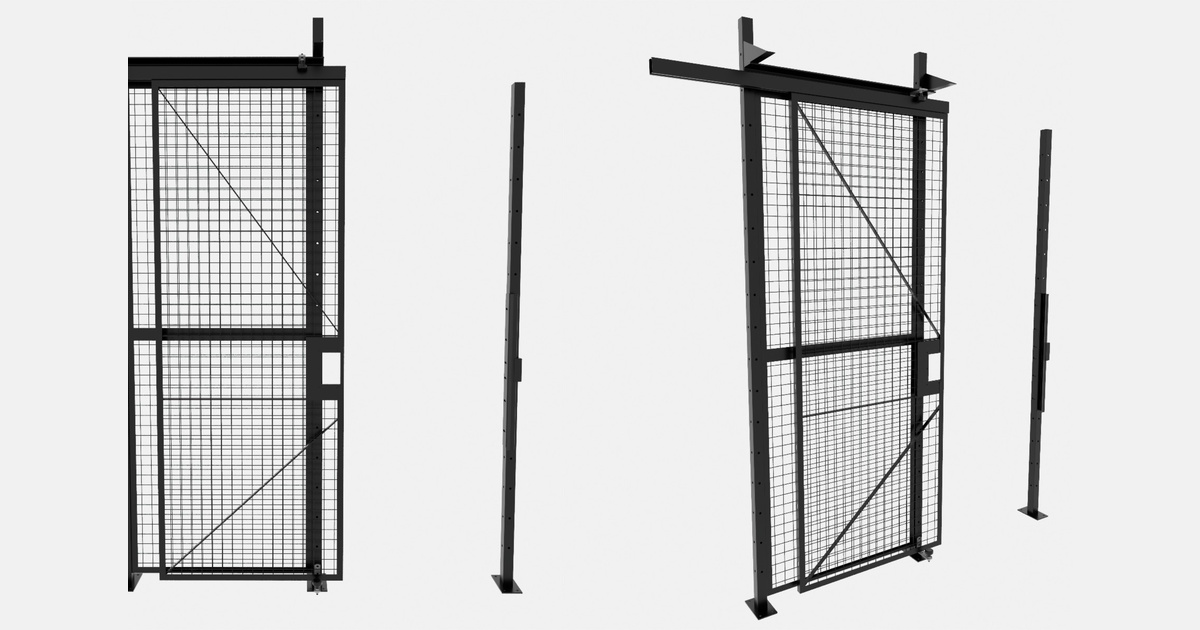
SpaceGuard Products, a North American manufacturer of wire mesh security solutions and security protection systems, has released the BeastWire® Tunnel Door. This access solution is designed to overcome the limitations of traditional balanced doors and is aimed at cannabis cultivation, processing, packaging and distribution environments. The BeastWire Tunnel Door is designed for installations that require vertical clearance, reliable movement and floor space efficiency.
The BeastWire Tunnel Door provides top clearance with no tracks in the operating path of the door. It is suitable for spaces where overhead paths are not feasible, such as facilities that use high-mast forklifts, oversized pallet loads or specialized material handling equipment. Tall equipment can pass through the opening unhindered, allowing for continuous workflow and flexibility in equipment movement.
 © SpaceGuard Products
The door uses a track system designed to create consistent movement. This addresses issues such as stuttering, binding, and misalignment that can occur with conventional sliding or counterbalanced designs. The track controls the path of the door so that the locking mechanism aligns with each cycle, allowing operators to close the door with relatively low force.
Unlike lower track systems that require a soil trench, the BeastWire Tunnel Door mounts above ground. This avoids cutting the installation slab, simplifies installation and reduces maintenance requirements. The system can be installed as a retrofit or in new construction, without changing the floor.
 © SpaceGuard Products
The door frame and retractable design reduces the need for side supports and additional space on the side of the door. This results in a smaller footprint and more usable surface area. The gate has the same construction approach as other BeastWire systems.
The BeastWire Tunnel Door is a high-access door designed for strength and ease of use in cannabis industry facilities.
For more information:
SpaceGuard products 
Email: (email protected)
spaceguardproducts.com/
Cannabis News
DEA Defends Stance That Synthetic Cannabis Compound HHC Is Federally Banned In Response To Industry Lawsuits



A cannabis company called Good Behavior is seeking approval from the city of Yorkville, Illinois, to open a dispensary on a 0.93-acre plot along Saravanos Drive, west of South Bridge Street and south of Stagecoach Trail, becoming the latest entrant in a string of cannabis proposals the city has previously rejected. The company has filed a special-use application with the city and is staking its case on the tax revenue a dispensary would generate for Yorkville.
Full details of the application, including projected tax figures, the company’s ownership structure and details of any board discussions, are available to Shaw Local News Network subscribers. The article, reported by Shaw Local News Network’s Joey Weslo and published on June 23, 2026, notes that cannabis companies had previously failed to get city approval before Good Behavior presented its proposal.
The proposed site places the dispensary in a commercial corridor to the south of the city. Good Behavior’s application requires a special use permit from Yorkville before the project can proceed.
Source: local Shaw

Coast to Coast Cannabis News Reports – Massachusetts Rids THC Infused Drinks from Liquor Stores

CANNABIS GLASS HOUSE | KYLE KAZAN

Marijuana Retail Report

New access solution for cannabis facilities designed to address limitations of traditional gates

Canopy Growth’s Year of Reinvention Under Luc Mongeau

DEA Defends Stance That Synthetic Cannabis Compound HHC Is Federally Banned In Response To Industry Lawsuits

Report: Cannabis Industry Jobs Fell 2.7% Year-Over-Year

Is New Hampshire ready to go Adult use legal? CWCB & Flower Expo previews C Block of Weed Talk News

TOMMY CHONG

Marijuana Retail Report

“Our system can manage equipment across 10,000+ m² using just a few wires”

Florida Workshop to Discuss What Constitutes a ‘Cartoon’ in Hemp Packaging

Mazar-i-Sharif Hash Wednesday

Afghan Black Hash Wednesday

Weak Michigan Cannabis Sales Again in July – New Cannabis Ventures

From Finance to Wellness: Brad Zerman’s Impactful Pivot

DEA’s Cole Reverses His “priorities” ; Prohibitionists Dig In; Dead & Co Celebrates 60 years in SF

Re-release of the full show of Cannabis Coast to Coast news. Republican Texas DA Fires Up vs. laws;

Curaleaf Q2 Revenue Falls 8% – New Cannabis Ventures

Your Cannabis Business: Consistent Filings Are Critical
-
 Cannabis News10 months ago
“Our system can manage equipment across 10,000+ m² using just a few wires”
-
 Florida10 months ago
Florida Workshop to Discuss What Constitutes a ‘Cartoon’ in Hemp Packaging
-
 Video9 months ago
Mazar-i-Sharif Hash Wednesday
-
 Video9 months ago
Afghan Black Hash Wednesday
-
 aawh10 months ago
Weak Michigan Cannabis Sales Again in July – New Cannabis Ventures
-
 Video10 months ago
From Finance to Wellness: Brad Zerman’s Impactful Pivot
-
 Video10 months ago
DEA’s Cole Reverses His “priorities” ; Prohibitionists Dig In; Dead & Co Celebrates 60 years in SF
-
 Video10 months ago
Re-release of the full show of Cannabis Coast to Coast news. Republican Texas DA Fires Up vs. laws;