Connect with us

Cannabis News

More Than 100 Alabama Patients Bought Medical Marijuana In First Week Of Legal Sales

Published

on

“Our store manager saw a patient coming out, and as silly as it sounds, they jumped up and hit their heels. Yes, they were very happy to have that medicine.”

By Anna Barrett, Alabama Reflector

More than 100 qualifying patients have it purchased medical cannabis since the opening of Alabama’s first dispensaryThe Alabama Medical Cannabis Board said Thursday.

The state’s first purveyor of medical cannabis, Callie’s Apothecary, opened its first location in Montgomery on June 4 after a “soft opening” the day before. Justin Aday, the commission’s general counsel, said Thursday that 102 patients have purchased medical cannabis products in 111 transactions. Those transactions generated about $14,600 in pretax sales, with the average transaction being $131.56, Aday said.

Vince Schilleci, owner of Callie’s, said in a phone interview Thursday afternoon that the last week of business has been rewarding.

“I’m seeing a lot of happy patients,” he said. “Our store manager saw a patient coming out, and as silly as it sounds, they jumped up and hit their heels. Yes, they were very happy to have that medicine.”

According to the patient menu on Callie’s website, each item ranges from $42 to $52. Schilleci said the dispensary got its second shipment of products on Thursday and expects another on Friday, which will help meet patient demand.

“We had to, I hate to use this term ration, but we limited how much patients could buy because we knew how many patients were coming in, and we wanted people to at least have a chance to have something,” Schilleci said. “We’ve removed rationing now so patients can go down and buy their full 60-day allotment if they want.”

Aday said that since Thursday morning, 481 patients have applied for a cannabis card, of which 446 have been issued by AMCC.

Alabama’s cannabis law, passed in 2021, allows registered doctors to prescribe cannabis for about 15 medical conditions, including cancer, depression, Parkinson’s disease, PTSD, sickle cell anemia, chronic pain and terminal illnesses. Acceptable product forms are limited to pills, tinctures, patches, oils and gel cubes (peach flavor only), plant raw and smoking forms are prohibited.

As of Thursday, there are 52 doctors in Alabama certified to recommend medical cannabis to patients, according to the Alabama Board of Medical Examiners. Aday said 39 are registered with the AMCC, three are pending, and 21 of the doctors have prescribed medicinal cannabis to their patients.

“We certainly hope to see more of these patients come to that dispensary and other dispensaries open that will provide more geographic coverage,” Aday said. “We’re working with the lab processors on the new products that are being manufactured so that the dispensary has an inventory of the products and various products in that inventory to serve the patients that are visiting.”

Lawsuits have also hindered access to medical cannabis. Some companies sued the commission for not issuing licenses, citing a discriminatory process. In another case five parents sued the board over delays in accessing cannabis, which was dismissed in August.

Licenses for three of the four potential dispensary companies were not approved until December.

Three of the companies, CCS of Alabama, LLC, GP6 Wellness, LLC and RJK Holdings, LLC, have licenses and are expected to open storefronts this summer, according to AMCC Director John McMillan. A fourth license is pending litigation, but is likely to go to Yellowhammer Medical Dispensaries, LLC.

“I would do it all over again to see the smile on these patients’ faces. Now, I would have expected it to be a little easier, but it was worth it,” Schilleci said. “It’s been worth it. There’s no doubt about it.”

This story was first published by the Alabama Reflector.

user photo Max Pixel.

Marijuana Moment is made possible with the help of readers. If you rely on our pro-cannabis journalism to stay informed, consider a monthly Patreon pledge.

Continue Reading
Click to comment

Leave a Reply

Your email address will not be published. Required fields are marked *

Cannabis News

‘We didn’t cherry pick our submissions”

Published

on

By

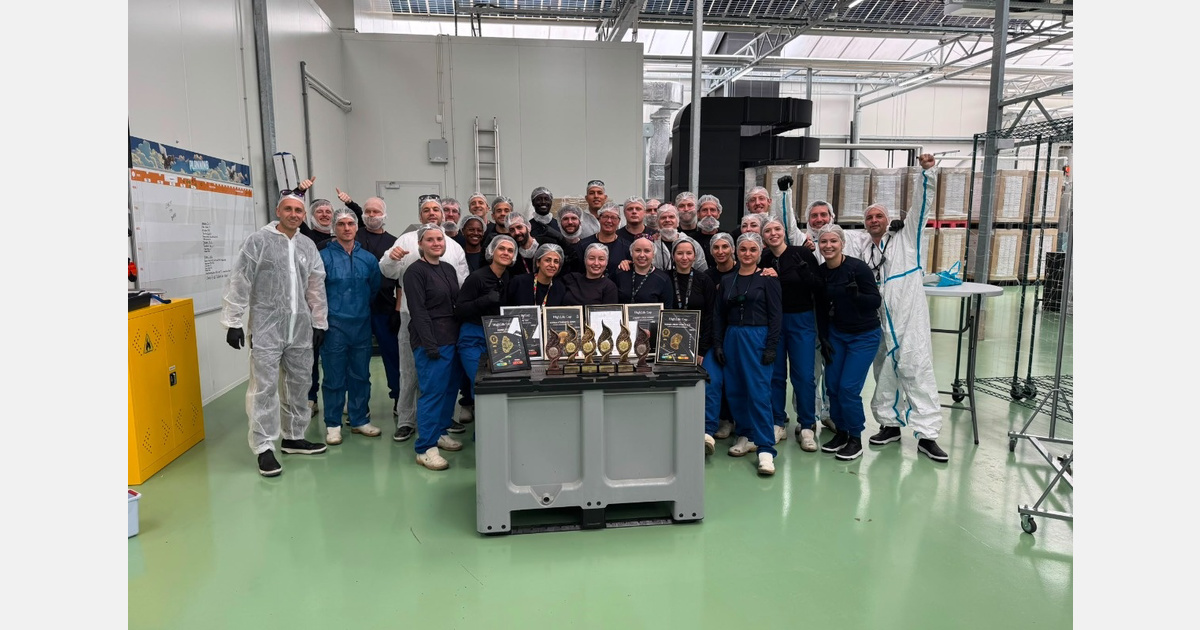
Hollandse Hoogtes received seven awards at the 2026 Highlife Cup, five of them in first place, using batches it was already sending to cafes in Holland, rather than material saved for the competition. The works were presented together with coffeeshop Club69 and John&co.

© Hollandse Hoogtes

The difference between LP and equity income
The Highlife Cup is run in lots selected by cafes from months of sales, which leaves room for an entrant to submit their strongest lot. Rick Bakker, CEO of Hollandse Hoogtes, didn’t have much to choose from. “We built our facility to have a harvest every week, so the cycle goes on and on,” says Rick. The company’s production is allocated as quickly as it comes off the line, so what went into the mug was the final version, the same flower that a customer would buy that week. Wins include Crumbled Lime’s first sativa, Zizi’s first indica, Rainbow Zizi’s house favorite, Fruit Punch’s hash and Karma Stardawg third place at WPFF, along with two edible awards.

This is the first year that licensed producers can enter the cup, in their categories, after being excluded the previous year. The jury conducts terpene tests on the entries, and scores put the regulated category above the illegal cafe entries in three of the five flower categories, with both illegal entries scoring higher than the regulated entries. Basic growers had months to select their best material to send, while Hollandse Hoogtes produced a standard weekly production.

Rick spends time in the cafeteria telling the employees where the company is going. “Being number one is a standard, not a trophy,” he says. “What I’m proud of is our people, from farming to hand cutting to logistics, they keep that motivation to be the best and produce week after week.”

© Hollandse Hoogtes

Cafes sold cannabis for decades without lab testing or stable genetics. “Everything we produce has to be tested, and we can consistently deliver consistent quality,” says Rick. “We have mother plants, all the plants come from those selected mother plants. That was unthinkable in the illegal market.” Cultivating all harvests with selected mothers allows the company to put regular production into a glass without worrying about which batch it is.

Genetics and inheritance
Hollandse Hoogtes works with two genetic houses, Karma Genetics and Amsterdam Genetics, both of which have long histories in the Dutch scene, and all of Karma’s breed and selection top positions come from this relationship. “We are very pleased that Karma has supported the start of Hollandse Hoogtes and continues to consult and support us.”

At the start of the experiment, growers got a short window to import cuttings of the developed genetics, which Rick describes as a day or two, when the rules briefly allowed, after which the path was closed. “The selection process now works from seed,” says Rick. When the company sees a gap in the market it selects seeds and conducts a full pheno-hunt of approximately 2,000 plants to judge how ten to fifty expressions of a single genetic grow together with others and the capabilities of the facility. Some basic genetics never worked well indoors, so selection continues.

© Hollandse Hoogtes

Dutch experimental cannabis market
Edibles come out of a kitchen run by a chef, Nicolas Vanderslyen, who spent ten to fifteen years in Michelin-starred kitchens before fully delving into cooking with cannabis compounds. Hollandse Hoogtes combines the flavor of rosin with the flavor of chocolate or gummy, combines its tiramisu praline with Super Silver Sweets rosin for the look of the cake, and the chocolate comes from a luxury chocolate house. Tiramisu Pralines took the first place and Cherry Cola Gummies came third. “We see it as an important category that helps people who don’t want to smoke but want to get the experience,” says Rick.

Hollandse Hoogtes prices in the premium segment. “If you look for the same quality products from coffee shops, you pay 25 to 35 euros per gram for a good type of Gelato, like our Rainbow Bacio (Karma’s favorite for roasting) and we sell that for 12 to 15 euros,” says Rick. In the middle of the market is an average of eight to eleven euros per gram of flower, and at the bottom are greenhouse crops that have not done well indoors, and stock that a grower needs to move, where Rick has seen similar offers for five grams of strain for €22.50.

Demand already exceeds what the company can grow. “Winning awards doesn’t help because the demand will grow,” laughs Rick. The facility opened with ten flowering cells and sixteen are under construction, an increase of close to fifty percent, with flowers from the new cells expected to be on the market in the second quarter of next year. Current cells run on Fluence VYPR LEDs, and in expansion the company plans to test HPS and under-lighting with its own nutrient recipes. In canopy size Rick ranks alongside Hollandse Hoogtes Village Farms after counting the new build, behind CanAdelaar (Cronos), which remains the largest among experimental growers in greenhouse production, while Hollandse Hoogtes is grown entirely indoors, a setup best suited to the Dutch climate.

For more information:
Dutch heights
(email protected)
www.hollandsehoogtes.nl

Continue Reading

Cannabis News

DEA Picks Participants For Marijuana Rescheduling Hearing This Month, And Only Opponents Are Invited
Published

on

By

The Drug Enforcement Administration (DEA) has selected participants Hear about the Trump administration’s cannabis reorganization process this will begin this month—and only those opposed to the reform have been invited to participate.

On Thursday, the DEA began notifying parties who expressed their intention to participate that they had been invited to participate, and sending rejection letters to those who were not invited.

The invited participants are:

  • Drug and Alcohol Screening Association (NDASA)
  • Tennessee Bureau of Investigation
  • Smart Approaches to Marijuana (SAM)
  • The states of Nebraska, Idaho, Indiana and Louisiana
  • Voice of the Victims
  • Kenneth Finn, MD
  • Phillip A. Drum, PharmD

All organizations, individuals and officials have come out against marijuana reform, and some have filed lawsuits specifically trying to block cannabis reform.

Supporters of the reform who have expressed their intention to participate have not been invited.

According to several rejection letters seen by Marijuana Moment from cannabis reform advocates, the DEA said they do not meet the definition of “interested person” to participate because they “would not be harmed or harmed by any rule or proposed rule that may be issued.”

In a letter to the Drug Policy Alliance (DPA), DEA Administrator Terrance Cole wrote that the agency has “concluded that you have not demonstrated that you are harmed or harmed by the promulgation of a proposed rule to transfer marijuana, 21 CFR 1308.11(d)(23) 21 CFR 1308.11(d)(23), marijuana as defined in abstracts, 21 CFR. 1308.11(d)(58), and naturally derived delta-9-tetrahydrocannabinols from Schedules I through III of the CSA as proposed in the “Notice of Proposed Rulemaking” (NPRM).

“In fact, you state that the DPA supports the removal of marijuana from Schedule I and ‘does not object’ to the transfer of marijuana to Schedule III. Furthermore, the DPA states that any harm it would suffer from the NPRM would be to schedule marijuana in Schedule III. Because the DPA has not sufficiently demonstrated that the proposed rule itself is harmed or harmed, the DEA concludes that the DPA is not an “interested person.”

“Accordingly, the DEA is denying your request to participate in the hearing,” Cole told DPA.

Cat Packer, DPA’s director of drug markets and law enforcement, told Marihuana Moment after receiving the opt-out notice that “the rescheduling would leave the federal criminalization of marijuana largely intact and falls far short of what the public has asked for.”

“More than 70 percent of this public comments submitted on the proposed rule supported decriminalizationHowever, many patients, consumers, families, small businesses and individuals who have suffered the consequences of the ban — including arrests, incarcerations, family separations, housing barriers, immigration consequences and lost economic opportunities — have been excluded from meaningful participation in these proceedings, he said. dialogue, helping to shape the policies that affect their lives, families and communities.”

Michael Bronstein, president of the American Trade Association for Cannabis and Hemp (ATACH), said his group is “very disappointed” that not a single supporter of cannabis rescheduling was elected.

“The upcoming redistricting hearings will strictly include prohibitionist parties who oppose President Trump’s stance on redistricting. Now it’s up to the Drug Enforcement Administration to defend its rule,” he said.

SAM president Kevin Sabet, meanwhile, said his prohibitionist group “appreciates the opportunity to make our case” at the hearing.

“Rescheduling marijuana would be the biggest drug policy mistake in a generation,” he argued in a statement. “SAM looks forward to presenting the science, data, and public health stakes that show why reprogramming should be rejected.”

The hearingwhich will be overseen by a DEA administrative law judge, will begin on June 29 and conclude no later than July 15.

Acting Attorney General Todd Blanche in April He issued an order that immediately reclassified the state’s licensed medical cannabisas well as marijuana products approved by the Food and Drug Administration (FDA) under Schedule I through Schedule III of the Controlled Substances Act (CSA).

According to a separate order signed by the acting Attorney General, in the upcoming hearing, marijuana III.

In order to be considered for participation in the hearing, the parties had to submit requests, indicating their interest in the procedure, the claims or issues they want to hear and their position on these issues.

“The purpose of the hearing is to ‘receive factual evidence and expert opinion’ on whether marijuana should be transferred to Schedule III of the controlled substance list,” Blanche’s initial statement in April said.

The attorney general will also select an administrative law judge (ALJ) to oversee the proceeding.

“The ALJ’s authority includes the power to hold conferences to simplify or determine the issues at the hearing or to consider other matters that may assist in the expeditious resolution of the hearing; to require the parties to state their position in writing; to sign and issue subpoenas; to compel the production of documents and materials to the extent necessary to conduct the hearing; to examine witnesses; to direct, exclude, or testify; the Rule on Procedural Matters and the President’s DEA Hearing Procedures and Administrative Procedure Actions allowed under the law, Blanch wrote.

Preliminary hearing process on the marijuana redistricting process initiated by the Biden administration It was halted last year amid allegations of improper communications and witness selection.

the current The marijuana redistricting process is being challenged in several ways which have been upheld by a federal Court of Appeals. those pieces of State attorneys general have filed lawsuits against cannabis reform, Opponents of marijuana legalization and a a cannabis-based biopharmaceutical corporation.

Meanwhile, the reorganization of state-licensed medical cannabis is already having a major impact.

The Congressional Research Service published a report on the current rescheduling of cannabis Certified patients with medical marijuana from state licensed dispensaries are now eligible for Class III. “The order appears to allow end users to use marijuana medically without a CSA prescription,” he says.

The Bureau of Alcohol, Tobacco, Firearms and Explosives (ATF) has published a Draft update to a gun purchase form to recognize the legal status of medical marijuana in the reprogramming. The revised section of the question states that only the “recreational use or possession of marijuana” is federally prohibited, omitting the prior form’s mention of medical cannabis.

The US Treasury and Internal Revenue Service (IRS) said they plan to issued new tax guidelines for the marijuana industry after reprogramming. The reform will benefit state-licensed marijuana businesses by allowing them to take federal tax deductions that are currently prohibited under IRS Code Section III, known as Section 280E.

Even the DEA, which has long opposed cannabis legalization and accused the Biden administration of stalling the initiative in the reorganization process, has done so. It launched a registration process for legal marijuana businesses in the state to take advantage of the federal benefits that come with the reform.

The Department of Transport, on the other hand, issued guidelines stating this use Legal medical cannabis in the state is still no excuse for truck drivers to test positive for drugspilots and other safety-sensitive personnel.

A congressional committee recently Federal officials voted to block further steps to reschedule cannabis.

Read DEA Reorganization Denial the letter To the Drug Policy Alliance below:

Marijuana Moment is made possible with the help of readers. If you rely on our pro-cannabis journalism to stay informed, consider a monthly Patreon pledge.

Continue Reading

Cannabis News

More flexibility to manage light, condensation and UV with extended Solarweave range

Published

on

By

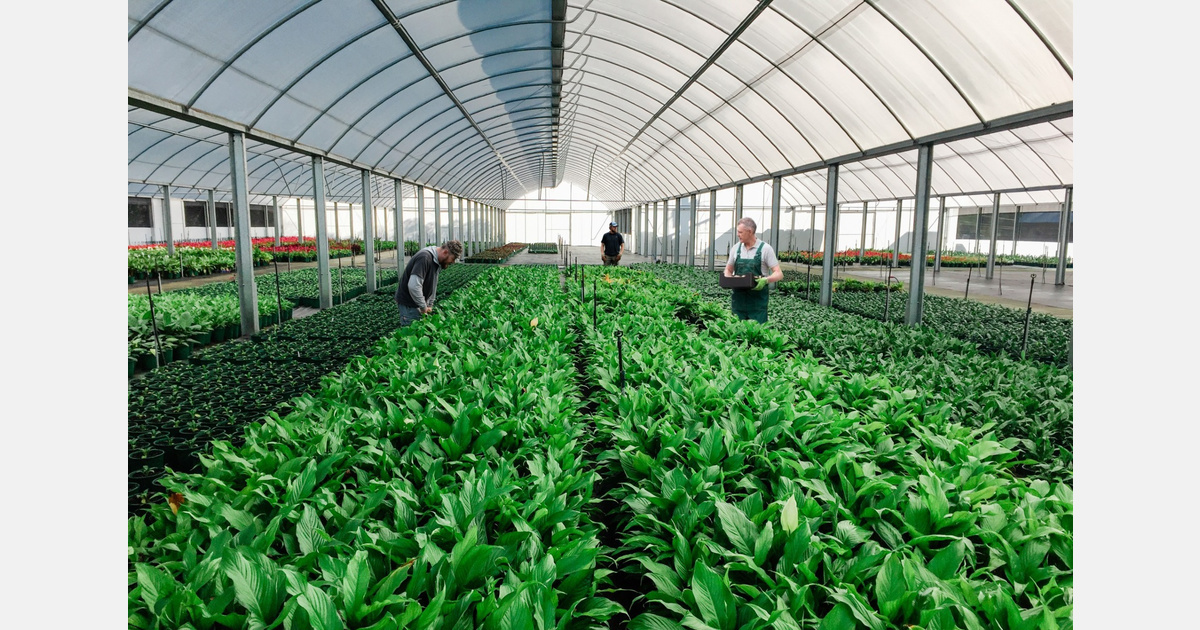
For over 50 years, Solarweave has been a woven covering solution for greenhouse and polytunnel applications. First introduced in the 1970s, it was developed as a sustainable alternative to plastic films and is recognized for its long life, strength and consistent performance.

Designed and manufactured in Australia, Solarweave is designed to withstand demanding growing environments, including high temperatures and high winds. Today, it is used worldwide in many protected cropping systems.

Building on this heritage, GALE Pacific has expanded the Solarweave range with the new D40 and D60 variants, giving growers greater flexibility to manage light, condensation and UV exposure while maintaining the durability that Solarweave is known for.

© GALE Pacific

Light performance optimized for modern grow systems
The extended Solarweave range allows growers to select the right balance of light properties and anti-drip performance for different crops, climates and structures.

Solarweave D40 and D60 gradually increase fog, light diffusion and UV protection. This allows more light to penetrate through the crop canopy and helps reduce plant stress and disease risk in greenhouse environments.

Long life for stronger life value
Unlike plastic films that often need to be replaced every few seasons, Solarweave is used for 15 years or more in greenhouse and polytunnel applications.

This extended service life reduces replacement frequency, labor requirements and downtime during the life of the structure. When evaluated over time, many growers believe Solarweave provides a greater return on investment by avoiding the recurring costs and downtime associated with film replacement and disposal.

Built for real-world production
Solarweave is repairable, allowing localized damage to be repaired on site rather than replacing the entire coating. This is a practical advantage for continuous commercial growing operations.

With decades of proven performance, Australian manufacturing expertise and a wide range of options, Solarweave continues to evolve while remaining a reliable solution for long-lasting greenhouse covers.

For more information:
GALE Pacific
Email: (email protected)
galepacific.com/

Continue Reading
Advertisement

Trending

Copyright © 2021 The Art of MaryJane Media