Cannabis News
Most cannabis flower on the European market would fail a human-consumption standard, Fundación CANNA finds
Published
8 hours agoon
By
admin
Cannabis extracts and isolates carry pesticides and heavy metals more often than raw flower, which means that the purification step that the industry sees as a path to a cleaner product is concentrating the contamination it’s supposed to remove. These are the findings of Fundacion CANNA, a non-profit initiative that studies the cannabis plant and its active ingredients.
© Canna Foundation
Iñaki García, agricultural engineer and biotechnologist at the CANNA Foundation, has analyzed samples in research from 2018 to 2023. “An important finding is that the CBD purification processes do not always clean the product from contaminants. The data show that the presence of pesticides is more evident in the extracts and isolates than in the raw materials. The presence of lead in all the matrices analyzed, from flowers to purified oils and crystals, is significant, also the presence of mercury is highlighted, certain solvents used in the purification may be contaminated or may have selectivity for this metal”, says Inaki. A buyer reads “isolate” as “cleaner,” and the analysis reads the other way because everything the plant carries travels with the compound and is reduced to a smaller volume, so the concentration goes up instead of down.
The same sample body continues its increasing strength at the top of the market. “A significant change in the concentration of THC has been observed in THC-dominant flowers, reaching the highest peak in 2023 (17.95%). Technical improvement has also been noticed in Broad Spectrum oils and extracts, and over time they have significantly increased their CBD concentration. This is probably because the other THCs that are more efficient extraction processes are kept more efficiently. It reduces the efficiency in both directions. Learned to extract THC and retain CBD it is the same process that transfers the pesticides to the final product, so improvements in cannabinoid selectivity do not necessarily translate into improvements in contaminant control.
© Canna Foundation
Purification concentrates what it needs to remove
Fundación CANNA analyzes microbial, metal and chemical contamination in all types of products it receives. “Regarding microbiological contaminants, plant materials consistently have high microbial loads. Among the most dangerous are fungi of the genus Aspergillus, which can cause aspergillosis in immunocompromised people, and their aflatoxins are carcinogenic. Lead is widespread in most types of samples. It should be noted that cannabis is potent. 60% of plant materials and extracts are cross-contamination in the cultivation or surrounding areas. One of the most striking findings is the sale in Europe It was the detection of vitamin E acetate in e-liquids, a substance associated with serious lung injuries.
The bioaccumulation point explains why lead appears downstream. A plant grown in contaminated soil leaches the metal directly from the soil and into the tissues, so all oils and crystals made from that plant inherit it. The finding of vitamin E acetate indicates something added to the formulation rather than being absorbed from the field, which means the European vape supply chain may be carrying a substance linked to serious lung injury.
The stage at which this contamination enters is usually the one that growers pay the least attention to. “Growers often underestimate the importance of the final stages of cultivation and processing. For example, the use of contaminated tools or improperly composted manure at the end of the cycle facilitates the emergence of pathogens such as E. coli. The duration of systemic pesticides that remain on the plant after application is also often underestimated,” said Inaki.
The systemic pesticide problem is the more difficult of the two to design because a compound that moves inside the plant cannot be washed off the surface during harvest, and a grower who applied it early in the cycle is still in flower months later.
The industry has already arranged tools for a pathogen. “The problems caused by HLVd in crops are already well known, as the viroid is now widespread. In this case, the industry has reacted with testing services now available to growers to determine whether a plant is infected, along with in vitro cultivation protocols to repair infected plants,” says Inaki. This is the case where hidden hop viroids came to a detection and fix, an exception to the contaminant that Inaki works with the model.
© Canna Foundation
Tags and content match
The CANNA Foundation also tests finished consumer products against the numbers printed on them. “Based on our research, only one-third of CBD oil products met the label specifications. E-liquids also showed a lack of rigor in terms of label specifications. A major problem with cosmetic creams is that less than half of manufacturers specify the alleged CBD content, and only a minority of them met their negative deviations.” he says A negative deviation of 99.9% describes a product sold as having almost no CBD, which puts it in a position to charge for an active ingredient that does not provide a share of the cosmetic market.
The same decline occurs in the entire movement of processed goods. “Moving from calabash flower to oils, cosmetics or evaporative liquids should, theoretically, guarantee greater quality control. However, research shows that in this transition quality decreases and the consumer is left without protection. When moving from flower to processed product, the industry often gains commercial appeal and ease of use, but loses significantly in transparency and chemical product, in regulatory safety, which consumers often do not pay for. Inaki stated. The processed format is the one that gives a consumer the most finished and controlled, and the analysis finds the least correspondence between the claim and the content.
Operators bring their questions to the lab. “Customers often ask how to interpret the terpene profile. They also have great doubts when a contaminant appears in the product, trying to understand if its presence is harmful or within the recommended limits,” says Inaki. The second question reveals where the gap grows the hardest, because an operator with a positive result has no authority anywhere to verify that the level clears a threshold, because in a large part of the market the threshold does not formally exist.
© Canna Foundation
Lack of regulation leaves consumers without protection
The market still classifies cannabis as Indica and Sativa. “Terpene data is fundamental and much more accurate for classifying varieties than commercial labels. Principal component analysis (PCA) of the terpene profile allows the grouping of plants according to their true aromatic profiles. For example, it has been found that what the market labels as Indica usually has myrcene, and then perfume, a little more, research and alpha-pine mainly myrcene, and a little more correlates with the profile. Rather than pure THC potency, it is the subjective experience for the consumer that determines pleasantness,” said Inaki. The commercial consequence is that the number of producers competing, the THC percentage, is not the number that predicts whether a consumer will enjoy the product, leaving the industry to optimize for a figure that is not supported by aroma data as a driver of experience.
The CANNA Foundation’s testing addresses a basis that the European market does not currently have. “The lack of specific legislation for the recreational market and commercial CBD leaves consumers without protection. Most flowers have a level of contamination that would be unsuitable for human consumption. There is an urgent need to ban dangerous pathogens, such as Aspergillus fungi or E. coli bacteria, which are caused by poor cultivation hygiene. Lead appears in almost all samples, and companies believe that isolation processing removes mercury, analyzes show that even more that it is concentrated in the manufacture of isolates Reality must reflect the terpene profiles, which define the aroma Research shows that aroma is a good indicator of quality and effect, but the industry maintains trade names that do not match the actual chemical composition.
Every item on that list follows the same starting point, which is that a market without a mandatory test floor allows each of these failures to reach a shelf, and isolation step operators stoop to solve the metals problem, a step that Inaki’s mercury data worsens.
Instruments already find more than research can explain. “The main challenge is to clean the flower without degrading its composition. It is urgent to develop microbiological cleaning methods that replace irradiation and do not destroy terpenes or aromas, since these compounds define the quality and effect of the product. Moreover, although laboratories already identify small cannabinoids such as THCV, CBGV, CBC or CBDV, clinical studies suspect that they do not benefit from true clinical studies. it is not in isolated compounds, in the interaction and synergy between them all rather”, concludes Inaki.
For more information:
CANNA Foundation
(email protected)
fundacion-canna.es
You may like
-
Rescheduling Cannabis: Coast to Coast, a Weed Talk News special report with PCM Founder Jimmy Young
-
ENTERTAINMENT & CANNABIS | JEFF WELSH
-
Historic Week for Weed in Wash. DC! – DEA Agrees with HHS to Start Moving Cannabis to Schedule 3!
-
CANNABIS INFLUENCER | JESSICA GOLICH
-
Historic Week for Weed in Wash. DC! – DEA Agrees with HHS to Start Moving Cannabis to Schedule 3!
-
Germany ends statutory reimbursement of cannabis flower
Cannabis News
Pharma Company And Drug Testing Industry Claim Trump’s Rescheduling Move Will ‘Increase Marijuana Abuse’
Published
8 hours agoon
July 18, 2026By
admin
A drug-testing industry association and a pharmaceutical company are asking a federal court to block the Trump administration from moving forward with federal cannabis reregulation while hearing lawsuits challenging the reform, “arguing that marijuana abuse has lifelong dangerous consequences, especially for teenagers and pregnant women.”
The new filing says that by “reducing taxes on cannabis companies,” the federal reorganization will “stimulate the industry and increase marijuana abuse.”
The brief, filed Thursday, is the Justice Department’s response to the drug-testing group’s and pharmaceutical company’s motion to halt the rescheduling.
The government, in a brief issued earlier this month, noted that the entities challenging the rescheduling of cannabis “out-of-pocket interest all marijuana stored on schedule I” and they are not suitable opponents of reform because they are not the “intended beneficiaries” of the Controlled Substances Act (CSA).
Opponents filed this week, however, say the DOJ’s arguments are “meritless diversions.”
“Movers should not be ‘intended beneficiaries of the CSA,'” he says. “It doesn’t matter that the movements have ‘pocket interests’ at stake, while the CSA has broader goals aimed at the general welfare.”
The U.S. Court of Appeals for the District of Columbia District is considering three separate cases that have since been consolidated from Schedule I to Schedule III of the CSA.
A lawsuit is led by a prohibitionist organization Smart Approaches to Marijuana (SAM) and National Drug and Alcohol Screening (NDASA)and they say they are “offended” by the reform. Another comes from a coalition anti-marijuana activists, substance abuse professionals, doctors and a cannabis-focused biopharmaceutical corporation. He filed a third claim Attorneys General of Indiana, Nebraska and Louisiana— although the latter appeared later withdrew from the suit.
Two of the organizations involved in the case—NDASA and MMJ International Holdings and its subsidiaries—filed a separate motion. asking the court to suspend the rescheduling of marijuana while considering the broader challenge.
In the latest filing, their lawyers say they would “suffer irreparable harm” from federal cannabis reform.
New costs related to medical review officer (MRO) practices to be imposed on NDASA members in the drug testing industry “will force some out of business,” he says.
“Because the authority makes marijuana legal for state ‘medical’ use, MROs will have to conduct time-consuming checks to determine whether positive THC tests are attributed to legitimate uses. This causes irretrievable losses—irreparable harm—in two ways. First, NDASA’s MRO members will absorb some of the new costs themselves because they cannot bear the losses. billing decision(s).’ Second, those who don’t absorb themselves will be passed on by higher prices, which will cause some customers to stop trying marijuana. It is not “speculative” that some customers will forgo more expensive tests; it is inevitable that “common sense economic reality(y)” – often relied upon by courts – is that demand falls as prices rise.’
The brief also states that the revision “forces many NDASA members who require employee drug testing to either (1) forego marijuana testing and live with the increased risk of employee accidents and reduced productivity, or (2) pay significantly more for marijuana testing and testing due to affirmative action liability under the Disabilities Act (ADA) or state law.”
Responding to the government’s argument that NDASA is not the right entity to deal with reprogramming because it is not a beneficiary of the CSA, the report says the group’s members “turn CSA prohibitions into concrete practices that protect the public.”
“Drug testing creates an essential deterrent to the CSA’s “primary purpose of combating drug abuse.” Thus, NDASA members’ interests in marketing drug testing devices and services—and their clients’ interests in safe, drug-free workplaces—are “unquestionably consistent with the purposes of the statute.”
Additionally, “NDASA members who test their employees have a vested interest in ensuring the safety of their employees and the public who may be affected by their work,” he says. “That interest is consistent with the goals of the CSA. Marijuana reorganization harms that interest by requiring costly revisions to drug testing policies; by making marijuana testing itself more expensive; and by placing NDASA members who act on positive marijuana test results at greater risk of ADA and state law liability.”
MMJ, for its part, will also harm its “competitive position in the market for federally illegal cannabis-based pharmaceuticals,” the filing claims.
“Prior to the Reconsideration Order, MMJ enjoyed a significant advantage due to federal compliance and significant progress toward an FDA-approved cannabis product. The order destroys that competitive advantage—reflecting eight years of hard work and a $10 million investment—by making competitors’ products that have defied capital federal law federal.”
“These damages cannot be ruled out on the theory that MMJ” has allowed no cannabis drug to come to market so far, the government said in its brief, the company’s lawyers wrote. “MMJ has jumped eight years to seek DEA registration and FDA approval, while its competitors have taken “few steps”—indeed, no steps—to seek federal drug approval.
“MMJ has spent nearly eight years and $10 million developing cannabis therapeutics to comply with federal law,” the filing states. “The Reconsideration Order suddenly creates illegal competition among the state’s illegal cannabis drug producers, who have so far made no effort to comply with federal drug laws.”
NDASA and MMJ also argue that the general lawsuit challenging the reorganization will ultimately succeed on the merits, saying the proposed rule is “unlawful” because the government did not undergo formal rulemaking procedures in “flagrant violation” of federal statute.
“The public interest clearly supports the stay,” he concludes.
The latest filing of the legal dispute comes as a The testimony concluded a hearing on the Drug Enforcement Administration’s (DEA) marijuana reorganization proposal and the judge overseeing the proceedings outlined the next steps for filings that will lead to his own recommendation on whether the reform should be approved.
Acting Attorney General Todd Blanche in April He issued an order that immediately reclassified the state’s licensed medical cannabisas well as marijuana products approved by the Food and Drug Administration (FDA) under Schedule I through Schedule III of the Controlled Substances Act (CSA). According to a separate order signed by the acting attorney general, the hearing is looking into Class III marijuana.
Meanwhile, Two medical marijuana companies filed a motion to intervene in the reconsideration case siding with the government and opposing the prohibition lawsuits. NDASA and SAM lawyers, however, filed a brief arguing that cannabis businesses should not be included in the lawsuit.
The challenge to SAM and NDASA’s reconsideration request was signed by attorneys at Torridon Law PLCC, where former US Attorney General William Barr, who led the DOJ during Trump’s first term, is a partner.
SAM announced in January that it was Hiring Barr’s firm to fight cannabis rescheduling After Trump signed an executive order directing officials to quickly complete the process.
Meanwhile, the Appropriations Committee of the Chamber Federal officials voted to block further steps to reschedule cannabis. Bipartisan lawmakers told Marihuana Moment, however, that they don’t expect legislative efforts to block rescheduling to be successful.
Separately, SAM, MMJ and other plaintiffs filed a lawsuit seeking to block the Trump administration’s program. Certain hemp-derived products are covered by Medicare. That the case was dismissed by a federal judge in May, though that decision is being appealed.
Read the full set of opponents to marijuana reprogramming short in the case below:
Cannabis News
Saxony-Anhalt state government backs hemp innovation center in Mücheln
Published
1 day agoon
July 17, 2026By
admin
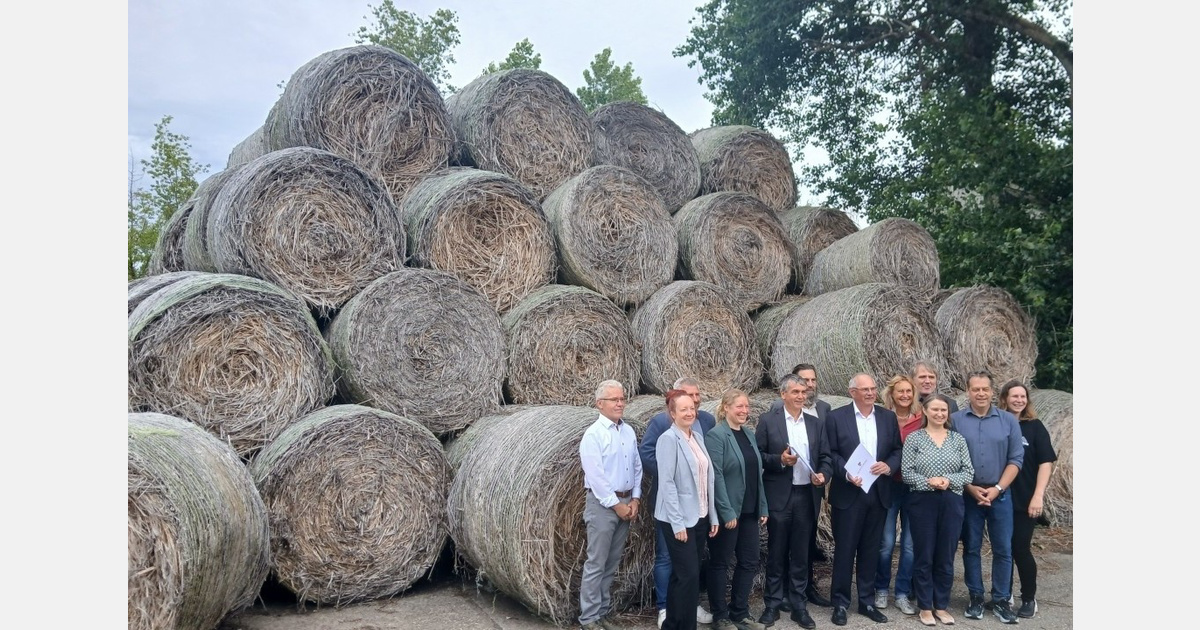
The German state of Saxony-Anhalt is supporting the development of a hemp information and competence center in Müchelnen (Geiseltal). The joint project known as IKHE – “Information and Competence Center for Hemp with Experience Trails” – is being carried out by the city of Mücheln (Geiseltal), the University of Applied Sciences Merseburg and the German Hemp Academy (Deutsche Hanf-Akademie eV).
The project has been given approximately 3.8 million euros as part of the New European Bauhaus (NEB) initiative, fully financed by the European Union’s Just Transition Fund (JTF).
The funding announcement was presented in Mücheln (Geiseltal) on July 7, 2026 by Gert Zender, State Secretary of the Ministry of Economy, Tourism, Agriculture and Forestry of Saxony-Anhalt.
© New Bauhauslers
Hemp is a versatile plant and one of the oldest crops cultivated by humans. For centuries, it was used to produce textiles, paper, and building and construction materials, before being largely displaced by fossil-based raw materials. Today, the renewed use of hemp opens up new possibilities for the ecologically and economically efficient production of building materials and fiber products. Grown in rotation with other crops, hemp improves soil quality, requires no crop protection products and requires little water.
Hanffaser Geiseltal eG a hemp industry processing cooperative is already active in the region. While Hanffaser Geiseltal processes the raw material, the IKHE partners are working to establish the information and competence center as a center for knowledge transfer, education and testing. Together, these efforts are turning Mücheln (Geiseltal) into a location with experience covering the entire hemp value chain.
At the heart of IKHE is an experimental building workshop where new bio-based building materials made from hemp are developed, tested and demonstrated in experimental building projects. This is complemented by a self-help building workshop, where both professionals and the public can learn how to work with hemp-based building materials through combined theoretical and practical seminars, and receive hands-on guidance for their building projects. Experiential trails will also allow visitors to explore where and how hemp can be used, in a hands-on way, from construction and textiles to food and cosmetics.
© New Bauhauslers
A bottom-up participatory approach is central to the project. From the very beginning, local residents, associations, schools and regional initiatives have been actively involved in the development and implementation of the project through open workshops and practical activities. In this way, the project combines formal scientific and technical knowledge with the practical expertise of craftsmanship and regional traditions, reflecting the values of the new European Bauhaus of being beautiful, sustainable and inclusive.
IKHE is an Applied NEB Project and will be in operation until 2028. It is supported by the NEB Network Office Saxony-Anhalt, acting on behalf of the State Chancellery and the Saxony-Anhalt Ministry of Culture.
Source: The new Bauhauslers
Cannabis News
Federal Marijuana Rescheduling Hearing Wraps Up, With DEA Judge Laying Out Next Steps
Published
1 day agoon
July 17, 2026By
admin
A Drug Enforcement Administration (DEA) hearing The Trump administration’s cannabis rescheduling proposal concluded, and the agency judge overseeing the proceeding set a deadline for the parties involved to file post-hearing briefs before the next recommendation on reform.
The multi-day hearing, which began late last month, ended Wednesday after presentations from a handful of states opposing federal cannabis reform.
DEA Chief Administrative Law Judge Derek Julius issued an order Thursday, saying that because “no closing time was granted” during the court days, participants in the process will be able to file post-trial documents, which are due Aug. 17.
Those documents can be up to 50 pages long and can include “closing arguments and arguments on any other matter raised by the court at the hearing.”
“This is a non-mandatory submission, so a named party will not be penalized for failing to file a post-hearing brief, and the absence of a submission means that there was no submission,” Julius wrote.
His order also states that participants can submit corrections to the daily transcripts of the proceedings by August 17.
“The amendments submitted by the designated parties are only proposed amendments. This panel will also examine the transcript for possible errors and indicate where amendments are needed,” wrote the judge. “The list created by the court will be compared with the list submitted by the Named Parties to create a list of final corrections. Thereafter, this court will issue an order approving the list of final corrections and include those corrections in the official copy of the transcript.”
“A fully redacted copy of the transcript of these proceedings will be made publicly available on the Agency’s website,” Julius said.
The judge said in his closing statement at the end of Wednesday’s hearing that he will work on writing his recommendation after receiving the next briefs on whether the government should move forward with broad marijuana rescheduling, but stressed that the final decision would rest with the DEA administrator.
Julius did not specify an anticipated timeline for the administrator’s recommendation of action.
At the hearing, DEA officials were tasked with defending the proposed cannabis reorganization featured testimony about the medical benefits of marijuana and its relative safety compared to other substances such as alcohol and opioids. It included appearances by a Food and Drug Administration (FDA) scientist and a doctor from New Hampshire. Medical marijuana provides relief to pain patients and can serve as an alternative to opioids.
Meanwhile, attorneys and witnesses for the parties opposing marijuana redistricting who attended the hearing focused on the alleged harms of cannabis use, as well as criticism of the recently approved changes. an analysis used to determine whether or not drugs have approved medical value.
DEA Administrator Terrance Cole only organizations and individuals opposed to marijuana reform have been invited to the hearing as a designated participant – telling followers that they do not meet the definition of “interested person” to participate because they are not “affected or prejudiced by any rule or proposed rule that may be issued.”
Participating opposition parties include Smart Approaches to Marijuana, the National Drug & Alcohol Screening Association, the Tennessee Bureau of Investigation, DUID Victim Voices, Kenneth Finn, Phillip A. Drum, and the states of Idaho, Indiana, and Nebraska.
Before the hearing began last month, marijuana reform activists rallied They held a press conference outside DEA headquarters to highlight how they feel of the process – that supporters of the reform were not invited to participate and that the proceedings were not broadcast live, despite the officials’ vow of “transparency”.
Marihuana Moments sent petitions to DEA Chief Administrative Law Judge Derek Julius and DEA Administrator Cole asking for them reverse the decision to ban the public from tuning into the cannabis hearing via live stream. A Congressmen and other journalists later joined that request.
—
Marijuana Moment’s journalism is made possible by readers like you, who value this work enough to support us monthly pledges on Patreon. If you rely on our reports to stay informed of important developments in cannabis, please help us do this becoming a permanent subscriber today.
Backing us at the $25/month level, you’ll have access to our Bill Tracker so you don’t miss any important marijuana legislation in your state.
—
Acting Attorney General Todd Blanche in April He issued an order that immediately reclassified the state’s licensed medical cannabisas well as marijuana products approved by the Food and Drug Administration (FDA) under Schedule I through Schedule III of the Controlled Substances Act (CSA).
A separate order was signed by the acting attorney general hearing marijuana III.
Preliminary hearing process on the marijuana redistricting process initiated by the Biden administration It was halted last year amid allegations of improper communications and witness selection.
the current The marijuana redistricting process is being challenged in several ways which have been upheld by a federal Court of Appeals. those pieces of State attorneys general have filed lawsuits against cannabis reform, Opponents of marijuana legalization and a a cannabis-based biopharmaceutical corporation.
Meanwhile, the reorganization of state-licensed medical cannabis is already having a major impact.
The Congressional Research Service published a report on the current rescheduling of cannabis Certified patients with medical marijuana from state licensed dispensaries are now eligible for Class III. “The order appears to allow end users to use marijuana medically without a CSA prescription,” he says.
The Bureau of Alcohol, Tobacco, Firearms and Explosives (ATF) has published a Draft update to a gun purchase form to recognize the legal status of medical marijuana in the reprogramming. The revised section of the question states that only the “recreational use or possession of marijuana” is federally prohibited, omitting the prior form’s mention of medical cannabis.
The US Treasury and Internal Revenue Service (IRS) said they plan to issued new tax guidelines for the marijuana industry after reprogramming. The reform will benefit state-licensed marijuana businesses by allowing them to take federal tax deductions that are currently prohibited under IRS Code Section III, known as Section 280E.
Even the DEA, which has long opposed cannabis legalization and accused the Biden administration of stalling the initiative in the reorganization process, has done so. It launched a registration process for legal marijuana businesses in the state to take advantage of the federal benefits that come with the reform.
The Department of Transport, on the other hand, issued guidelines stating this use Legal medical cannabis in the state is still no excuse for truck drivers to test positive for drugspilots and other safety-sensitive personnel.
The The War Department released a memo making it clear that military service members were using marijuana and civilian employees of the department remain prohibited, even in the federal rescheduling of cannabis.
A congressional committee recently Federal officials voted to block further steps to reschedule cannabishowever lawmakers from both parties told Marihuana Moment they don’t think that provision will be enacted become law
Read the DEA’s post-trial hearing the order below:
Rescheduling Cannabis: Coast to Coast, a Weed Talk News special report with PCM Founder Jimmy Young
ENTERTAINMENT & CANNABIS | JEFF WELSH
Marijuana Retail Report
Most cannabis flower on the European market would fail a human-consumption standard, Fundación CANNA finds

Pharma Company And Drug Testing Industry Claim Trump’s Rescheduling Move Will ‘Increase Marijuana Abuse’
Cannabis Legalization Bill Reintroduced in the Senate
Historic Week for Weed in Wash. DC! – DEA Agrees with HHS to Start Moving Cannabis to Schedule 3!
DIVERSITY IN ACTION | SUCCESS CENTERS
Marijuana Retail Report
Saxony-Anhalt state government backs hemp innovation center in Mücheln
“Our system can manage equipment across 10,000+ m² using just a few wires”
Mazar-i-Sharif Hash Wednesday
Florida Workshop to Discuss What Constitutes a ‘Cartoon’ in Hemp Packaging
Afghan Black Hash Wednesday
Weak Michigan Cannabis Sales Again in July – New Cannabis Ventures
From Finance to Wellness: Brad Zerman’s Impactful Pivot
Re-release of the full show of Cannabis Coast to Coast news. Republican Texas DA Fires Up vs. laws;
DEA’s Cole Reverses His “priorities” ; Prohibitionists Dig In; Dead & Co Celebrates 60 years in SF
Texas DA Fires Up for Change! Mass. Sheriff arrested on Extortion charges; GOP vs Industry in state
Your Cannabis Business: Consistent Filings Are Critical
Trending
-
Cannabis News11 months ago“Our system can manage equipment across 10,000+ m² using just a few wires”
-
Video10 months agoMazar-i-Sharif Hash Wednesday
-
Florida11 months agoFlorida Workshop to Discuss What Constitutes a ‘Cartoon’ in Hemp Packaging
-
Video9 months agoAfghan Black Hash Wednesday
-
aawh11 months agoWeak Michigan Cannabis Sales Again in July – New Cannabis Ventures
-
Video11 months agoFrom Finance to Wellness: Brad Zerman’s Impactful Pivot
-
Video11 months agoRe-release of the full show of Cannabis Coast to Coast news. Republican Texas DA Fires Up vs. laws;
-

Video11 months agoDEA’s Cole Reverses His “priorities” ; Prohibitionists Dig In; Dead & Co Celebrates 60 years in SF