Connect with us

Cannabis News

Germany ends statutory reimbursement of cannabis flower

Published

on

The Bundestag voted on Friday to remove the cannabis flower from statutory health insurance, passing the chamber 319 to 286 with four abstentions after a closing debate in which the AfD, Greens and Left jointly attacked the substance of the rules and the speed of the procedure as part of a funding law.

The vehicle is the GKV-Beitragssatzstabilisierungsgesetz, designed by the government to close 15.3 billion euros by 2027 and around 40 billion by 2030. The law relieves 16.3 billion euros in 2027 and 3801.03 billion euros and more than 3801.03 billion euros in 2027. reduce spending on the other hand. The cannabis flower takes a line in that package, along with the exclusion of homeopathic and anthroposophic medicines from supplementary fund benefits, and the end of billing for whole-body skin cancer screening ordered without clinical indication. Co-payments increase by 50 percent, from a minimum of 7.50 euros to a maximum of 15.

© Philiprowe | Dreamstime

Nina Warken, Federal Health Minister (CDU), says that the law is a milestone in the long road to secure the finances of the statutory funds, and that what is at stake is nothing more than a paradigm shift in the health system. The account of the meeting of the Bundestag. Spending has recently grown at roughly twice the rate of income, Nina says. “We want to go out with the money we have in the future.”

The manufacturer’s rebate more than doubled from 7% to 15.5%. The dynamic component that would have replicated long-term incremental revenue was missing from the committee’s deliberations. Britta Haßelmann, parliamentary leader of the Bündnis 90/Die Grünen group, stated that promises of one billion euros were made to the pharmaceutical industry while the savings proposals of government experts remained unimplemented. Heidi Reichinn, leader of the parliamentary group of Die Linke, says the reform takes the ax to the health service in Germany, stating that the whole legislative process was a disaster, because the professional associations had almost no time to settle on the rules.

The full account contains the exclusion of flowers and nothing about cannabis
Arnau Valdovinos, founder of Cannamonitor, says: “Austerity has come to the German cannabis market. The drive to save health has overtaken the patient and industry cases of therapeutic continuity, prescriber autonomy and patient-specific formulations. But there is a twisted logic with the mandatory six-month product savings rather than the de facto monopoly of more expensive approved drugs like Exilby, even when there are already much cheaper compound alternatives, if savings are really the goal, The self-pay market shows that the answer is more competition, not less.

The six-month trial of therapy that Arnau mentions is nowhere to be found in the Bundestag’s published account of the seat, which stops short of registering the exclusion of flowers. Its operative text is contained in the committee’s amendment document, and the full summary is not reproduced. Exilby, Vertanical’s full-spectrum cannabis extract, received German marketing authorization in June. It has not reached the market, and the funds have not agreed on a price.

“This is exactly the kind of change that Cannamonitor is here to see coming,” says Arnau. “After the approval of Exilby, before the correction surfaced, we pointed out that a licensed finished product like Exilby could ‘sleep’ most of the master formulations and make the reimbursement of flowers politically questionable. We follow the picture of the German market to the end, GKV Gamsi was returning sales data, open market prices and our customers read the regulations months in advance, and not therefore in the morning.”

For more information:

CannaMonitor
(email protected)
cannamonitor.com

Cannabis News

Minnesota Is On The Cusp Of Making Psychedelic Medicine Available (Op-Ed)

Published

on

By

“The question of creating a therapeutic access program for psilocybin is not how it will be implemented, but how it will be implemented.”

By Jessica Nielson, Minnesota Psychedelic Medicine Task Force, via Minnesota Reformer

Minnesota Legislature in 2023 He founded the Psychedelic Medicine Task Forcewas tasked with assessing access to psychedelic drugs to help address the mental health crisis here.

Background: Promising therapies like psilocybin-assisted treatments for depression, addiction, and trauma are gaining momentum for Food and Drug Administration approval, and other states like Oregon and Colorado have already legalized therapeutic access.

Wait, what are psychedelics you might ask? They are a class of drugs made illegal (Schedule I status) by the Nixon administration in 1970. From the 1950s to the 1970s, they were gaining traction in psychiatric clinics, where they were being used to treat mental health conditions and alcohol abuse. At the same time, they were also used by hippies protesting the Vietnam War and as part of the countercultural movement for the Civil Rights Movement.

The Controlled Substances Act effectively launched the War on Drugs and halted decades of promising research into the therapeutic potential of psychedelics—like magic mushrooms or psilocybin—and criminalized anyone who used them.

In recent years, however, there has been increased interest in psychedelic medications because of their potential to alter brain function, thereby ameliorating some of the more challenging mental health conditions that are byproducts of neurological patterns stuck in a pathological cycle.

Psychedelics are capable of altering the brain, a term known as neuroplasticity, and many researchers and clinicians are excited about their therapeutic applications for neurological and mental health disorders.

Fast forward to 2026, when President Donald Trump signed an executive order to speed up access to psychedelic drugs. It also included a section directing the federal agency to develop a framework for state-federal cooperation, which was a response to the surge in psychedelic-focused legislation we’ve seen across the country in recent years.

All of this last moment resulted in a very fruitful legislative session on psychedelics. Several bills were moved in the legislature, although we were few our ultimate goal was to create a therapeutic access program with psilocybin mushrooms. We managed to get a directive from the Office of Cannabis Management to set up a feasibility study and statutory report by January 15, 2027. The report will outline a framework for implementing a therapeutic psilocybin program with screened and healthy patients.

In the coming months, the Office of Cannabis Management will be working on its report on what the regulatory landscape will look like for the development and implementation of a state-regulated therapeutic psilocybin program.

Thanks to those in charge who participated The Psychedelic Medicine Task Force, Minnesota, already has a 200-page guidebook Legal, regulatory, scientific, cultural and ethical considerations for incorporating psychedelic medicine into our society. It is the result of 14 months of work by 23 members, and can also serve as a national resource to help all states develop policies and programs related to this important work.

The point is: the Office of Cannabis Management doesn’t have to start from scratch. It already has the report, the policy framework advanced by the House, the testimony of patients, veterans, clinicians and families, and a clear signal that there is broad interest in getting it right.

The question of creating a psilocybin therapeutic access program is not how it will be implemented, but how it will be implemented. We demonstrated at this session that there is broad bipartisan support at the local, state and federal levels. Many states are considering legislation to determine how their states will address the integration of psychedelic drugs into their systems of care, and Minnesota has the opportunity to be a leader and pioneer in this effort.

With so much research and promising support for psychedelic drugs, we should see the passing of this session as a planning phase for action in 2027, to help the Legislature pass this access program and help many of our friends and family recover from the most difficult mental health conditions that affect them.

Jessica Nielson, PhD, is the chair of the Minnesota Psychedelic Medicine Task Force. He is an assistant professor in the Department of Psychiatry and Behavioral Sciences at the University of Minnesota. He is also the founder and president of the Minnesota Psychedelic Society.

This piece was first published by the Minnesota Reformer.

user photo Mark Groeneveld.

Marijuana Moment is made possible with the help of readers. If you rely on our pro-cannabis journalism to stay informed, consider a monthly Patreon pledge.

Continue Reading

Cannabis News

Two federal courts hold cannabis capital raisers liable for securities fraud

Published

on

By


Raising capital in the cannabis industry comes with real legal risk, and two recent federal rulings drive home that point.

In Michigan, five investors known as the “5 Guys” sued after they wired $1.5 million for a stake in a Muskegon dispensary joint venture, only to realize they had diverted the money to cover the parent company’s payroll and operating costs instead of funding the business as promised. The defendants tried to defend themselves using the “unlawful contract” defense, arguing that because marijuana is federally illegal, courts should not enforce agreements related to it. Thus Chief Justice Y. Jarbou drew a distinction: claims that would seek to validate illegal enterprise, such as breach of fiduciary duty, were dismissed, but fraudulent claims survived, as ordering restitution for fraud is not the same as enforcing an illegal agreement. The Court has also declined to allow the reliance rebuttal standard to automatically eliminate allegations of fraud.

In California, the SEC’s case against American Patriot Brands — a former food truck company that got into cannabis and raised more than $50 million from investors — reached the penalty phase. Judge Anne Hwang ordered the company nearly $24 million, including more than $2.6 million for high salary and personal expenses to its CEO, plus permanent injunctions and two executive officers and directors.

Together, the rulings send a clear message: the legal gray area of ​​cannabis does not extend to fraud. Operators are advised to treat each raise as a securities offering, spend investors’ money as directed, fully disclose related party agreements and bring securities advice rather than surface issues.


Continue Reading

Cannabis News

Federal Judge Questions Link Between Marijuana And Guns, Citing ‘Widespread State Legalization’
Published

on

By

“Our current presumption has the practical effect of depriving marijuana users … of their Fourth Amendment right against unreasonable searches and seizures.”

From the Carolina Journal

The newest member of the 4th U.S. Circuit Court of Appeals used a North Carolina case Wednesday to discuss the potential legal ramifications of changing its stance on marijuana.

Justice Nicole Berner offered her commentary in an eight-page concurring opinion in United States v. in Carson. Berner was nominated to the 4th Circuit in 2024 by then-President Joe Biden.

Appeals judges upheld Jermaine Derrick Carson Jr.’s conviction for being a felon in possession of a firearm. The court rejected Carson’s arguments that the evidence against him should be suppressed. It contained evidence from Asheville police detective Steven Escobedo’s search of Carson during a traffic stop.

Berner supported the majority decision. However, much of his consensus was devoted to the connection between marijuana and law enforcement pursuits.

“I agree with my colleagues that our precedent in United States v. Sakyi dictates the outcome of this case,” Berner wrote, citing a 1998 4th Circuit precedent.

“Sakyi created a presumption that a police officer has reasonable suspicion to search a suspect for a weapon during a traffic stop when he reasonably suspects that illegal drugs are in the car,” Berner explained. “Applying this binding precedent, we are left only to conclude that Escobedo did not violate Carson’s Fourth Amendment rights when he went to look for Carson’s weapons because Escobedo reasonably suspected that marijuana was in the car.”

“The Sakyi presumption is based on a simple premise: ‘where there are drugs, there are almost always guns,'” Berner wrote. “This premise that a person suspected of being near illegal drugs is believed to be carrying a gun can no longer hold in this era of widespread legalization of marijuana.”

“In the nearly thirty years since Sakyi was decided, the alleged link between marijuana use and gun ownership has weakened,” he added. “In fact, the Government admitted as much in oral arguments.”

“The legal landscape surrounding the use of marijuana, both medical and recreational, has changed significantly at both the state and federal levels,” Berner continued. “Forty-seven states and the District of Columbia currently allow the medical use of marijuana. Twenty-four states, including a number within the Fourth Circuit, have legalized the recreational use of marijuana. Although federal law continues to criminalize marijuana, the federal government has “largely allowed the production and sale of marijuana under state law, and has allowed marijuana businesses to develop.”

“Sakyi believes that people who use and distribute illegal drugs will carry weapons for protection,” Berner argued. “In the wake of changes in federal law and widespread state legalization, safety concerns are now absent for many marijuana users. A person in Maryland, for example, can walk into a dispensary and legally purchase marijuana without the need for the type of protection that Sakyi based its nexus analysis on.”

Berner highlighted the actions of Asheville police in Carson’s case.

“The facts of this case demonstrate an unassailable disconnect between marijuana use and dangerousness,” the judge wrote. “The officers themselves repeatedly assured Carson and the other occupants of the car that they ‘were not the weed police.’ In fact, even though marijuana remains illegal in North Carolina, the Asheville Police Department no longer charges people with possession of marijuana for personal use. This approach follows the lead of the Department of Justice, which ordered federal prosecutors to drop marijuana charges more than a decade ago.”

Government prosecutors are now in an “awkward position” to suggest that “the millions of Americans who now regularly use marijuana are dangerous,” Berner wrote. The recent Supreme Court decision in United States v. to Heman it emphasizes the need to revise our belief. There, the Court held unconstitutional a law criminalizing the possession of weapons that applied to occasional marijuana users.’

“The court expressly rejected the view that the link between dangerousness and marijuana use could be maintained given the evolving legal and social landscape,” the agreement continued. “However, under our circuit law, reasonable suspicion to search for weapons remains whenever a police officer detects the odor of marijuana.”

The 4th Circuit’s “view is contrary to the decisions of our sister circuits,” Berner argued. A three-judge 4th Circuit panel was unable to change that view.

“As a result, Sakyi connects us, and I agree with my colleagues in their specific opinion,” Berner. he wrote. “I write separately to emphasize that our current presumption has the practical effect of denying those who use marijuana, even in states where it has been legalized under state law, as well as those who find themselves in close proximity to others who use marijuana, their Fourth Amendment right against unreasonable searches and seizures.”

“As marijuana laws and social mores continue to evolve, this presumption may not survive constitutional scrutiny,” Berner added.

This story was first published by the Carolina Journal.

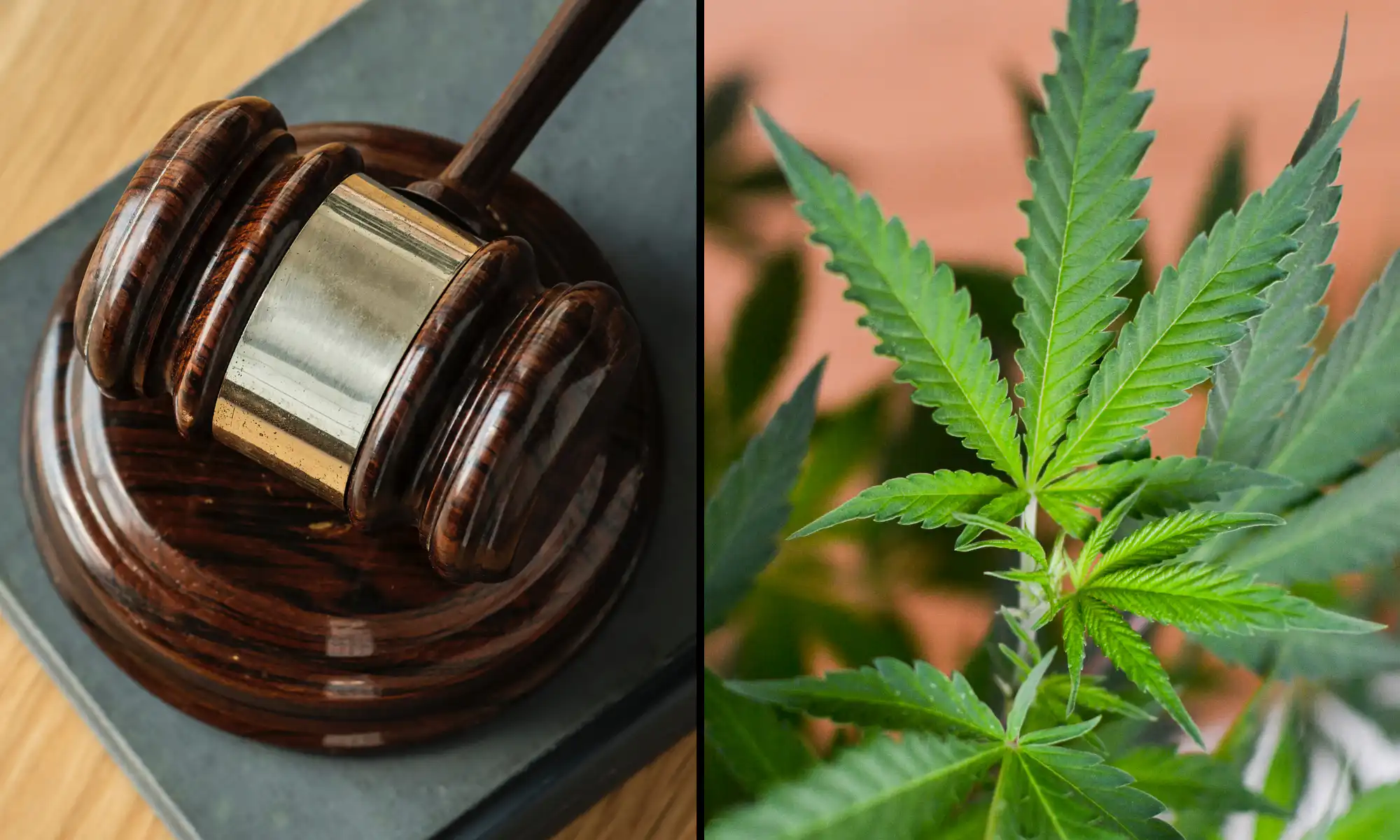
Photo elements courtesy of the user rawpixel and Philip Steffan.

Marijuana Moment is made possible with the help of readers. If you rely on our pro-cannabis journalism to stay informed, consider a monthly Patreon pledge.

Continue Reading
Advertisement

Trending

Copyright © 2021 The Art of MaryJane Media