Connect with us

Cannabis News

Biofilm, pathogens, and the costs of dirty irrigation systems

Published

on

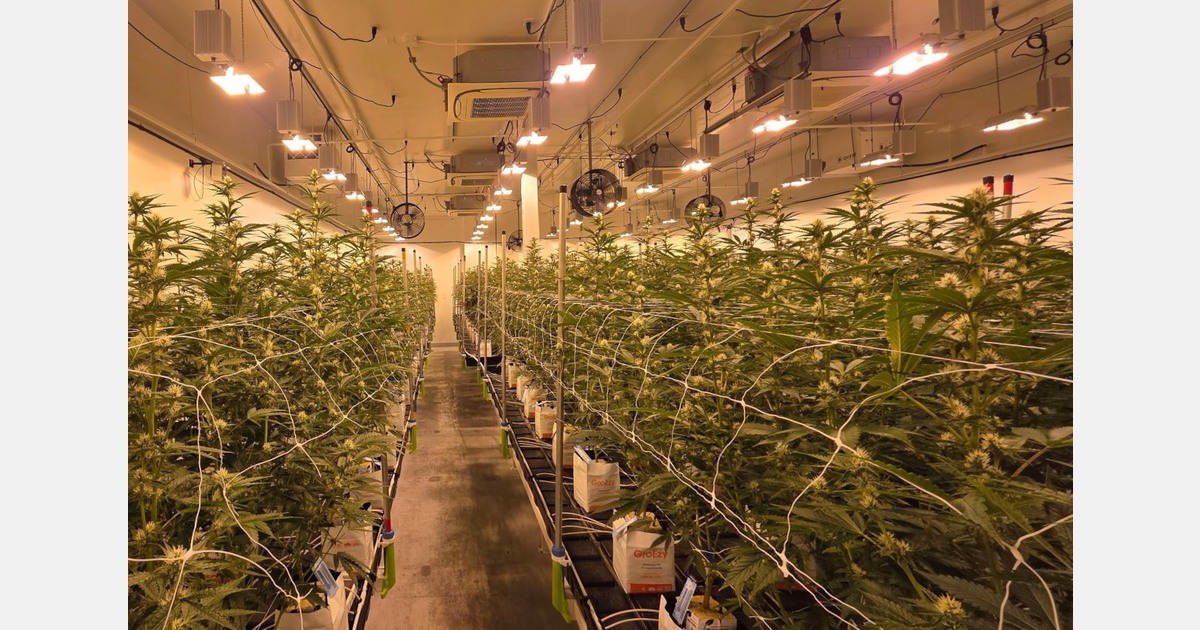
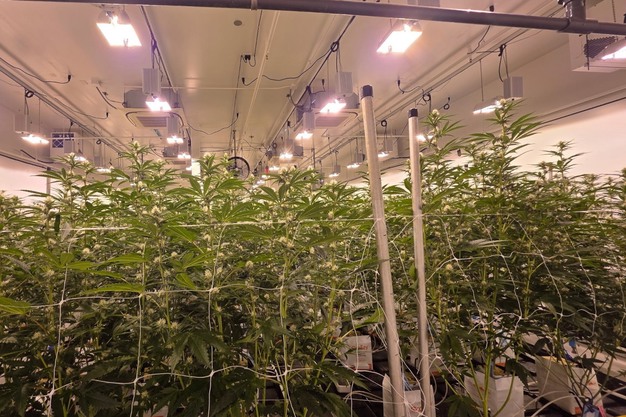
Walk into most cannabis facilities and the grow rooms should (should) look clean. Plant lines under marked light, climate systems singing, nutrient programs marked to a decimal. However, inside the irrigation lines, a different story often unfolds. Out of sight, out of mind is not always applicable, unfortunately.

Biofilm accumulation in irrigation infrastructure is one of the most persistent and underestimated problems of CEA. Left unchecked, it creates the conditions for pathogen pressure, nutrient inconsistencies and costly crop losses. “However, in many operations, the solutions offered have historically come with their own trade-offs, phytotoxicity concerns, incompatibility with beneficial microbes, or less aggressive chemicals that require complete crop removal before application,” says Key Solutions Group’s Don Lund.
© Key Solutions Group

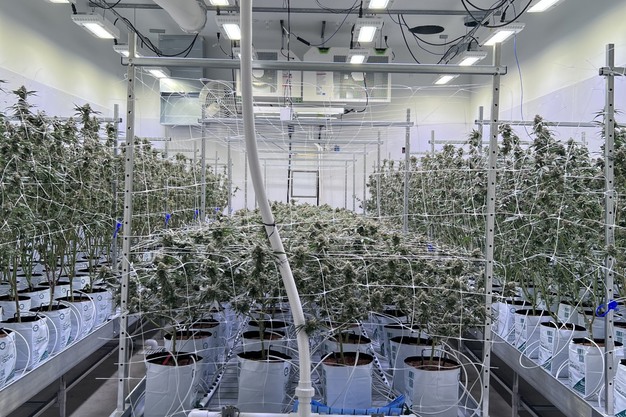
As the owner of Key Solutions Group, the manufacturer’s representative for PRO-OXINE® Horticulture, a unique chlorine dioxide-based chemical developed specifically for CEA environments, registered by the EPA as a disinfectant, sanitizer, algicide and fungicide and manufactured in the United States. Don is very aware of the space growers need to navigate. “There are a lot of chemicals on the market,” says Don, “and what usually happens on the irrigation side is that growers start dealing with biofilm and end up looking for something that creates phytotoxicity problems. Our chemistry is based on Integrated Disease Management (IDM) principles. The goal is to keep the growing clean from the start through prevention. We’re a science-based company, not a marketing-based one,” he says. “That makes a real difference in this space, especially for growers who have been burned before.”

One chemistry, many applications
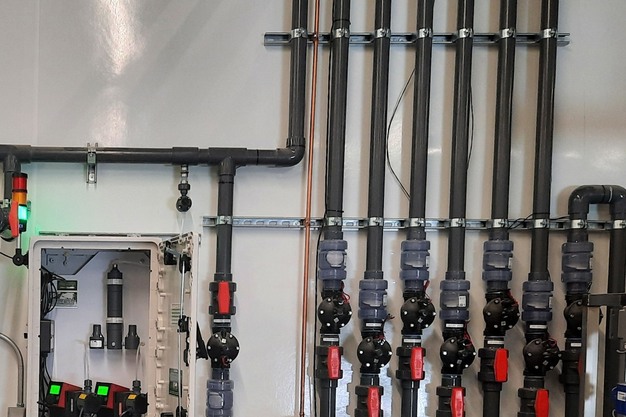
What sets PRO-OXINE® Horticulture apart is a proprietary blend of purified sodium chlorite and highly refined oxychlorine species with dual-use flexibility, according to Don. “The same chemistry, activated on-site by a mild acid, can be spread across irrigation lines and hard non-porous surfaces. This means a single product handles what would otherwise require multiple SKUs, reducing inventory complexity and simplifying staff training.”

Activation occurs through a proprietary method, allowing for the persistent residual effect that Don describes throughout the growing cycle, a key difference from chlorine dioxide products, which tend to act in a binary mode: inactive or fully activated, while leaving mostly undesirable toxic byproducts.
© Key Solutions Group

“With standard chlorine dioxide, you’re either on or off,” Don explains. “Developed specifically by the manufacturer for CEA, it allows you to manipulate ppm levels while maintaining a near-neutral pH, which maintains a clean, healthy irrigation environment throughout the growing cycle, rather than hoping for the best.”

For facilities with existing biofilm problems, the protocol can be adapted accordingly. “Starting slowly or using a shock treatment at night when there are no plants, followed by a wash,” he says. “For clean operations, the focus shifts to prevention: injecting at low ppm during irrigation (2 ppm per EPA rule) keeps lines clean, nutrients effective and the root zone happy and healthy. We eliminate the need for shock between growths while being proven time and time again.”

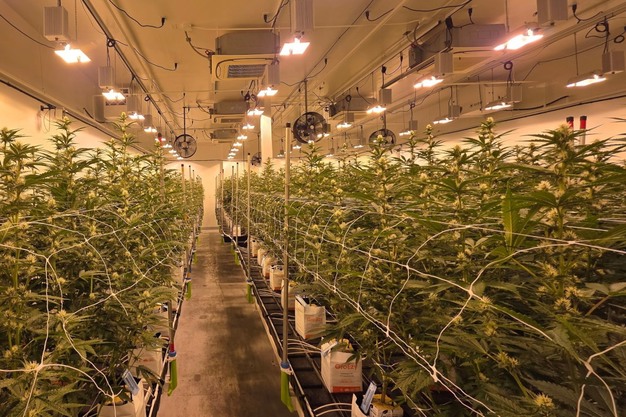
The chemistry also addresses specific pathogen challenges that cannabis growers regularly encounter, including biofilm, fusarium, botrytis, HLVd, iron bacteria and other water sources, and algae and botrytis build-up on floors and tables. “Applications range from inlet water, storage tanks, irrigation, recycled water systems, tools, facility hard surfaces, equipment and more to disinfecting and effective sanitation with PRO-OXINE® horticulture.”
© Key Solutions Group

Organic word of mouth
“What’s interesting about our growth in the horticulture field is through word of mouth, as we do very little actual advertising and marketing. Our customers are our best form of marketing as they share their experiences with their industry contacts. Yes, we exhibit a few cannabis and produce CEA shows a year, however testimonials and relationship building have been very key.” Don estimates that about 90% of new business comes from existing customers recommending PRO-OXINE® to members of the Horticulture industry. It’s a dynamic that he attributes not only to product performance, but to the company’s approach to the relationship itself. “We don’t sell consumables,” he says. “We’re selling a solution through prevention…an IDM approach. The mindset is completely different. We want growers to succeed through a proven proactive approach, which is what Key Solutions Groups is all about.”
© Key Solutions Group

Key Solution Group (Altoona, IA) is currently expanding its presence in Europe, Australia and South America while continuing to grow and produce its own cannabis in North America. Key Solution Group is the manufacturer’s representative for PRO-OXINE Horticulture and the manufacturing facility of Kemin Bio Solutions (Des Moines, IA; Norman, OK).

For more information:

Key Solutions Group
(515) 802-2761
(email protected)
ksg-corp.com

Continue Reading
Click to comment

Leave a Reply

Your email address will not be published. Required fields are marked *

Cannabis News

Georgia Lawmakers Pass Bill To Expand Medical Marijuana Access, Sending It To Governor’s Desk

Published

on

By

“This gives the product form that provides the fastest possible relief for the most patients.”

By Mark Niess, Capitol Beat New Service

In the 11 years since Georgia’s medical marijuana program began, it has stumbled slowly, limiting patients to low-potency oils.

The Georgia General Assembly gave final approval Monday to a bill that would change that.

The House voted 144-21 raise Georgia’s THC content limit for medical marijuanaand allowing registered patients to vape the drug for faster relief. Senate Bill 220 now to Gov. Brian Kemp (R).

“These are much-needed improvements,” said Shannon Cloud, whose 20-year-old daughter suffers from seizures and is a registered medical marijuana patient in Georgia. “It gives patients and doctors more flexibility to access what’s really going to work, removing very tight restrictions.”

Of the dozens of states with medical marijuana programs, Georgia has the lowest adoption rates, said Gary Long, CEO of Botanical Sciences, which has five dispensaries statewide.

There are about 34,500 registered patients and 2,200 caregivers in Georgia, according to the state Department of Health.

Patients will get faster relief from vaping than ingesting oil tinctures, Long said.

“If you’re a patient with chronic, intractable pain, you don’t want to wait 45 minutes for those other forms to take effect,” Long said. “This is a medicine. This is not a recreational product. This shapes the product that gives the fastest possible relief to the most patients.”

Currently, Georgia’s medical marijuana law allows patients to purchase and consume products containing 5 percent THC, the compound that gives marijuana users a high. Recreational marijuana, which is illegal in Georgia, can have a THC content of 20 percent or more.

Underneath SB 220there would be no THC percentage limit. Georgia’s medical product name would change from “low THC oil” to “medical cannabis.”

Sen. Ed Setzler, R-Acworth, said he has “serious concerns” about raising the THC limit and stopping people from getting high.

“This is not a low-THC oil to solve the problems of little girls with serious medical conditions that modern medical science can’t solve otherwise. This is something different,” Setzler said the week before the Senate’s 38-14 vote to approve the bill. “People with concentrated THC are taking THC into their lungs. That’s a very different proposition.”

Sen. Matt Brass, R-Newnan, said the bill would help legitimate patients and avoid the kind of legalization of recreational marijuana that has happened in other states.

“This situation makes it different. We put it in the hands of the doctors,” Brass said. “We have a tight lock on these qualification requirements, and are taking advice from medical experts.”

In order to obtain medical cannabis, Georgia patients need a doctor’s authorization to treat, among other things, seizure disorders, Parkinson’s disease, multiple sclerosis, post-traumatic stress disorder and intractable pain. SB 220 would add lupus to the list and limit treating physicians to those with a primary practice in Georgia.

Georgians for Responsible Marijuana Policy, a group that warns of the dangers of marijuana’s expansion, said the increased availability and potency of THC could lead to addiction, harm young people’s brain development and driving skills, and undermine worker productivity.

“When cannabis use disorder takes root, it doesn’t create freedom, it takes away the ability to choose,” the group’s executive director, Michael Mumper, wrote in a statement at the start of this year’s legislative session.

Kemp can sign the bill, allow it to become law without his signature or veto.

This story was first published by Capitol Beat.

Marihuana Moment is made possible with the help of readers. If you rely on our pro-cannabis journalism to stay informed, consider a monthly Patreon pledge.

Continue Reading

Cannabis News

Demand for medical cannabis continues to grow

Published

on

By


West Virginians’ demand for medical cannabis continues to grow

Meanwhile, the national conversation reveals an ongoing debate about the value of cannabis, with a new presidential executive order and a New York Times editorial pointing in opposite directions. A WVU Medicine addiction specialist shared some resources on the issues behind that conversation.

In Morgantown, a new medical cannabis dispensary recently opened at Earl Core and Hartman Run roads: Country Grown Cannabis. That brought the dispensary count in Morgantown to eight, with three in Westover, Kingwood, Fairmont and one in White Hall.

And for West Virginia, most data provided by the state’s Office of Medical Cannabis have admitted 35,202 patients in December 2025: a slight decrease from October 2025, when the number was 35,598; but higher than the 34,003 in our previous report in September 2024.

Sales revenue varies from month to month, according to the Transparency Project – a national data source used by the OMC. As of August 2024, revenue was $8.39 billion. Most recently, in October 2025, it was $8.09 million; and in December, 7.97 million dollars.

Read more at Dominion Position


Continue Reading

Cannabis News

Missouri Court Orders Officials To Award Marijuana Business Licenses Amid Application Scoring Flaws
Published

on

By

“The department’s scoring criteria and scorers’ decisions were based on the subjective ratings of the scorers. This fundamental flaw tainted the entire scoring process.”

By Rebecca Rivas, Missouri Independent

A Missouri appeals court has issued a sweeping rebuke of the state’s marijuana licensing process, ordering regulators to issue Hippos LLC licenses to 13 facilities after 2019 scoring was inconsistent and, in one case, after a grader had never established the ratings.

A unanimous verdict is issued after a few weeks A rigorous state audit found the same errors-irregular scoring, poor documentation and a process so opaque that the integrity of the results was in doubt.

Last week’s decision by the Missouri Southern District Court of Appeals does more than revive Hippos’ longstanding challenge over denied cultivation, manufacturing and dispensary licenses. It also undercuts the methodology Missouri’s Administrative Hearing Board has used to resolve cannabis licensing disputes and raises new questions about hundreds of potential rulings in nearly 850 appeals filed by unsuccessful applicants.

Lisa Cox, spokeswoman for the Missouri Department of Health and Senior Services, which oversees the cannabis program, told The Independent that the agency is “evaluating all options” in terms of appealing the decision.

Hippos officials could not be reached for comment.

As the Missouri Department of Health and Aging Services worked to build the state’s multibillion-dollar industry framework in 2019, it hired Nevada-based Wise Health Solutions to source nearly 2,000 applications.

“In each of Hippo’s applications, the same answers to the same question received consistent scores in many cases,” Judge Jeffrey Bates wrote in the ruling. “This should never have happened if Wise’s scorers had followed the instructions given. Neither the department nor Wise did anything to correct this situation.”

The Hippos lawsuit challenged requests for denials of two cultivation, six manufacturing and five dispensary licenses.

The first stop to appeal the denied applications was with the Administrative Hearing Board, which tried to recover Hippos’ applications by choosing the most common score for the questions the company challenged.

The three appeals judges found the commission’s approach to reinstatement “completely flawed”.

“The raw scores do not provide evidence of the intent of the scorers, as there is no note explaining why the scores were given,” the ruling said. “The conflict of these unexplained scores cannot be reconciled by assuming that the most common score for a given answer is correct.”

The justices agreed with Hippos that the commission’s decisions affirming the state’s denial of the company’s requests were “arbitrary, capricious and unreasonable” and that those decisions were not supported by competent and substantial evidence at all.

The case was remanded to the circuit court, with the lower court ordering the department to “grant Hippos the requested cultivation, manufacturing and dispensary facility licenses.”

No rejection

A major blow to the state’s defense, the judges said, was that Hippos provided two credible witnesses who testified that the petition should have received higher scores, and the judges believed the state did not back down.

The experts were cannabis consultants who collectively prepared 83 applications in Missouri, the ruling says, and more than half of their clients’ applications successfully received licenses.

“The Department offered no rebuttal to Hippos’ expert testimony and presented no other testimony as to why Hippos should not have been given the higher score that the experts testified to,” the ruling states.

In its response to State Auditor Scott Fitzpatrick’s report released last month by the department, it argued that the board had conducted a “thorough review” of the scoring evidence and heard from many experts on hundreds of appeals.

Cox said the Hippos case was one of the first the commission heard in the process of reviewing the department’s licensing decisions.

“The information the Southern District is seeking – expert testimony supporting the department’s position – has been provided in all of the following cases and supports the Administrative Hearing Board’s decision in the Hippos case,” he said in an email to The Independent.

The department’s audit response listed several cases in which the commission ruled in favor of the department, and in at least one other case, the commission used the same methodology that an appeals court last week called “flawed.”

No notes, no evidence

Hippos challenged the scores given to various questions in the application.

The judge had a hard time justifying the scores without seeing the grader’s notes on why they made them.

“After concluding that it was necessary to re-score Hippos’ applications due to the inconsistencies noted by the commission, the commission stated that it was looking for ‘evidence’ that reflected the subjective evaluation of the scorers,” the ruling stated. “Obviously, any notes on a scorer’s reasons for giving a particular score would be helpful to demonstrate consistency.”

Without notice, the ruling said the board’s decision to use the old sheet music was “inventive.”

The lack of notice comes from an instruction in Wise’s training manual, the ruling said, pointing to the lines: “Don’t write anything you don’t want everyone to read. Past versions (something deleted) can be found(.) Adhere to this axiom: Say and forget; write and regret.”

The handbook reminded them that e-mails, memos, or other written materials could be discovered if any scores were challenged in court.

During the audit, Fitzpatrick also said those sentences and the lack of note-taking were problematic. In response to the audit, the department said reading the sentences on its own “does not consider that language in the context of the rest of the training manual,” and raters were encouraged to take notes.

In the lawsuit, Hippos also successfully challenged the scorer’s credentials, something they had tried and failed to do before the commission in other cases.

The ruling stated that Wise was required to ensure that each scorer had the experience and background to perform their assigned role. In the case of the woman who got the grades Hippos challenged, “there is nothing in the record to show that that requirement was met.” The woman did not list or describe any experience or background in the cannabis industry or business evaluation or analysis, the ruling said.

However, the department has argued that he is a university professor with good research skills in the entire case. In a 2024 brief, the department noted that it also graded three other questions about Hippos applications.

“However, Hippos does not criticize the scoring of these questions,” he said short the states “Because they gave each of them a score of 10.”

The appeals court was not convinced.

Unanimous court the verdictAlong with Fitzpatrick’s audit is a sweeping assessment of how Missouri has issued licenses that launched its legal marijuana market. It also raises broader questions about other cases in which the Administrative Hearing Board has relied on similar methods to review disputed application scores.

“The board correctly concluded that the department’s scoring criteria and scorers’ decisions were based on the subjective assessments of the scorers,” the ruling states. “This fundamental error tainted the entire scoring process.”

This story was first published by the Missouri Independent.

Photo elements courtesy of the user rawpixel and Philip Steffan.

Marijuana Moment is made possible with the help of readers. If you rely on our pro-cannabis journalism to stay informed, consider a monthly Patreon pledge.

Continue Reading
Advertisement

Trending

Copyright © 2021 The Art of MaryJane Media