
Cannabis News
Focus on how LED systems function once installed

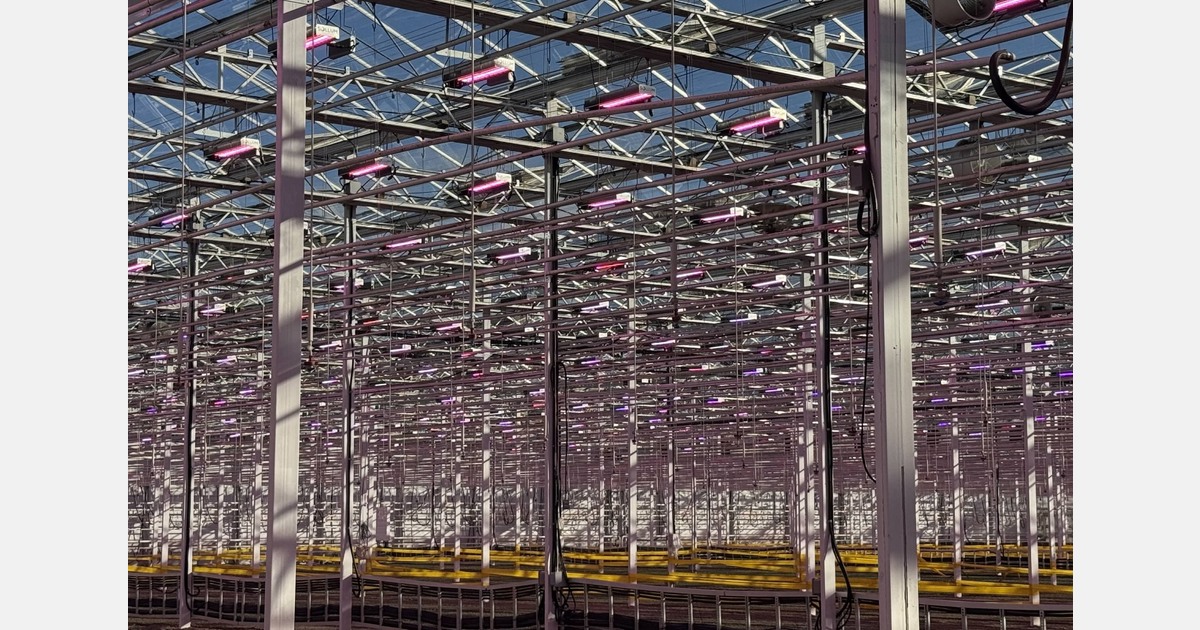
Ask various greenhouse growers what the “best” LED lighting system is and the answers will vary. Some will focus on efficiency figures, some on upfront investment and some on brand awareness or existing facilities. As LED lighting has become common practice in commercial greenhouses, it has become clear that the question itself is changing. The best commercial LED greenhouse lighting system, according to Sollum Technologies’ Abhay Thosar, is one that adjusts spectrum, intensity and Daylight Integral (DLI) in real time to crop requirements, seasonal light availability and energy conditions.
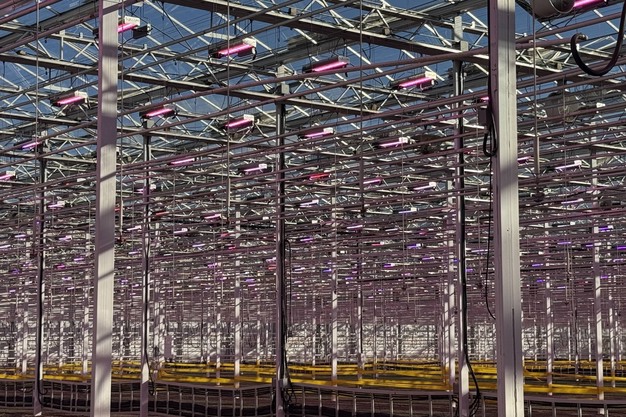 © Sollum Technologies
Energy costs continue to fluctuate, and the availability of natural light varies throughout the year. “At the same time, growers are expected to deliver consistent quality, predictable yields and stable production planning. LEDs are no longer a separate technology, but part of the core infrastructure. What differentiates lighting strategies is not what appears on a spec sheet, but how a system performs under actual greenhouse operating conditions,” he says. “Greenhouse production is inherently variable. Lighting systems must respond to these changes rather than operate as static installations.”
When comparing LED fixtures, the evaluation is often based on efficiency in µmol/J, maximum light output, purchase price, and warranty terms. While these metrics are useful, they do not fully reflect how a lighting system performs once installed. Seasonal and daily variations in sunlight, differences between sites within the same greenhouse, specific responses to crop spectrum and intensity, and changing energy rates all affect real-world performance.
“An apparatus that looks optimal on paper can become restrictive if it cannot be adjusted as conditions evolve,” explains Abhay. “Adaptability is part of performance.”
Commercial LED greenhouse systems are increasingly defined by their ability to adjust over time. The flexibility of the spectrum allows growers to vary the quality of light according to crop type, growth stage and production goals. Increasing blue light during early stages of growth or introducing red light during periods of low light are adjustments that demonstrate how spectral control can be used to influence plant responses.
“Flexible spectrum gives growers the ability to align lighting with plant behavior, rather than treating the light response as a fixed input,” says Abhay.
Light intensity control is another factor. Instead of maintaining constant output over long periods of time, adjustable intensity allows growers to respond to changes in natural light and avoid using unnecessary energy. This approach is closely related to DLI-based control, where lighting decisions are driven by the amount of light a crop receives each day. In advanced systems, DLI targets are achieved through automated modulation of light output as sunlight conditions change throughout the day.
 © Sollum Technologies “The goal is to accurately manage consistent DLI without adding complexity to day-to-day operations,” said Abhay.
Greenhouse environments are rarely uniform, making field-level control important. Differences in structure, orientation or crop design can result in different light requirements within the same facility. Lighting systems that allow zone-based adjustments support more consistent crop development throughout the greenhouse.
Integration with existing greenhouse systems is another matter. Lighting interacts with climate control, energy management and crop planning, and systems that operate in this broad framework are easier to manage over time. Long-term adaptability also plays a role, as lighting strategies change frequently to respond to new cultivars, market demands or energy requirements. Systems that support these changes without having to completely replace them offer greater operational flexibility.
Many greenhouse LED installations still rely on static schedules, where prescription lights are set after installation and manually adjusted, if necessary. Dynamic lighting strategies take a different approach by continuously adjusting spectrum, intensity and timing to crop needs, available daylight, seasonal patterns and operational constraints. These adjustments can be made in real time and at the zone level, managing the underlying complexity of the system.
“The system manages variability so growers can focus on crop results,” says Abhay.
In practical terms, the most suitable commercial LED greenhouse systems support consistent crop performance across seasons, improved uniformity and predictable production results. They allow growers to adjust lighting strategies without replacing hardware and manage energy use in relation to production goals. In this context, “best” is less about the most powerful apparatus and more about a system’s ability to adapt as conditions change.
“The important question for growers is no longer which LED system is the best in absolute terms, but which system provides the control and flexibility needed to respond to changing conditions, plant requirements at each growth stage, and long-term operational goals. Greenhouses are dynamic environments, and lighting systems are increasingly expected to function in the same way.”
For more information: Sollum Technologies
sollumtechnologies.com







Cannabis News
Cannabis operators report mixed results as rescheduling reshapes the financial outlook
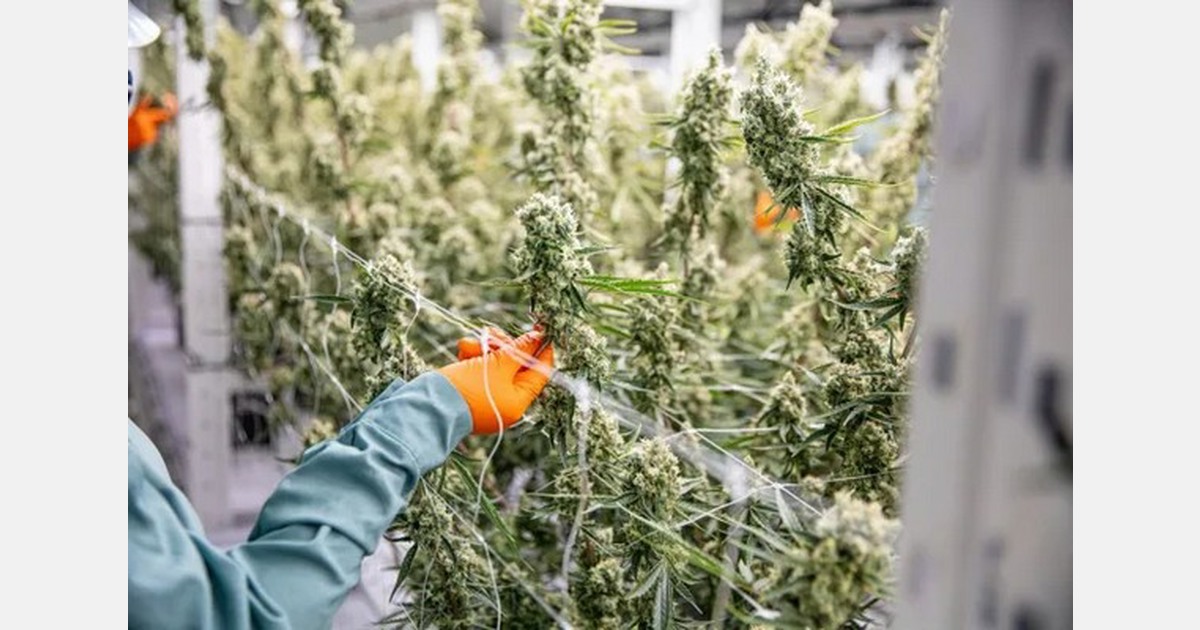
The rescheduling came mid-quarter and rewrote the tax math for each medical sales operator, but the underlying revenue picture remained uneven in early 2026, with acquisitions driven at one end of the scale and continued top-line compression at the other.
Vireo Growth: Back on $106 million deal
Vireo Growth Inc. reported Q1 GAAP revenue of $106.2 million, up 333.5% year-over-year, driven almost entirely by recent acquisitions rather than organic growth. The company completed the Schwazze acquisition in March, adding 45 dispensaries and two manufacturing facilities in Colorado and New Mexico. At the end of the quarter, it closed Eaze and Hawthorne Gardening, FLUENT Corp. announced an acquisition agreement and executed a California dispensary joint venture with Glass House Brands. Treating all acquisitions as closed on January 1, 2025 on a pro forma basis, revenue was $210.2 million and adjusted EBITDA was $42.2 million. The company ended the quarter with $137.8 million in cash.
John Mazarakis, CEO of Vireo, said: “Performance in the first quarter met our expectations and we are excited to welcome Schwazze, Eaze and Hawthorne to Vireo. We are focused on integration and optimization across the platform, while remaining opportunistic regarding growth opportunities associated with further acquisitions.”
Cresco Labs: $151 million, 280E relief and Texas license
Cresco Labs reported Q1 revenue of $151 million, down from $165.8 million in Q1 2025. Adjusted gross margin was 50.7% and adjusted EBITDA margin of $33 million was 21.7%. Cash at the end of the quarter was $67 million against a $310 million secured term loan. The company was conditionally granted a Texas Compassionate Use Program license after the quarter ended and opened two new dispensaries in Ohio.
Management said, “Moving the state’s legal medical cannabis from Schedule I to Schedule III is the most impactful reform this industry has seen, and it validates the work we’ve been executing for years. We’ve built the operational foundation and balance sheet discipline to reap the immediate benefits of rescheduling, and position Cresco to take advantage of the broader path to normalization.”
Jushi Holdings: 4% growth, 460 basis point margin expansion
Jushi Holdings reported first-quarter revenue of $66.4 million, up 4% year-over-year, with gross profit margin up 460 basis points to 45%. Adjusted EBITDA was $11.4 million, up 17.2%. The margin improvement was driven by higher production volumes in Ohio, Massachusetts and Pennsylvania and the performance of grower processors. Jushi brand products accounted for 58% of retail revenue in vertical markets. The company refinanced $132.3 million in debt during the quarter, providing $160 million in new debt through 2029.
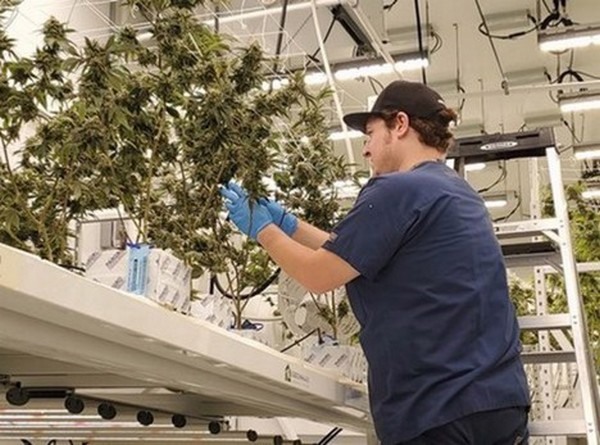
Jim Cacioppo, president and CEO, said: “The recent scheduling of state-licensed medical marijuana for Schedule III is an important milestone for the industry, eliminating 280E tax limitations for medical operations and supporting a more favorable long-term operating environment.” Medical sales accounted for about 60% of Jushi’s 2025 revenue, making this material relief.
iAnthus Capital: Revenue falls to $33.5 million
iAnthus Capital reported first-quarter revenue of $33.5 million, down $4.6 million from 2025’s first quarter. Gross margin was 47.5%, up 477 basis points from the 2025 quarter. The company did not provide a management comment in the press release.
Country farms: international export record, fourth consecutive quarter of net income
Village Farms International reported first quarter consolidated net sales of $50.2 million, up 27% year-over-year, with net income of $2.9 million and adjusted EBITDA of $9.9 million, up 118% year-over-year. International export sales increased 171% to a record $14.6 million, driven by demand for EU-GMP compliant products in Germany. Pure Sunfarms had the top Canadian market share in dried flowers for the 15th consecutive month. The company started planting the first half of its Delta 2 greenhouse expansion and expects its Phase II facility in the Netherlands to reach full capacity by the end of 2026, which would quadruple Dutch production.
Michael DeGiglio, President and CEO, said: “Our first quarter results reflect a strong start to the year and continued momentum in our largest markets, with adjusted EBITDA growth of 118% year-over-year, significantly outpacing revenue growth of 27%, driven by our international business and continued leadership in Canada.
Cronos Group: Record revenue, $822 million in cash
Cronos Group reported Q1 net income of $45.2 million, up 40% year-over-year and a record quarter, with net income of $15.7 million and adjusted EBITDA of $5.1 million. Israel led growth PEACE NATURALS grew 53% for ninth consecutive record quarter. In Canada, the Spinach brand took first place in vapes with a 9.8% share of the national market, and maintained its top spot in edibles at 20.8%. The company ended the quarter with $821.9 million in cash and authorized a new $50 million stock repurchase program. The deadline to close the acquisition of CanAdelaar, one of the ten licensed growers in the Dutch Controlled Cannabis Supply Chain Experiment, has been extended to September 9, 2026 to allow time for regulatory approvals.
Mike Gorenstein, chairman, president and CEO, said, “Cronos achieved net earnings and gross profit in the first quarter as we continue to execute against our unlimited product strategy and the additional supply from Cronos GrowCo’s expansion fuels the next phase of our growth.”
Org chart: Revenue down 9%, Sanity Group acquisition closes after quarter
Organigram Global reported fiscal second quarter net income of $59.8 million, down 9% year-over-year, with adjusted EBITDA of $0.9 million, down 82%. Lower vape and pre-infusion sales drove the decline, along with a $5.8 billion dent in the U.S. hemp business. The company achieved a record quarterly harvest of over 32,000kg at its Moncton facility, up 56% year-on-year, and launched 10 SKUs in Australia targeting over 4,000 pharmacies. At the end of the quarter, Organigram acquired Sanity Group, one of Germany’s leading cannabis companies, and updated its 2026 guidance to net revenue of more than $350 million.
James Yamanaka, CEO, said: “Q2 reflected our poor performance in vaporizers and temporary challenges in pre-infusion production, compounded by slower industry growth. We have acted quickly to address these issues, and the operational changes and product improvements we have implemented are already beginning to stabilize performance.”
Greg Guyatt, Chief Financial Officer, said: “The financial impact of the competitive and operational challenges encountered earlier in fiscal 2026 is believed to have materialized in the first half of the year, and we are now beginning to stabilize performance. We expect to resume a trajectory of margin expansion and improved profitability during the second half of the year, supported by positive revenue and international sales growth. The Sanity Group.”

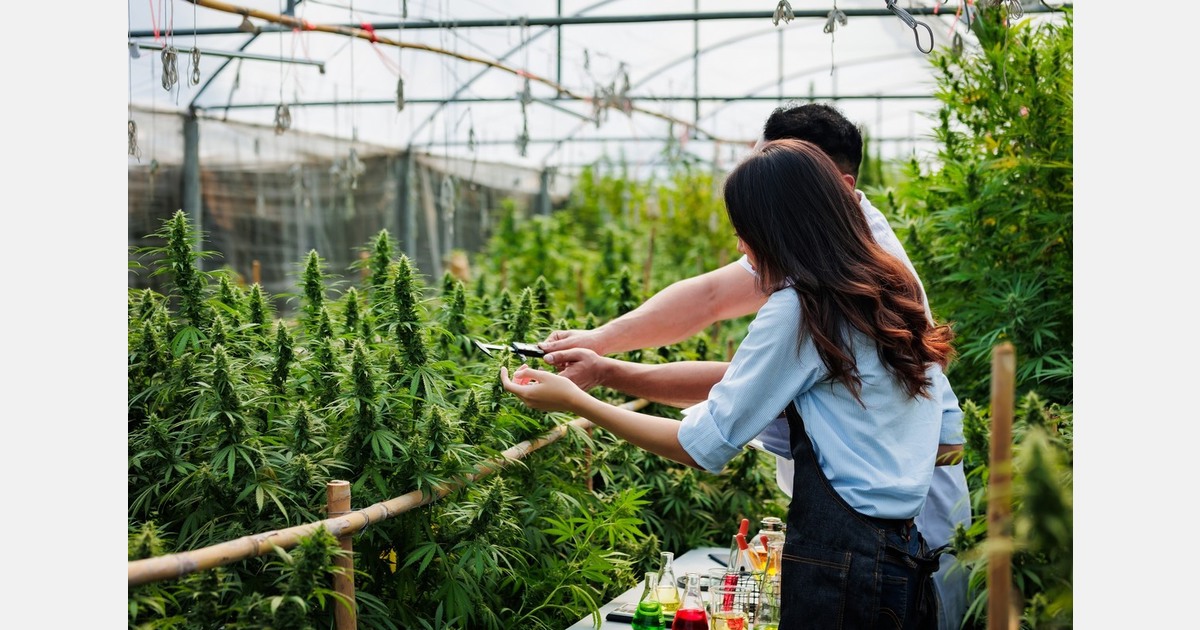
Existing medical cannabis licensing fees will be temporarily applied to recreational marijuana businesses, the Select Committee decided on May 5. Board members agreed 4-1 to the temporary change, as long as officials say the fees are higher than necessary and accurately reflect the town’s oversight costs.
Bryce Cobb, Livermore Falls’ code enforcement officer, plumbing inspector, health officer and E-911 dispatcher, said voters approved the amended cannabis ordinance on April 28. Cobb said the amended ordinance allows recreational marijuana businesses and the next step was to establish a fee schedule. Recreational cannabis businesses operating in town would require local licensing approval under the ordinance.
Asked if he had fee schedules from other towns to compare, Cobb said he did not. Additionally, the town’s fee schedule specifically mentions medicinal cannabis.
“So it could be medical and adult use,” Cobb said when discussing whether the existing fee structure could apply to recreational businesses.
Read more at Sun Magazine

081924WeedTalkNews- 1st Week Ohio Sales Results; Missouri Recall, Is Big Alcohol Ready to “Help”?

VETERANS FOR CANNABIS [medical marijuana]

Cannabis operators report mixed results as rescheduling reshapes the financial outlook

Curaleaf Earnings, and Ohio’s $107 M April Sales Record

Medical Marijuana Helps Pain Patients Reduce Use Of Opioids, New Study Shows

New Jersey Court Rules In Favor of Cops Terminated for Off-Duty Cannabis Use

Coast to Coast Cannabis News Reports on the B Block of Weed Talk News w/ Alaina Pinto

EXPLORING THE WORLD OF CANNABIS FESTIVALS | PETER HUSON

Michigan Cannabis Sales Fell Yet Again – New Cannabis Ventures

Livermore Falls debates cannabis licensing fees

“Our system can manage equipment across 10,000+ m² using just a few wires”

Florida Workshop to Discuss What Constitutes a ‘Cartoon’ in Hemp Packaging

Mazar-i-Sharif Hash Wednesday

Afghan Black Hash Wednesday

Re-release of the full show of Cannabis Coast to Coast news. Republican Texas DA Fires Up vs. laws;

Weak Michigan Cannabis Sales Again in July – New Cannabis Ventures

From Finance to Wellness: Brad Zerman’s Impactful Pivot

DEA’s Cole Reverses His “priorities” ; Prohibitionists Dig In; Dead & Co Celebrates 60 years in SF

Your Cannabis Business: Consistent Filings Are Critical

Texas DA Fires Up for Change! Mass. Sheriff arrested on Extortion charges; GOP vs Industry in state
-
 Cannabis News9 months ago
“Our system can manage equipment across 10,000+ m² using just a few wires”
-
 Florida9 months ago
Florida Workshop to Discuss What Constitutes a ‘Cartoon’ in Hemp Packaging
-
 Video7 months ago
Mazar-i-Sharif Hash Wednesday
-
 Video7 months ago
Afghan Black Hash Wednesday
-
 Video9 months ago
Re-release of the full show of Cannabis Coast to Coast news. Republican Texas DA Fires Up vs. laws;
-
 Video9 months ago
From Finance to Wellness: Brad Zerman’s Impactful Pivot
-
 aawh9 months ago
Weak Michigan Cannabis Sales Again in July – New Cannabis Ventures
-
 Video9 months ago
DEA’s Cole Reverses His “priorities” ; Prohibitionists Dig In; Dead & Co Celebrates 60 years in SF