
Cannabis News
Using plasma to kill airborne pathogens

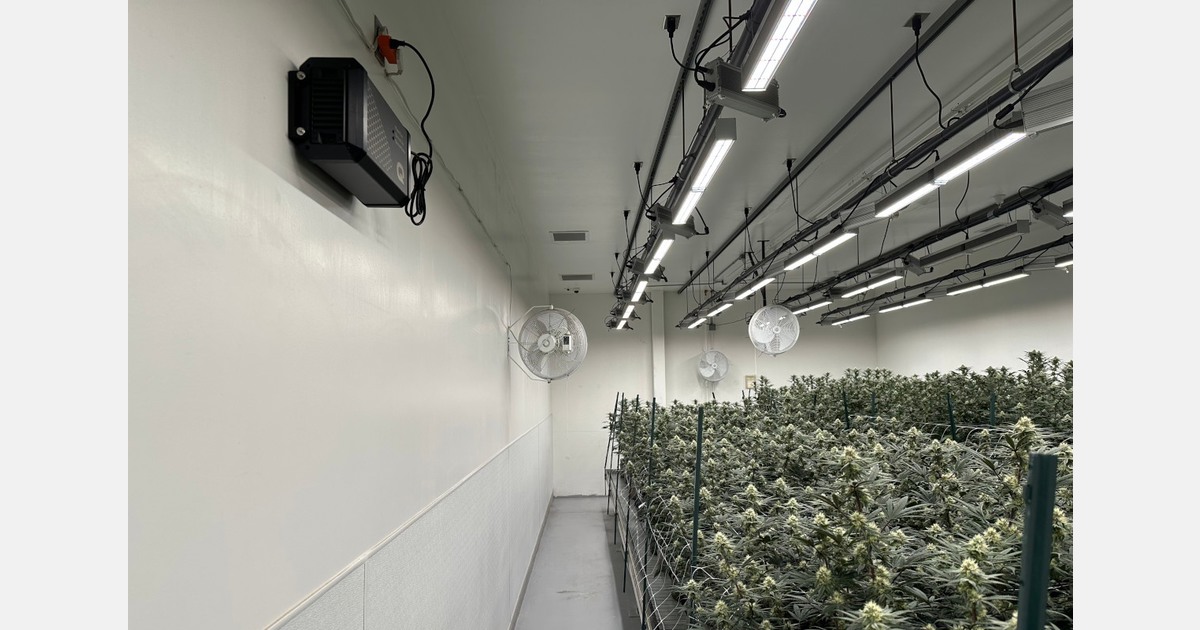
Whether it’s cannabis or produce, every grower faces a constant battle against mold and similar threats. Cannabis is particularly vulnerable, as its humid growing environment and the physical structure of its flowers create an ideal breeding ground for many pathogens. Fruit, vegetables and cut flowers, on the other hand, often die in large quantities as they sit in containers or trucks before reaching their final destination.
For the past two years, DDH has been working with an industrial plasma manufacturer to adapt cold plasma technology for controlled environment agricultural and shipping environments. The result is a variety of products sold under the name Quantum Clear (QC).
plasma
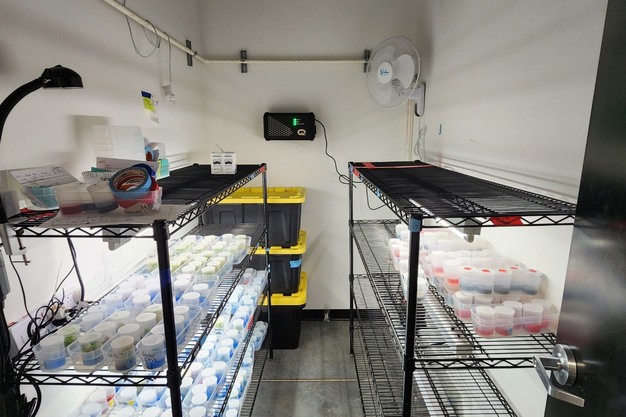
DDH’s Travis Higginbotham says the original inventor had used plasma technology in other sectors and was looking for a partner to bring it to agriculture and horticulture. “It took us two full years of design and testing to get the equipment to work in grow facilities, centralized HVAC systems, shipping trailers and cold rooms,” he said. The company has collected data on various USDA fruit crops, third-party air quality testing for 50 different pathogens and volatile organic compounds such as ethylene, and pilot projects with large ornamental and cannabis operators.
 © Due Diligence Horticulture
The appeal of this approach, Travs points out, is that the plasma field does not produce ozone, which is a concern with some current plasma technologies. The company has UL and Carb certifications, which verify that there is no ozone and that the units are safe for plant and human workplaces.
Preservation of products
The way it works is pretty simple, practically speaking, at least. Air enters on one side of the device, passes through a plasma area and exits on the other side. In this area, gases are energized into a plasma state that produces reactive oxygen and nitrogen species, including hydroxyl radicals and hydrogen peroxide. These compounds interact with airborne pathogens and organic molecules. “The idea is to create an area in the environment that breaks down the cell walls and changes the structure of certain compounds,” explains Travis.
Fruit storage and shipping environments have been an early focus. “The combination of darkness, low temperatures, humidity and well-packaged produce creates ideal conditions for mold,” he says. “Less air exchange and increased ethylene levels also encourage faster fruit ripening and smoother texture. USDA work with bananas, tomatoes, apples and strawberries showed that shipments treated with cold plasma maintained quality and had virtually no visible mold.”
 © Due Diligence Horticulture
Due Diligence Horticulture has designed versions of the unit for shipping containers, refrigerators, HVAC systems and growing spaces. This enables flexibility throughout the supply chain, providing redundancy and centralized air handling.
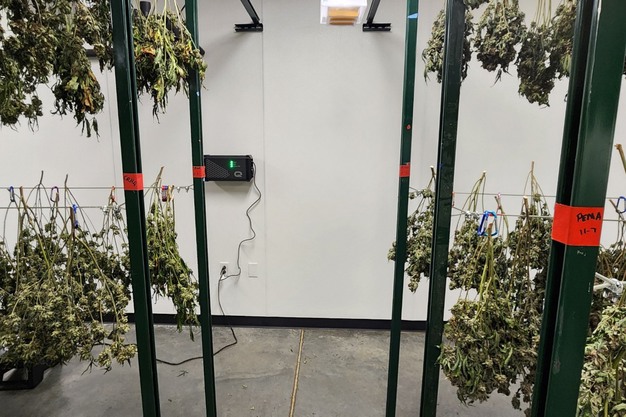
All of this potential implementation was also based on the company’s focus on safety, Travis noted, not just for the humans working in the grow rooms, but for the plants as well. Several data sets suggested neutral or positive effects on performance and quality, although the company is still gathering more information. “We’ve doubled and even tripled the application capacity without negatively affecting the pistils of cannabis flowers. The technology is gentle on the plant, but destroys pathogens.”
cannabis
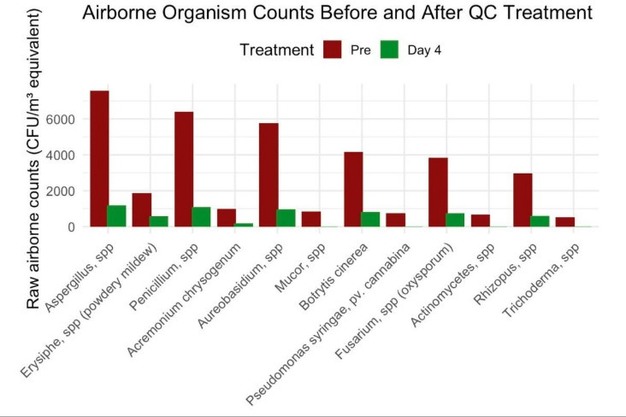
For cannabis growers, interest centers on airborne pathogens associated with empty fills, including aspergillus. “Operators also want to cut down on powdery mildew losses or limit the cost and frequency of IPM interventions during flowering. Since plasma treatment can be applied from tissue culture rooms to post-harvest spaces, trials have looked at how the units behave during the crop cycle.” The graph below shows the results of a producer trial in November 2025 where the Aspergillus count was reduced by 90% after 4 days of use.
 © Due Diligence Horticulture
Growers of vegetables and ornamentals are also in trouble. Trials in shipping with coastal farms and cooler storage with Metrolina Greenhouses have been completed, and further work is underway in Central American Tissue Culture facilities and other controlled environments with good air exchange.
 © Due Diligence Horticulture
Travis emphasized that installation is easy compared to systems that rely on chemical injection. “The units are stand-alone boxes designed for different voltages and room sizes. There is no subscription service attached to the equipment, and the devices come with a standard warranty and optional extended coverage. DDH also offers financing to help manufacturers secure Quantum Clear cold plasma units.”
 © Due Diligence Horticulture
In various studies, the company reports an average reduction of 87.2% in airborne pathogens in less than a week and a greater reduction of over 95% when the units are run continuously for up to a month. “It’s a practical tool for growers who want to not only monitor air quality, but better understand air quality management.” he says “He’s responsible for getting the technology into the hands of producers through our testing program and QC to make sure it’s the solution they expected.”
Want to know more? tune in DDH December 10 webinarth at 10:00 a.m. PT. Click here to register.
For more information:
Due Diligence Horticulture
www.ddhort.com







Entourage Health Corp., an Aylmer, Ont.-based cannabis grower, laid off 53 workers on June 8 without notice, offering only two weeks’ pay in lieu of notice rather than layoffs. More than 40 former employees have since filed complaints with Ontario’s Ministry of Labor, alleging the company violated the province’s Employment Standards Act, which entitles workers with more than five years of service at companies with payrolls of more than $2.5 million to receive 26 weeks of severance pay.
The company is owned by the pension fund of LiUNA, a major private sector union, which became Entourage’s largest lender and shareholder following a series of investments beginning in 2017. Entourage was taken private by an entity related to LiUNA in April 2025. After struggling with debt and unprofitability, the company laid off most of its leisure workers, and lost most of its bank employees to CCAA. protection at the end of June 2026. Its medical cannabis division continues to operate with 22 employees.
Court filings show Entourage owes LiUNA’s pension fund about $240 million. Efforts to sell the company generated little industry interest, leading to a bankruptcy filing. Former employees, including Benjamin Hessel and Gabriela Ayee, say they were blindsided by the sudden layoffs and worry they won’t get back the severance they were owed in the restructuring. A labor attorney noted that workers laid off in bankruptcy typically become unsecured creditors with limited recourse because secured lenders and government creditors are prioritized. The federal Wage Protection Program offers affected workers a one-time payment of up to $9,275. Neither Entourage nor the LiUNA Pension Fund responded to requests for comment.
Cannabis News
Wyoming Attorney General Blocks State Marijuana Rescheduling That Would Be Triggered By Trump’s Federal Reform

Sascha Mielcar, CEO of Canify AG, inspects all the suppliers the company buys from, retesting each batch and discarding anything out of specification. However, cannabis from other companies is reaching German pharmacies that cannot meet these standards. “There is a market in Germany where you wonder how the product got into it,” says Sascha. The certification standards, he believes, are not being strictly applied.
 © Canify
“I don’t like the term GMP cleaning, it’s a complex methodology,” says Sascha. His concern is the microbiological purity of what reaches the patients, a product that clears certification abroad and would not survive the same examination in Germany. Canify only sells flowers that are GMP certified, and Sascha would rather turn away business than release something out of spec.
For repair, Canify uses a GMP validated method. “We don’t revel in repairs, but if we do, we do it through a qualified, validated process,” says Sascha. Others in the market use various methods and claim GMP validation, and Sascha is skeptical of the extent of these standards.
From the early days to the international footprint
Canify was among the first movers in the German market. Founded in 2018, obtained GMP certification in 2021 after three years and huge expenses, trading since the end of 2022, imports, processes and releases products from various countries, including Portugal, Canada, Uruguay, Colombia, South Africa, Lesotho, Spain, Denmark and North Macedonia, for its brands and telemedicine and clinical services on its German soil. Its volume grew tenfold in 2024 and fivefold again in 2025, although price compression means revenue has not grown in line with volume. The company has also announced a merger with MG Health, a Lesotho-based grower and manufacturer with GMP I and II certified facilities, a step that Sascha calls Canify vertically integrated on two continents, and what he believes to be the first fully integrated operator of its kind outside of Canada.
 © Canify
Cannabis from a bunker in Nato
The manufacturing site has an unusual history. As cannabis was classified as a narcotic, storage regulations were strict, and Canify built its vault inside a former NATO bunker. “It’s a regular piece of real estate, but it’s quite useful,” says Sascha.
 © Canify
In terms of product formats, little has changed. Germany remains a compound market where pharmaceuticals are prepared and the main form factor is still dried flower. “We’re using Stone Age form factors, dried flowers,” says Sascha. He doubts whether edibles are legal in Germany and is wary of vaporizers, where the certification covers the device rather than the cartridge, and there are voices calling for the disappearance of these products from the market. Canify is investing in a fully certified device, closer to an inhaler than a vaporizer, designed for precise dosing and high bioavailability. “Germany remains a composite market, the only real way is to work with pharma,” concludes Sascha.
For more information:
Canify AG
canify.com

BREAKING NEWS President Joe Biden announces cannabis is moving to schedule 3 of the CSA

CRAFT CANNABIS & WEIGHT LOSS | DANNY MURR-SLOAT

Marijuana Retail Report

Entourage Health faces severance claims from dismissed employees

ALJ Hearing Shows Medical Use + AI Enters Cannabis Industry

Wyoming Attorney General Blocks State Marijuana Rescheduling That Would Be Triggered By Trump’s Federal Reform

American Bankers Association Sends Letter to Congress Urging Passage of the SAFE Banking Act

Is Rescheduling to 3, the 1st step towards legalization? Or DE-scheduling the only hope?

THE LAST PRISONER PROJECT

Marijuana Retail Report

“Our system can manage equipment across 10,000+ m² using just a few wires”

Florida Workshop to Discuss What Constitutes a ‘Cartoon’ in Hemp Packaging

Mazar-i-Sharif Hash Wednesday

Afghan Black Hash Wednesday

Weak Michigan Cannabis Sales Again in July – New Cannabis Ventures

From Finance to Wellness: Brad Zerman’s Impactful Pivot

Re-release of the full show of Cannabis Coast to Coast news. Republican Texas DA Fires Up vs. laws;

DEA’s Cole Reverses His “priorities” ; Prohibitionists Dig In; Dead & Co Celebrates 60 years in SF

Curaleaf Q2 Revenue Falls 8% – New Cannabis Ventures

Your Cannabis Business: Consistent Filings Are Critical
-
 Cannabis News11 months ago
“Our system can manage equipment across 10,000+ m² using just a few wires”
-
 Florida11 months ago
Florida Workshop to Discuss What Constitutes a ‘Cartoon’ in Hemp Packaging
-
 Video9 months ago
Mazar-i-Sharif Hash Wednesday
-
 Video9 months ago
Afghan Black Hash Wednesday
-
 aawh11 months ago
Weak Michigan Cannabis Sales Again in July – New Cannabis Ventures
-
 Video11 months ago
From Finance to Wellness: Brad Zerman’s Impactful Pivot
-
 Video11 months ago
Re-release of the full show of Cannabis Coast to Coast news. Republican Texas DA Fires Up vs. laws;
-
 Video11 months ago
DEA’s Cole Reverses His “priorities” ; Prohibitionists Dig In; Dead & Co Celebrates 60 years in SF