
Cannabis News
Bloemteknik receives £2.5 million investment


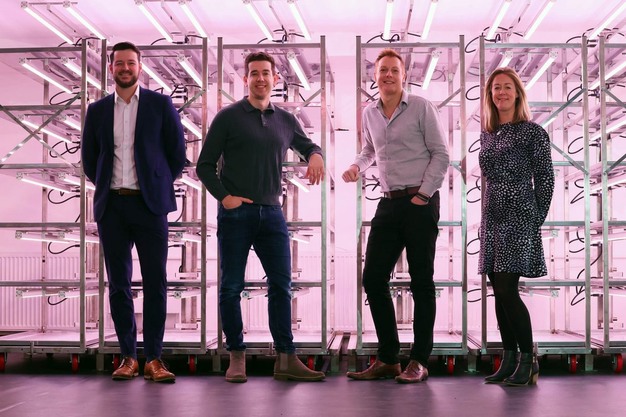
Foresight Group has announced a £2.5m investment in Bloemteknik Limited, a Cardiff-based supplier of precision LED lighting systems for commercial greenhouses and vertical farms.
The investment was made through British Business Bank’s Wales Investment Fund and Foresight’s Growth VCTs. The Investment Fund for Wales was launched in November 2023 by the UK government-backed British Business Bank to promote the provision of seed funding to small and medium-sized businesses across Wales. Bloem’s investment was led by appointed fund managers, Foresight, who oversee the Fund’s equity investments of up to £5m.
 © Bloemteknik
The investment allows Bloem to scale its operations, strengthen its delivery capability and expand into new international markets. The partnership brings strategic support through board-level guidance, sector expertise and access to Foresight’s global network, helping Bloem build a strong, high-growth business rooted in South Wales.
James Fleet, CEO of Bloem, said: “Bringing GreenFingers to market simply wouldn’t have been possible without Foresight’s support. Their investment has allowed us to turn an ambitious concept into meaningful value for growers. GreenFingers creates a truly self-contained self-optimizing lighting ecosystem, with advanced algorithms to automatically adjust complementary LED spectrums in real-time to maintain consistent DLI in a balanced crop environment.”
Bethan Bannister, Chief Executive of National and Regional Investment Funds at the British Business Bank, said: “It is great to see how the Welsh Investment Fund is accelerating innovative businesses like Bloem’s to bring new products to market. Bloem’s development track record is impressive and with this funding supporting its strategic growth ambitions, we look forward to its success.”
Ashley Rogers, Investment Manager at Foresight, commented: “Bloem has shown strong early traction in a rapidly growing market with a differentiated product and an experienced team. We are excited to support their growth and innovation, especially as they expand into new geographies and continue to build their market-leading proposition.”
For more information:
Bloemteknik
Sophia House Cathedral Rd Cardiff CF11 9LJ, United Kingdom
+44 (0) 2920 660250
(email protected)
bloemteknik.com














The thread connecting the Erva Daninha operation to the current price compression in the Portuguese cannabis export market does not begin in Lisbon or Berlin.
According to an industry source with direct knowledge of the scheme, the criminal network that would eventually lead to a sector-wide regulatory crackdown allegedly operated through a mechanism that exploited the loosest link in Portugal’s export chain. Some non-EU countries are said to have issued import permits, which were used by European operators with export permits on the Portuguese side, who sent these documents to Infarmed for approval and shipment of the product. The Portuguese authorities finally called their counterparts from the countries in question to verify the documentation, the paperwork was not completed. The main actors, the source says, cashed in and left. “The worst thing is that Portugal was seen as the epicenter of pharmaceutical production in the world. They lost their reputation.”
Investigators determined that the criminal organization, aware of flaws and weaknesses in Portugal’s cannabis export inspection and control system, bought pharmaceutical companies and created authorized wholesale and export entities, then used false documentation and certificates to ship thousands of kilos to illegal markets. Europe and Africa.On May 20, 2025, the National Anti-Drug Trafficking Unit of the Judicial Police carried out 64 search and seizure orders from the north to the south of the country and on the island of Madeira, arresting several suspects. The operation was called Erva Daninha.
Legitimate operators were careful to distinguish themselves from the actors they were investigating. Nuno Martens from Takodana He said he welcomed the attack. “I don’t understand why people are afraid of this. It’s a good thing that the PJ is doing these raids. If there are things that need to be investigated, that’s good.” The real challenges of the market were soon to materialize.
the conclusion
In the months that followed, several licenses were revoked. Infarmed tightened oversight and added new paperwork requirements, creating an ever-changing regulatory framework that made scaling, exports, and day-to-day operations significantly more difficult. It all startedAs one Portuguese producer said, when Infarmed began to inspect the company more closely May police raid.
One processor’s journey shows how the frozen product eventually became a pricing weapon. According to the source, the companies whose licenses were revoked had between 10 and 14 tons in inventory. Initially written off as a loss, the tide quickly turned when Infarmed reinstated those licenses and lots were released. According to the source, the operators did not want that product anymore, it was already registered as a loss, so the logical conclusion was to remove it as soon as possible. This is how significant amounts of cannabis flowed into Germany at one euro per gram, forcing prices down.
According to market data, by autumn 2025, GACP-certified high-THC flower in Germany was already between €0.75 and €2.30 per gram, while EU-GMP-certified material commanded a clear premium of €2.15 to €3.55 per gram. By the spring of 2026, prices had fallen further. High-THC GACP flower ranged from €0.60 to €2.50 per gram, while EU-GMP high-THC flower softened to €2.00 to €3.48.
Reclaiming reputation
The reputational damage had already spread beyond the prices. Grower active in Portugal said MMJ Daily The trust issues created by the raid exacerbated everything that followed. “They had certain certificates, but they thought they were authorized and they made movements that were not there.” Now when operators want to structure deals through Portugal, the answer from international partners is: Except for Portugal. Malta’s medical cannabis business grew by 1,000% last year.
In early April 2026, at least eight more cannabis operators were removed from Infarmed’s listings, in what analysts described as an unprecedented drop in all. license categories. Whether these departures reflect non-renewal of administration, business failure or the ongoing effects of the 2024 freeze is not yet entirely clear.
A sign of recovery is emerging, however. Another source familiar with the sector points to a new digital UN verification system for import and export documentation, which will be rolled out by the end of April 2026, as a potential turning point. The system is already receiving positive early reviews from operators who have seen it in action. If he delivers on that promise, the source believes Portugal’s reputation could begin to recover within the next three months.
A trafficking ring that allegedly used fake import permits and European export licenses led to the police operation. The police operation resulted in a regulatory crackdown. The crackdown froze tens of tons of legitimate products at Portuguese facilities. The frozen product, once launched, hit the German market at a price that reset everyone else’s expectations. The main actors, according to the source, are still at large.
Cannabis News
Texas Judge Pauses New Rules Banning Hemp Products Like Smokable THCA Flower Amid Legal Challenge From Industry

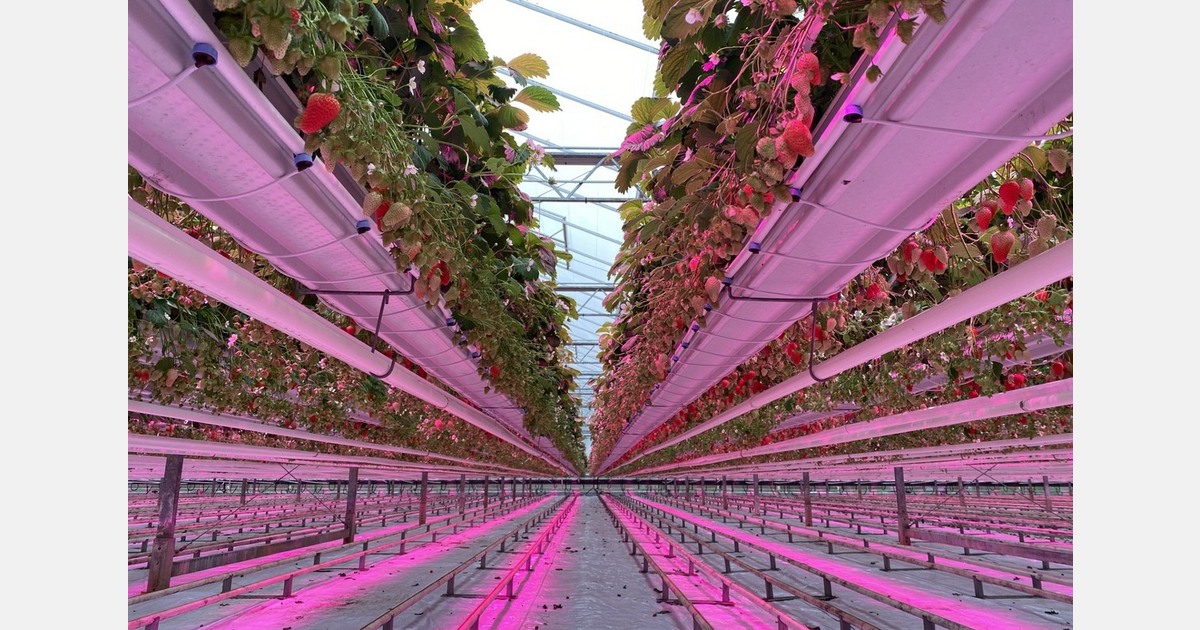
Greenhouse growers are working in conditions where crop yield and energy use must be managed simultaneously. According to Timo Spruijt, Chief Customer Officer at RED Horticulture, this requires a shift from fixed lighting schedules to approaches based on plant light responses.
“Lighting is moving from static control to measured and predictable strategies,” says Timo. “That starts with understanding how plants react to light and translating that into everyday decisions.”
 © RED Horticulture
This approach is based on photobiology, which links plant development to light conditions. Two parameters are central: intensity and spectrum. Light intensity affects photosynthesis, biomass accumulation and yield, while spectrum affects morphology, flowering, rooting and nutritional composition. Paul Vailhen, photobiologist at RED, points out that these factors must be managed together. “Focusing on one parameter without the other limits how plants use light. The interaction between intensity and spectrum determines photon efficiency.”
He explained that growers can use this knowledge to target harvests more precisely. “When photobiology is applied in practice, lighting becomes a management tool rather than a fixed input.”
Three areas
To support this, RED Horticulture organizes its offer around three areas: luminaires, control platform and agronomic orientation. These components are intended to respond to changes during the day and during the cultivation phases. “The needs of the plants are not constant,” says Timo. “Lighting strategies must follow these variations.”
The MyRED platform is used to translate greenhouse data into lighting decisions. Growers can monitor performance and adjust lighting strategies through a dashboard. “The platform allows producers to define and modify their light recipes and evaluate the results,” explains Timo. “It links crop data with energy use.”
He added that implementation goes beyond software. “Support continues after installation. We work with growers to set goals, apply strategies and adjust over time.”
Energy use
Energy use is a major factor in greenhouse operations. Timo connects lighting strategies directly with consumption. “Understanding how intensity and spectrum affect power use helps growers manage their energy input,” he says. “This could lead to changes in the way lighting is applied during the day.”
Automation is also part of today’s greenhouse practices. The system can adjust the lighting throughout the day according to predefined strategies. “Automation reduces manual adjustments and keeps light levels consistent,” says Timo. “It also allows control over the entire light output.”
He noted that automated control can contribute to additional energy savings beyond the performance of the luminaires. “When strategies are applied dynamically, further reductions in energy use are possible.”
Research
This is another part of the research approach. Through the Photobiology and Agronomy Research Center (PARC), RED Horticulture conducts trials under controlled conditions. Timo explains how this relates to commercial production. “Trials allow strategies to be tested before implementation. Producers can then apply these results with a clearer view of expected outcomes.”
The goal is to make photobiology applicable to different crops and growing environments. “The same principles can be adapted to different varieties and production systems,” says Timo. It concludes by returning to the role of knowledge in greenhouse management. “Understanding photobiology is the starting point. From there, growers can build lighting strategies that match crop requirements and energy constraints.”
For more information:
RED Horticulture
World Horti Center
Europe 1
2672 ZX Naaldwijk
+31 174 705 617
horticulture.red/

Meat Breath at Gnomestar Craft Cannabis

Full show CC2C 9-30-24: A path to Legalization? Cannabis Industry Path with Sen. Ron Wyden’s Bill

Phillip DeFranco Is Spreading INSANE Lies About Cannabis

HELP GIVE SOPHIE A CHANCE

4/20 Will Make You Money – One Mistake Can Wipe It Out

How a trafficking scheme triggered price compression in Germany

Texas Judge Pauses New Rules Banning Hemp Products Like Smokable THCA Flower Amid Legal Challenge From Industry

Nebraska Bill to Protect Doctors Who Recommend Medical Cannabis Fails

Gushers Marijuana Monday

Cannabis Coast to Coast News with Alaina Pinto and PCM News Team. Oct.6, 2024 Introductory Promo Vid

“Our system can manage equipment across 10,000+ m² using just a few wires”

Florida Workshop to Discuss What Constitutes a ‘Cartoon’ in Hemp Packaging

Mazar-i-Sharif Hash Wednesday

Re-release of the full show of Cannabis Coast to Coast news. Republican Texas DA Fires Up vs. laws;

From Finance to Wellness: Brad Zerman’s Impactful Pivot

DEA’s Cole Reverses His “priorities” ; Prohibitionists Dig In; Dead & Co Celebrates 60 years in SF

Weak Michigan Cannabis Sales Again in July – New Cannabis Ventures

Your Cannabis Business: Consistent Filings Are Critical

New Hampshire Governor Says Federal Marijuana Rescheduling Won’t Change Her Opposition To Legalization

Texas DA Fires Up for Change! Mass. Sheriff arrested on Extortion charges; GOP vs Industry in state
-
 Cannabis News8 months ago
“Our system can manage equipment across 10,000+ m² using just a few wires”
-
 Florida8 months ago
Florida Workshop to Discuss What Constitutes a ‘Cartoon’ in Hemp Packaging
-
 Video6 months ago
Mazar-i-Sharif Hash Wednesday
-
 Video8 months ago
Re-release of the full show of Cannabis Coast to Coast news. Republican Texas DA Fires Up vs. laws;
-
 Video8 months ago
From Finance to Wellness: Brad Zerman’s Impactful Pivot
-
 Video8 months ago
DEA’s Cole Reverses His “priorities” ; Prohibitionists Dig In; Dead & Co Celebrates 60 years in SF
-
 aawh8 months ago
Weak Michigan Cannabis Sales Again in July – New Cannabis Ventures
-
 Best Practices8 months ago
Your Cannabis Business: Consistent Filings Are Critical