Connect with us

Cannabis News

Curaleaf completes buyout of remaining stake in Germany’s Four 20 Pharma

Published

on

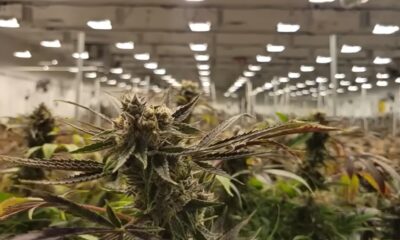
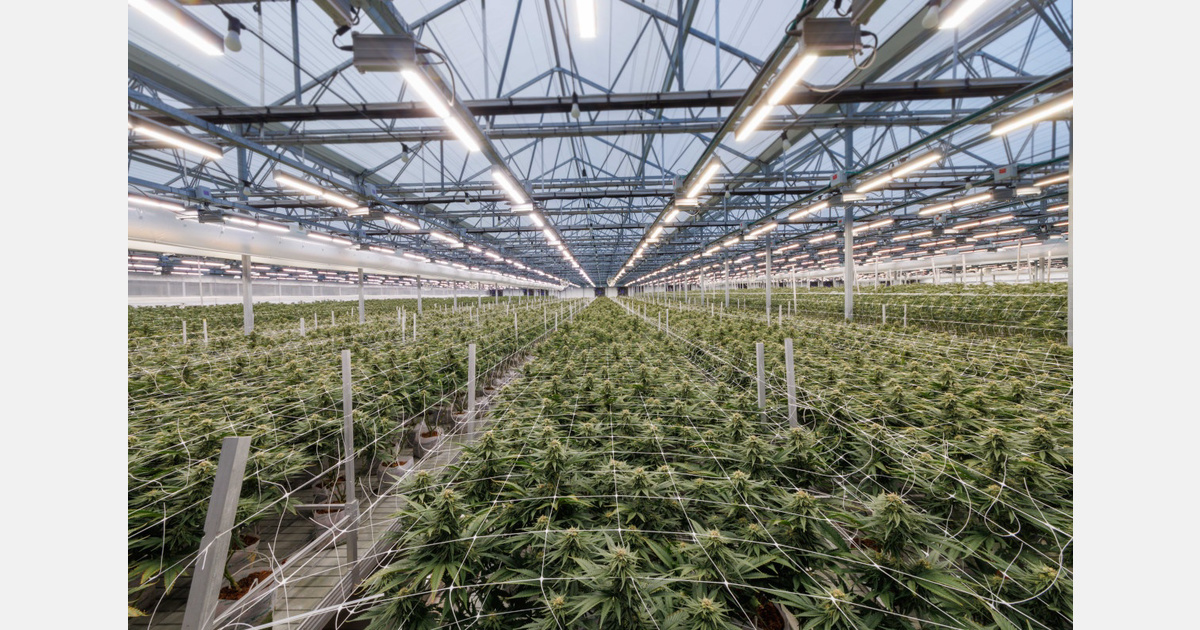
Curaleaf Holdings has completed the acquisition of the remaining 45% stake it did not previously own in Four 20 Pharma GmbH, a German producer and distributor of fully EU-GMP and GDP licensed medical cannabis. Four 20 Pharma is recognized for its high quality cultivation, pharmaceutical grade processing and comprehensive distribution network in Germany and several European markets serving nursing homes, pharmacies and research institutions. The company’s commitment to compliance, patient care and scientific rigor positions it as a cornerstone of the European medical cannabis ecosystem.

The full acquisition of Four 20 Pharma vertically strengthens Curaleaf’s integrated global supply chain, from proprietary cultivation sources in Portugal and Canada to licensed distribution throughout Germany, providing patient quality assurance from seed and full oversight at every stage. Since the initial agreement in 2022, Curaleaf and Four 20 Pharma have worked closely together to expand patient access, advance research initiatives and streamline the international cannabis supply chain by validating a data-driven approach to education, cultivation and product development.
© Curaleaf

“Completing this acquisition of the remaining stake in Four 20 Pharma reinforces our commitment to Europe and the strategic importance of building high-quality local operations in a market that will continue to grow significantly,” said Boris Jordan, CEO and President of Curaleaf. “Four 20 Pharma’s leadership in production, fulfillment and distribution allows us to expand patient access to medical cannabis while driving innovation in the international market. This investment has been a significant and strategic anchor in our international strategy, and we look forward to continued long-term growth in Europe.”

“Joining Curaleaf as a fully integrated subsidiary marks an exciting new chapter for Four 20 Pharma,” said Torsten Greif, Founder and Managing Director of Four 20 Pharma. “We built this company on an uncompromising commitment to quality, compliance and patient care, values ​​that align perfectly with Curaleaf’s international mission. Together, we are positioned to set the standard for medical cannabis in regulated markets around the world.”

Building on the success of Four 20 Pharma in Germany, Curaleaf has already launched the Four 20 brand in the UK and Poland and plans to continue expanding the brand to additional international markets, leveraging the quality and fulfillment model that has made Four 20 Pharma one of Germany’s most trusted medical cannabis brands.

For more information:
Curaleaf
(email protected)
curaleaf.com

Cannabis News

West Virginia Supreme Court Considers Whether Smell Of Marijuana Can Be Basis For Police To Search Homes

Published

on

By

“There is no longer an inherent connection or logical connection between the smell of marijuana and illegal activity, and for good reason.”

By Lori Kersey, West Virginia Watch

The West Virginia Supreme Court of Appeals is considering a case that questions whether the smell of marijuana alone is enough for law enforcement to obtain a warrant to search a person’s home.

The Supreme Court is expected to rule on an appeal of the Berkeley County Circuit Court’s decision to throw out evidence found in a home after Martinsburg police detected a “strong odor” of drugs. Ignoring the evidence prevented the state from prosecuting a man on drug charges, a lawyer told judges last week.

Aaron Lewis was arrested in 2020 on three counts of drug possession with intent to deliver and being a prohibited person in possession of a firearm, according to to report From the Herald-Mail.

Court documents say Martinsburg police were responding to a call from another man, who was searching the caller’s yard, about a suicidal woman who allegedly stabbed herself. The officers were unable to find the woman and began a door-to-door search for her.

Officers went to Lewis’ home where his son, Aaron Lewis Jr., answered the door. Officers detected a “strong odor of marijuana,” according to court documents. Young Lewis refused to give officers permission to search the house.

Before obtaining a search warrant, they entered the home to conduct a “protective search,” during which they found a wad of cash and two clear containers in the kitchen’s kitchen, court documents say. Two officers then left to obtain a search warrant while other officers remained on scene to secure the apartment.

An officer cited the strong odor of marijuana and observations during the sweep as the basis for believing a controlled dangerous substance was present in the home.

A magistrate granted a warrant to search Lewis’ home, seizing “(a)ny and all controlled substances … including, but not limited to, heroin and methamphetamine,” as well as seizing cash, firearms, books, digital devices and drug paraphernalia. the documents say

During the search, officers seized bags and containers of suspected marijuana, a bag of suspected heroin, a bag of crack cocaine, a handgun and 11 rounds of ammunition and cash, according to court documents.

A lawyer for Lewis asked a judge in 2023 to suppress all evidence seized under the warrant, arguing that the initial warrantless search — a security search before a search — violated the Fourth Amendment, which protects against unreasonable searches and seizures. Without the observations made during the search, all that was left was the smell of marijuana, and that alone is not enough to constitute probable cause, the attorney argued.

Berkeley Circuit Judge Debra McLaughlin granted Lewis’ motion to suppress the evidence, saying homes searched should be given more protection than cars. The judge ruled that the smell of marijuana alone did not constitute evidence of “illegal drug trafficking and/or possession of heroin, methamphetamine and/or other illegal drugs” in the home, court documents state.

The state of West Virginia is seeking a writ of prohibition in the case, a legal order barring the circuit court from proceeding outside its jurisdiction.

“The precedent for this court is clear,” Holly Mestemacher, West Virginia’s assistant attorney general, told the justices. “The odor of marijuana provides probable cause to search. The circuit court ignored and rewrote the law and suppressed evidence seized pursuant to a search warrant.” He described the judge’s decision to suppress the evidence as a “clear and glaring legal error” that exceeded his authority.

The court required “an almost impossible list of proofs required before certainty and probable cause exist,” he argued.

The ruling took away evidence the state needed to move forward in the case, he said.

“It’s actually a death knell for our ability to judge because the court required that standard far beyond what the law has ever required,” he said.

Cameron LeFevre, an attorney representing Lewis, asked the Supreme Court to uphold the Circuit Court’s ruling denying the state’s request for a writ of prohibition. He said the judge doesn’t have to answer whether the smell of marijuana justifies a search. There were “flaws” in the case, he said, including an improper security search, an illegal search of the home and an affidavit that lacked important details.

Federal courts have affirmed that the smell of marijuana is evidence of criminal activity and warrants law enforcement, but many state courts are reconsidering that based on the changing legal status of the drug. according to State Court Report, A project of the Brennan Center for Justice at NYU Law School. The West Virginia Legislature legalized medical marijuana in 2017. All states around West Virginia have legalized medical or recreational marijuana.

LeFevre argued that the Lewis case is not appropriate for the Supreme Court to decide whether the smell of marijuana alone is sufficient to warrant a lawful search.

“There’s an incomplete record. It’s a unique procedural stance. It’s in a writ of prohibition,” he said. “It would be far better for the court to reasonably decide . . . the case on its final merits, after a trial, after a full record, and then there are no other procedural and legal issues in the process of seeking the warrant and the search itself.”

However, if the court decides to take up the issue of the smell of marijuana, he said, the mere smell of marijuana is no longer sufficient probable cause.

“There has been an important development in the laws of the land regarding marijuana,” he said. “(Medical marijuana) has been legalized in West Virginia. It’s been partially legalized in other states around West Virginia. There’s no longer an inherent connection or logical connection between the smell of marijuana and illegal activity, and there’s good reason for that.”

The court is expected to rule on the case before the end of the current trial on June 11.

This story was first published by West Virginia Watch.

Marijuana Moment is made possible with the help of readers. If you rely on our pro-cannabis journalism to stay informed, consider a monthly Patreon pledge.

Continue Reading

Cannabis News

Texas Judge Allows Smokable Hemp And Other Products To Be Sold, Blocking State Ban From Being Enforced

Published

on

By

A Texas judge has issued a temporary injunction that continues to prevent state officials from enforcing the news Regulations restricting access to hemp-derived products such as THCA combustible flower. Meanwhile, the state Supreme Court in a separate case allows regulators to ban delta-8 THC.

Friday’s ruling by Judge Daniella DeSeta Lyttle follows another judge last month who issued a temporary restraining order on the ban on hemp products. According to the latest order, sales of hemp products can continue until at least July 27.

Decisions a a lawsuit filed by a coalition of hemp industry leaders and advocacy organizations The Department of State Health Services (DSHS) and the Health and Human Services Commission (HHSC) have accused lawmakers of effectively circumventing the law. ban the sale and manufacture of certain hemp consumable products.

Under state law passed by the legislature and governor in 2019, the suit says cannabis products are legal if they contain no more than 0.3 percent delta-9 THC. But regulators at DSHS and HHSC recently approved a “total delta-9 THC” limit using a post-decarboxylation formula that includes tetrahydrocannabinolic acid (THCA) in the calculation.

Texas lawmakers passed legislation to severely restrict hemp products in the 2025 session, but Gov. Greg Abbott (R) vetoed it and did not make it into law.

Lyttle said Friday that the plaintiffs have established “a possible right to relief on the merits of their claims.”

“In the absence of injunction, plaintiffs will suffer immediate and continuing harm to their business operations, legal rights and economic interests,” he said. he wrote. “These damages include disruption of established supply chains, loss of market access, impairment of goodwill and customer relationships, and the risk of significant compliance costs and enforcement consequences under the rules that plaintiffs have proven invalid.”

The hemp industry lawsuit, which also lists Attorney General Ken Paxton (R) as a defendant, also calls into question large increases in business license fees that were approved by regulators. Under the new rules, the cost of a manufacturer’s license increased from $250 to $10,000 per facility, while the retailer registration fee increased from $150 to $5,000 per location.

While the judge who issued a temporary restraining order on the product restrictions last month did not grant a stay on the new fees, Lyttle included them within the scope of his temporary injunction.

“These measures do not impose policy choices of the Legislature; they supersede them,” says the initial complaint filed by plaintiffs Texas Hemp Business Council (THBC) and Hemp Industry & Farmers of America (HIFA). “And they do so against the backdrop of a constitutional legislative process that ran its entire course — from the legislative passage of Senate Bill 3 to the governor’s veto, two failed special sessions — and produced an ambiguous result: no new law. Texas law does not allow agencies to override that result through rulemaking.”

“Texas has long promoted itself as a national leader in economic growth and regulatory stability. It is a state committed to fostering innovation, supporting legitimate businesses, and maintaining a predictable legal environment in which businesses can operate and invest,” he says. “Consistent with that vision, Texas has chosen to authorize and regulate the manufacture, distribution and sale of consumable hemp products (‘CHP’) through a comprehensive statutory framework enacted by the Legislature in 2019.”

“Plaintiffs acknowledge this framework and the State’s interest in ensuring that CHPs are produced and sold in a safe, responsible and lawful manner,” the lawsuit states.

In a state Supreme Court ruling Friday, the justices overturned a lower court’s order that prevented regulators from treating delta-8 THC as a controlled substance.

“The companies that developed these products claim that the legislature opened up the market to them in 2019,” the court’s opinion says. “So when the commissioner sought to clarify that, in fact, the legislature had not clarified the potent levels of delta-8 THC manufactured in consumable hemp products, a group of businesses and consumers asked a court to rewrite the controlled substance schedules for him and the department, especially since the legislature legalized delta-8 THC in 2019 making the commissioner’s actions impossible and ultra vires.”

“The trial court granted that relief by way of a temporary injunction, which was affirmed by the appeals court. We now conclude that the lower courts exceeded their jurisdiction,” the justices said. find. “If the legislature wants to legalize powerful drugs, it has all the tools it needs to do so, and that is inevitable, as we expect such a big change in social policy. The role of the courts is simply to evaluate the state of the law as it stands.”

Separately, Texas officials conditionally approved more new medical marijuana business licenses As part of a law being implemented to significantly expand the state’s cannabis program.

A recent survey showed that Texas voters overwhelmingly support legalizing medical marijuana they still do not know, to a large extent, about the existing program.

in march Texas voters approved a question to legalize marijuana that showed up in the state’s Democratic primary voting.

Another statewide survey released in February found that Texas voters don’t like how state leaders and lawmakers have handled marijuana and THC policy issues. In the poll, many voters (40 percent) said they disapprove of how their elected officials have approached the issue, according to the poll. 29 percent said they approve of how cannabis issues have been handled, while 31 percent said they had no opinion either way.

A separate survey released last year proved this Many Texas voters want the state’s marijuana laws to be “less strict.” And among the issues examined by members of parliament in the last special sessions, the voters said that a proposal to deal with the regulation of hemp was one of the least important.

Meanwhile, the lieutenant governor and speaker of the House recently announced that the state will continue with their own ibogaine research program The drug companies did not submit proposals to meet the requirements and standards for receiving state funds under a recently passed law to begin clinical trials with the psychedelic.

Image courtesy of AnonMoos.

Marijuana Moment is made possible with the help of readers. If you rely on our pro-cannabis journalism to stay informed, consider a monthly Patreon pledge.

Continue Reading

Cannabis News

Cannabis growth facility eyes new spot for growth facility near Crisfield

Published

on

By


The Somerset County Board of Zoning Appeals approved another special exception for a cannabis-growing facility after negotiations to purchase a previous location failed to reach an agreement.

Trilogy Group LLC was granted a license to grow by the Maryland Cannabis Association, with the condition that the business be operational by July 2026. Trilogy Group wants to operate on the county-owned, undeveloped industrial site on Revell’s Neck Road in Westover. However, this project time frame does not coincide with the license term.

In September 2025, the producer was approved for a special exception for a facility at 4630 Crisfield Highway. The existing building houses Jed’s Auto Refinishing, which would be renovated to accommodate the growing operations. When the sale of that property ultimately failed, Trilogy Group purchased the land at 4381 Crisfield Highway and obtained another special exemption.

Jesse Drewer, Somerset’s Director of Technical and Community Services, said: “They looked for a site they already owned before coming to us and working through the process. “They are landlords and developers all in one.”

Read more at WBOC


Continue Reading
Advertisement

Trending

Copyright © 2021 The Art of MaryJane Media