Connect with us

Cannabis News

West Virginia Supreme Court Considers Whether Smell Of Marijuana Can Be Basis For Police To Search Homes

Published

on

“There is no longer an inherent connection or logical connection between the smell of marijuana and illegal activity, and for good reason.”

By Lori Kersey, West Virginia Watch

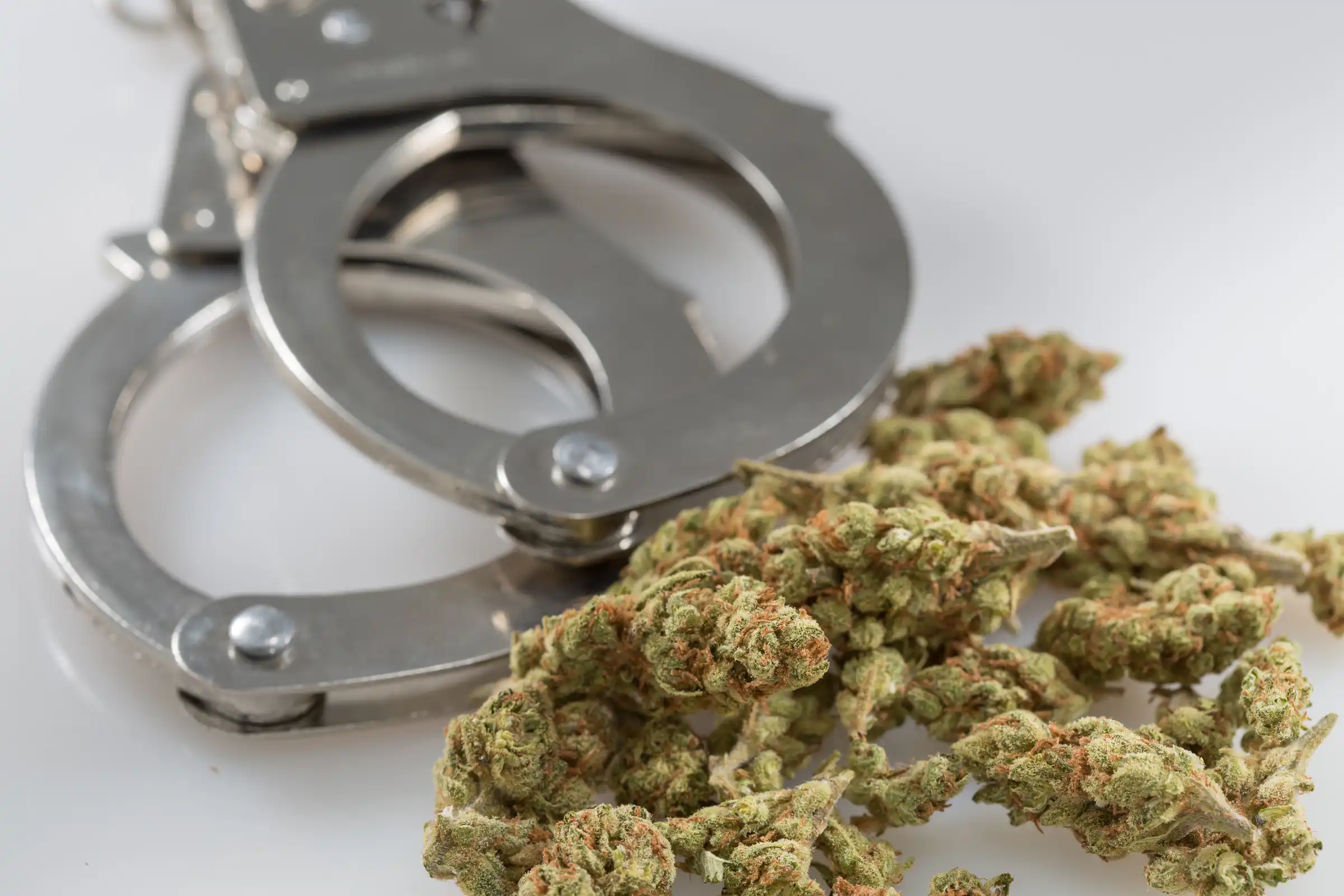
The West Virginia Supreme Court of Appeals is considering a case that questions whether the smell of marijuana alone is enough for law enforcement to obtain a warrant to search a person’s home.

The Supreme Court is expected to rule on an appeal of the Berkeley County Circuit Court’s decision to throw out evidence found in a home after Martinsburg police detected a “strong odor” of drugs. Ignoring the evidence prevented the state from prosecuting a man on drug charges, a lawyer told judges last week.

Aaron Lewis was arrested in 2020 on three counts of drug possession with intent to deliver and being a prohibited person in possession of a firearm, according to to report From the Herald-Mail.

Court documents say Martinsburg police were responding to a call from another man, who was searching the caller’s yard, about a suicidal woman who allegedly stabbed herself. The officers were unable to find the woman and began a door-to-door search for her.

Officers went to Lewis’ home where his son, Aaron Lewis Jr., answered the door. Officers detected a “strong odor of marijuana,” according to court documents. Young Lewis refused to give officers permission to search the house.

Before obtaining a search warrant, they entered the home to conduct a “protective search,” during which they found a wad of cash and two clear containers in the kitchen’s kitchen, court documents say. Two officers then left to obtain a search warrant while other officers remained on scene to secure the apartment.

An officer cited the strong odor of marijuana and observations during the sweep as the basis for believing a controlled dangerous substance was present in the home.

A magistrate granted a warrant to search Lewis’ home, seizing “(a)ny and all controlled substances … including, but not limited to, heroin and methamphetamine,” as well as seizing cash, firearms, books, digital devices and drug paraphernalia. the documents say

During the search, officers seized bags and containers of suspected marijuana, a bag of suspected heroin, a bag of crack cocaine, a handgun and 11 rounds of ammunition and cash, according to court documents.

A lawyer for Lewis asked a judge in 2023 to suppress all evidence seized under the warrant, arguing that the initial warrantless search — a security search before a search — violated the Fourth Amendment, which protects against unreasonable searches and seizures. Without the observations made during the search, all that was left was the smell of marijuana, and that alone is not enough to constitute probable cause, the attorney argued.

Berkeley Circuit Judge Debra McLaughlin granted Lewis’ motion to suppress the evidence, saying homes searched should be given more protection than cars. The judge ruled that the smell of marijuana alone did not constitute evidence of “illegal drug trafficking and/or possession of heroin, methamphetamine and/or other illegal drugs” in the home, court documents state.

The state of West Virginia is seeking a writ of prohibition in the case, a legal order barring the circuit court from proceeding outside its jurisdiction.

“The precedent for this court is clear,” Holly Mestemacher, West Virginia’s assistant attorney general, told the justices. “The odor of marijuana provides probable cause to search. The circuit court ignored and rewrote the law and suppressed evidence seized pursuant to a search warrant.” He described the judge’s decision to suppress the evidence as a “clear and glaring legal error” that exceeded his authority.

The court required “an almost impossible list of proofs required before certainty and probable cause exist,” he argued.

The ruling took away evidence the state needed to move forward in the case, he said.

“It’s actually a death knell for our ability to judge because the court required that standard far beyond what the law has ever required,” he said.

Cameron LeFevre, an attorney representing Lewis, asked the Supreme Court to uphold the Circuit Court’s ruling denying the state’s request for a writ of prohibition. He said the judge doesn’t have to answer whether the smell of marijuana justifies a search. There were “flaws” in the case, he said, including an improper security search, an illegal search of the home and an affidavit that lacked important details.

Federal courts have affirmed that the smell of marijuana is evidence of criminal activity and warrants law enforcement, but many state courts are reconsidering that based on the changing legal status of the drug. according to State Court Report, A project of the Brennan Center for Justice at NYU Law School. The West Virginia Legislature legalized medical marijuana in 2017. All states around West Virginia have legalized medical or recreational marijuana.

LeFevre argued that the Lewis case is not appropriate for the Supreme Court to decide whether the smell of marijuana alone is sufficient to warrant a lawful search.

“There’s an incomplete record. It’s a unique procedural stance. It’s in a writ of prohibition,” he said. “It would be far better for the court to reasonably decide . . . the case on its final merits, after a trial, after a full record, and then there are no other procedural and legal issues in the process of seeking the warrant and the search itself.”

However, if the court decides to take up the issue of the smell of marijuana, he said, the mere smell of marijuana is no longer sufficient probable cause.

“There has been an important development in the laws of the land regarding marijuana,” he said. “(Medical marijuana) has been legalized in West Virginia. It’s been partially legalized in other states around West Virginia. There’s no longer an inherent connection or logical connection between the smell of marijuana and illegal activity, and there’s good reason for that.”

The court is expected to rule on the case before the end of the current trial on June 11.

This story was first published by West Virginia Watch.

Marijuana Moment is made possible with the help of readers. If you rely on our pro-cannabis journalism to stay informed, consider a monthly Patreon pledge.

Continue Reading

Cannabis News

TSA clarifies that cannabis policy has not changed

Published

on

By


Over the past week, many news organizations have been running exaggerated headlines about a supposed change by the federal government to allow marijuana to be brought into airports and airplanes. But it’s not true, the Transportation Security Administration (TSA) tells Marijuana Moment.

“TSA’s policy on medical marijuana has not changed,” a TSA spokeswoman said in an email Wednesday.

“According to the TSA website: If any illegal substance or evidence of criminal activity is found during the security screening, TSA will refer the matter to law enforcement,” they said. While it’s true that the agency’s list of medical marijuana “What can I bring?” section of its website was updated on April 27, there were no major changes in policy.

Currently, the website says “Yes,” passengers can carry medical marijuana in carry-on and checked bags with special instructions. But the TSA cannabis policy has said “Yes” to medical marijuana, with the same caveats, since 2019.

Read more at Marijuana Moment


Continue Reading

Cannabis News

Alabama Officials Move To Delay Automatic Rescheduling Of Marijuana Under State Law Following Trump’s Federal Move

Published

on

By

“We’re not saying Alabama won’t do this. We’re definitely going to do this, but if you get it without objection, it’s scheduled right away.”

By Anna Barrett, Alabama Reflector

The governing body of the Alabama Department of Public Health voted Thursday against the federal rescheduling of marijuana, saying state health officials needed more time to determine how to implement it.

Dr. Scott Harris, Alabama’s top health official, told members of the state’s Public Health Commission that the state has “full intent” to implement the change.

“We’re not saying Alabama won’t do this,” Harris told the committee. “We’ll certainly do this, but if you get it without objection, it’s scheduled immediately. If you do nothing, it’s scheduled within 30 days. I’m going to ask you to take the third option, which is to oppose it. Then we just have a little time to figure this out with all our other stakeholders.”

The committee’s vote was unanimous. Brian Hale, ADPH’s legal director, said the objection would be open to public comment during the meeting. This period would last 30 to 60 days.

“The objection is simply to allow more time for input on the implications of this rescheduling,” Hale said. “There will be a public hearing, we’ll see the comments that way, and then we’ll talk to other stakeholders, licensing boards and others who might be affected to see what their input might be.”

In April, the US Department of Justice (DOJ) moved marijuana from Schedule I — the Drug Enforcement Administration’s (DEA) list of drugs with the least amount of abuse and legal use — to Schedule III, which, according to the DEA, drugs have a moderate to low potential for physical and psychological dependence. The order followed an executive order President Donald Trump signed in December to keep the DOJ on track to reschedule.

Former President Joe Biden ordered the DOJ to reschedule the drug in 2024, but hearings on the move were canceled in early 2025.

The federal mandate applies to medical marijuana products in states that allow the use of the drug. The move means those businesses can deduct business expenses from federal taxes and investigators have access to legal products in the state. As a Schedule I drug, only cannabis grown in a federal facility could be researched, greatly limiting the supply available to researchers.

Alabama has a medical cannabis program approved by the Legislature in 2021. A Montgomery The dispensary said last week it hopes to make medical marijuana available to patients soon. A message seeking comment from Vince Schillec, the dispensary’s owner, was left Thursday afternoon.

Harris said the reconsideration would not violate state law, but after speaking with the Alabama Medical Cannabis Commission (AMCC), he was unsure how the reconsideration would affect the program.

“We’ve worked very hard to try to figure out what the ramifications of this are. There are a number of things that don’t completely conflict with state laws or other regulations, but they require some thought as to how to implement them,” Harris said.

Justin Aday, AMCC’s general counsel, said in a telephone interview that the commission does not foresee any immediate impact from the federal reorganization or a delay in the reorganization at the state level.

“We certainly understand the commission and the desire to gather additional information about the implications of the federal reorganization and what the implications would be, depending on how medical cannabis is scheduled at the state level,” Aday said. “We will certainly participate in that process as necessary, and we will provide all the information we can.”

This story was first published by the Alabama Reflector.

Marijuana Moment is made possible with the help of readers. If you rely on our pro-cannabis journalism to stay informed, consider a monthly Patreon pledge.

Continue Reading

Cannabis News

New California emergency marijuana rules aim to help state businesses

Published

on

By


California officials are making additional reforms to help the state’s marijuana businesses take advantage of federal tax and other benefits under the Trump administration’s redistricting move.

Specifically, the Department of Cannabis Control (DCC) proposed emergency regulations on Monday to allow companies with current licenses that use both medical and adult marijuana to secure a secondary license through a simplified process to separate the segments of their operations, as federal planning changes currently only cover medical cannabis.

Under the DCC’s proposal, marijuana companies could “create a second entity and hold two separate licenses (one for adult use and one for medicinal use) on the same premises” under the expedited regulations.

“DCC is working to make this pathway available due to the timing and uncertainty of the federal process,” the department said. “Additional operational components (such as tracking and tracing requirements, local permitting, tax collection, and other implementation issues) are still being evaluated and will be addressed through future guidance or rulemaking as needed.”

Read more at Marijuana Moment


Continue Reading
Advertisement

Trending

Copyright © 2021 The Art of MaryJane Media